The influencer marketing landscape has undergone a tectonic shift, reaching a staggering $33 billion valuation in 2026. This growth isn't just about bigger budgets; it's about efficiency. Brands are seeing a 60-70% reduction in manual coordination time, according to research by CreatorIQ. As we head into 2026, the primary debate for marketing teams has shifted from "which database has more names" to "which platform can actually execute the work for me?" This is the core tension in the Stormy AI vs Upfluence comparison: the choice between an autonomous AI agent and a legacy CRM database.
The Philosophy Shift: AI Agents vs. Legacy CRMs
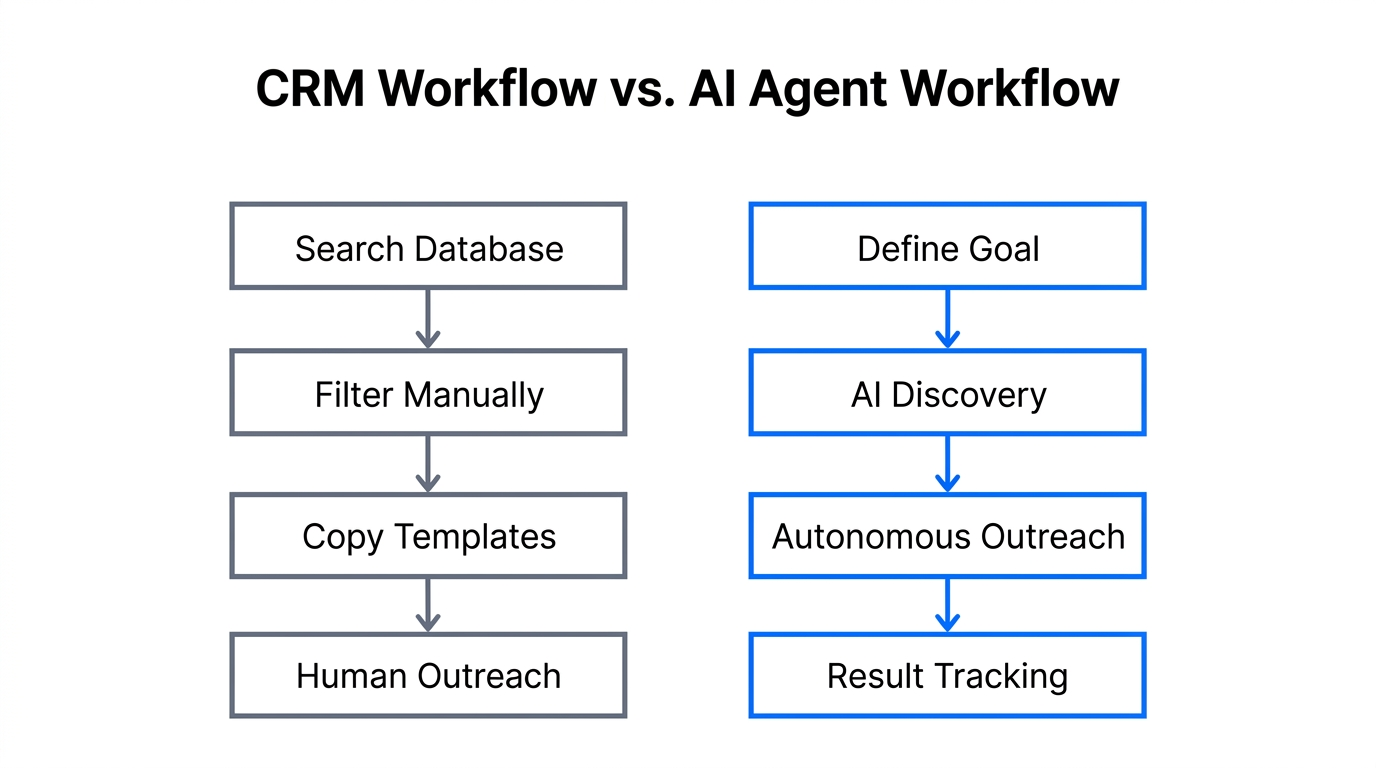
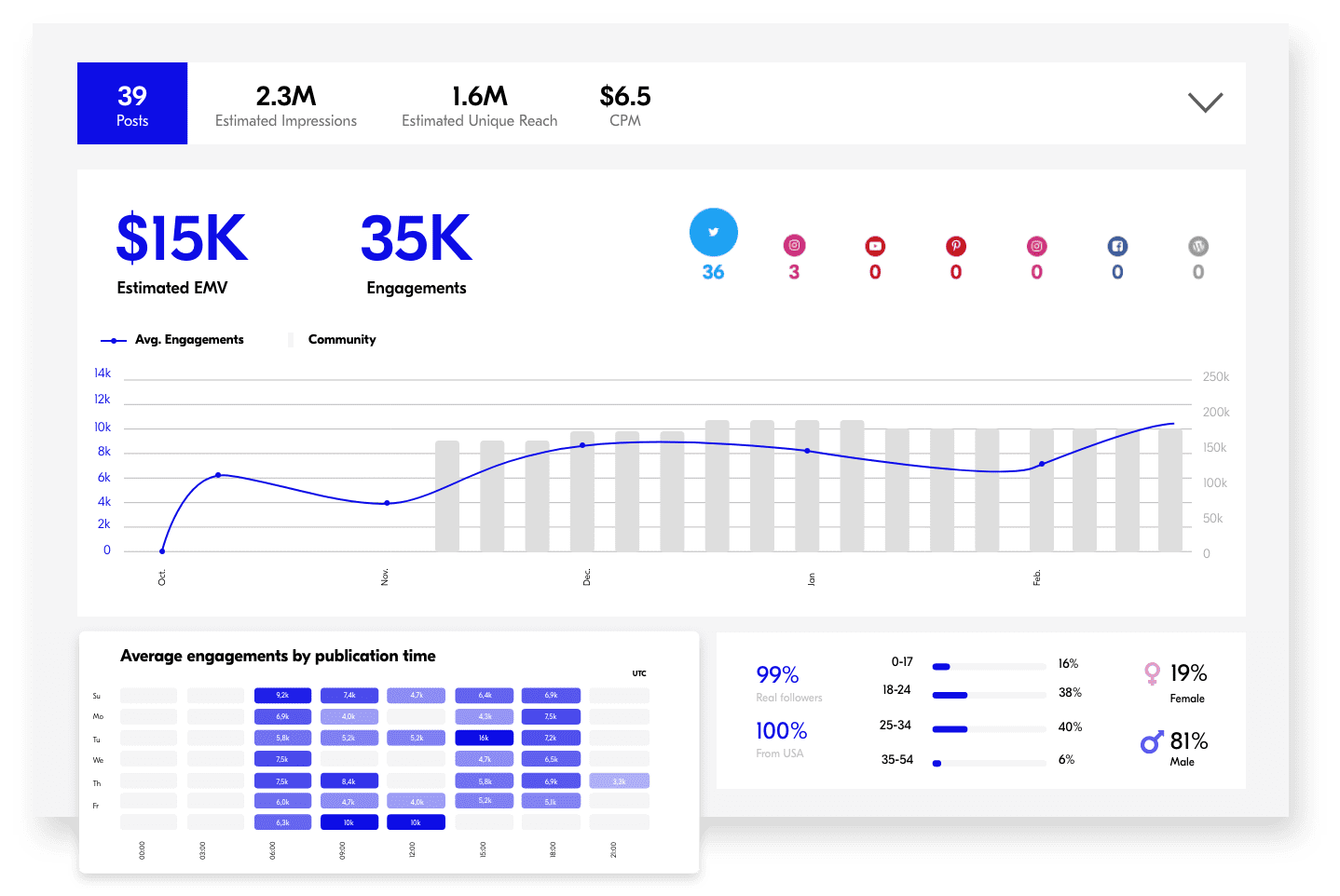
To understand the difference between Stormy AI and Upfluence, you have to understand their fundamental DNA. Upfluence, a stalwart in the industry, was built on the Legacy CRM model. It is designed for human-led teams who want a deep database of 12M+ creators and a suite of tools to manage them manually. It excels in "Live Capture," identifying influencers within a brand’s existing customer base via integrations with Shopify and Amazon.
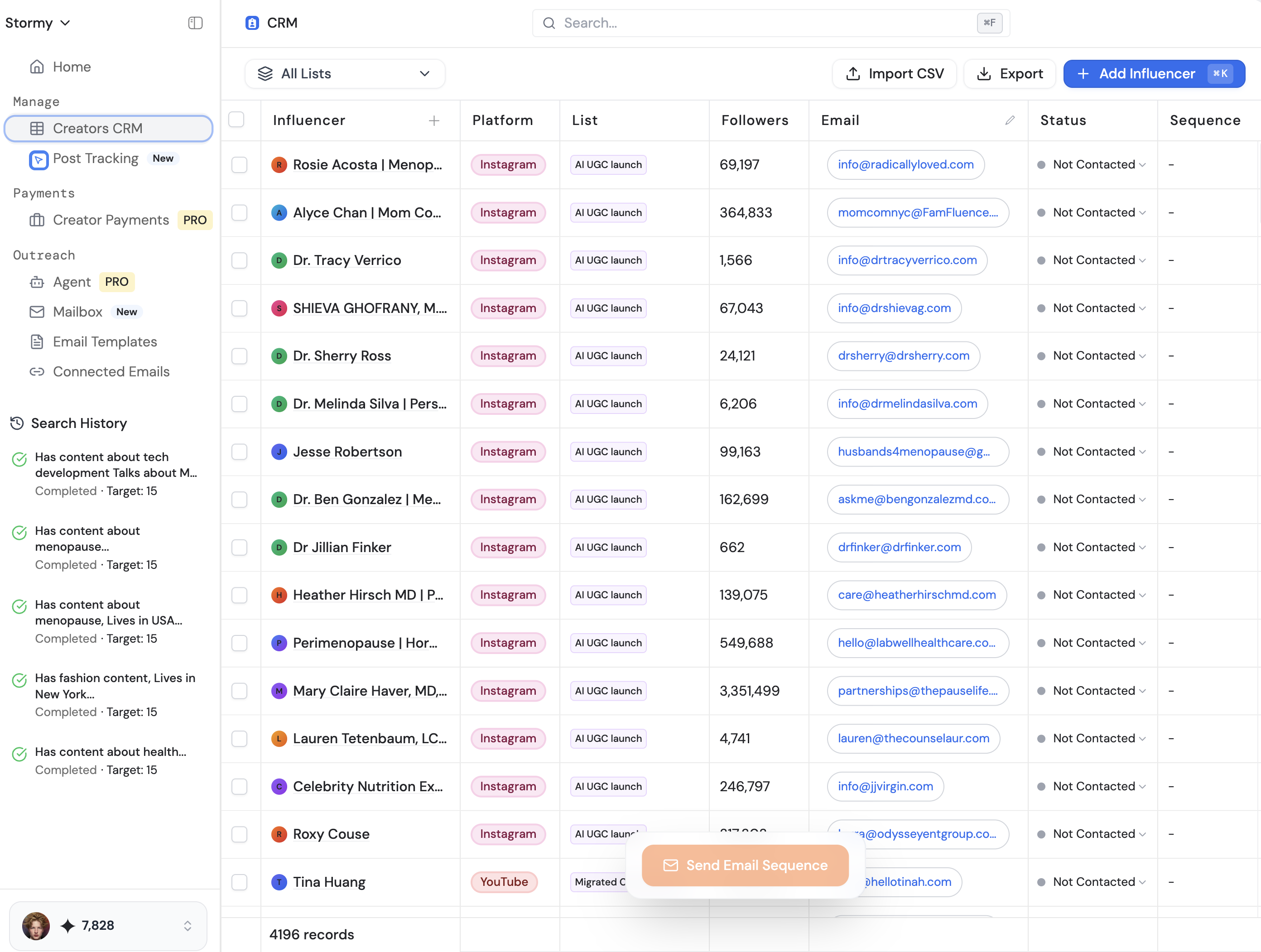
Conversely, Stormy AI represents the Autonomous Agent Platform era. Instead of giving you a shovel and telling you where to dig, Stormy is the excavator. It uses advanced Large Language Models (LLMs) like ChatGPT to handle the heavy lifting of discovery, vetting, and even negotiation with 99.8% accuracy. While Upfluence helps you organize your work, Stormy is designed to do the work for you while you sleep.
"In 2026, the bottleneck is no longer finding influencers; it's the 40+ hours of manual outreach and negotiation required to actually go live. AI agents have turned that week-long process into a 10-minute task."
Discovery: Natural Language vs. Faceted Filters
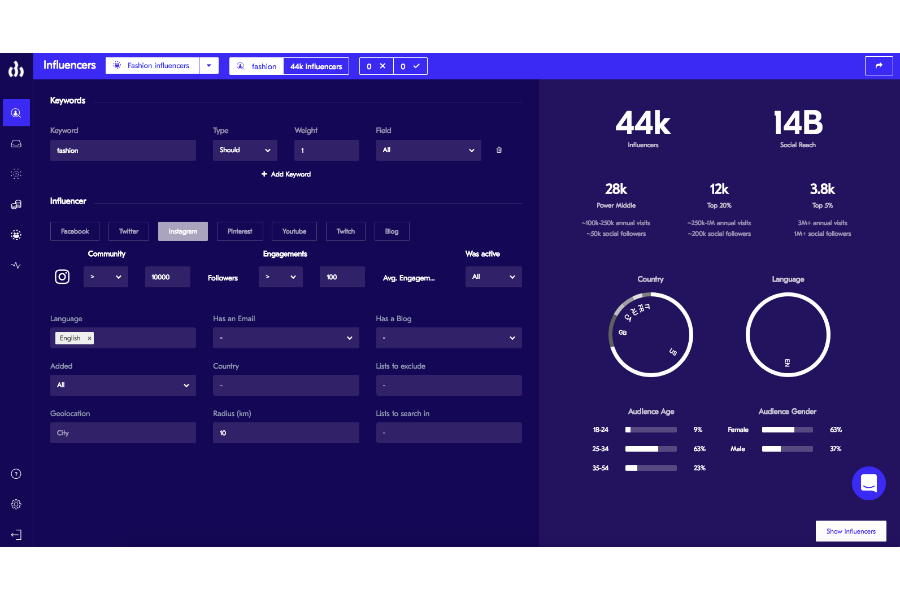
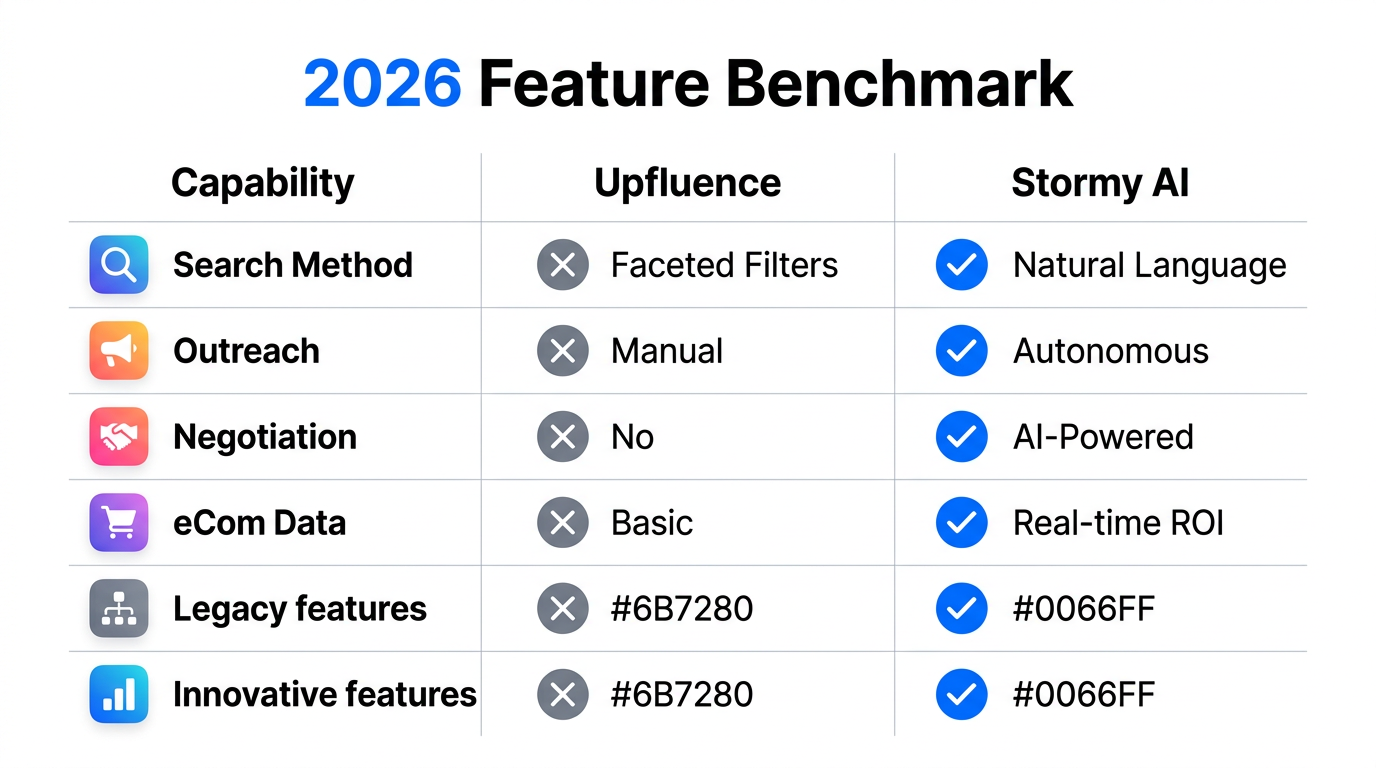
Search is where the user experience diverges most sharply. In Upfluence, discovery is a traditional database experience. You use faceted filters—selecting niche, location, follower count, and engagement rate from dropdown menus. It is precise, but it requires the user to know exactly what they are looking for and how the database categorizes it.
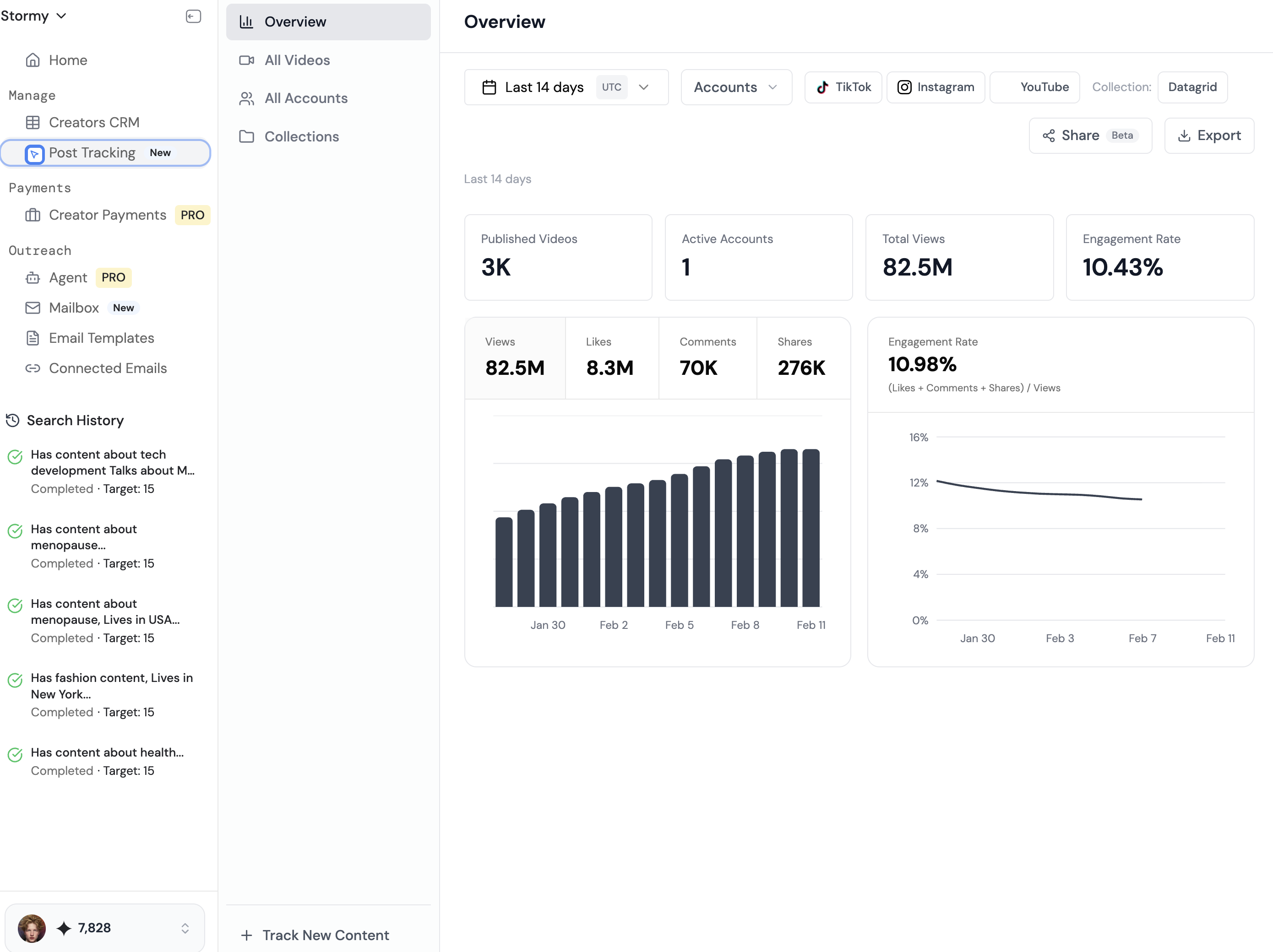
Stormy AI utilizes a natural-language search engine across TikTok, YouTube, Instagram, and LinkedIn. You simply type a prompt as if you were talking to a colleague: "Find me Gen Z fitness creators in Los Angeles with 10K-100K followers who post about sustainable activewear." Stormy’s AI understands the context and intent, scanning live data to find perfect matches instantly.

According to Stormy AI's industry report, 69.1% of marketers now prefer AI-powered operations over manual filtering. This is because AI can detect nuance—like identifying "authentic sentiment" in comments—that a standard "engagement rate" filter might miss.
Outreach and Negotiation: The Automation Gap
Upfluence offers automated email sequences and drip flows, similar to tools like Mailchimp or Klaviyo. While this saves time compared to 1-to-1 emailing, it still requires a human to manage the replies, handle counter-offers, and finalize terms. This "human-in-the-loop" requirement often becomes the primary scaling bottleneck for growing brands.
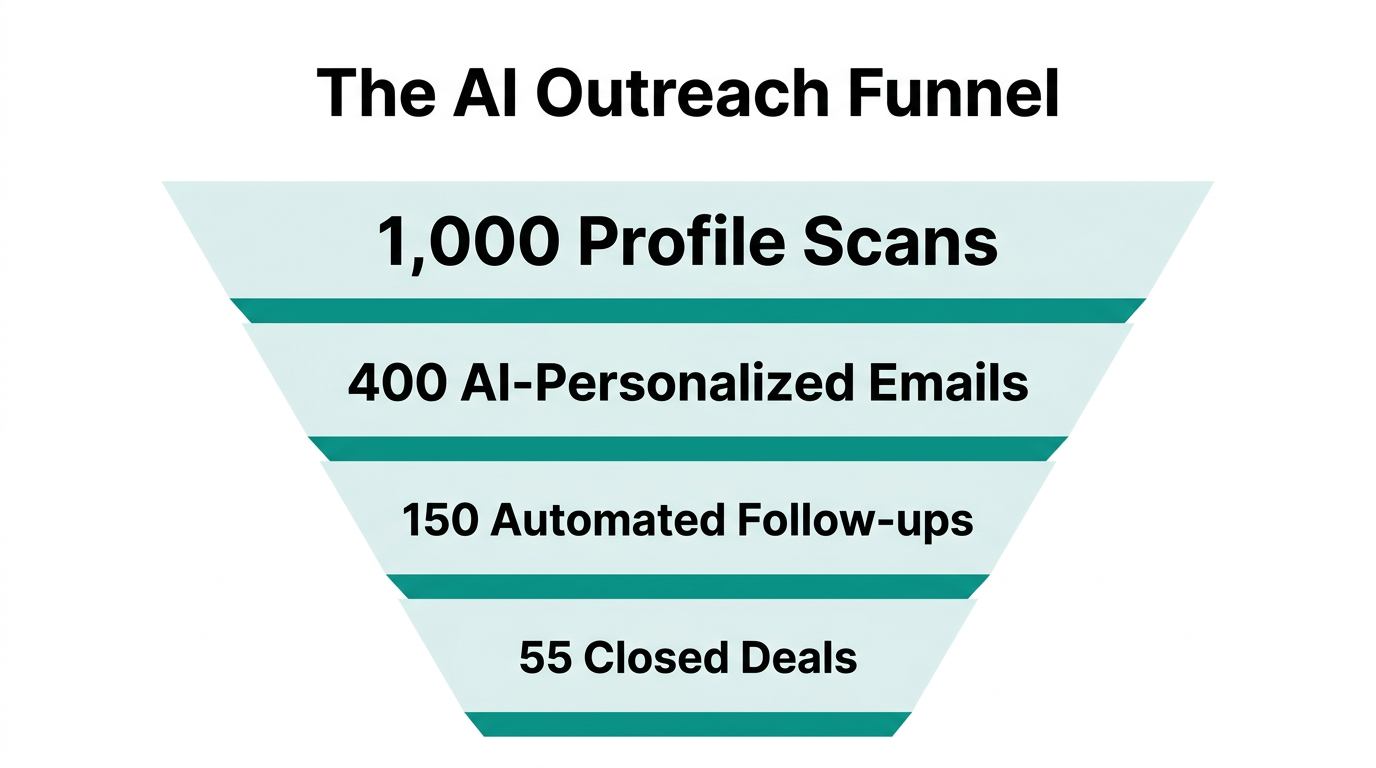
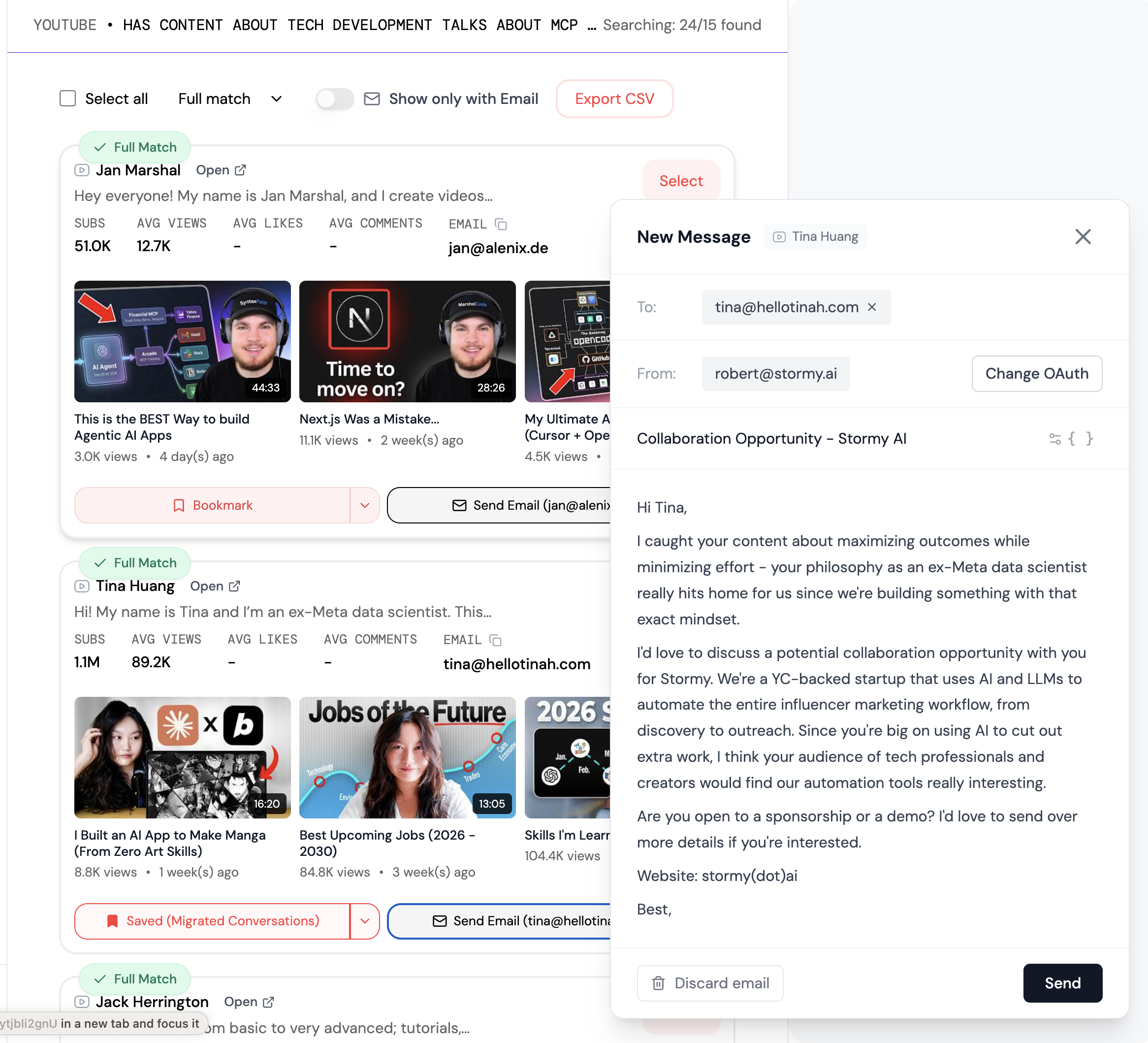
Stormy AI introduces the Autonomous AI Agent. These agents don't just send the first email; they handle the entire conversation. Using hyper-personalized data from the creator’s profile, Stormy generates outreach that doesn't feel like a template. More importantly, it features Autonomous AI Negotiation. If a creator asks for a higher rate, the AI can check your pre-set budget parameters and handle counter-offers automatically.
This level of automation is why AI-managed campaigns cost roughly 40% less in labor overhead, as reported by HubSpot. For a lean startup or a performance agency, this is the difference between managing 10 creators a month or 100.
Head-to-Head: Stormy AI vs. Upfluence
| Feature | Stormy AI | Upfluence |
|---|---|---|
| Primary Focus | Autonomous Execution | Workflow CRM & Database |
| Discovery | Natural Language AI Search | Faceted Filters (12M+ DB) |
| Outreach | 24/7 AI Agents + Follow-ups | Manual Drip Sequences |
| Negotiation | Autonomous AI Negotiation | Human-led Terms |
| Integrations | TikTok Shop, LinkedIn, Newsletters | Shopify, Amazon, WooCommerce |
| Price | Transparent ($100 - $200/mo) | Custom (Approx. $478+/mo) |
E-commerce and UGC Specialization
Upfluence remains a powerhouse for traditional e-commerce brands that rely heavily on their existing customer base. Their "Live Capture" tool allows brands like Valabasas to achieve a 14x ROI by turning buyers into brand affiliates. If your strategy is strictly "customer-to-creator" pipeline building on Shopify, Upfluence has a strong value proposition.
However, if your goal is high-volume User Generated Content (UGC) for mobile app marketing or social commerce, Stormy AI is the superior choice. App developers and SaaS startups use Stormy to secure hundreds of UGC creators simultaneously to drive low-cost app installs. By automating the vetting process, Stormy ensures that every creator has a genuine audience, avoiding the 2026 trend of sophisticated bots mimicking engagement—a problem InfluenceFlow warns is becoming harder for humans to spot.
"The 2026 winner isn't the brand with the biggest budget, but the brand with the most automated workflow. Labor is the new 'ad spend' waste."
Pricing: Transparent Tiers vs. Custom Contracts
One of the biggest hurdles with legacy platforms like Upfluence is the barrier to entry. According to Influencer Hero, entry-level pricing for Upfluence typically starts around $478 per month, often requiring mandatory 12-month contracts. This model favors mid-market companies with dedicated influencer marketing teams and predictable annual budgets.
Stormy AI disrupts this with a transparent, self-serve model. As noted on Futurepedia, Stormy offers tiers starting at $100 for 1,000 credits, with a popular Starter plan at $200 (often discounted). There are no "gatekeeper" sales calls required to get started, making it the go-to for lean startups and agencies that need to move fast.
The Decision Matrix: Which One Should You Choose?
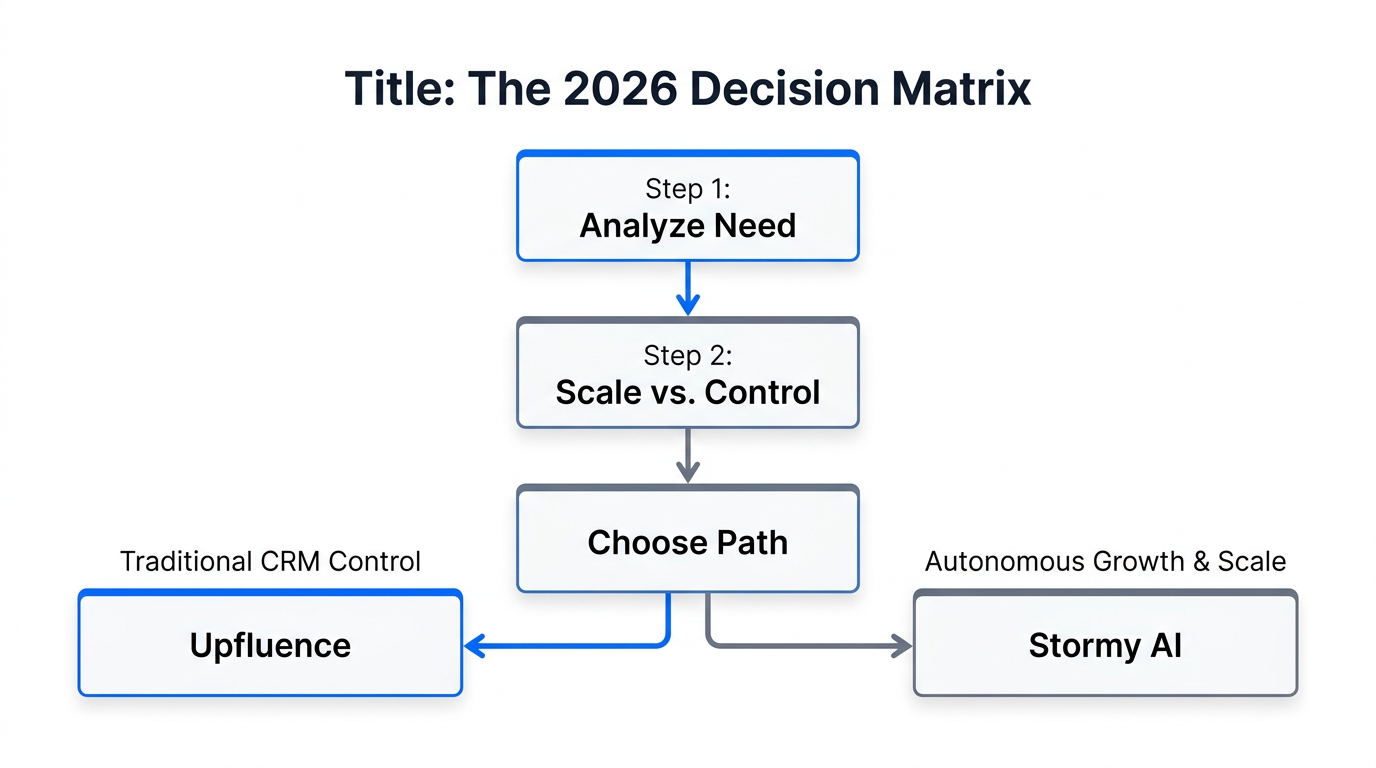
Choosing between these two depends entirely on your team's structure and goals for 2026. Here is a quick guide to making the right call:
- Choose Upfluence if: You have a dedicated influencer manager, your primary goal is turning existing Shopify customers into affiliates, and you prefer a traditional database with deep historical data.
- Choose Stormy AI if: You are a lean team or solo founder, you need to scale UGC/app install campaigns quickly, you want autonomous agents to handle your outreach/negotiation, and you prefer pay-as-you-go pricing over long-term contracts.
Conclusion: The Future is Autonomous
In the head-to-head battle of Stormy AI vs Upfluence, the winner is determined by your appetite for automation. Upfluence is an excellent record-keeping and customer-matching tool for the e-commerce era. But as we move deeper into 2026, the complexity of managing hundreds of creators across TikTok, YouTube, and LinkedIn requires more than just a better CRM—it requires an AI Agent.
By automating the entire lifecycle from discovery to contract in under 10 minutes—as highlighted by Skywork AI—Stormy AI allows brands to focus on strategy and creativity while the AI handles the logistics. If you're ready to stop digging and start scaling, it's time to let an AI agent lead the way.
Ready to see the future of influencer marketing? Start your free trial with Stormy AI today and launch your first AI-powered campaign in minutes.