For many SaaS founders, the initial instinct after launching an MVP is to head straight to Google Ads. There is a comforting, albeit expensive, logic to it: if I pay for traffic, I will get customers. However, for the modern micro-SaaS, this approach often leads to a "leaky bucket" syndrome where Customer Acquisition Costs (CAC) consistently outpace the Lifetime Value (LTV) of a user. In an era where venture capital is harder to secure, scaling via organic Product-Led Growth (PLG) isn't just a choice—it’s a survival strategy.
The Shift from Paid Search to Product-Led Growth
Product-Led Growth is a business methodology where user acquisition, expansion, conversion, and retention are all driven primarily by the product itself. According to OpenView Venture Partners, companies that employ a PLG strategy grow faster and are more efficient than those relying solely on traditional sales and marketing. Instead of dumping thousands into TikTok Ads or Meta, founders should focus on building "viral loops" and organic discovery channels.
Leveraging Influencer Partnerships for SaaS Discovery
One of the most effective organic-adjacent strategies is partnering with niche creators who already have the trust of your target audience. Whether it’s a productivity guru on YouTube or a "Build in Public" founder on LinkedIn, these influencers can drive high-intent traffic without the volatility of bidding wars. To execute this at scale, many teams are moving away from manual spreadsheets and legacy tools like Tagger or Julius in favor of more modern, automated solutions.

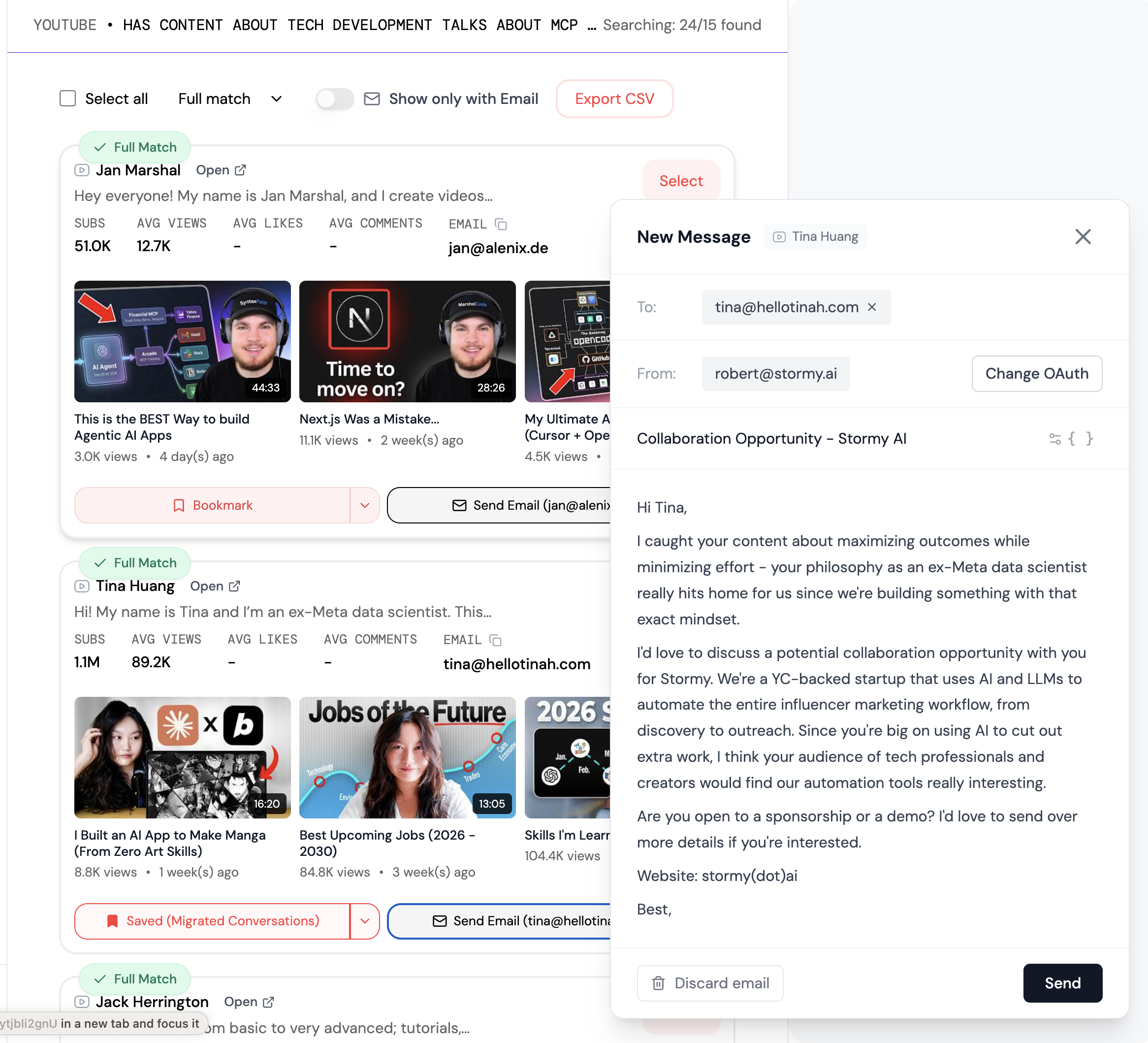
To find the right partners, you can use Stormy's AI search for discovery across TikTok, YouTube, Instagram, LinkedIn, and even newsletters. Instead of guessing who might work, you can type a prompt like "SaaS reviewers for dev tools with high engagement" and get a curated list instantly. Once you have a list, Stormy AI helps with influencer vetting and fake follower detection, ensuring your product isn't being promoted to bot accounts.
Building in Public and Community Engagement
Organic growth thrives in communities. Platforms like Indie Hackers and Product Hunt have become the town squares for SaaS discovery. By sharing your journey—including the failures—you build a brand affinity that paid ads can never replicate. Engaging in subreddits like r/saas or r/startups allows you to solve real user problems in real-time, often leading to your first 100 passionate customers.
Automating the Outreach Process
Once you’ve identified the communities and influencers that resonate with your product, the hurdle is usually volume. Sending manual emails to fifty creators a day is a recipe for burnout. This is where an AI email outreach agent with auto follow-ups becomes essential. By automating the "boring" parts of the relationship-building process, you can focus on the high-level strategy and product improvements.
Data-Driven Iteration
Finally, PLG is not "set it and forget it." You need to track which organic efforts are actually moving the needle. While you likely use Google Analytics for web traffic, tracking the actual impact of creator collaborations requires a dedicated creator CRM and post tracking system. By monitoring views, likes, and engagement across every post, you can double down on the content that converts and cut the rest, ensuring your growth remains sustainable and profitable.
In summary, scaling a SaaS in today's market requires a pivot from "paying for attention" to "earning attention." By leveraging PLG principles, community engagement, and modern AI-driven influencer discovery, founders can build a growth engine that scales without a massive ad budget.