In the noise-saturated landscape of 2026, the biggest threat to your founder personal brand isn't the algorithm or the latest AI-generated spam—it is your own daily doubt. When we look at the most successful distribution channels on platforms like TikTok and LinkedIn, we don't just see talent; we see systems. Specifically, we see creators who have decoupled their self-worth from today's engagement metrics and attached it to a multi-decade operational framework.
Building a brand that lasts requires more than just "going viral." It requires a shift from short-term hacks to what we call the Steve Martin 40-Year Mindset. This approach, combined with the rigorous productivity systems used by world-class biographers and modern tech founders, provides a blueprint for anyone looking to build massive distribution without burning out. Whether you are managing your content in Notion or automating your workflows via Zapier, the underlying philosophy remains the same: systems beat inspiration every single time.
The Steve Martin Banjo Story: Decoupling Daily Doubt
 51:38
51:38The legendary comedian Steve Martin wasn't born a virtuoso on the banjo. In fact, when he first started, his progress was so slow that his tutors were brutally honest: he didn't have much natural talent. He faced the same daily frustration that many founders feel today when their YouTube video flops or their newsletter growth stalls on Beehiiv.
Martin’s breakthrough wasn’t a technical trick; it was a mental reset. He asked himself a simple question: "What if I just committed to playing the banjo for 40 years?" He realized that while you might suck at something for three months, six months, or even three years, it is mathematically impossible to play an instrument for 40 years and still be bad at it. This "40-Year Mindset" took all the pressure of being "good" off his shoulders and allowed him to simply be committed. Five years later, he was winning Grammys.
"The 40-year mindset isn't about wanting it to take 40 years; it's about accepting that the result is inevitable over a 40-year horizon, which frees you to work without anxiety today."
In 2026, most creators quit not because they are weak, but because they have the wrong expectation of the timeline. If you view your content distribution strategy as a 10-year game, a single week of low views becomes irrelevant. You stop asking "Will this work?" and start asking "Am I doing my reps?"
Impatience with Action, Patience with Results
56:58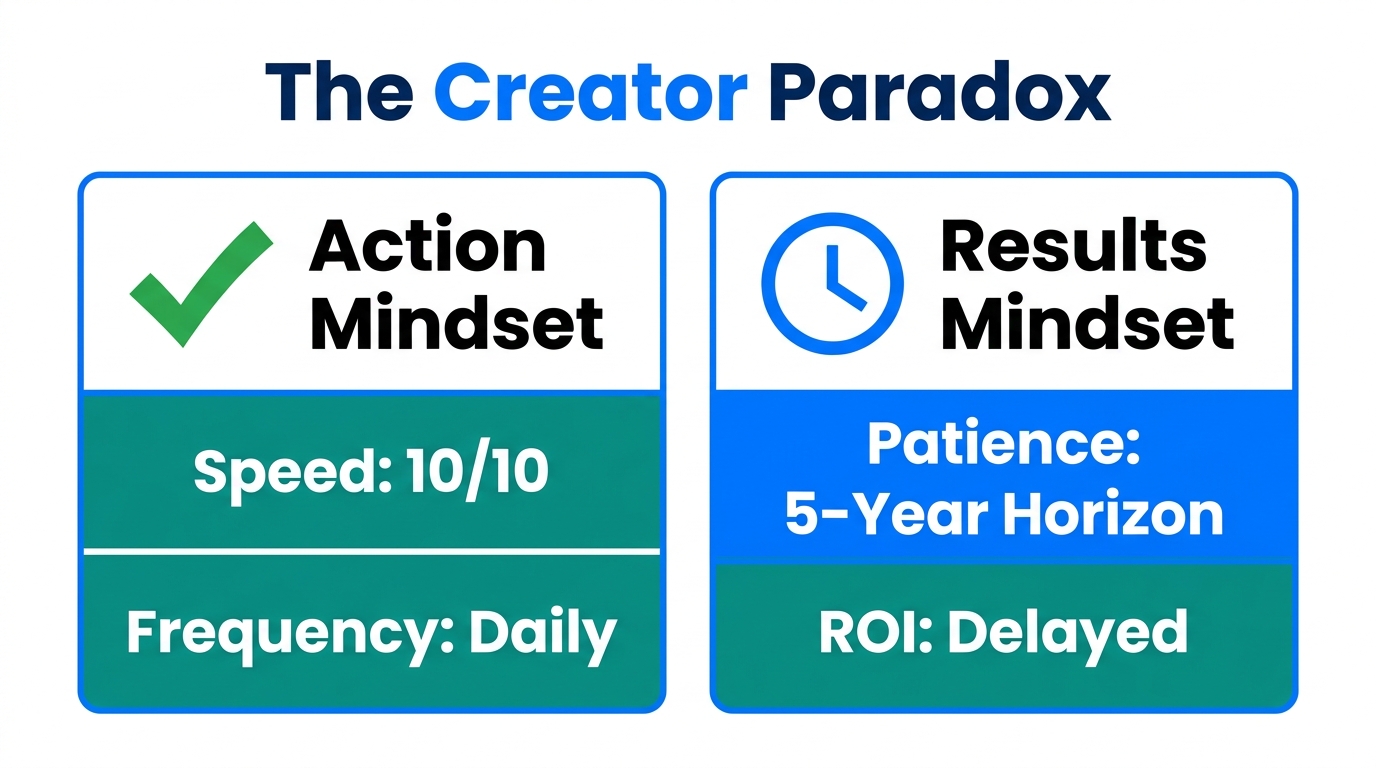
To successfully implement founder personal brand systems, you must embrace a paradox famously articulated by Naval Ravikant: Impatience with action, patience with results. This is the core of any high-growth content distribution strategy in 2026. You cannot be patient with your daily output. If you are waiting for the "perfect" time to film a video for Instagram or write a thread for X, you have already lost.
Think of it like an Uber ride. When you see on the app that your car is nine minutes away, you don't panic. You see it moving toward you on the map; you accept the timeline. Your brand growth works the same way. If you are taking the right daily actions, the result is already "on its way." You just have to stay at the curb.
The Robert Caro System: The Power of 1,000 Words
47:38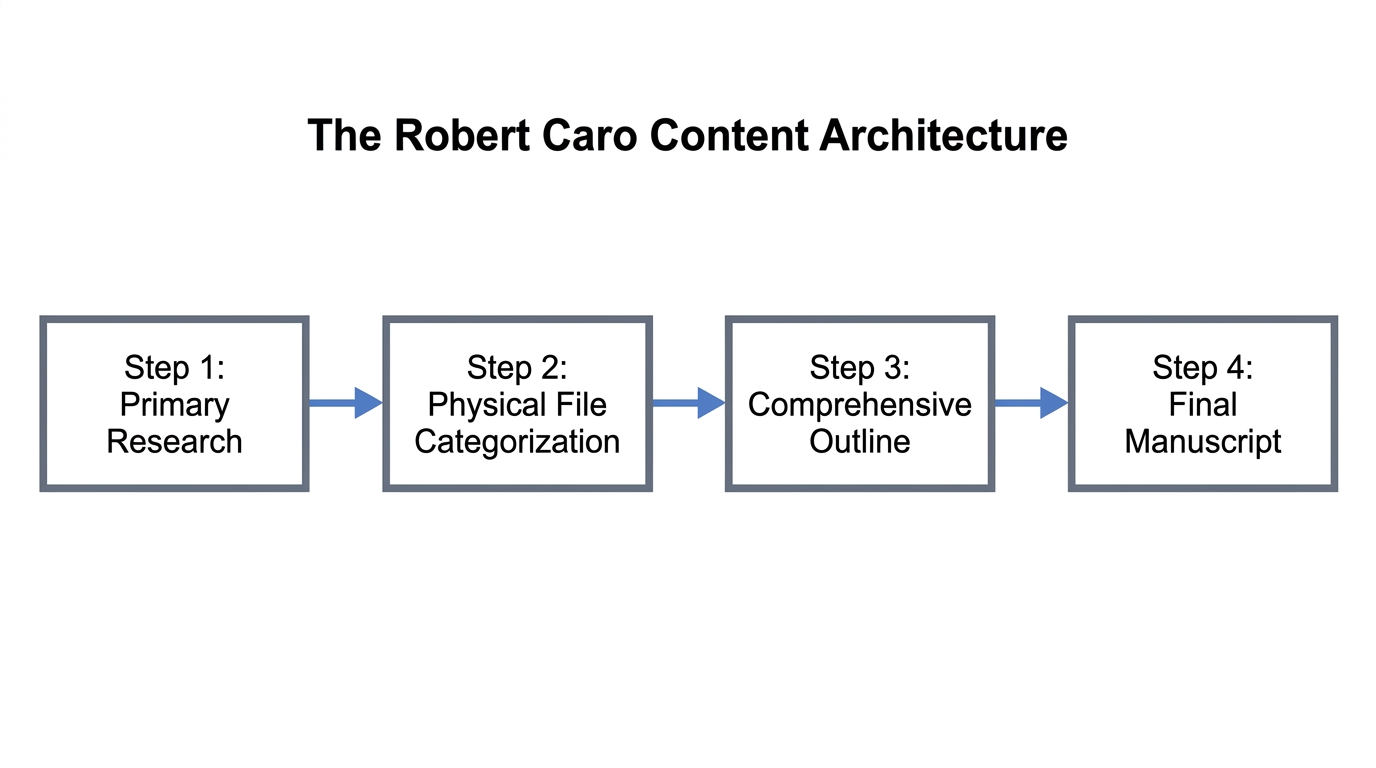
If you want to understand how massive projects get finished, look at Robert Caro, the Pulitzer Prize-winning biographer who wrote The Power Broker. Caro didn't write his 1,400-page masterpiece by waiting for the "muse." He used a simple, visual system to guarantee progress: 1,000 words every single day.
Caro kept a large desk calendar. Every day he hit his 1,000-word goal, he would mark a big 'X' on the date and record the exact word count (e.g., "1,243 words today"). This created a visible "chain" of success. This creator productivity framework is remarkably effective because it turns an abstract goal into a binary daily win. You either did the work, or you didn't.
| Feature | The Inspiration Model | The System Model (Caro/Martin) |
|---|---|---|
| Focus | Quality of today's output | Consistency of daily reps |
| Motivation | Feeling "ready" or "inspired" | The 1,000-word quota |
| Metrics | Likes, Shares, Comments | X's on the calendar |
| Long-term Goal | Going viral tomorrow | Building a 40-year legacy |
In 2026, this translates perfectly to founder content. Your 1,000 words might be 1,000 words of scripting, three recorded videos, or reaching out to five potential collaborators. When you use Stormy AI to discover and vet creators for your next campaign, you are essentially applying the Caro system to your influencer outreach—making it a repeatable, daily operation rather than a sporadic effort.
Creative Gym Sessions: The ‘No-Input’ Morning
41:38Tim Ferriss often speaks about the concept of "Creative Gym Sessions." The goal isn't to create a masterpiece every morning; it's to strengthen the creative muscle. In 2026, the biggest distraction is the "input"—the constant stream of Slack messages, ChatGPT notifications, and emails sitting in your Salesforce CRM.
To combat this, the highest-output founders use a No-Input Morning. This means from 7:00 AM to 9:00 AM, you do not check your phone, you do not open your browser, and you do not respond to messages. You focus entirely on creation. This is where you write your scripts, plan your strategy, or design your assets in Canva.
"All of man's problems stem from his inability to sit quietly in a room alone for 30 minutes. In 2026, those 30 minutes of silence are your greatest competitive advantage."
The benefits are more than just psychological. Data suggests that a screen-free morning can significantly improve memory and cognitive focus. One study showed individuals moving from the 50th to the 99th percentile in memory tests after a sustained period of reducing digital distractions. By treating your morning like a "creative gym," you ensure that your best energy goes toward building your own distribution, not reacting to someone else’s agenda.
Distribution Strategy 2026: Systems Over Vibes
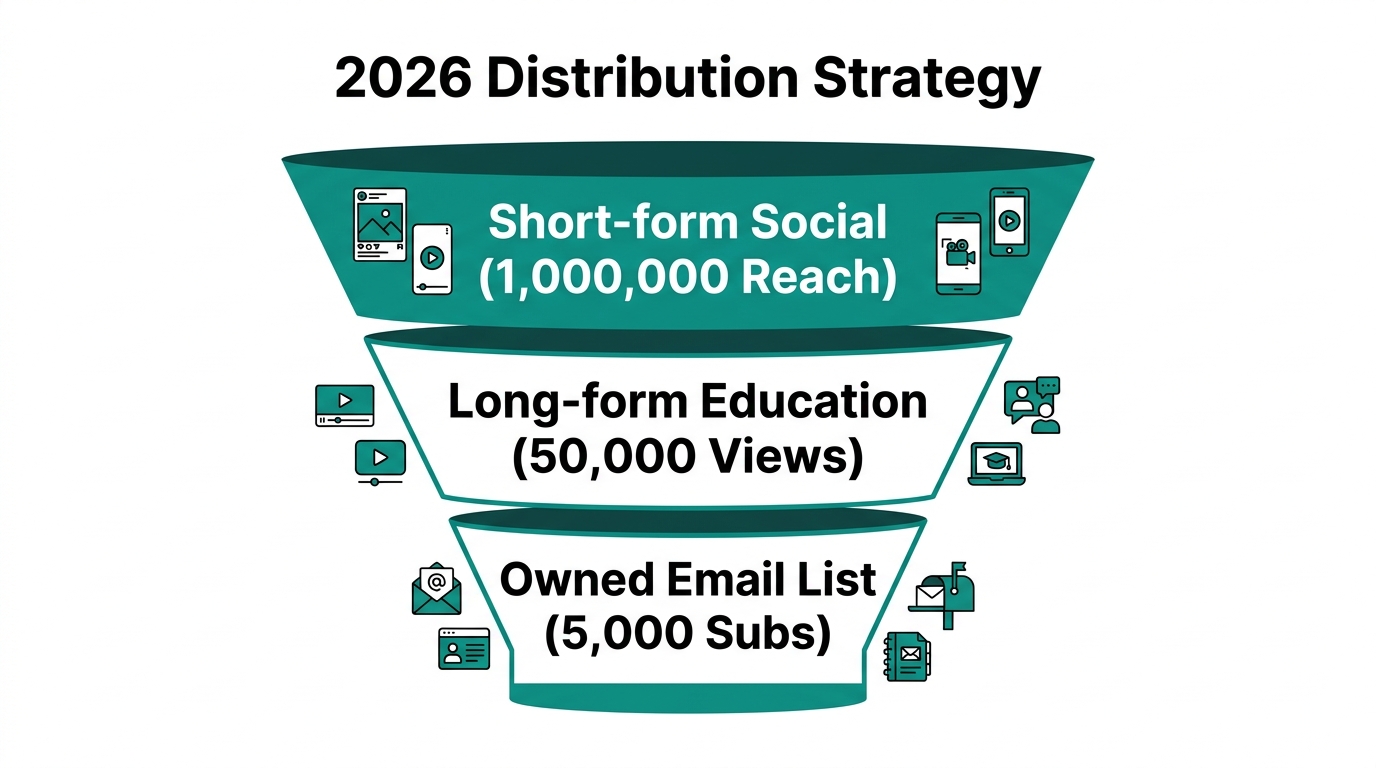
In 2026, "vibes" are no longer a viable distribution strategy. The market is too competitive. You need a content distribution strategy that leverages both human creativity and AI-powered efficiency. While you focus on your "1,000 words" or your "Creative Gym Session," you can use tools like Stormy AI to handle the heavy lifting of distribution and scaling.
For example, if your system involves collaborating with other creators to expand your reach, you shouldn't be manually searching for them. You can set up an AI Agent on Stormy to discover, vet, and outreach to creators every single day while you sleep. This allows you to maintain the 40-year mindset on the macro level while being incredibly impatient with your growth on the micro level. You pair your high-level writing with automated distribution through Meta Ads Manager or TikTok Ads Manager to ensure your "1,000 words" actually reach the world.
The 365-Day Playbook for Audience Growth
To move from theory to execution, you need a playbook. Follow these steps to build your own "X-on-the-calendar" chain for 2026:
Step 1: Define Your Quota
Don't set a goal to "be famous." Set a daily quota you can control. It might be writing for 60 minutes, recording one raw video, or sending ten outreach emails. Use Google Sheets or a physical calendar to track this.
Step 2: Implement the ‘No-Input’ Block
Protect your first 90 minutes of the day. No Gmail, no social media. If you are serious about a founder personal brand, this time is non-negotiable.
Step 3: Automate the Low-Value Work
Don't waste your creative energy on manual tasks. Use Stormy AI to find creators and manage your CRM. Use Shopify to automate your commerce and Google Ads to scale what works.
Step 4: The 12-Hour Reset
Once a month, perform a "phone fast." Spend 12 hours without a device, walking or sitting alone. This resets your dopamine receptors and often leads to your most profound business breakthroughs.
Conclusion: The Inevitability of Success
Success in the creator economy of 2026 isn't about being the smartest or the most "talented." It’s about being the most systemic. By adopting the Steve Martin 40-Year Mindset and the Robert Caro writing system, you remove the emotional volatility of entrepreneurship. You stop worrying about whether you'll make it and start focusing on whether you've put your 'X' on the calendar for today. Commit to the process, automate the distribution, and let the 40 years do the work.