In the high-stakes world of consumer goods, the difference between a billion-dollar brand and a forgotten prototype often comes down to speed and narrative. Eric Ryan, the mastermind behind Method, Olly, and Wellie, argues that many growth teams fail because they spend too much time 'managing' and not enough time 'making.' To break through the 'sea of sameness' found in retail aisles, modern startups must adopt a State of Make—a workflow designed to collapse months of product development into a single, high-intensity creative cycle.
This playbook explores how to implement a product distribution strategy that prioritizes rapid iteration, emotional storytelling, and the reduction of friction. By borrowing principles from mobile gaming and advertising, growth teams can outmaneuver corporate giants and secure distribution deals that once seemed impossible.
The 24-Hour Creative Cycle: Turning Trend Insight into Retail Reality
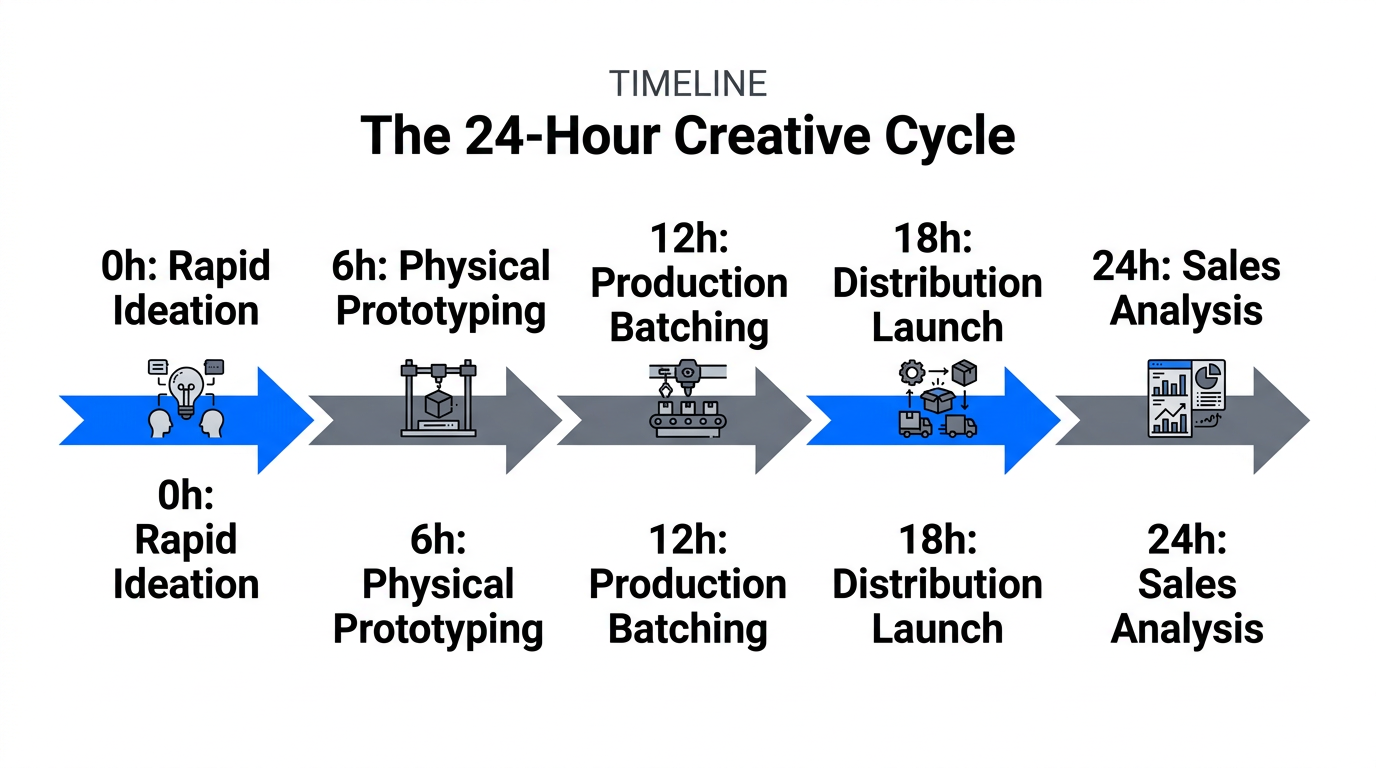
Most corporate product development cycles are slow, bogged down by committees and fear. To win, you must operate in a perpetual 'State of Make.' Eric Ryan’s secret weapon for securing partnerships with retailers like Target was a 24-hour turnaround that utilized global time zones to 'wow' buyers. This isn't just a sales enablement tactic; it's a fundamental shift in startup operations.
The process begins with 'Trend Trips' to innovation hubs like Tokyo or London. Instead of just taking photos, the team is given a 'scavenger hunt' assignment: find specific cultural shifts that haven't hit their category yet. By 5:00 PM local time, the team selects the best ideas at a 'happy hour' session. These are immediately called into a creative team in a different time zone (like San Francisco), who work on the briefs while the scouting team sleeps. By breakfast the next morning, the team has polished, high-fidelity mockups to present to retail executives.
"The speed of the turnaround is the wow factor. Most people deliver mock-ups two weeks later when the emotion is gone. Doing it in 24 hours is the entrepreneurial juice that wins."
| Phase | Traditional Development | The State of Make (24hr) |
|---|---|---|
| Trend Sourcing | Market research reports (3 months) | Real-world scavenger hunts (8 hours) |
| Design Iteration | Agency back-and-forth (4 weeks) | Global overnight design relay (12 hours) |
| Buyer Presentation | Slide decks and spreadsheets | Polished physical mockups (Next morning) |
| Decision Speed | Quarterly reviews | Immediate emotional 'Yes' |
The 'Time to Fun' (TTF) Metric: Reducing Customer Friction
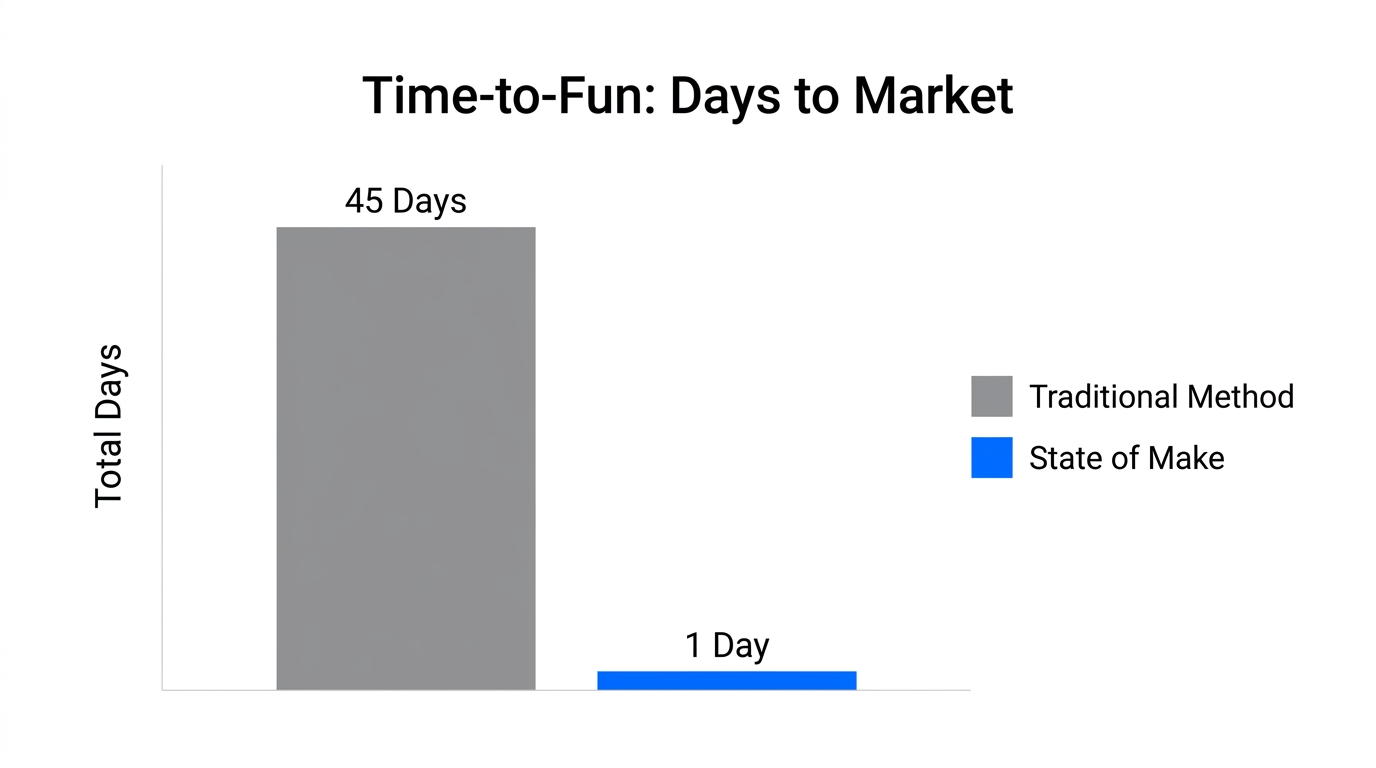
In mobile gaming, Nintendo masters the 'Time to Fun' (TTF)—the number of seconds it takes from opening the app to the first satisfying interaction. Ryan argues that this metric should be applied to every customer acquisition strategy. Whether you are selling a vitamin or opening a restaurant, the goal is to eliminate the 'registration screens' of real life.
If your TTF is too long, you lose the customer before the value proposition hits. For a retail brand, this might mean the unboxing experience or the immediate scent of a product. For a restaurant, it’s the 'arrival drink' or a free sample the moment a guest walks in. Reducing friction is a growth hacking technique that builds instant loyalty.
Selling the Farm, Not the Chicken: Narrative-Led Sales
When entering a saturated category, you cannot just be 'better'; you must be different. Most brands focus on features (the 'chicken'), while successful brands focus on the story (the 'farm'). This framework moves the product from a commodity to an object of desire. For example, in the fiber category, legacy brands like Metamucil focus on the 'disease' or the 'function.' A modern growth team would 'swerve out,' focusing on metabolism, clean systems, and lifestyle aesthetics.
To build a narrative that sticks, you must find the intersection of altruism and narcissism. The consumer buys it because they love how it looks on their counter (narcissism), but they stay because they feel good about the sustainability or health benefits (altruism). Tools like Canva or Figma are essential for bringing these narratives to life visually before a single unit is manufactured.
"Don't sell the chicken, sell the farm. We don't want to think about the chicken because we murdered it. We want to think it had a good life on a beautiful, aesthetic farm."
Building 'Artisan Operator' Teams
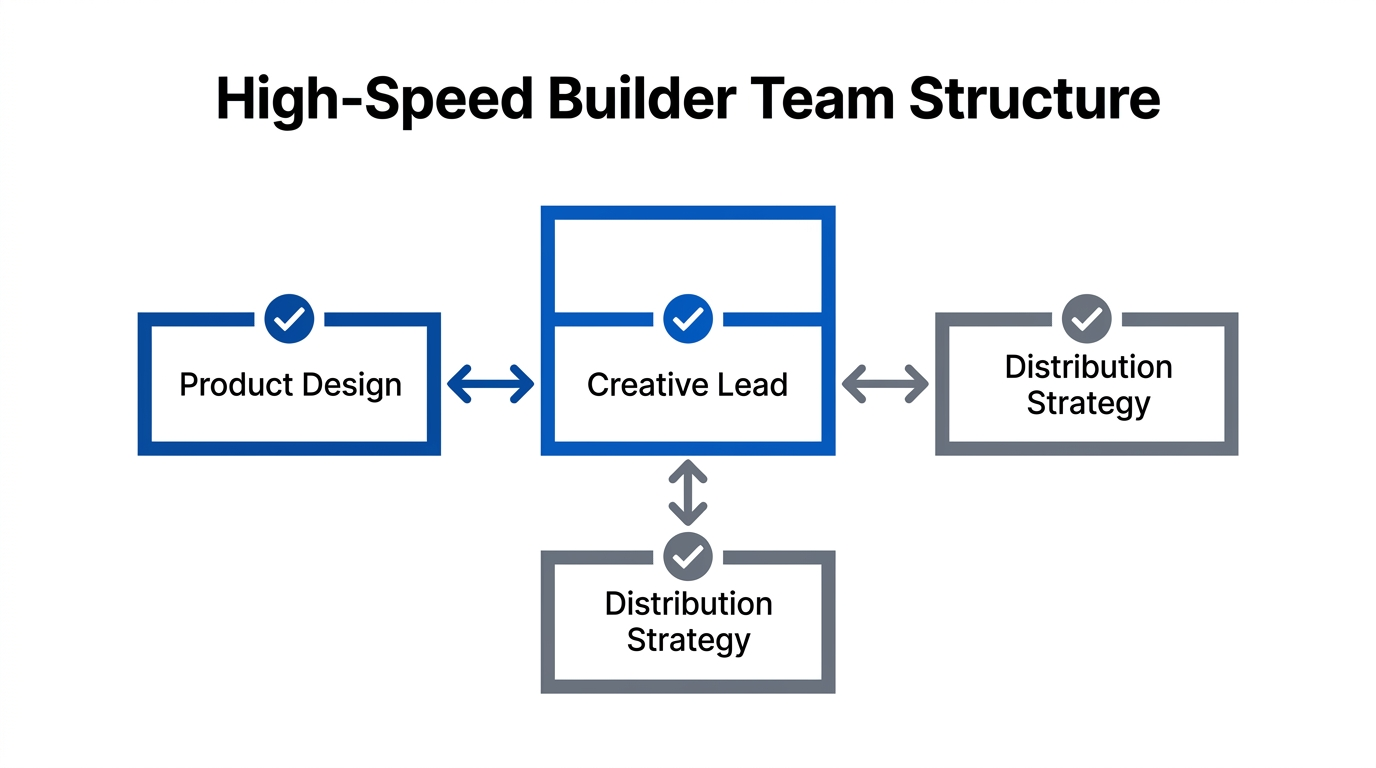
Corporate environments are filled with managers, but startups need builders. Ryan advocates for 'Artisan Operators'—teams that possess incredible imagination and creativity but can also run a predictable business with tight financial controls. High-speed product distribution strategy requires small, agile teams that can live in the uncertainty of a 'State of Make.'
When hiring, look for people who can handle non-linear growth. Many accomplished CEOs from large corporations struggle because their careers have been linear: do X, get Y. In a startup, you often push water uphill for six months before a breakthrough occurs. To manage these creator relationships and source the right talent to promote your brand, platforms like Stormy AI can help source and manage UGC creators at scale, ensuring your 24-hour creative cycle has the talent it needs to fuel social momentum.
The 'Consumer Audition' Playbook
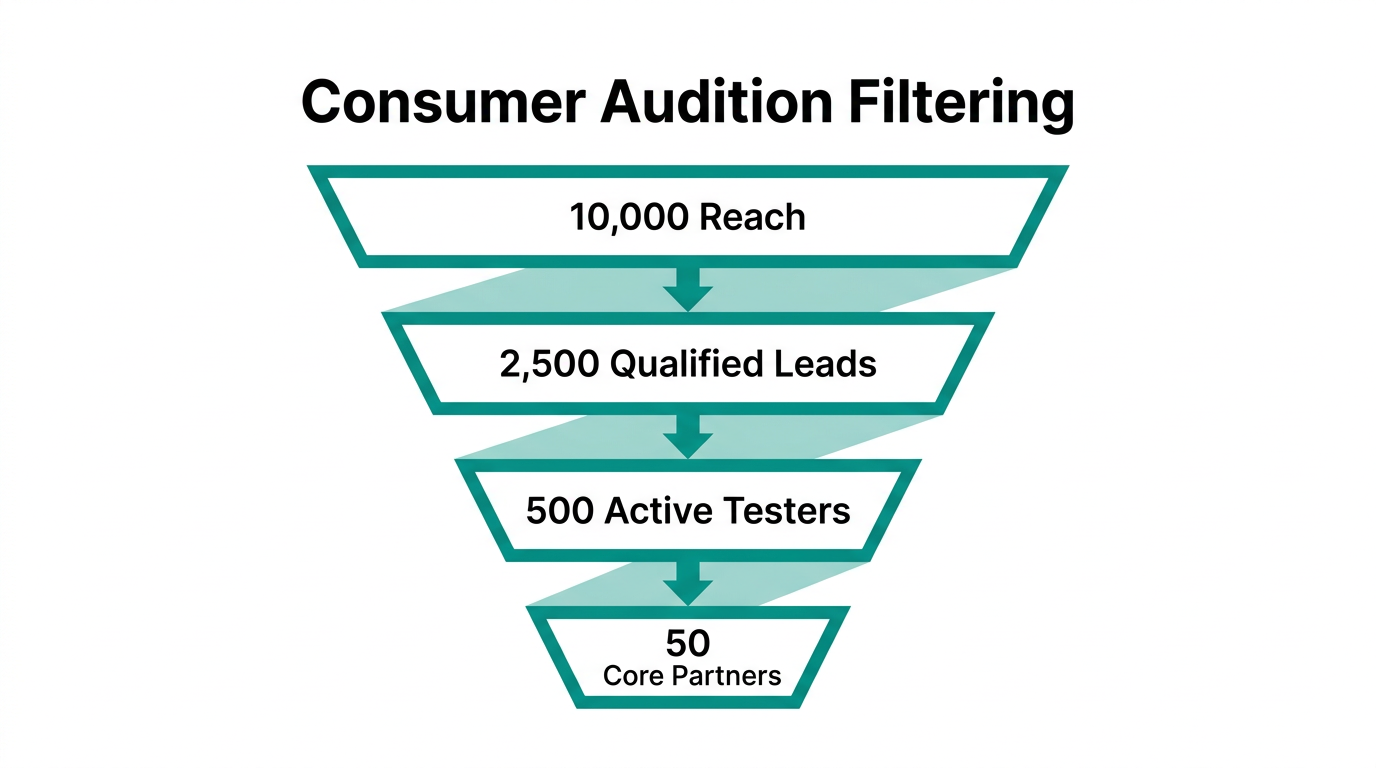
Before a full-scale launch, conduct Consumer Auditions. This is not the same as a traditional focus group. In an audition, you are looking for qualitative feedback to 'improve' rather than 'prove.' You are testing the creative tension between two disparate ideas. The further apart the two ideas are—like 'Eco' and 'Chic'—the more powerful the potential brand.
Step 1: Identify the Cultural Shift
Look for a macro trend that the category has missed. Is it the 'lifestyling' of the home? The 'spiritualization' of fitness? Use platforms like TikTok and Instagram to spot these shifts in real-time before they hit the mass market.
Step 2: Create Creative Tension
Take two unrelated dots and connect them. What if a vitamin bottle looked like a piece of high-end furniture? What if a bandage was a fashion accessory? The more disparate the ideas, the higher the tension.
Step 3: Test the 'One Change' Rule
If you throw a consumer three eggs, they will drop all of them. Only change one major thing about a familiar category. If you change the shape, the color, and the function all at once, the product becomes too novel and foreign.
Conclusion: Embracing the State of Make
Scaling a brand in today’s surplus world requires more than a good product; it requires a superior workflow. By adopting the 24-hour creative cycle and focusing on the TTF metric, growth teams can create products that feel both familiar and novel. Remember, the goal of sales enablement is to transfer emotion. If you aren't excited by the 'make,' your customers won't be either.
As you scale your outreach and build your 'farm' narrative, remember that modern tools like Stormy AI can streamline the discovery and vetting of the creators who will eventually tell your story to the world. Stop managing the process and start making the product. The retail aisles are waiting for something different.