In the high-stakes world of startup scaling, the gap between a successful exit and a quiet shuttering often comes down to one metric: efficiency in customer acquisition. For years, growth leads have relied on static automation tools like Zapier to bridge the gap between platforms. However, as we move into 2025 and 2026, the paradigm is shifting. We are no longer just automating tasks; we are orchestrating intelligence. With the release of Claude Code, a terminal-based interface that allows developers and marketers alike to interact with their entire codebase and API stack through natural language, the barrier to building sophisticated, internal ad tech for startups has vanished. According to the Digital Marketing Institute, 92% of businesses are now investing in generative AI to maintain a competitive edge, signaling that the era of manual ad management is officially over.
The Agentic Shift: Moving Beyond Static Automation
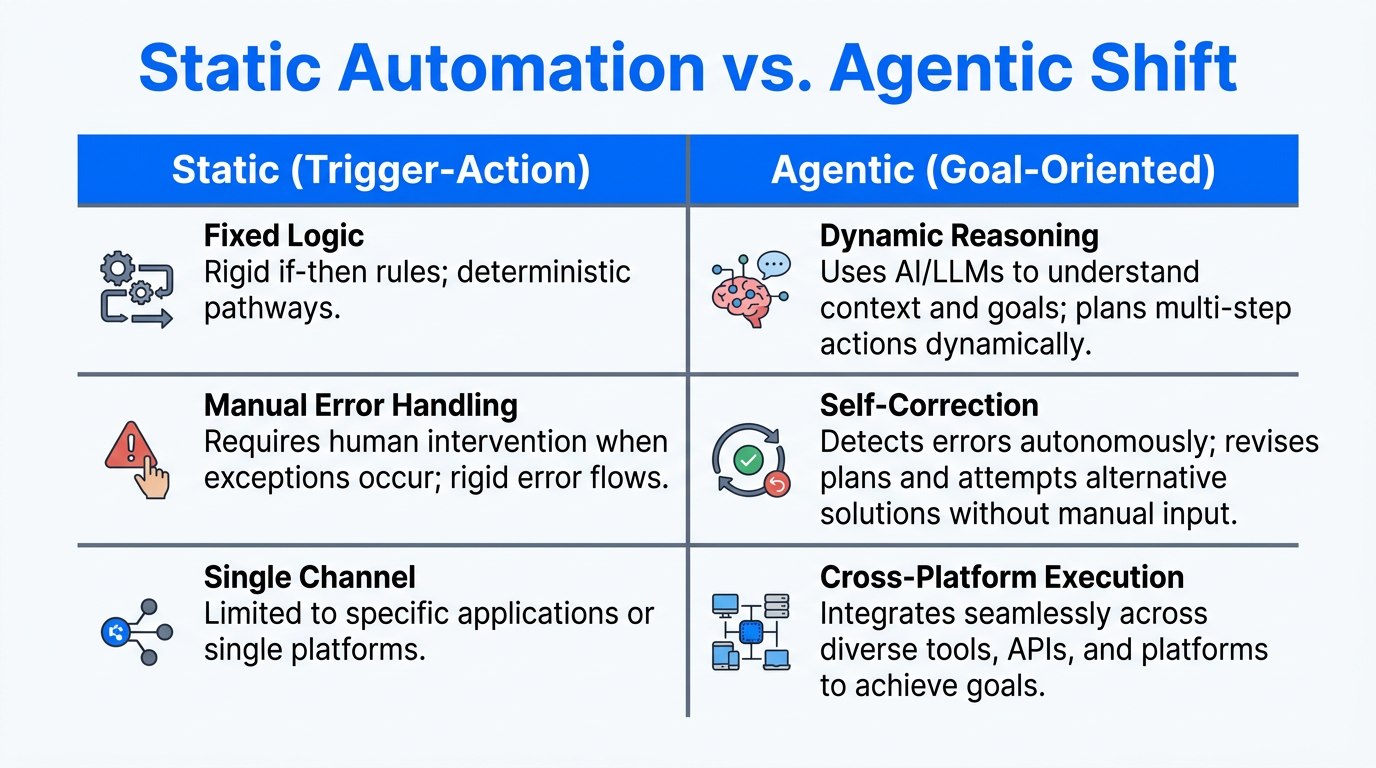
Traditional marketing automation has long been defined by "if-then" logic. You trigger a lead in a CRM, and an email follows. While useful, this linear approach fails when faced with the multi-dimensional complexity of modern growth marketing strategy. Enter autonomous AI agents. Unlike static workflows, these agents can reason, pivot, and execute multi-step processes without human intervention for every micro-decision.
By leveraging Claude Code, startups can build what Gartner calls "AI-Driven Workflow Orchestration." This isn't just about writing copy; it's about building a system that monitors ROAS (Return on Ad Spend) in real-time and automatically refines targeting parameters. The data back this up: startups using AI-driven automation report 20–30% higher ROI than those clinging to legacy methods. In fact, Taboola reports that the average return for AI-integrated marketing is now $5.44 for every $1 spent.
"The shift from static triggers to agentic reasoning is the single most important transition for growth teams since the advent of the tracking pixel."
Claude Code CLI: Building Your Internal Ad-Tech Powerhouse
The most intimidating part of ad tech for startups used to be the technical debt. Building a custom tool to manage Google Ads or Meta Ads required a dedicated engineering team. Claude Code changes this by allowing non-technical founders to act as software architects. By using the Claude Code CLI, you can generate full Python scripts that interact with marketing APIs simply by describing the desired outcome.
The Power of 30 Seconds
Consider the production of ad variants. In a traditional setup, a creative lead might spend 30 minutes crafting a dozen variations for an A/B test. Using Claude-powered workflows, teams at Generation Digital have successfully reduced this production time from 30 minutes to 30 seconds per variant. This 60x increase in speed allows for hyper-experimentation, which is the lifeblood of early-stage growth.
| Feature | Traditional Automation (Zapier/Make) | Agentic Orchestration (Claude Code) |
|---|---|---|
| Logic | Linear If/Then triggers | Autonomous reasoning and decision making | Data Connectivity | API-to-API via rigid connectors | Direct codebase and live API navigation via MCP | Creative Input | Static templates | Dynamic generation based on live performance data | Maintenance | High (breaks when UI changes) | Self-correcting through agentic feedback loops |
Model Context Protocol (MCP): The Secret Sauce for Real-Time Data
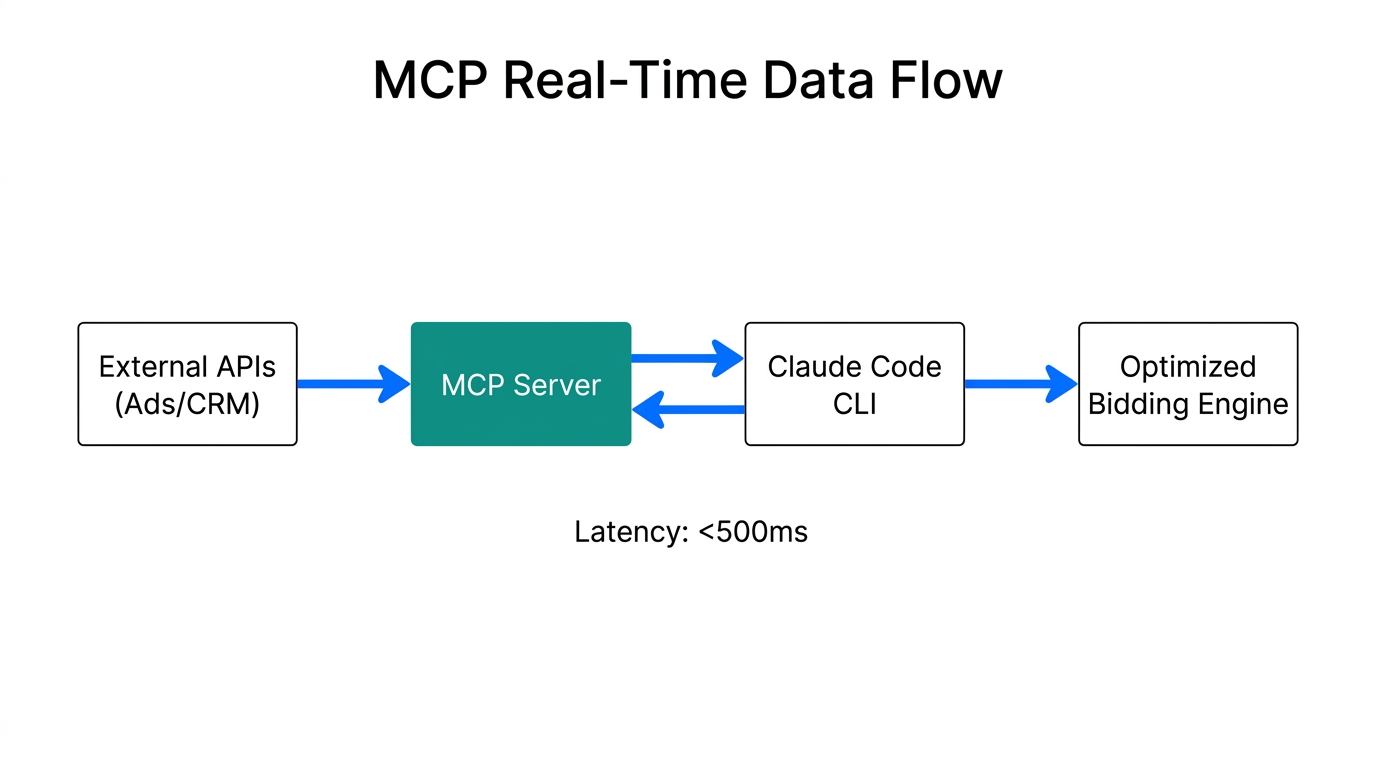
One of the biggest hurdles for autonomous AI agents has been accessing data outside their training set. The Model Context Protocol (MCP), introduced in 2025, solves this. MCP allows Claude to connect directly to your external data sources—be it Google Ads, Meta Ads, or your internal CRM—without the need for custom middleware or complex backend engineering.
For a growth lead, this means you can prompt Claude to: "Analyze our Meta Ads spend for the last 24 hours. Identify the bottom 20% of campaigns by ROAS and reallocate that budget to the top 2 campaigns." Because of MCP, the agent doesn't just suggest the change; it can execute it directly within the ad manager interface. This creates a closed-loop system where your growth marketing strategy evolves faster than any human-managed campaign could.
"AI-generated ads now deliver click-through rates (CTR) on par with human-made ads, hovering around 0.76% compared to the human average of 0.65%."
Case Study: How Genspark Hit $36M ARR in 45 Days
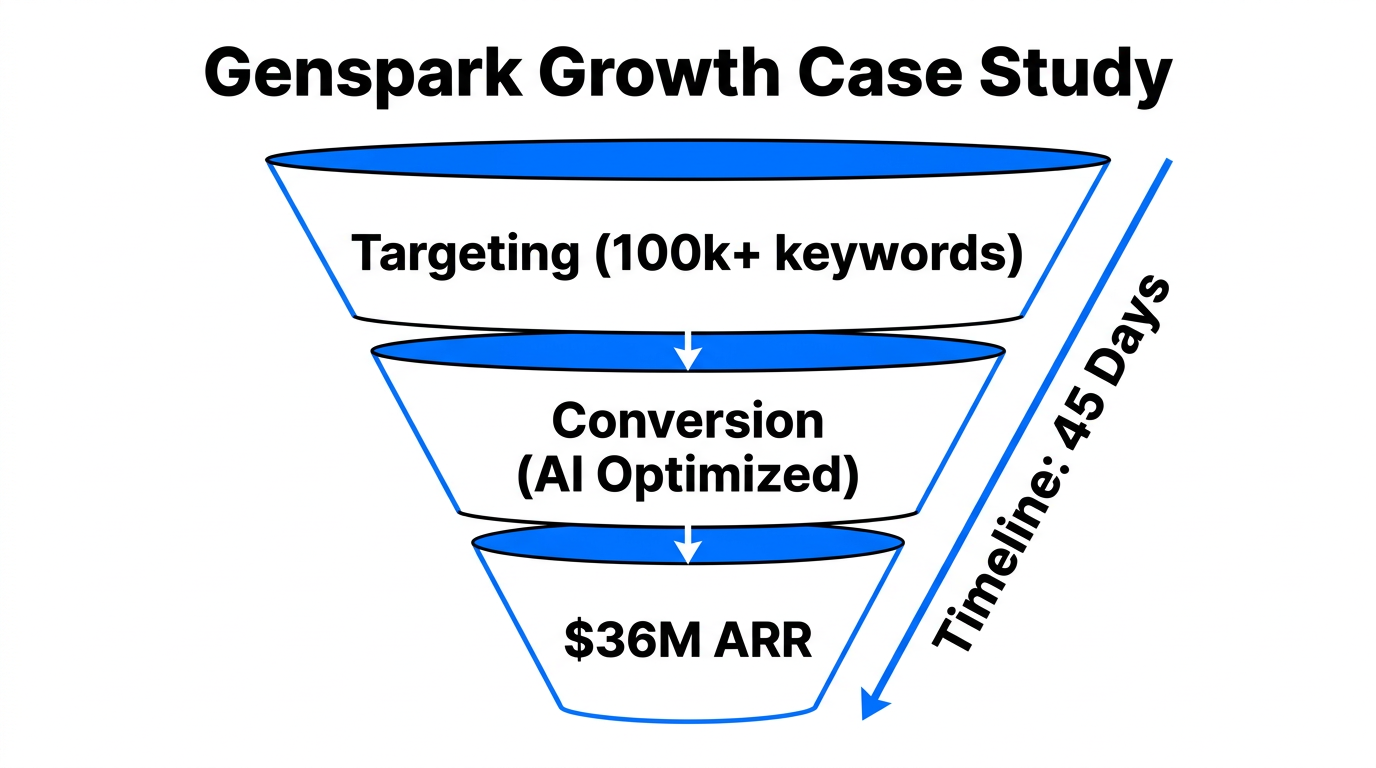
The theoretical power of Claude Code is best illustrated by the success of Genspark. By building a multi-agent system with Claude as the central coordinator, Genspark was able to automate complex search-driven ad workflows. They didn't just automate the bidding; they automated the entire intent-discovery process.
The system used autonomous AI agents to scan trending search queries, generate matching landing pages using tools like Framer, and deploy targeted ads across search engines. The result? $36M ARR within 45 days of launch. This level of scale is impossible with manual labor, proving that agentic orchestration is the ultimate leverage for modern startups. This approach also integrates perfectly with high-quality creator content; for example, platforms like Stormy AI can be used to source authentic UGC creators whose content then feeds into these automated AI ad engines.
The 'Set and Forget' Trap: Maintaining Brand Integrity
While the speed of marketing automation is intoxicating, it comes with risks. Over-automating without a human-in-the-loop strategy can lead to "brand drift" or, worse, significant financial waste. Experts at Hashmeta warn that failing to monitor performance creates "blind spots" where AI might optimize for the wrong metrics, such as high CTR but low-quality leads.
To avoid this, startups should implement process integrity checks. João Sobreira, co-founder of Advolve, notes that Claude is often preferred over other models because of its superior reasoning in orchestrating these complex checks. Instead of letting the AI publish directly, set up a "Review & Approve" gate where a human marketer audits the top-performing creative variants every 48 hours to ensure they align with the evolving brand voice.
Step-by-Step: Setting Up Your Automated Growth Stack
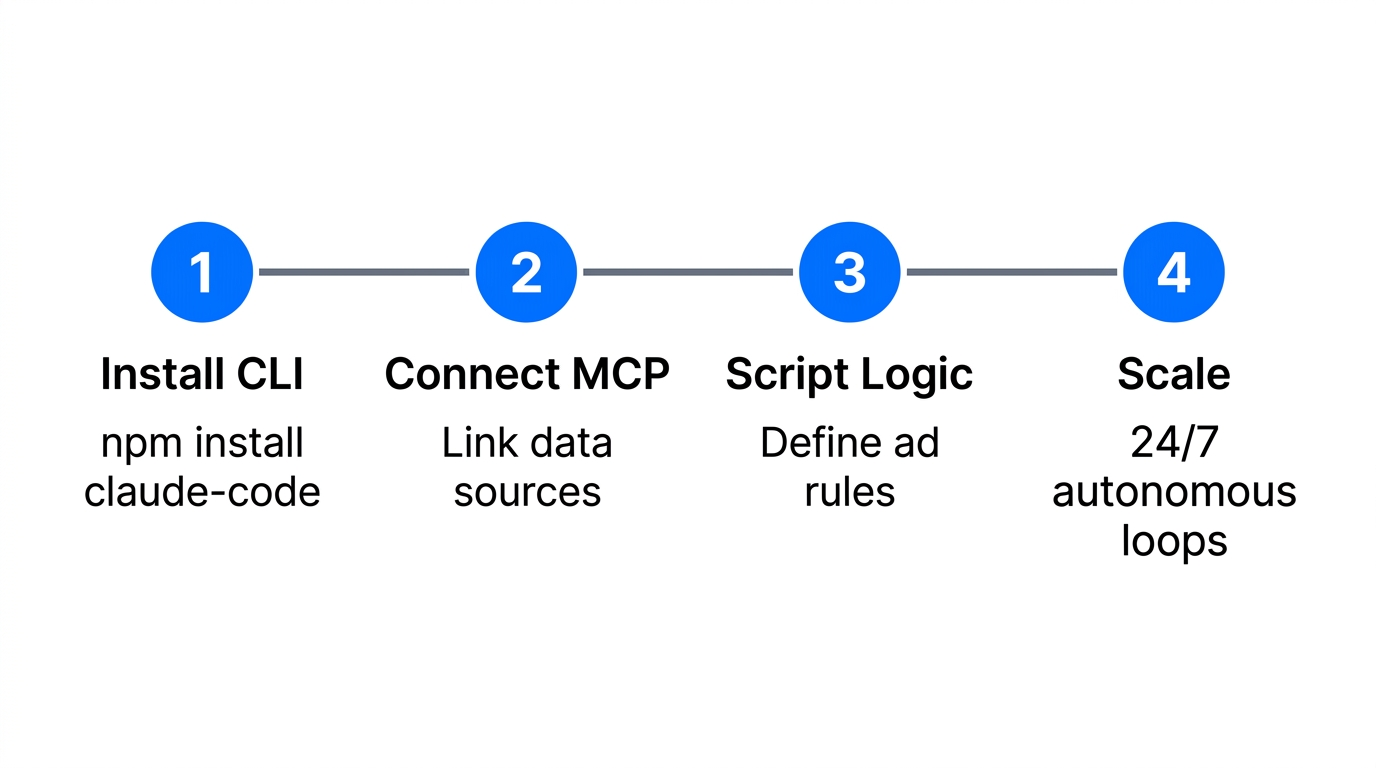
Ready to transition from manual workflows to agentic orchestration? Follow this playbook to build your first automated ad-tech tool using Claude Code.
- Install the Claude Code CLI: Follow the official documentation to get the terminal interface running on your local machine.
- Connect Your Data Sources: Use the Meta Ads MCP Server to allow Claude to read and write to your ad accounts.
- Define Your Brand Guidelines: Create a markdown file containing your brand voice, prohibited words, and target personas. Claude will use this as a "source of truth" for all creative generation.
- Chain Your Models: Use Claude as the "Central Brain" to orchestrate other tools. For instance, have Claude write a script, then send it to ElevenLabs for voiceover and Kling AI for video snippets.
- Scale with Creators: Partner with influencers to ensure your automated ads always have a fresh supply of authentic human content to remix.
"The most successful startups of 2026 won't have the biggest marketing teams; they'll have the most efficient agentic workflows."
Conclusion: The Future of Growth is Agentic
The transition from static marketing automation to autonomous AI agents is not a luxury; it is a necessity for any startup aiming for explosive growth. Tools like Claude Code and protocols like MCP have democratized access to high-tier ad tech for startups, allowing small teams to operate with the sophistication of global agencies. By combining the reasoning power of Claude with a robust growth marketing strategy and high-quality human creative sourced through platforms like Stormy AI, founders can build a growth engine that scales as fast as their ambitions. Remember: the goal is not to replace the marketer, but to amplify them. Keep a human in the loop, maintain data hygiene, and let the agents handle the heavy lifting of scale.