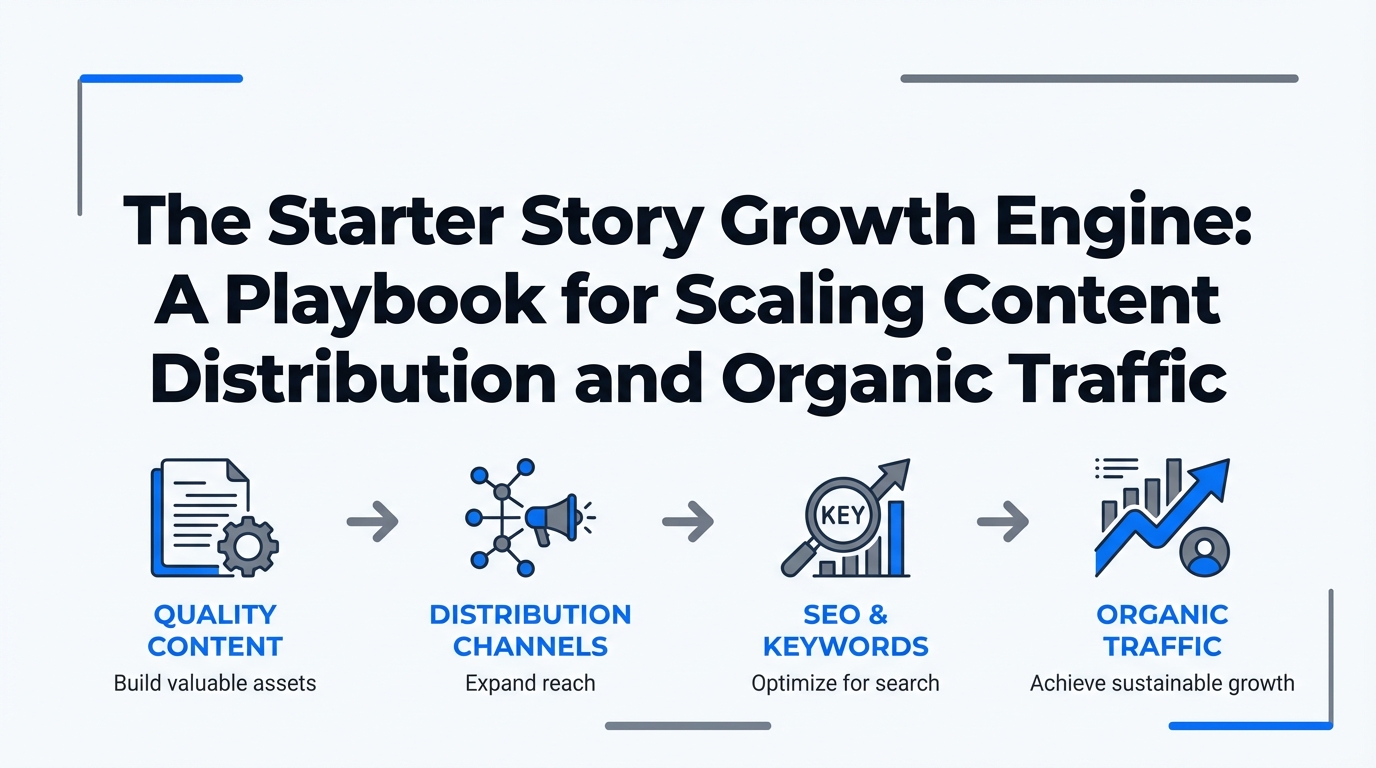
When Pat Walls started Starter Story in a New York City Starbucks, he wasn't just building a blog; he was engineering a high-velocity content distribution strategy. What began as a side project fueled by 6:00 AM coffee runs eventually scaled into a media platform reaching millions of visitors, culminating in a life-changing acquisition by HubSpot. The secret wasn't a single viral hit or a massive ad budget. Instead, it was a meticulous content marketing playbook rooted in consistency, automated workflows, and a unique approach to user-generated content (UGC) that any founder can replicate to drive organic traffic growth.
The Deep Work Framework: Building the Foundation of Consistency
Before the millions of visitors and the acquisition, there was a simple ritual: two hours of uninterrupted Deep Work every morning. Walls credits his success not to "luck," but to the compounding effect of showing up daily. For content marketers, the lesson is clear: consistency is the only non-negotiable variable in the growth equation. By dedicating the first hours of the day to the most needle-moving tasks—writing, coding, and interviewing—he built a momentum that eventually became unstoppable.
This disciplined approach allowed Walls to manage a full-time developer job while simultaneously building a scaling media platform. By focusing on high-leverage activities during these deep work sessions, he ensured that every hour spent in that Starbucks was contributing to the eventual organic traffic growth of the site. It wasn't about being "busy"; it was about being productive in ways that moved the revenue and traffic needles.
"I’d sit right there every single morning and put in two hours of deep work before I started my job. It wasn’t impressive at all, but it was consistent."
The Interview Loop: Scaling UGC for SEO Success
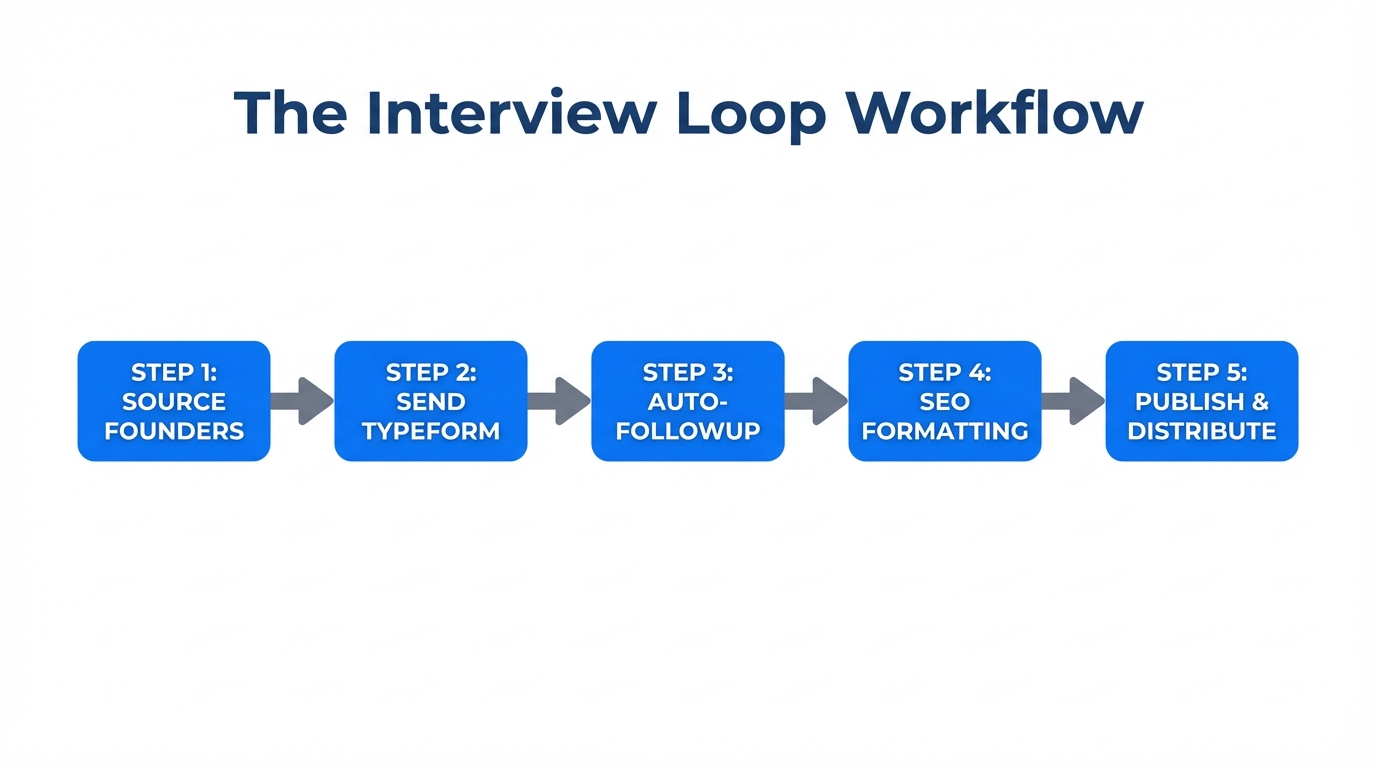
The core of the Starter Story marketing engine is what we call the "Interview Loop." Rather than writing every article from scratch, Walls created a system where founders provided the content. This is essentially a form of structured user-generated content (UGC). By sending out standardized but deep-dive questions to successful entrepreneurs, Starter Story generated thousands of high-quality case studies with minimal editorial overhead.
This strategy solves the two biggest problems in content marketing: volume and quality. Because the content comes directly from the source (the founders), it is inherently authentic and valuable. Because it follows a structured format, it can be processed and published at a scale that a traditional editorial team could never match. This "always be shipping" philosophy is central to their content distribution strategy.
| Strategy Component | Traditional Media | The Starter Story Model |
|---|---|---|
| Content Creation | Expensive Staff Writers | Founder-Generated UGC |
| Production Speed | Slow/Polished | High-Volume/Structured |
| SEO Focus | Broad Keywords | Thousands of Long-Tail Case Studies |
| Scalability | Linear (Hire more writers) | Exponential (Automated Loops) |
Why the Loop Works for SEO
From an SEO perspective, this model is a goldmine. Each interview targets specific, long-tail, founder-focused keywords. Whether someone is searching for "how to start a Shopify store" or looking for specific revenue breakdowns of niche businesses, Starter Story has a dedicated page for it. This granular targeting allows the platform to rank for thousands of keywords that competitors ignore.
SEO Strategies for Media Companies: Ranking for Niche Keywords
To achieve massive organic traffic growth, you cannot simply compete for the most popular head terms. You must own the long-tail. Starter Story’s content marketing playbook focuses on creating a "moat" of data-rich case studies. Each interview acts as a landing page optimized for specific intent. By leveraging tools like Google Ads keyword data and organic search trends, they identify what aspiring entrepreneurs are searching for and feed those insights back into their interview funnel.
For brands looking to source these types of creators or business owners at scale, using AI-powered tools can significantly reduce the friction of discovery. For example, platforms like Stormy AI can help marketing teams discover and vet creators who fit specific niches, making it easier to build your own version of an "interview loop" or ambassador program. While Walls built his list manually in the early days, modern growth teams use AI to automate the identification of high-quality profiles across TikTok, YouTube, and LinkedIn.
"The goal was never just money. It was to build something bigger than myself... something that didn't depend entirely on me."
The Case Study Advantage
Case studies are the ultimate lead generation and brand-building tool. They provide social proof that is impossible to fake. When a reader sees a successful founder detailing their exact revenue, tech stack (using tools like Stripe or Klaviyo), and marketing hurdles, they don't just consume content—they build trust with the platform. This trust is what allowed Starter Story to transition from a simple blog to a premium subscription business and eventually a high-value acquisition target.
Scaling Organic Reach Through Volume: The "Always Be Shipping" Philosophy

A major differentiator in the Starter Story marketing strategy is the sheer volume of output. While many media companies obsess over a single "perfect" piece of content per week, Walls optimized for consistent shipping. This approach acknowledges that you cannot always predict what will go viral or rank #1. By increasing the number of "shots on goal," you increase the probability of success.
Scaling through volume requires a shift from a "creative" mindset to a "systems" mindset. This involves:
- Automated Outreach: Using templates and sequences to contact potential interviewees.
- Structured Onboarding: A seamless process for founders to submit their stories.
- Team Delegation: Moving from a solo founder to a team of editors and managers.
- Multi-Channel Distribution: Repurposing one interview into newsletters, social snippets, and video content.
When HubSpot acquired Starter Story, they weren't just buying a website; they were buying a distribution engine. They saw a platform that could reliably produce high-quality content that attracted their core demographic of small business owners and entrepreneurs. The alignment between the two companies was rooted in a shared mission: helping businesses grow through better storytelling and resources.
Step-by-Step Playbook for Your Media Platform
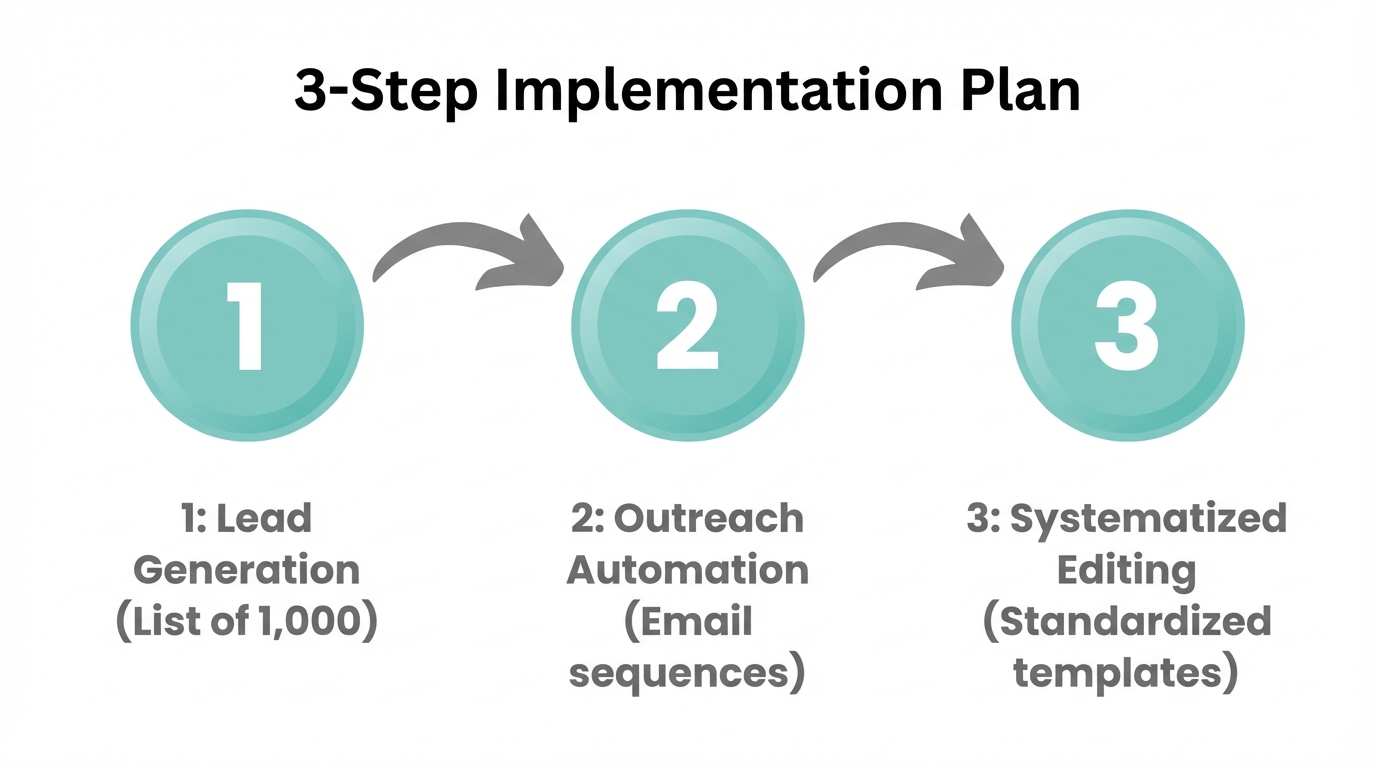
Step 1: Define Your Content Loop
Identify a format where others provide the value. This could be interviews, data aggregations, or community-led discussions. Structure this format so it is repeatable and requires minimal editing. The goal is to create a template that maintains quality while allowing for high-volume output.
Step 2: Optimize for Long-Tail SEO
Don't just write about "marketing." Write about "how a niche SaaS used TikTok Ads to reach $10k MRR." Use specific titles that match exact user searches. Each piece of content should answer a specific question for a specific sub-niche of your audience.
Step 3: Systematize Distribution
Once an article is live, where does it go? Create a checklist for every post: blast to the email list (using Beehiiv or similar), post snippets to LinkedIn, and create a thread on X. Distribution is 80% of the battle; writing is only 20%.
Step 4: The Deep Work Ritual
Block out 90-120 minutes every single day for "shipping." No meetings, no emails, no distractions. Use this time exclusively for the tasks that build your content engine. If you can’t commit to two hours, start with thirty minutes—but never miss a day.
"Quitting and freedom... I thought that was the goal, but it was really just the beginning."
Conclusion: From Side Project to Acquisition
The story of Starter Story is a masterclass in content marketing for the modern era. It proves that you don't need a massive team to build a massive audience—you need a better system. By leveraging the power of Deep Work, creating a scalable UGC interview loop, and obsessively focusing on long-tail SEO, Pat Walls built a sellable asset that eventually caught the attention of a tech giant like HubSpot.
For founders and marketers today, the takeaway is simple: stop looking for the viral hit and start building the engine. Whether you are using a creator CRM to manage your contributors or simply grinding out interviews in a coffee shop, the principles remain the same. Show up, ship content, and let the numbers compound. Your life, and your business, can change in just a few short years of consistent effort.