In the hyper-accelerated media landscape of 2026, the shelf life of a traditional brand narrative is shorter than a trending sound on TikTok. Founders and influencers alike are finding that 'authority' is no longer a static achievement but a moving target that requires a constant recalibration of substance and spectacle. To survive this cycle, the most successful brands have adopted a mental model known as 'Stake and Sizzle.' This framework, popularized by distressed debt investors but perfected by modern media moguls like Scott Galloway, provides a blueprint for pairing core safety with explosive, viral upside.
Defining the Stake and Sizzle Model: Substance vs. Optionality
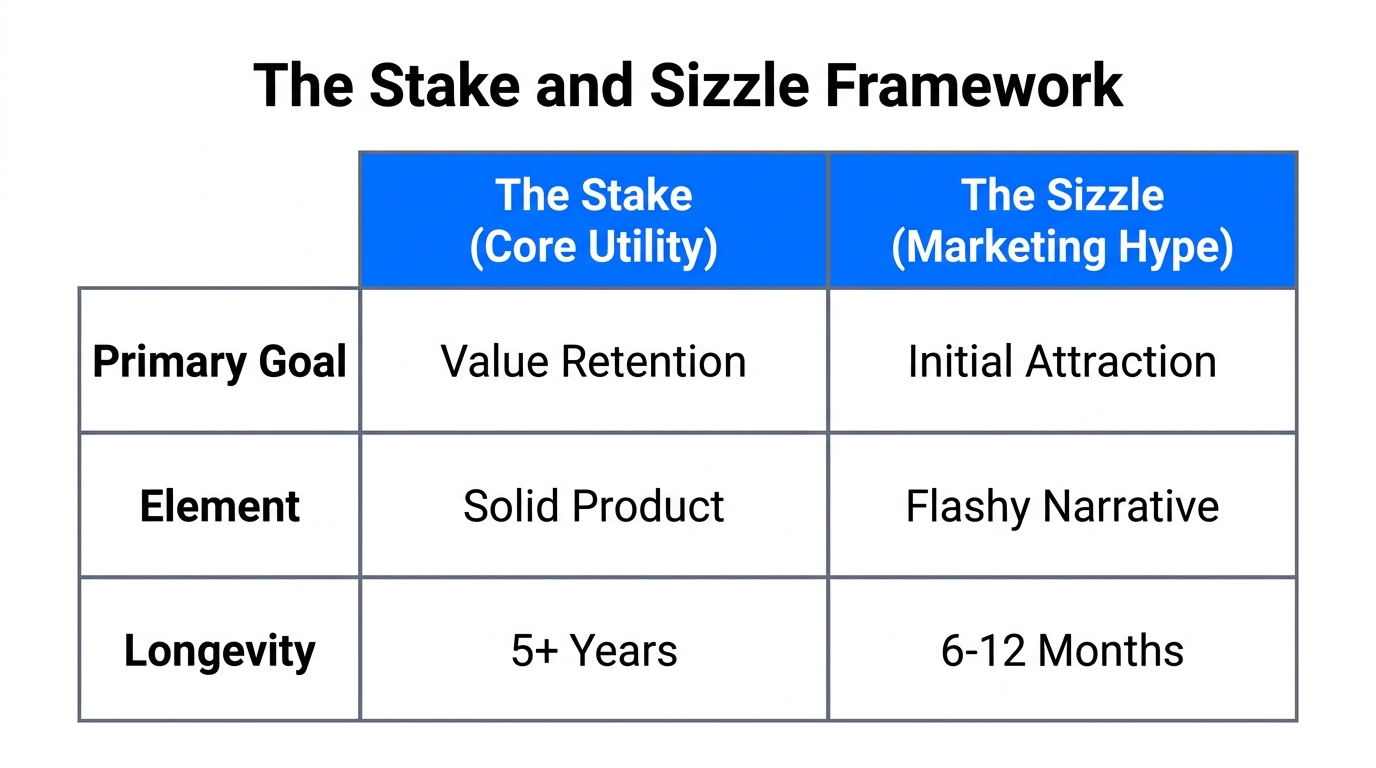
To build a resilient brand in 2026, you must understand the dichotomy between what keeps you safe and what makes you rich. In the world of distressed investing—where investors buy debt from bankrupt companies—the 'Stake' is the known value. It is the cold, hard cash or physical assets that ensure you don't lose your shirt. The 'Sizzle' is the unpriced optionality—the 'what if' that could turn a 2x return into a 40x windfall.
Consider the recent shift in the FTX recovery narrative. In 2023, FTX was a radioactive brand, synonymous with fraud and 'bad business.' By 2026, the narrative has shifted toward one of the most successful distressed recoveries in history, as detailed in recent Reuters analysis of the bankruptcy proceedings. Investors who bought FTX claims at 20 cents on the dollar weren't just buying a bankruptcy case; they were buying the 'Stake' (the underlying assets Sam Bankman-Fried hadn't managed to lose) and the 'Sizzle' (the massive appreciation of the Bitcoin and Solana held by the estate).
"The trick is to find the stake—the substance that gives you a margin of safety—and pair it with the sizzle, the upside of how good this could be if things go right."
For a founder, your 'Stake' might be your proprietary technology or profitable SaaS revenue. Your 'Sizzle' is the vision of how that technology dominates the AI landscape of 2026. For an influencer, your 'Stake' is your deep domain expertise; your 'Sizzle' is your ability to package that expertise into controversial, high-reach content.
Scott Galloway Brand Analysis: The Power of the 'Inverse Index'
 0:00
0:00Few people embody the 'Stake and Sizzle' model better than Scott Galloway. For years, Galloway has been the subject of the 'Inverse Scott Galloway Index,' a running joke among critics who track his occasionally disastrous market predictions. Yet, despite being 'wrong' on specific calls, his brand has only grown in 2026. Why?
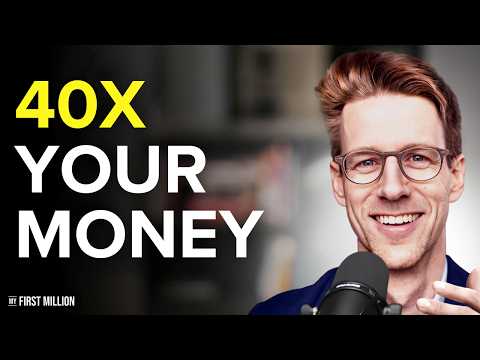
Galloway understands that in a world of 'all talk, no walk,' showing a 'walk' story is the ultimate authority builder. On a recent episode of the My First Million podcast, Galloway revealed that while others were mocking the downfall of crypto, he was quietly putting seven figures into distressed FTX claims. He wasn't betting on the 'bad business' of SBF; he was betting on the 'Stake' of the recovery process.
| Brand Element | The 'Stake' (Substance) | The 'Sizzle' (Viral Upside) |
|---|---|---|
| Galloway's Version | Selling a company for $100M+; NYU Professor status. | The 'Gift of Gab' and controversial predictions. |
| FTX Recovery | Cash recovery of 30 cents on the dollar. | Potential 40x upside from crypto appreciation. |
| Modern Influencer | Data-driven case studies and audience analytics. | High-production-value stunts and bold hot takes. |
By revealing this 'walk' story, Galloway effectively silenced the 'Inverse Index' critics. He proved that his brand is built on more than just provocative headlines; it is built on the same aggressive value investing principles championed by legends like Warren Buffett. To replicate this, founders must ensure their public 'Sizzle' is backed by a 'Stake' of undeniable results that they can pull out like a trump card when needed.
The FTX Recovery Narrative: From Disgrace to Opportunity
11:20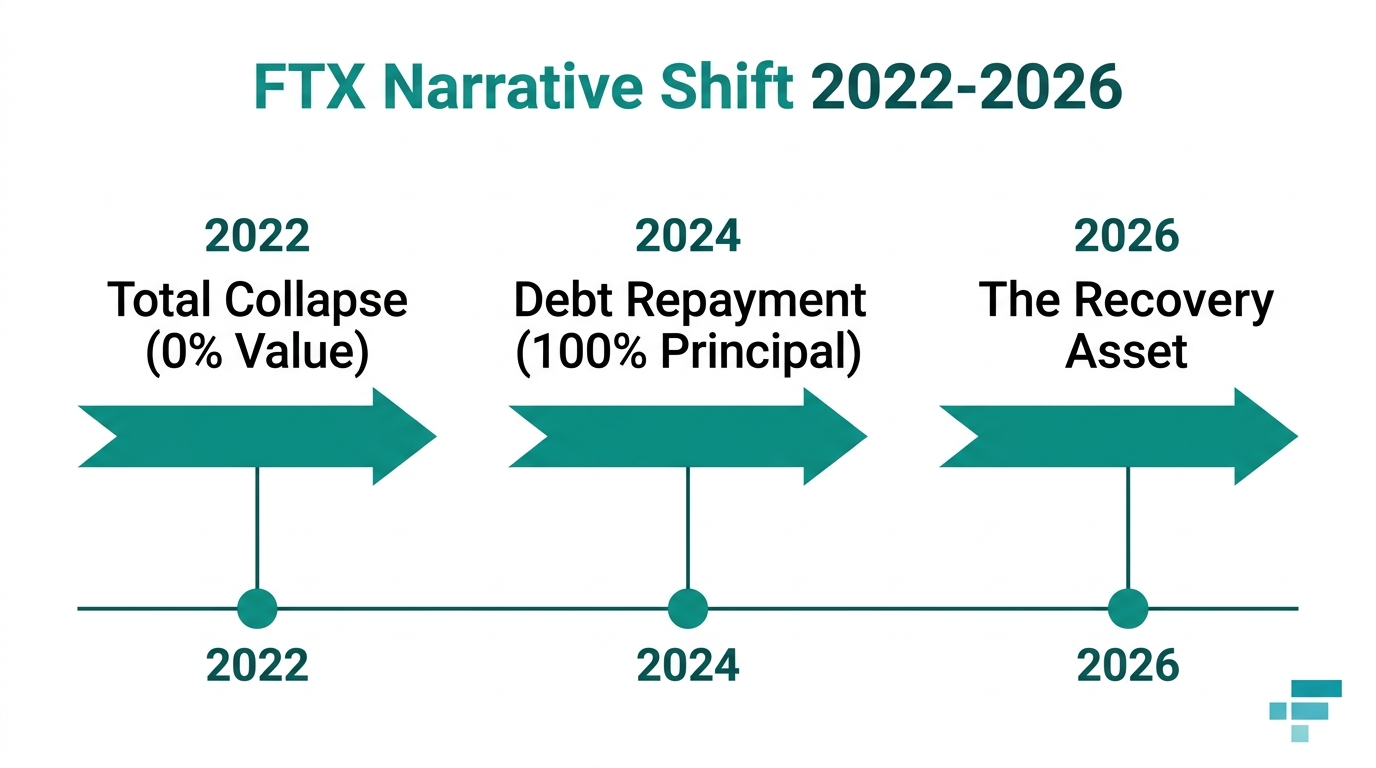
The FTX recovery narrative serves as a masterclass in how 're-invention' works in a hyper-fast media cycle. When the exchange collapsed, it was the 'symbol of a disgrace.' However, the mathematical reality of the bankruptcy was far different from the public perception. As the bankruptcy estate discovered nearly 200,000 Bitcoin that had been 'found' or recovered, the math became simple: the assets existed, but the sentiment was broken.
This created an informational arbitrage. While the general public was focused on the drama of the trial, smart investors were buying claims from customers who had lost hope. They were buying Bitcoin for 'free' by purchasing claims for less than the value of the cash already sitting in the estate's bank accounts.
"Math in distress is always super simple. If they have 200,000 Bitcoin out of 800,000, they have 25 cents on the dollar. If I buy for 5 cents, I've already won before the market even moves."
This is the essence of the brand building framework for 2026: buy low on sentiment, sell high on substance. When your brand is in a 'distressed' state—perhaps after a failed launch or a public mistake—you focus entirely on the 'Stake.' You shore up your assets, fulfill your promises, and wait for the 'Sizzle' of the next market cycle to rediscover your value. This is exactly how Stormy AI helps brands find creators who have the 'Stake' of a loyal audience but haven't yet been discovered by the masses for their 'Sizzle' potential.
The 2026 Reinvention Framework: The Power of Planned Silence
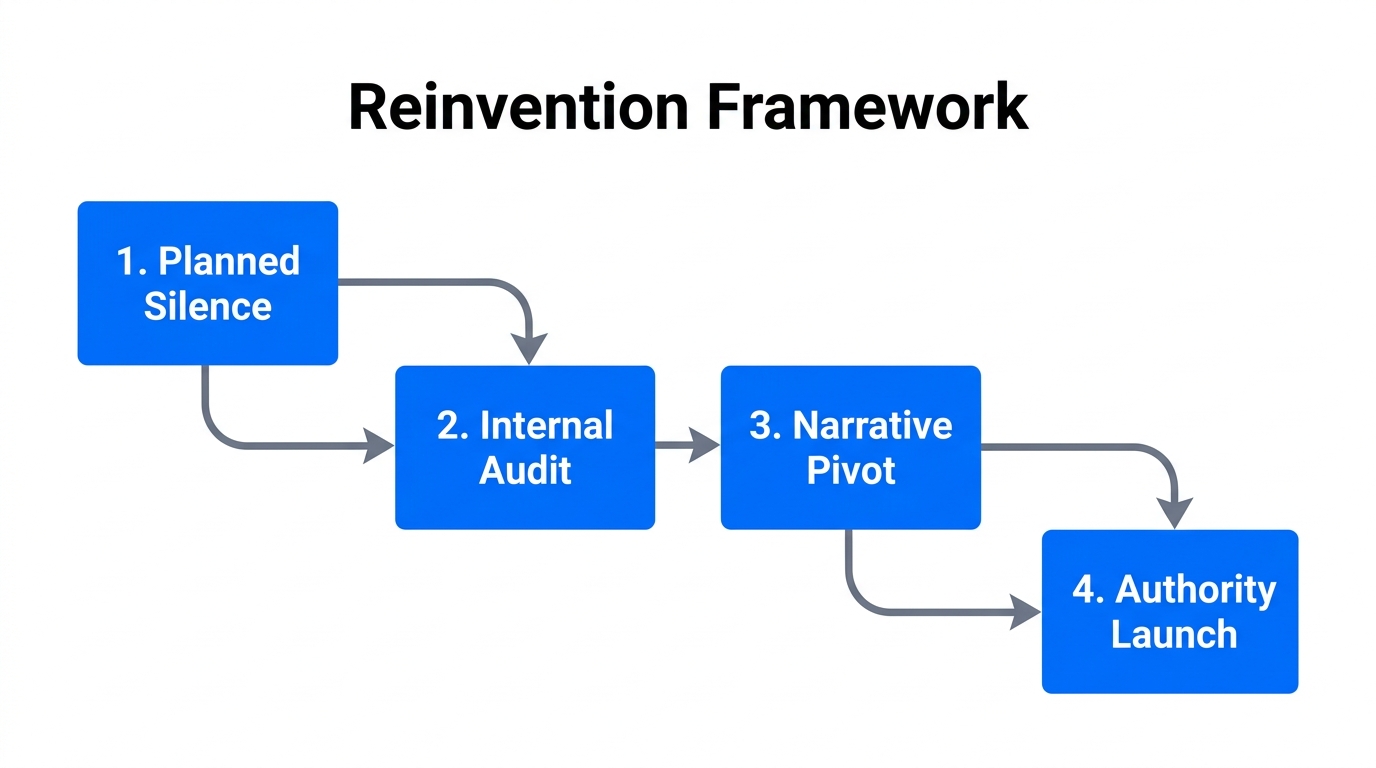
In a world where everyone is screaming for attention, the most powerful move is often to disappear. This concept, discussed by Robert Greene (author of the 48 Laws of Power), is known as 'Planned Silence.' By stepping out of the spotlight, you allow the market to miss you, creating a vacuum that you can later fill with a re-invented version of yourself.
Greene notes that re-invention is a requirement for power. Look at Mark Zuckerberg’s transformation in 2026. After years of being the 'villain' of data privacy, he used a period of relative silence and a 'year of efficiency' to pivot entirely into the hero of the AI revolution. By the time he re-emerged with a massive AI talent-poaching strategy, the market didn't see the 'old' Facebook; they saw the 'new' Meta, an AI powerhouse whose stock price soared by 33% in mere months according to Meta's 2026 quarterly reports.
This strategy also applies to influencer marketing in 2026. Brands are no longer looking for creators who are 'always on' but failing to innovate. They want creators who treat their brand like a series of projects. This is what many call 'project-to-project' branding—build, launch, disappear, and re-invent. It prevents audience burnout and keeps the 'Sizzle' fresh.
Sourcing Authority: Combining AI Tools with Scuttlebutt Hustle
58:47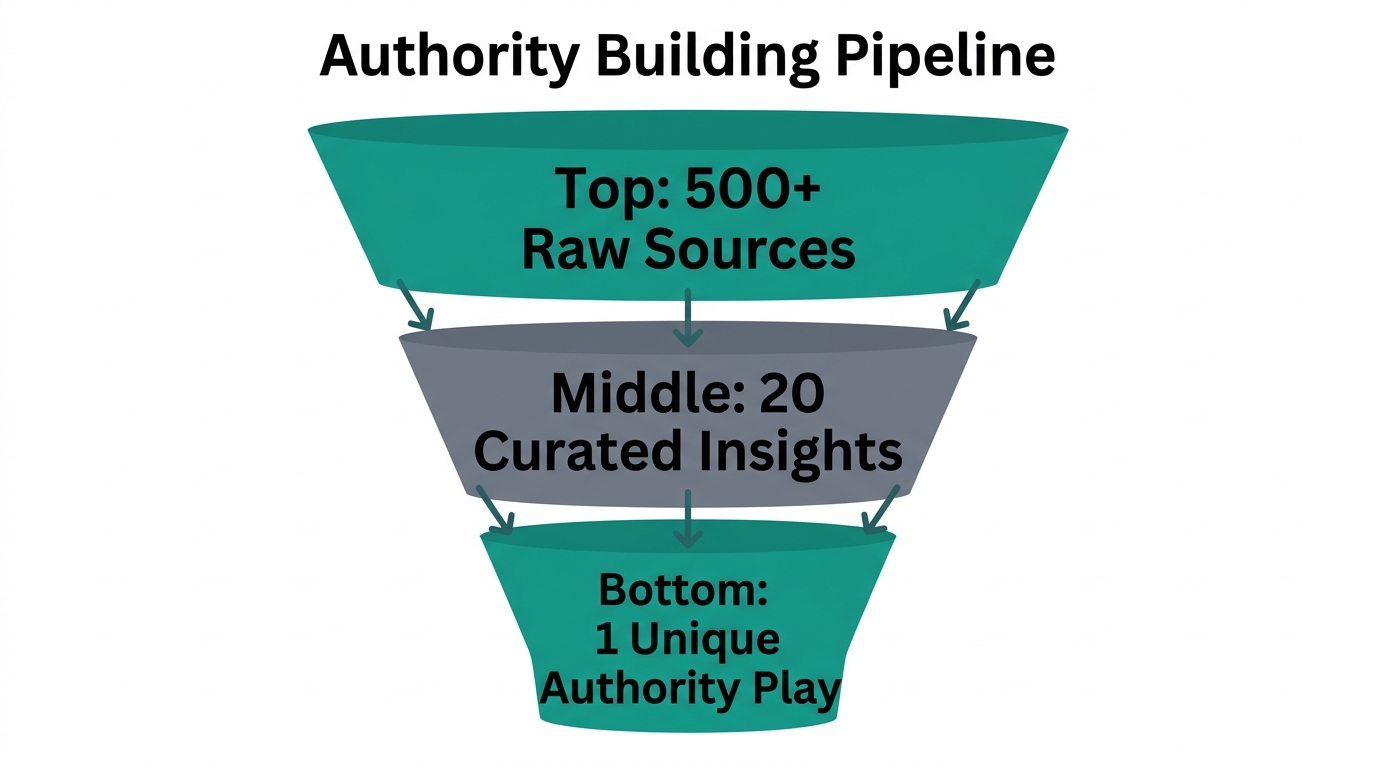
To execute a 'Stake and Sizzle' strategy, you need data. In the past, this meant 'scuttlebutt'—the old-school term for making phone calls, checking channels, and 'knocking on doors' to verify a company's health. In 2026, scuttlebutt has been digitized.
Tools like Stormy AI allow brands and influencers to perform 'digital scuttlebutt' at scale. Before partnering with a creator, a brand can use Stormy AI to vet the 'Stake'—the actual quality of the audience, the engagement fraud detection, and the demographic alignment. This ensures that the 'Sizzle' (the creator's viral reach) isn't just a hollow pump-and-dump scheme.
Success in 2026 requires three specific skill sets, as highlighted by successful distressed investors:
- Specific Knowledge of the 'Law': Whether it's the legal code of bankruptcy or the algorithmic code of TikTok Ads Manager, you must speak the native tongue of the platform you operate on.
- Deep Value Investing: Focus on things that are objectively undervalued by the market. This could be a niche Notion community or a distressed domain name.
- Entrepreneurial Hustle: The willingness to do the 'grunt work'—cold calling, verifying ownership via Stripe verification, and managing the 'brain damage' that comes with high-upside deals.
"The first decade is tuition. You have to be willing to be a novice, to get laughed out of conference rooms, and to fail before you can reliably compound your authority at 30-50% a year."
Conclusion: Building Your 2026 Legacy
The 'Stake and Sizzle' framework isn't just about making money in distressed markets; it's about brand longevity. By focusing on your 'Stake' (your substance, your assets, and your truth) while strategically deploying 'Sizzle' (your narrative, your viral upside, and your re-invention), you create a brand that can survive any bankruptcy—emotional, financial, or social.
As you plan your brand strategy for the remainder of 2026, ask yourself: Is my 'Stake' strong enough to survive a downturn? Is my 'Sizzle' compelling enough to capture the next wave? If the answer is no, it might be time for a period of planned silence. Re-evaluate your position, use Stormy AI to find your next growth levers, and come back when the market is ready to buy your recovery story.