Stackline vs Pacvue vs Perpetua: The 2026 Guide to Amazon Ad Automation
Compare Stackline vs Pacvue vs Perpetua in our 2026 guide. Discover the best Amazon ad automation software for enterprise retail media and AI-driven growth.
In 2026, the Amazon marketplace has matured into a $440 billion juggernaut, representing nearly 36% of the total U.S. online retail market according to Seller Assistant. For high-growth brands, the challenge is no longer just "showing up" in search results; it is navigating an ad ecosystem that generated over $68.5 billion in revenue last year alone, as reported by Insider Intelligence. As we move deeper into the era of agentic commerce, choosing the right Amazon ad automation software is the difference between scaling profitably and drowning in margin-eroding ad spend. This guide breaks down the 2026 landscape of the "Big Three": Stackline, Pacvue, and Perpetua.
The 2026 Retail Media Landscape: From Tools to Agents
The transition from 2024 to 2026 saw a fundamental shift in how Amazon Ads are managed. We have moved past simple keyword bidding into a world where autonomous intelligence platforms handle the heavy lifting. Brands are now optimizing for "Agentic Visibility"—ensuring their products are recommended by AI shopping assistants like Amazon Rufus. While enterprise giants like Stackline focus on holistic market intelligence, tools like Perpetua and Pacvue have doubled down on specialized execution.
While these enterprise tools handle the high-level bidding, many lean brands are now employing an AI ecommerce employee like Stormy AI to bridge the gap between ad performance and back-office operations. For instance, Stormy AI can automatically pull campaign performance from Meta Ads and Amazon, drop it into a shared Notion or Google sheet, and flag underperforming SKUs before they drain your budget.
Pricing Models: Percentage of Spend vs. Flat Fee
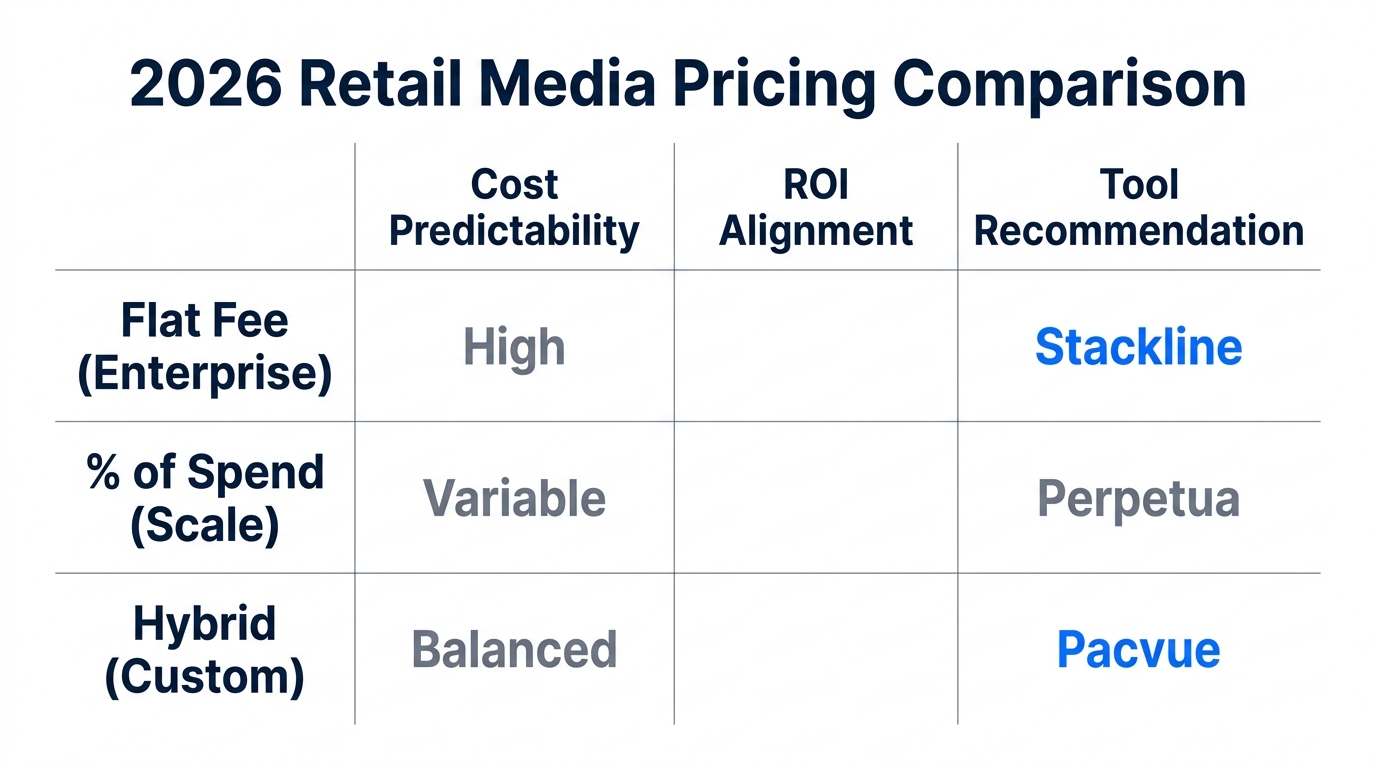
One of the most contentious debates in 2026 is the pricing structure of retail media management. For years, the industry standard was a percentage of ad spend. However, as budgets have swelled on platforms like TikTok Shop and Amazon, brands are feeling the sting of "margin compression."
- Pacvue & Perpetua: Both generally stick to a Percentage of Spend model (often ranging from 1-3% for enterprise). While this aligns the platform's success with your growth, it can become prohibitively expensive for brands spending $500k+ per month. In early 2026, we saw a notable "Pacvue Exodus" as high-spend sellers moved toward platforms with more predictable costs according to discussions in Reddit's e-commerce communities.
- Stackline: Operates on a Custom/Flat Fee model, typically starting at $5,000/month. This makes it an enterprise-only play, but for brands doing $10M+ in annual revenue, the flat fee often results in a lower total cost of ownership compared to variable models.
| Feature | Stackline | Pacvue | Perpetua |
|---|---|---|---|
| Pricing Model | Custom Flat Fee | % of Spend | Tiered + % of Spend |
| Entry Price | $5,000+/mo | Custom | Varies by Tier |
| Ideal For | Global Enterprise | Mid-to-Large Brands | Growth-Stage Brands |
"The percentage-of-spend model is becoming a relic for top-tier brands; in 2026, certainty in software costs is a prerequisite for protecting EBITDA."
The ROI of AI: Advisor vs. Rule-Based Automation
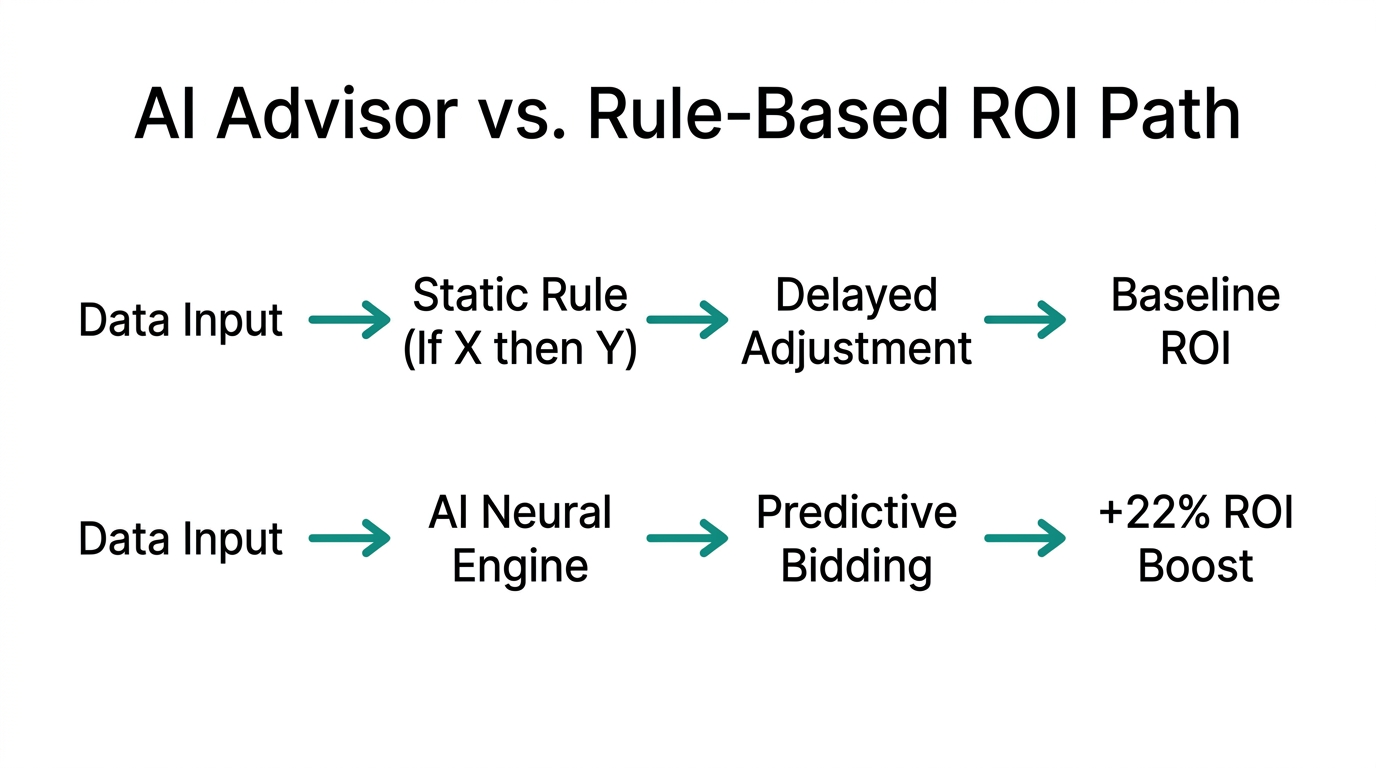
In 2026, the "automation" in Perpetua vs Stackline has evolved. We are no longer just setting "if-this-then-that" rules through Zapier. We are interacting with Advisors. Stackline's Advisor AI, launched in early 2026, can now generate full, boardroom-ready PowerPoint presentations from natural language prompts, saving teams 4–6 hours of manual reporting per week.
Meanwhile, Perpetua’s AI remains the king of "Always On" optimization. Its algorithmic approach is designed to maximize Share of Voice (SOV) without constant human intervention. According to 2025 brand rankings, top-performing brands using AI-aligned creative saw a 16% YoY increase in conversion rates (CVR).

However, automation shouldn't stop at the ad console. While Stackline optimizes the bid, Stormy AI handles the operational fallout. For example, if an ad campaign is too successful and triggers a stockout risk, Stormy AI can automatically wake up, check the inventory row in your Shopify or Amazon Seller Central, and draft an urgent restock PO to your supplier.
UI and Learning Curve: Atlas vs. Perpetua
If you have used Stackline's Atlas, you know it is the "Bloomberg Terminal" of e-commerce. It offers the deepest market data available, but it comes with a steep learning curve. Users often report "dashboard paralysis" on G2 without a dedicated analyst to translate the data into weekly sprints.
In contrast, Perpetua is widely praised for its ease of use. It is built for the brand manager who needs to see performance at a glance and make quick adjustments. Pacvue sits in the middle, offering robust customization and better training resources than Stackline, though its UI is sometimes described as less polished than Perpetua's.
Omnichannel Integration: Beyond Amazon
By 2026, the term "Amazon PPC tool" is almost an insult. Leading brands are omnichannel by necessity. Stackline leads the pack here with its Multi-Retailer Attribution (MRA), which integrates Amazon Marketing Cloud (AMC) data to prove that your Amazon DSP ads are actually driving sales at Walmart, Target, and Kroger.
The ability to tie online ad exposure to offline in-store purchases is the holy grail of 2026 retail media. Case studies from brands like Olly supplements show that Amazon DSP ads can increase Lifetime Value (LTV) by 34% by reaching customers across multiple touchpoints. While Pacvue also offers strong Walmart and Target integrations, Stackline’s depth in grocery via KPM gives it an edge for CPG brands.
"The 2026 winner isn't the brand with the best ACoS on Amazon; it's the brand that understands how Amazon spend fuels their entire retail footprint."
The Financial Impact: SKU-Level EBITDA Tracking
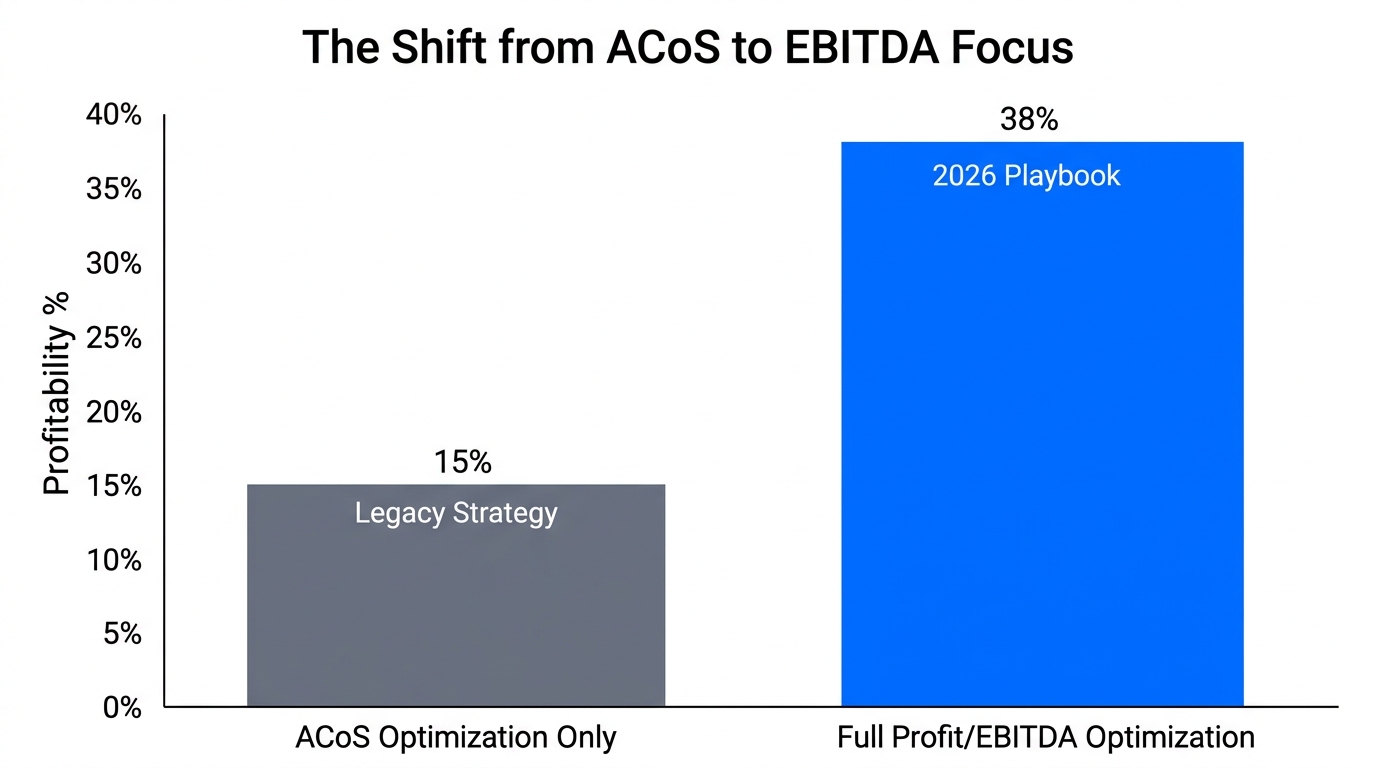
The most significant trend for 2026 is the death of "ACoS-only" tracking. Expert analysts from the Titan Network emphasize that the focus has shifted to SKU-level EBITDA. This requires integrating over 40 types of Amazon fees, COGS, and multi-channel attribution into a single view.
Stackline helps brands achieve this through its Beacon module, mapping SKUs to internal financial data. For those who can't afford the enterprise price tag of Stackline, an AI employee like Stormy AI is a powerful alternative. Stormy can import arbitrary CSVs from Shopify and Amazon, link them to your supplier's COGS in a dynamic spreadsheet, and calculate your true net profit daily.
How-To: The 2026 Amazon Ad Playbook
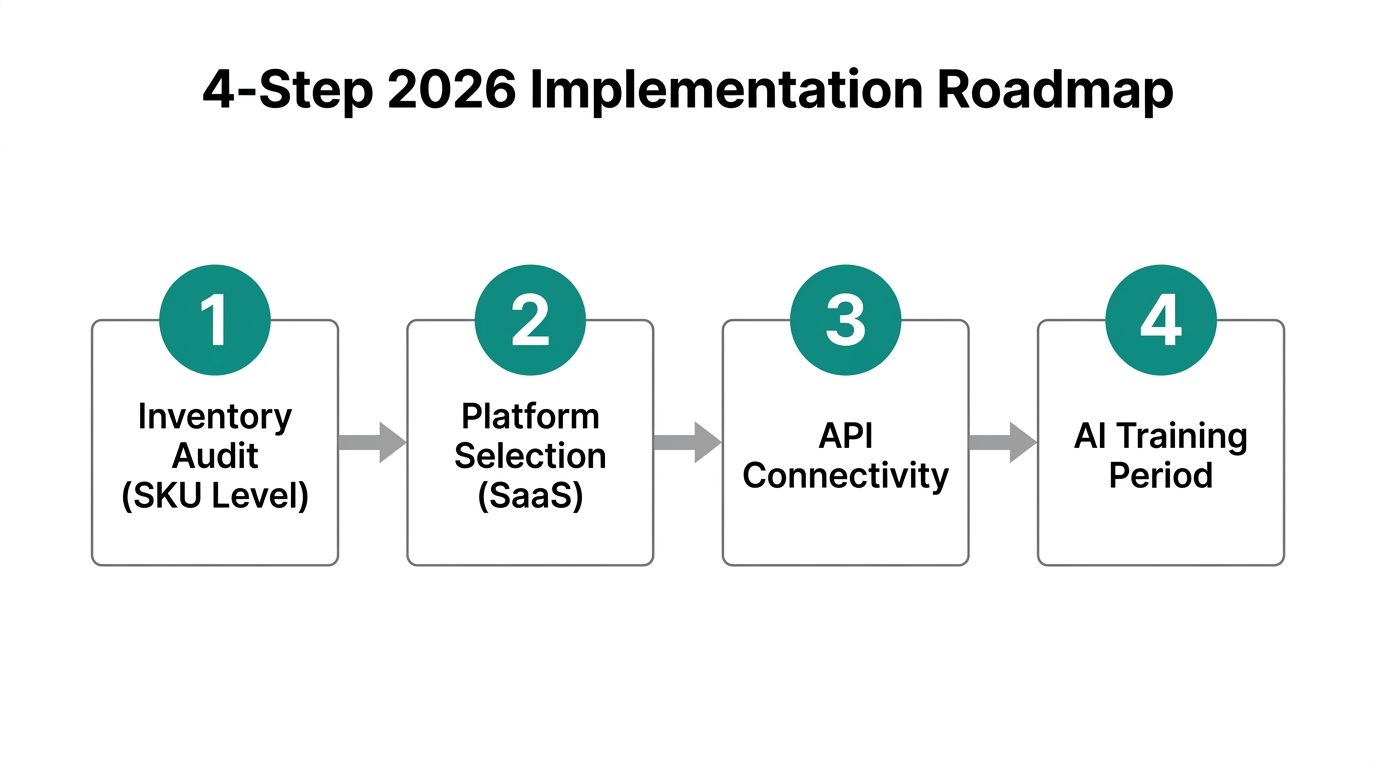
If you are deploying a high-end stack like Stackline or Perpetua, follow this tactical playbook to ensure your Amazon enterprise PPC tools deliver maximum ROI.
- Audit Your AI Visibility: Use the AI Visibility tool to see how often Amazon Rufus recommends your brand. Update your A+ Content and descriptions with natural language phrases shoppers actually use.
- Set Up Adaptive Automation: In your Ad Manager (Stackline or Pacvue), set rules to automatically shift budgets to Google Ads or Walmart if your Amazon ROAS drops below a pre-set threshold.
- Automate the Follow-up: While the ad platforms spend the money, have Stormy AI monitor the results. Ask Stormy to "Watch my Amazon ads row in the spreadsheet; if TACOS exceeds 15%, email me a summary of the top 3 offending campaigns."
- Run Quarterly Profit Simulations: Use Stackline’s Advisor AI or a Stormy AI custom analysis to ask: "What is the impact on EBITDA if we increase price by 5% but lose 10% in unit volume?"
Conclusion: Choosing Your Winner
In the battle of Stackline vs Pacvue vs Perpetua, there is no single "best" tool—only the best tool for your current stage.
- Choose Stackline if you are a global enterprise brand ($10M+) that needs heavy-duty market intelligence and multi-retailer attribution.
- Choose Pacvue if you are a large brand that requires granular control and a proven training framework for your internal team.
- Choose Perpetua if you are a growth-stage brand that wants the most user-friendly interface and "always-on" AI optimization.
No matter which platform you choose, the "messy back office" of e-commerce remains. That’s where Stormy AI comes in. While Stackline manages your millions in ad spend, Stormy AI acts as your AI ecommerce employee—keeping the spreadsheets updated, following up with suppliers on late shipments via Instantly or Gmail, and ensuring that your operational foundation is as strong as your marketing. In 2026, the brands that win are those that automate both the front office and the back office.