In the high-stakes ecommerce landscape of 2026, the battle for digital shelf space is no longer a skirmish—it is a war of attrition powered by predictive intelligence. As the global ecommerce tools market scales toward an estimated $14.62 billion this year, enterprise brands are moving beyond basic SEO to sophisticated market defense strategies. For category leaders on Amazon, Walmart, and Target, the objective has shifted from simple growth to the aggressive protection of Amazon category share data against a more professionalized pool of competitors.
While the total number of active sellers has compressed from peak levels to roughly 1.65 million active operators, those who remain are more capitalized and technically proficient than ever. In this environment, defending your rank requires a synchronized omnichannel ecommerce strategy that bridges the gap between shopper intent and operational execution. This is where the synergy between retail intelligence platforms like Stackline and autonomous AI teammates like Stormy AI becomes the ultimate competitive advantage.
Implementing SKU-Level Share Monitoring with Stackline Atlas
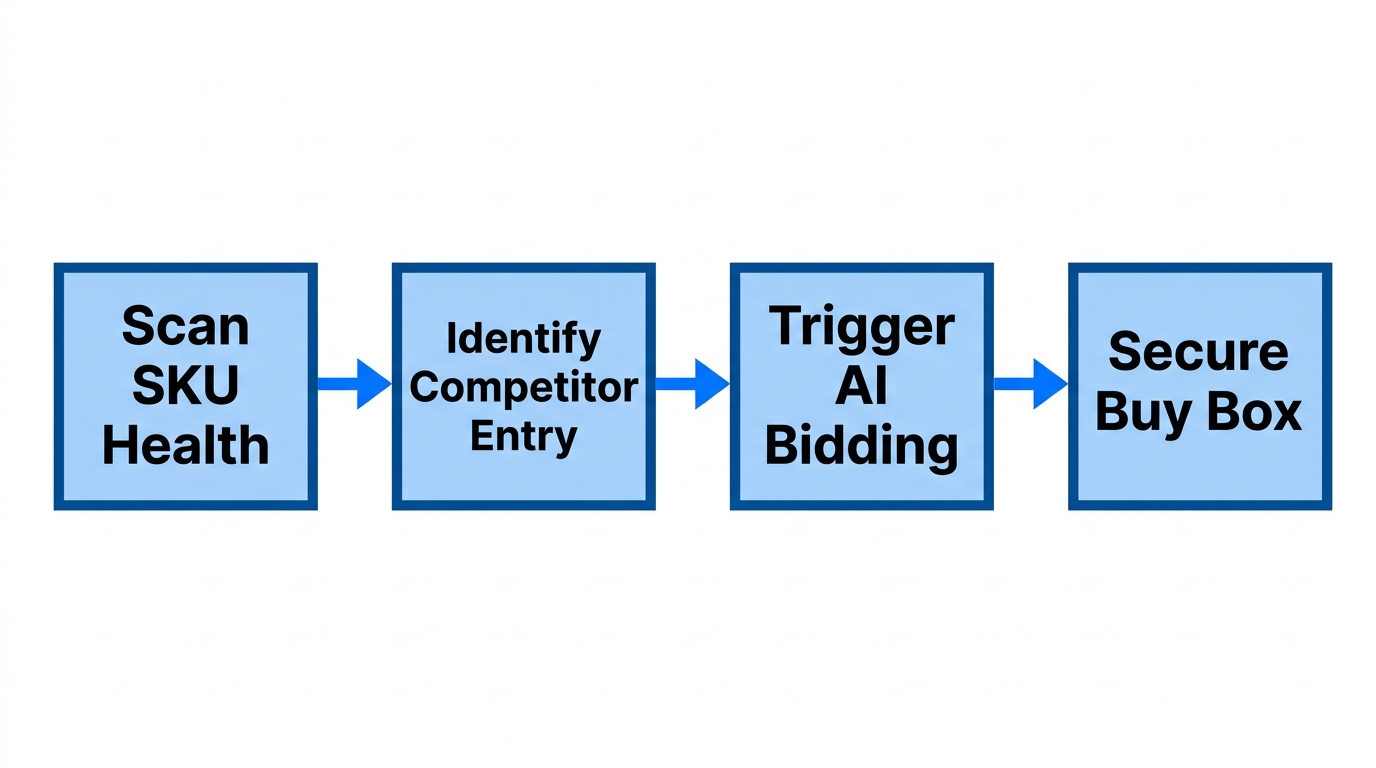
For an enterprise brand, losing even 1% of category share can translate into millions in lost revenue. This is why a comprehensive Stackline Atlas review usually highlights its ability to track market shifts at the individual SKU level. In 2026, relying on broad category trends is a recipe for stagnation; you need to know exactly which of your products are losing ground to which specific competitor variants.
Stackline Atlas provides a granular view of the retail landscape, allowing brands to monitor Share of Voice (SOV) and pricing shifts across Shopify, Amazon, and Walmart in real-time. By identifying "white space" opportunities—such as specific zip codes where Amazon Fresh delivery is surging but competitor stock is low—brands can redirect their ad spend to capture immediate demand. This level of precision is what allowed leaders like UPPAbaby to achieve a +224% ROAS by transitioning from traditional retail to a data-led digital leadership model.
"Growth belongs to brands that treat digital advertising as the control center for streaming, search, and offsite marketing—not just a conversion point." — Daniel Knijnik, QuartileTo scale these insights, many enterprise teams now rely on an AI ecommerce employee. For example, Stormy AI can be tasked to watch your Stackline Atlas dashboard. If a competitor launches a lightning deal that starts eroding your share, Stormy can automatically flag the trend, draft a reactive ad budget proposal, and alert the brand manager before the daily stand-up begins.
Preventing Stockouts with the 52-Week Beacon Pro Forecast
In 2026, a stockout is more than a missed sale—it is an algorithmic death sentence. With over 82% of sellers now utilizing FBA, the competition for prime warehouse placement is fierce. Category leaders are increasingly turning to Stackline’s Beacon Pro to manage 52-week inventory forecasts that account for seasonality, promotional spikes, and global supply chain volatility.
The goal is to identify potential inventory gaps at least three months in advance. Beacon Pro uses proprietary modeling to predict when your current run rate will outpace your inbound shipments. This is a critical priority for 2026 logistics, as Amazon’s A10 algorithm heavily penalizes listings that frequently go out of stock by stripping them of their hard-earned search rankings.
This is where Stormy AI handles the messy back-office execution. While Beacon Pro provides the forecast, Stormy acts as the operational layer. Stormy can:
- Monitor inventory levels across Amazon Seller Central and Walmart.
- Automatically draft reorder emails to suppliers based on Beacon Pro’s 3-month lead time alerts.
- Track supplier replies and update a master spreadsheet with shipment ETAs.
- Escalate to a human teammate if a supplier misses a deadline, ensuring the omnichannel ecommerce strategy remains intact.
Advanced Audience Targeting: The Power of 'Switch-In' Data
One of the most potent features for market defense in 2026 is Stackline’s Shopper Analytics, specifically the "Switch-In" data module. This tool allows brands to see exactly which competitor products customers were buying before they switched to your brand—and, more importantly, which brands your former customers are leaving you for.
By identifying these specific "abandonment" pathways, enterprise brands can create hyper-targeted Amazon DSP (Demand Side Platform) campaigns. For instance, if data shows that customers are leaving a leading competitor due to a recent price hike, you can target those specific users with ads highlighting your value proposition. This surgical approach to Amazon category share data ensures that your marketing dollars are spent on the audiences most likely to convert.
| Metric Type | Stackline Atlas Insight | Stormy AI Action |
|---|---|---|
| Category Share | Detects a 2% drop in SKU SOV | Discovers and outreaches to 10 relevant creators for a UGC blitz |
| Shopper Behavior | Identifies brand switchers from Competitor A | Generates a report on competitor's negative reviews to inform ad copy |
| Inventory Risk | Predicts stockout in 45 days | Drafts a PO for the supplier and sets follow-up reminders |
| Ad Performance | Flags rising TACoS on Top-of-Search | Audits campaign keywords and flags underperformers in a shared doc |
Stackline vs Pacvue: Choosing Your 2026 Command Center
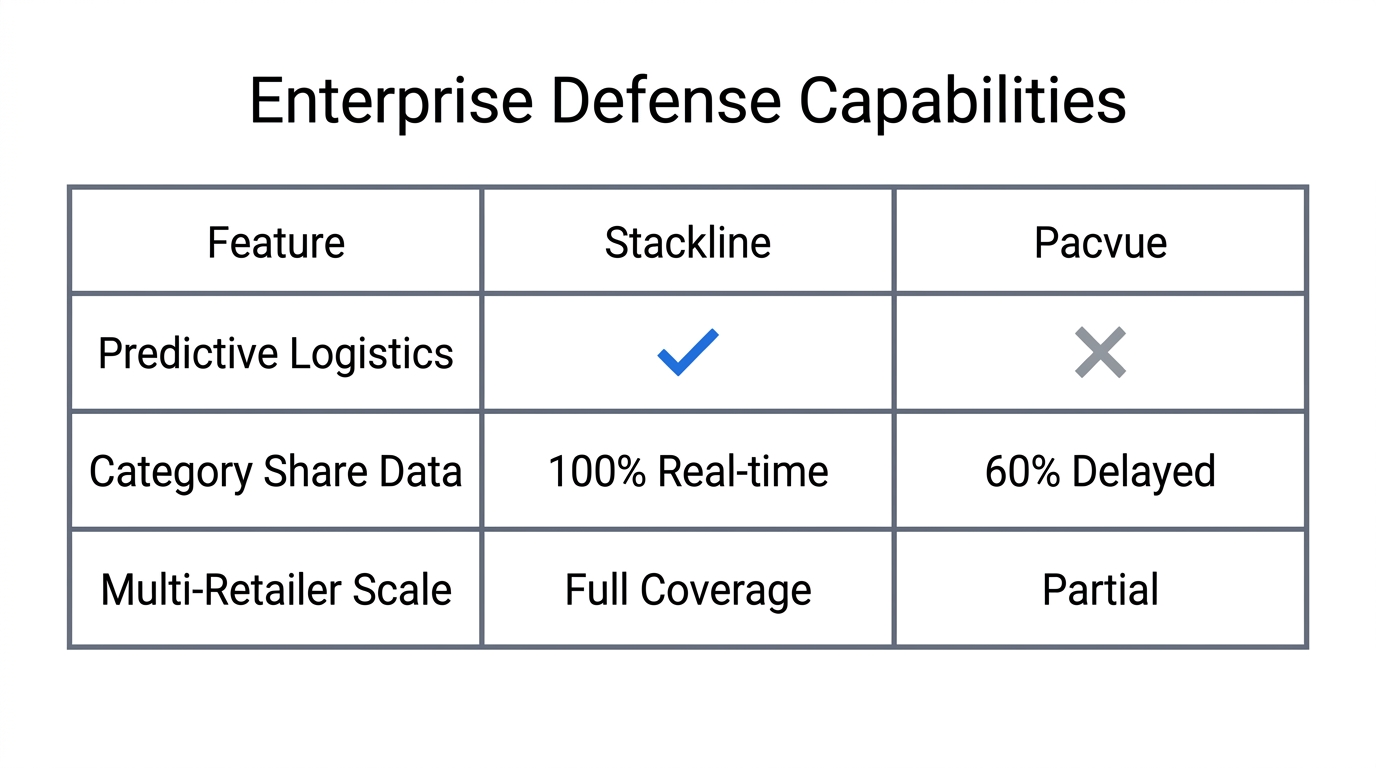
When deciding between Stackline vs Pacvue for your 2026 operations, the choice often comes down to the depth of retail intelligence versus the breadth of ad automation. While Pacvue is a formidable tool for mid-market brands focusing on rule-based bidding, Stackline remains the preferred choice for enterprise-level brands that need a "whole world" view of their retail ecosystem.
Stackline’s integration with the Amazon Marketing Cloud (AMC) 2026 updates provides a significant edge. It allows for custom SQL queries that track the full "path to purchase" across off-site signals like Twitch and Prime Video. For a brand like General Mills, this level of connectivity resulted in a 203% lift in ROAS by syncing Fire TV campaigns with retail performance data.
"Brands want to spend less time on tactics and more time on strategy... they will embrace AI that removes friction." — Mark Eamer, Amazon Ads VPWhile Stackline provides the data, Stormy AI bridges the gap for teams who don't want to live inside dashboards. Stormy can pull the weekly ROAS and TACOS reports from your ad platforms, compare them against Stackline’s market share data, and drop a polished executive summary into your Slack or inbox every Monday morning.
Omnichannel Orchestration: AMC, Twitch, and Beyond
In 2026, the customer journey is fragmented. A shopper might see an influencer's post on TikTok, watch a branded segment on Twitch, and finally purchase via TikTok Shop or Amazon. Successful market defense requires tracking these "View-Through" attributions to understand which top-of-funnel investments are actually driving bottom-of-funnel share.
The Amazon Marketing Cloud 2026 capabilities have made this transparency possible. By leveraging AMC's clean-room data, brands can see how off-platform traffic from Meta Ads or YouTube impacts their organic rank on Amazon. Stackline Advisor, now enhanced with LLM-based analytics, acts as a virtual CMO to interpret these complex data sets, identifying exactly where to double down.
Scaling through Automation: The Stormy AI Operational Layer
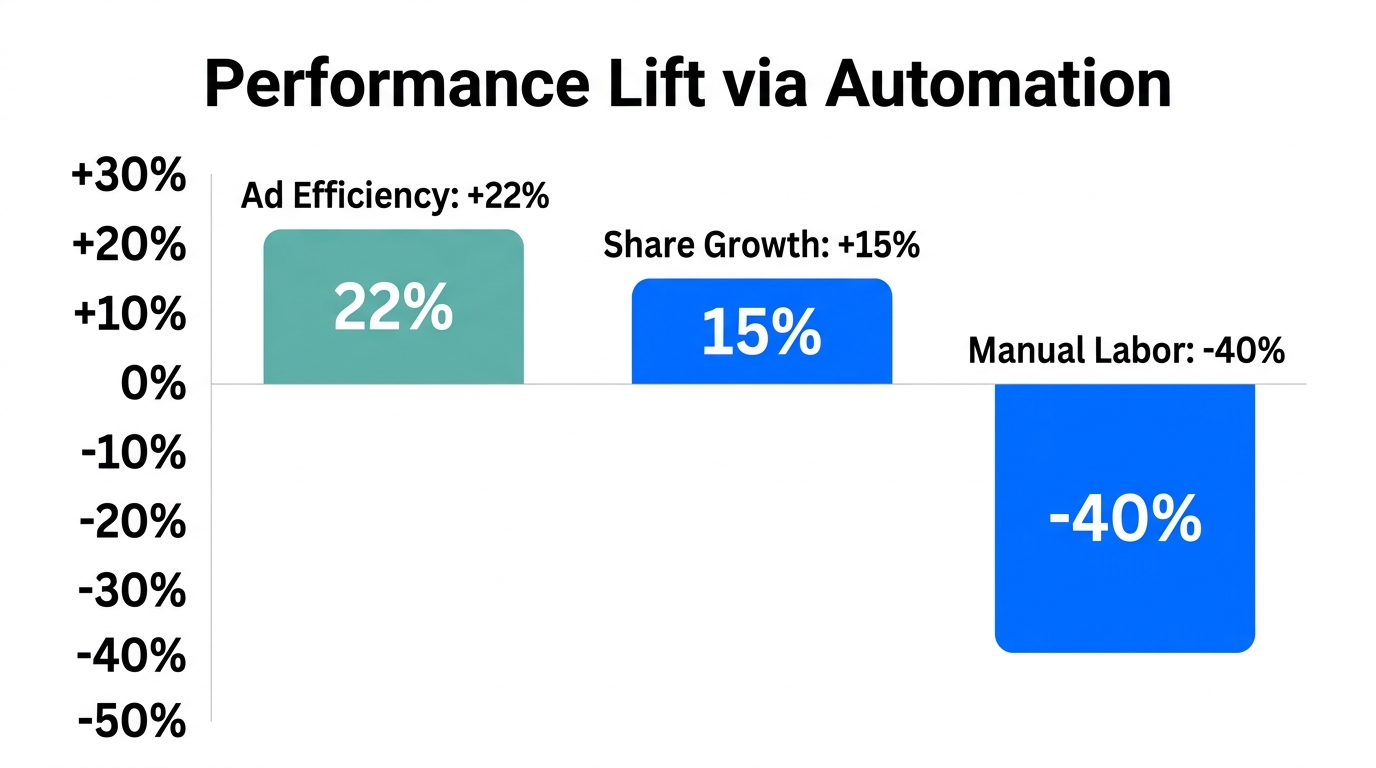
The most sophisticated data in the world is useless if your team is too bogged down in manual tasks to act on it. This is why the modern enterprise stack is incomplete without an AI ecommerce employee like Stormy AI. While Stackline points the way, Stormy does the heavy lifting.
For example, when Stackline Atlas identifies a competitor’s listing is suppressed or out of stock, that is the perfect time to strike. You can ask Stormy AI to search for relevant creators across TikTok and Instagram, draft personalized outreach emails to invite them to your affiliate program, and manage the follow-ups until the content is live. This allows your brand to flood the category with social proof precisely when your competitor is most vulnerable.
Stormy also handles the daily "pulse checks" that keep a brand healthy. It can monitor your Gorgias or Zendesk tickets for recurring product complaints, summarize the sentiment, and cross-reference it with your latest Amazon reviews to ensure your Amazon category share data isn't being threatened by a fixable product issue.
Conclusion: Defending Your Legacy in a Data-Driven Era
Defending market share in 2026 is no longer about having the biggest budget; it’s about having the fastest feedback loop. By combining the deep retail intelligence of Stackline Atlas with the autonomous execution of Stormy AI, enterprise brands can move from reactive defense to proactive category dominance.
Whether it's utilizing the 52-week Beacon Pro forecast to secure your supply chain or leveraging "Switch-In" data to steal competitor customers through the Amazon DSP, the tools for absolute market defense are at your fingertips. The brands that win this year will be those that treat their data not as a static report, but as a living set of instructions for their AI teammates to execute.
Ready to automate your market defense? Let Stormy AI handle the spreadsheets, supplier follow-ups, and creator outreach while you focus on the high-level strategy that keeps your brand at the top of the category.