The Spotify and Bill Simmons Playbook: Scaling Influencer-Led Media in 2026
Discover the media business models of 2026 through the lens of Bill Simmons and the Ringer strategy. Learn how to scale from creator to media executive.
In the landscape of 2026, the distinction between a "creator" and a "media corporation" has effectively vanished. We are no longer in an era where individuals simply post content; we are in the era of influencer-led growth where single personalities build nine-figure ecosystems. At the pinnacle of this evolution stands the story of Bill Simmons—the man who transformed from a niche blogger into a $200 million asset for Spotify. His journey provides the definitive playbook for anyone looking to master media business models in 2026.
The shift from individual talent to media executive is not merely about hiring more editors; it is about institutionalizing "taste." As the digital space becomes increasingly crowded with AI-generated filler, the value of a "Steward of Taste" has reached an all-time high. Whether you are an app developer looking to integrate influencer-led growth into your acquisition strategy or a creator looking to scale, the lessons from The Ringer, Grantland, and the "Blueberry Billionaires" of the world offer a clear path to dominance.
The Ringer Strategy: From Blogger to $200M Exit
Exploring the massive $200 million acquisition of Bill Simmons' Ringer by Spotify.
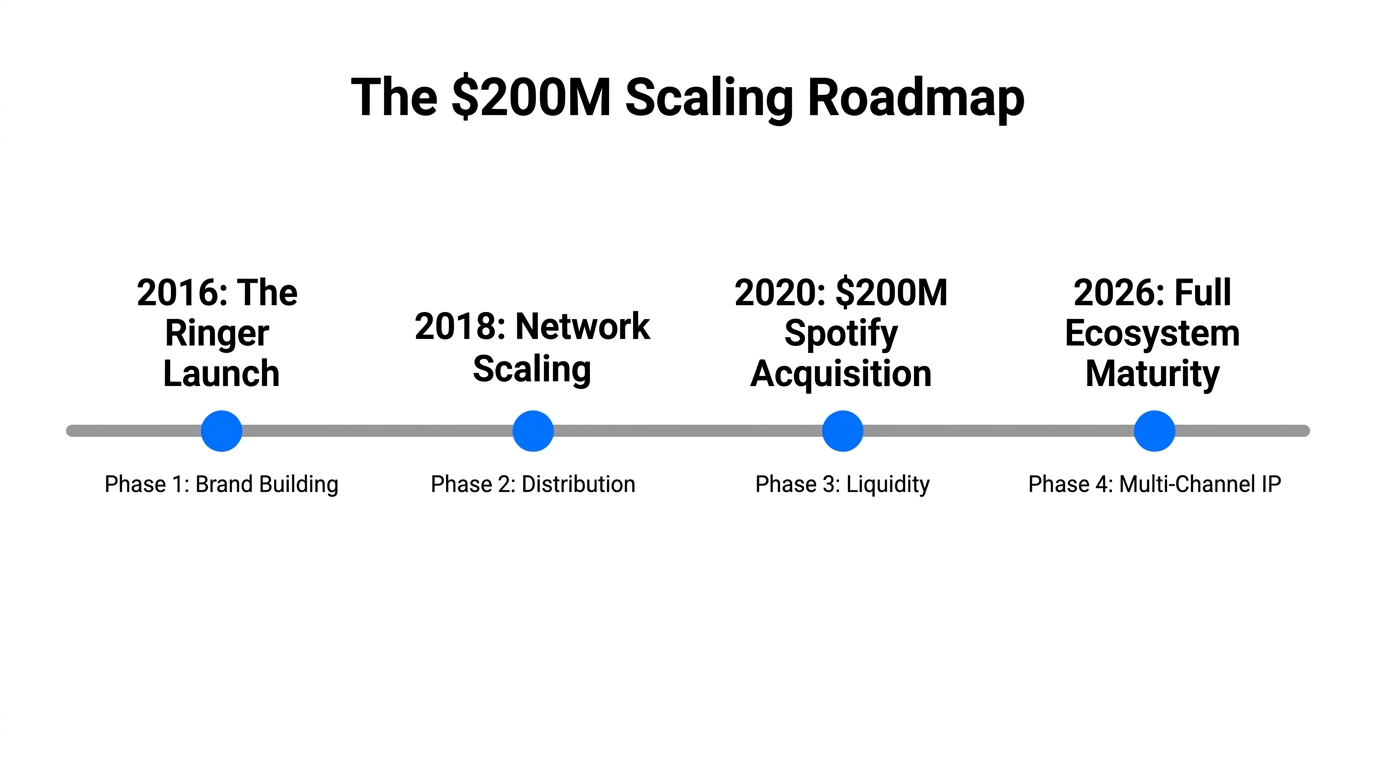
Bill Simmons did not just write sports columns; he built a distribution engine that prioritized the fan experience over corporate neutrality. When Simmons was at ESPN, he famously clashed with the status quo, eventually leading to the death of Grantland. However, by launching The Ringer, he proved that the audience follows the voice, not the masthead. In 2026, we see this pattern repeating across every vertical from fintech to fitness. Brands that succeed today are those that stop acting like advertisers and start acting like media houses.
When Spotify acquired The Ringer for $200 million, they weren't just buying a podcast feed; they were buying a cultivated community. This is a primary example of Spotify influencer marketing at its most sophisticated level. By acquiring the voice that sports fans trust, Spotify secured a recurring revenue stream that is far more resilient than traditional ad-supported media. For modern brands, this means that instead of just buying a one-off post, the goal should be to partner with—or build—media entities that act as the authoritative voice in a niche.
"The right way is the hard way. The show is successful because I micromanaged it. Every word, every line, every take—that is my way of life."
The 'Steward of Taste' Framework: Why Micromanagement Wins
There is a dangerous myth in the scaling of a media company: the idea that you must automate yourself out of the creative process as quickly as possible. When Scott Belsky, a legendary investor and founder of Behance, advised emerging media entrepreneurs, he used the term "Steward of Taste." He argued that a founder must remain in the thick of the creative output to ensure that the "soul" of the brand remains intact. In 2026, where TikTok Ads Manager is flooded with generic content, the unique perspective of a human curator is what prevents a brand from becoming a commodity.
This framework suggests that at the beginning, you shouldn't worry about being "Lady Gaga" selling out stadiums. You should worry about being the best craftsman in your garage. Scaling too early often dilutes the very thing that made the brand successful. This is where tools like Stormy AI become essential. Rather than replacing the human element, Stormy allows media executives to identify other stewards of taste—micro-influencers and creators who have already built trust with their niche—enabling a brand to scale its reach without losing its authentic voice.
| Feature | Corporate Media Model | Influencer-Led Media (2026) |
|---|---|---|
| Voice | Neutral & Impartial | Opinionated & Fan-First |
| Scalability | High Volume / Low Quality | Niche Dominance / High Engagement |
| Distribution | Paid Placement | Organic Trust + AI Outreach |
| Monetization | Ad Banners | Ecosystem Ownership / M&A |
Blueberries and Fiber: Lessons in Vertical Dominance
Discover how Bill Simmons leveraged sports blogging to dominate a specific digital niche.To understand how to build a media empire, one must look at the strategy of John Bragg, the "Blueberry Billionaire." As highlighted in the Shane Parrish podcast, Bragg built Oxford Frozen Foods by dominating a single, unsexy niche: blueberries. He eventually controlled 40-50% of the global supply. His philosophy was simple: "I have no reverse gear." When the market crashed or frost killed his crops, he didn't retreat; he diversified into the infrastructure (packaging and freezing plants) that the entire industry relied on.
In the media world of 2026, vertical-specific content—like the NFL, 30-for-30, or niche SaaS categories—is the "blueberry" asset class. You don't need to own the entire internet; you just need to own the underlying infrastructure of attention within your vertical. This is exactly what Bill Simmons did with the NFL. He didn't just talk about the games; he created a media ecosystem around the culture of the league. Just as John Bragg realized that owning the "fiber" (the cables) was more valuable than the "sexy" programming, smart media executives in 2026 focus on owning the distribution channels that creators rely on.
"I intentionally overpaid for acquisitions and word spread fast. If you want to sell, sell to John Bragg. You'll get a fair price, a quick close, no games."
Bragg’s strategy of "intentionally overpaying" for key assets is a masterclass in reputation building. In the creator economy, this translates to offering creators better terms, better tools, and better distribution. By becoming the preferred partner for talent, you eventually win the entire vertical. Platforms like Stormy AI help brands implement this by automating the outreach and vetting process, ensuring you find the "key assets" (the top 1% of creators) before your competitors can even identify them.
Transitioning from Creator to Media Executive
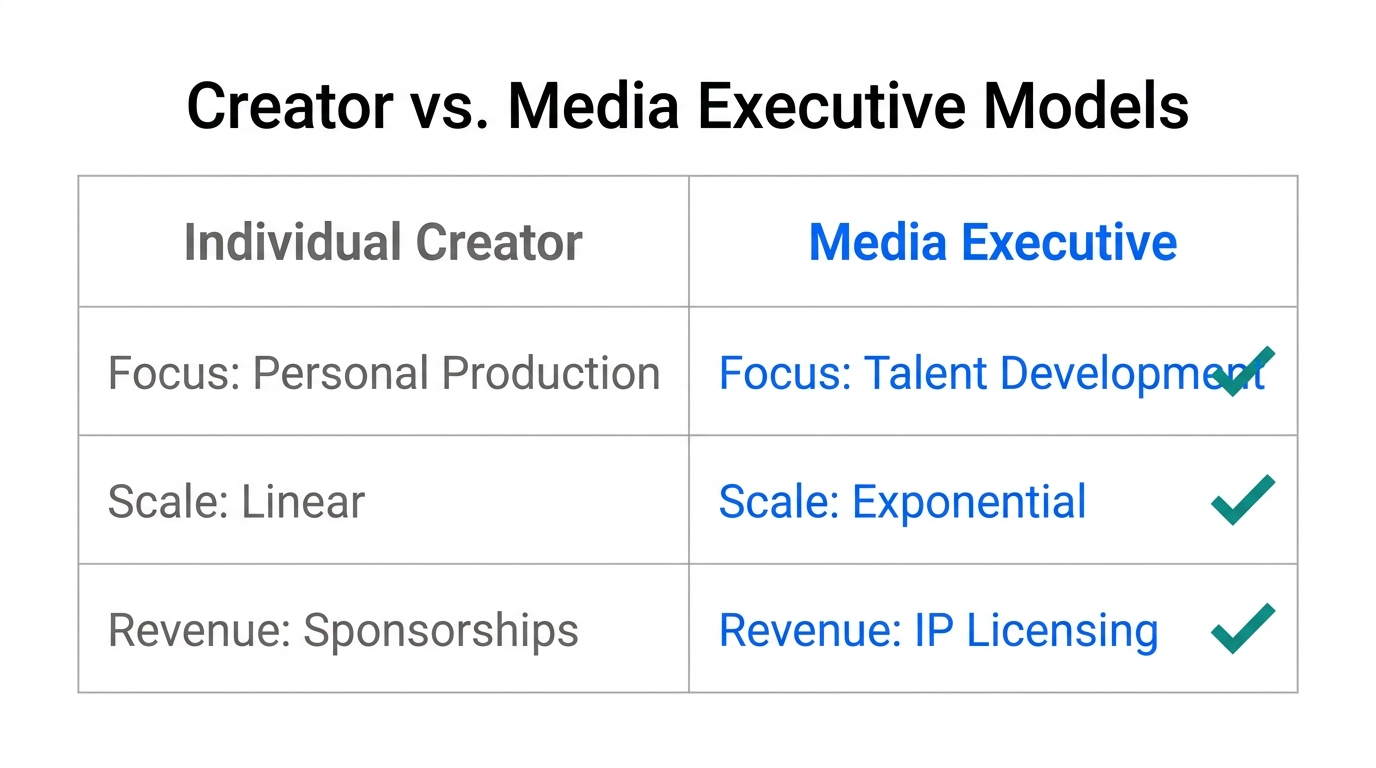
The hardest leap in the media business models of 2026 is the transition from individual creator to executive. This requires moving from "doing the work" to "managing the talent." We see this in the story of Michael Harris (Harry O), the co-founder of Death Row Records. Even while serving a life sentence, Harris was an executive who understood the power of talent spotting. He famously funded an early Denzel Washington play with a million dollars, recognizing greatness before it was mainstream. According to Broadway World, many of these early investments in talent generate billions in long-term ticket sales and licensing.
To make this transition, creators must adopt the "Second Wind" mindset. The brain, like the body, has a second wind that kicks in just as you are about to fatigue. Scaling a media company requires pushing through the initial burnout of production and into the strategic phase of talent acquisition. You must be willing to "accept your own mediocrity" in the early stages of management—as Jerry Seinfeld suggests—to eventually reach a point where you can polish a team into a world-class unit.
The 2026 Playbook: Leveraging Micro-Moments
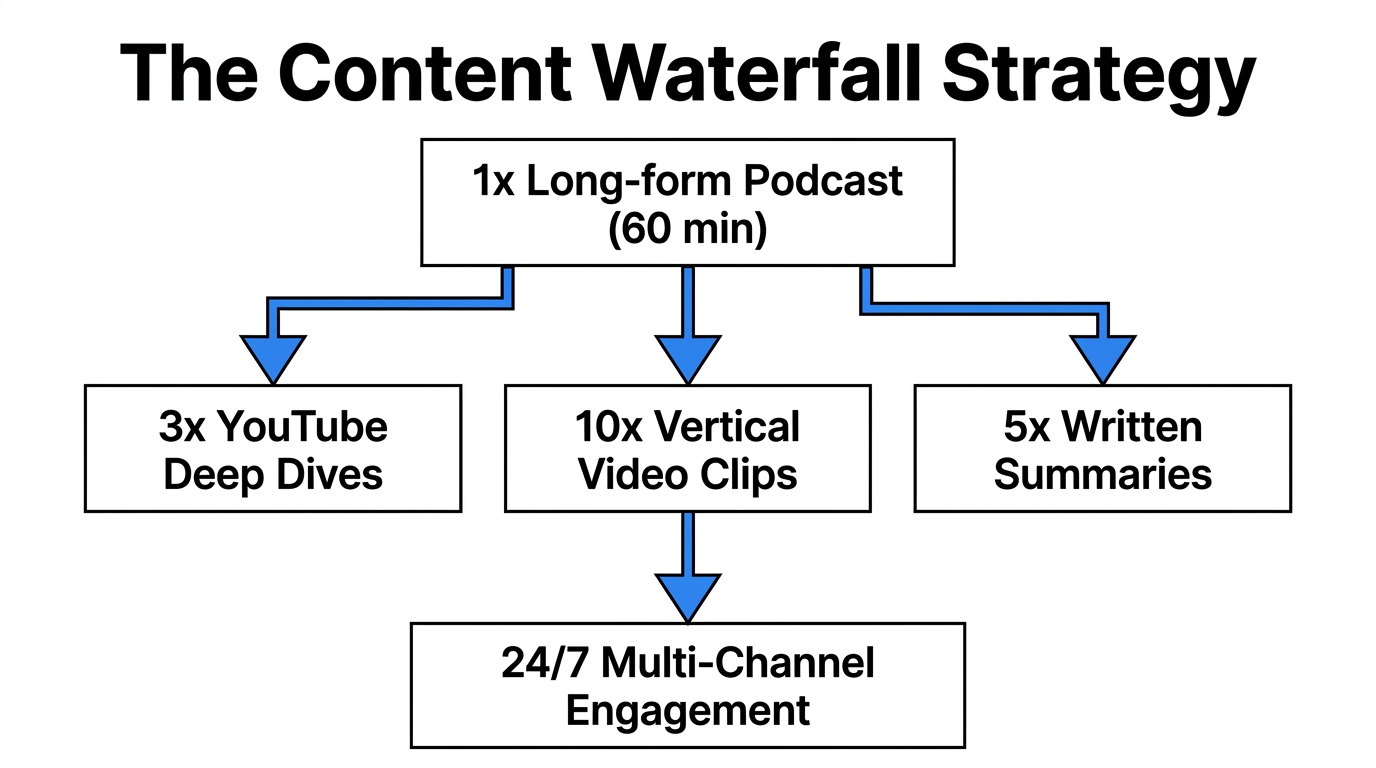
One of the most actionable lessons from the Bill Simmons playbook is his approach to micro-moments. A recent viral video showed Simmons, a man worth hundreds of millions, carrying a school chair and a microphone through his office to jump on a podcast because an NFL trade (the Micah Parsons trade) had just happened. He couldn't wait for a scheduled recording; he had to be part of the instant conversation. This is influencer-led growth in its purest form—responding to high-engagement moments with the speed of a fan but the reach of a mogul.
For brands and creators in 2026, the playbook looks like this:
- Identify the Vertical: Don't try to own "fitness"; try to own "recovery for marathon runners." Use tools like Stormy AI to find the exact creators dominating that micro-niche.
- Establish Stewardship: Ensure every piece of content—from a tweet to a documentary—passes through a human filter of "taste." Do not let AI automate away your brand's soul.
- Own the Infrastructure: Like John Bragg, look for the "freezing plant" of your industry. Is it a newsletter on Beehiiv? Is it a private community for your app users?
- Pounce on Micro-Moments: When a trade happens, or a new feature drops, or a competitor fails, be the first voice to provide a "fan-first" perspective.
- Scale Through AI Outreach: Once you have a winning formula, use an AI agent to manage creator relationships at scale, allowing you to focus on being the "Steward of Taste."
By following this strategy, brands can achieve what Simmons did: a near-monopoly on attention within a specific demographic. Whether you are running campaigns on Google Ads or tracking app installs via AppsFlyer, the ultimate goal is to have the audience trust your voice more than the platform's algorithm.
Conclusion: The Future of Media is Personal
Final wrap-up on scaling influencer-led media through the lens of Bill Simmons.The Bill Simmons the Ringer strategy teaches us that in 2026, trust is the only currency that doesn't inflate. By being a steward of taste, staying resilient in the "pain cave," and treating media like a craft rather than a commodity, you can build a company that is not just successful, but acquisition-ready for the giants like Spotify. The technology may change—from radio satellites to AI search engines—but the human desire for authentic connection remains constant. To start building your own media empire and discovering the creators who will define your brand's future, discover creators on Stormy AI and begin your journey toward vertical dominance today.