In the oversaturated digital ecosystem of 2026, the barrier to entry for attention has moved from "high" to "absurd." We are no longer competing against other brands; we are competing against AI-generated dopamine loops, personalized entertainment, and a global audience that has seen everything twice. To break through, you can't just be better; you have to be noteworthy. Enter Sperm Racing, a viral phenomenon orchestrated by 17-year-old founder Eric Zhu that has redefined viral marketing tactics in 2026. It’s a masterclass in using absurdity to anchor a serious conversation about male fertility, and it provides a blueprint for every growth marketer looking to build a distribution strategy for startups that actually sticks.
The 'Marry Me Chicken' Principle: Why Your Hook Needs High Tension
Learn how the marry me chicken philosophy creates irresistible value for your target customers.
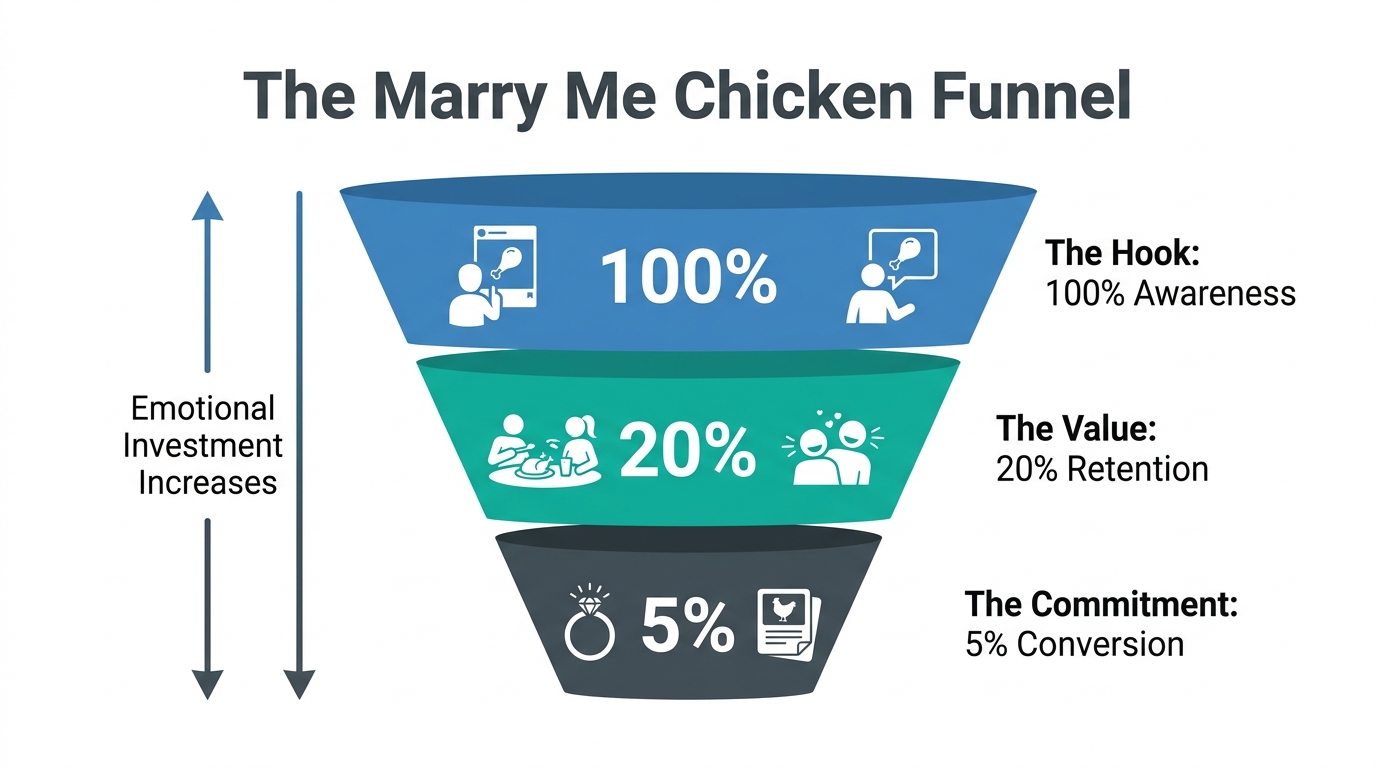
Most marketing fails because it is polite. In 2026, politeness is invisible. To understand why something like a microscopic race goes viral, we have to look at the "Marry Me Chicken" principle. As discussed on My First Million, this concept stems from a chicken recipe so legendary that it supposedly compels a man to propose on the spot. It isn't just "creamy chicken"; it is a high-tension hook that promises a life-altering result.
Your product or campaign needs a similar, remarkable hook. If you are just another SaaS tool or e-commerce brand built on Shopify, you are playing a losing game. You need a narrative that makes people stop and ask, "Is this actually happening?" When users visit Sperm Racing, they are greeted by a manifesto that leans directly into this tension. By refusing to blink first, the brand forces the audience to engage with the absurdity, which naturally leads to organic distribution.
"The problem with most businesses adopting AI and new marketing strategies is a problem of imagination, not capability."Analyzing the Sperm Racing Manifesto: Serious Solutions Hidden in Silly Projects
A deep dive into the world's first sperm race and its viral marketing potential.The brilliance of the Eric Zhu marketing strategy is the juxtaposition of a joke and a crisis. While the surface-level event—4,000 people watching sperm swim toward a microscopic finish line—is ridiculous, the underlying message is dead serious. Male fertility is declining globally, with sperm counts reportedly dropping by half since the 1970s.
By framing a health crisis as a sport, Zhu created a "Trojan Horse" for awareness. The manifesto doesn't lead with medical jargon; it leads with a racetrack. This is how you master brand awareness stunts in 2026. You find a high-gravity problem—like fertility, climate change, or financial literacy—and you wrap it in a layer of entertainment that is too weird to ignore. This allows the brand to capture the top-of-funnel attention of people who would never click on a standard medical ad.
| Element | Traditional Marketing Approach | 'Noteworthy' Marketing Approach |
|---|---|---|
| Hook | "Buy our fertility supplements" | "Watch a live sperm race in LA" |
| Distribution | Paid Google Ads | Organic viral loops & PR buzz |
| Tone | Professional and safe | Absurd and high-tension |
| Result | Linear growth (CPAs rise) | Exponential awareness |
How to Generate PR Buzz by Refusing to 'Relieve the Tension'
The mistake most marketers make when doing something "edgy" is they apologize too early. They wink at the camera. They say, "Hey, we're just kidding!" Eric Zhu and his team did the opposite. Even when facing venue cancellations at the Palladium due to the controversial nature of the event, they doubled down. They moved the event to LA Center Studios and kept the branding consistent.
By refusing to relieve the tension of the marketing joke, you force the media to cover you. Is it a real sport? Is it a prank? The ambiguity is the fuel. In 2026, viral marketing tactics thrive on this grey area. Journalists at outlets like The Times or Forbes aren't looking for another press release about a seed round; they are looking for cultural anomalies. Sperm Racing is a cultural anomaly.
"If you want to be noteworthy, you have to be willing to be the person who took a silly business seriously."The 2026 Viral Playbook: From Ad Buyer to Cultural Architect
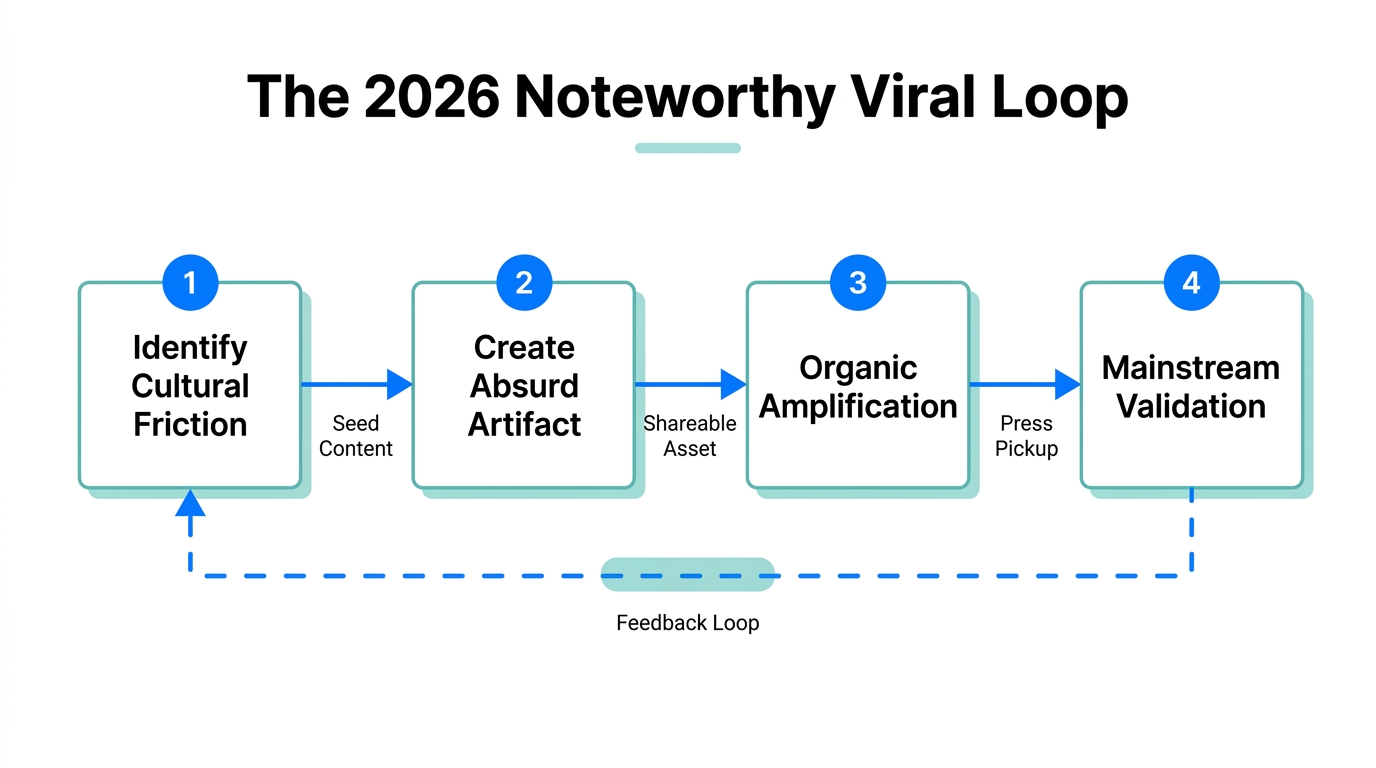
In 2016, you could win by being a great Facebook Ad buyer. You optimized your bidding, you tweaked your creative, and you printed money. In 2026, that game is played by AI agents. Humans have been promoted to the role of Cultural Architect. Your job isn't to manage budgets; it's to design events that capture the zeitgeist.
This shift requires tools that can identify the right amplifiers. Platforms like Stormy AI have become essential in this new era. To make a stunt like Sperm Racing work, you need to find the specific niche creators who will appreciate the absurdity. Using AI-powered creator discovery on Stormy AI, a brand can instantly find 100 micro-influencers in the "biohacking" or "absurdist tech" niches and coordinate a massive outreach campaign to ensure the event is the only thing people see on their TikTok feeds.
Step 1: Identify the Tension Point
Find a topic that people care about but are uncomfortable or bored discussing. In the Eric Zhu case, it was male fertility. For your startup, it might be the inefficiency of 20th-century banking or the boredom of corporate training—often solved with modern stacks involving Stripe for payments and Zapier for automation.
Step 2: Build the 'Remarkable' Layer
Create an event or a product feature that is visually striking and easy to explain in one sentence. "A racetrack for sperm" is a perfect 10/10 remarkability score. It is easy to visualize and impossible to forget.
Step 3: Amplify with AI Precision
Don't just blast ads. Use Stormy AI to discover creators who are already talking about adjacent topics. Send them hyper-personalized invites using automated AI agents, and let them be the ones to break the news to their audiences. This builds organic credibility that a paid ad can never touch.
Why 'B-Minus' Entrepreneurship Fails in 2026
Why average business efforts are failing in the age of advanced artificial intelligence tools.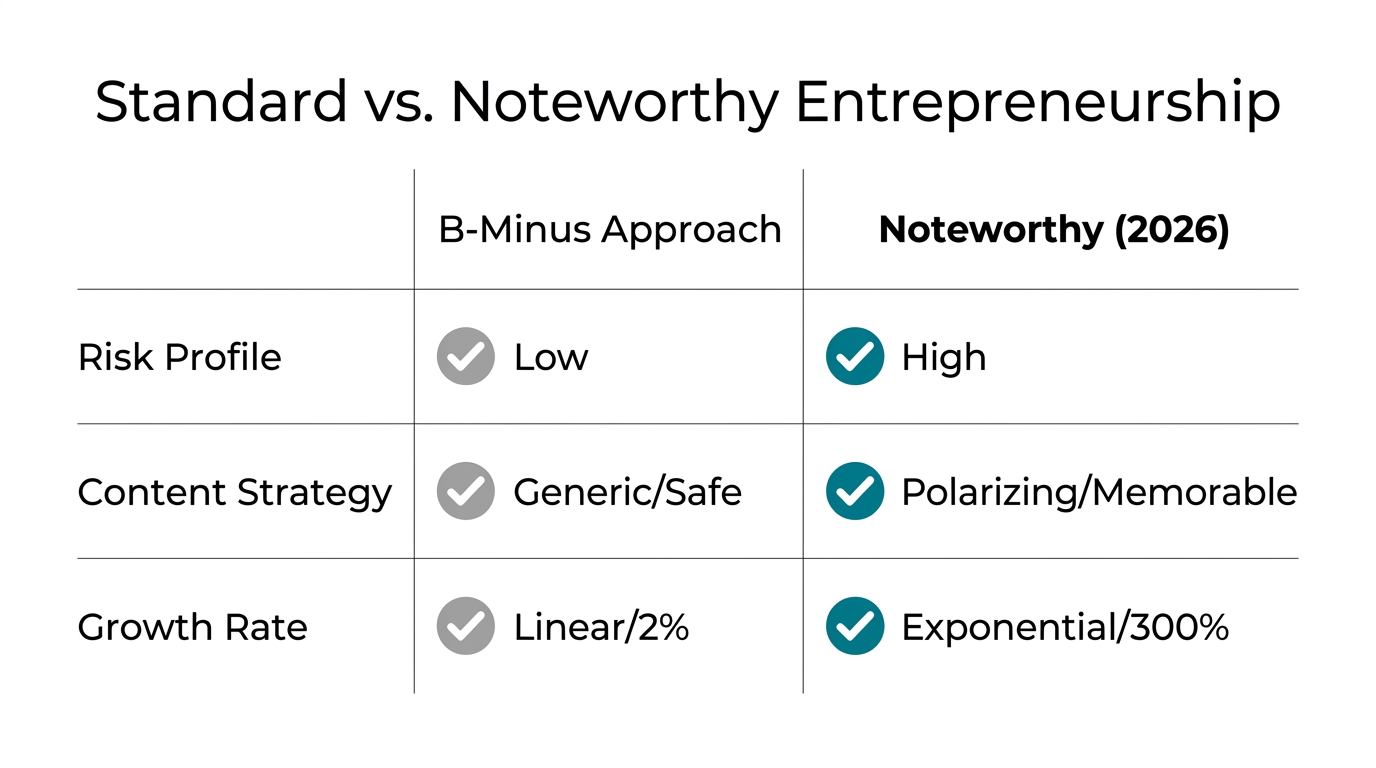
The research is clear: the "middle" is disappearing. You are either a massive, bank-friendly commodity like a Mercedes-Benz dealership (which, as Nick Saban found, can be worth $700 million if you own the right territory) or you are a remarkable, outlandish disruptor. The B-minus entrepreneur—the one who builds a slightly better project management tool or a generic supplement—is getting crushed by AI-generated competitors and rising customer acquisition costs.
To survive as a startup in 2026, you must choose a side. You can either follow the Nick Saban / John Elway model of partnering with established giants and dominating a local radius, or you can follow the Eric Zhu model of being so remarkable that the radius doesn't matter. There is no longer room for "safe" marketing. Safe is the most dangerous place you can be.
"Business has many moving parts—product, team, market pricing—creating lots of directions to explore. Most stuck points are just temporary plateaus, not dead ends."Conclusion: The Future is for the Remarkable
The Sperm Racing case study isn't just a funny story about a 17-year-old in LA; it’s a preview of the future of growth. As we move further into 2026, the brands that win will be those that act as cultural architects rather than mere vendors. They will use unconventional growth hacks to spark conversations, and they will use AI tools like Stormy AI to scale those conversations across the creator economy.
Stop trying to be slightly better than your competitor. Start trying to be the most noteworthy thing in your customer's day. Whether you are selling male fertility tests, AI-powered e-commerce agents, or luxury cars, the principle remains the same: find the tension, build the hook, and never blink first.