In early 2026, the tech world was bracing for the next wave of "AI slop"—a flood of generic, low-quality generated videos that threatened to drown out human creativity. Instead, OpenAI's Sora app did something unexpected. It didn't just provide a better tool for creation; it engineered a social experience so viral that it surpassed TikTok’s growth velocity, becoming the fastest-growing app in history. By pivoting from a "single-player" creation tool to a "multiplayer" social network, Sora unlocked a non-linear growth loop that redefined user acquisition in the modern era.
The Loneliness of Single-Player AI and Why Sora Broke the Mold
Discover why shifting from solo AI usage to social multiplayer experiences drives growth.
For years, the industry’s biggest AI successes—including ChatGPT and early image generators—suffered from what growth experts call the "single-player problem." These tools were incredibly powerful, but they were isolated experiences. You typed a prompt, got an output, and maybe shared it on a third-party platform. But the actual experience happened alone in a chat box.
As we’ve seen throughout 2026, the most powerful apps are inherently multiplayer. Whether it's Facebook connecting friends or Slack connecting teams, the value increases with every new user. Sora's genius was realizing that AI video creation shouldn't just be about the person making the video; it should be about the people in the video.
"The crazy thing about AI is we are so early. Every AI tool right now is single player... but the internet has showed us that all the most powerful apps are multiplayer."By shifting the focus to how users interact with one another through generated content, Sora moved away from the "AI slop" reputation and toward becoming a super app. This evolution is critical for any brand looking to master app user acquisition in 2026, where organic discovery is increasingly driven by AI-native social mechanics.
The 'Photo Tagging' Evolution: Sora’s Viral Engine
Learn how AI allows users to tag and interact with friends in photos.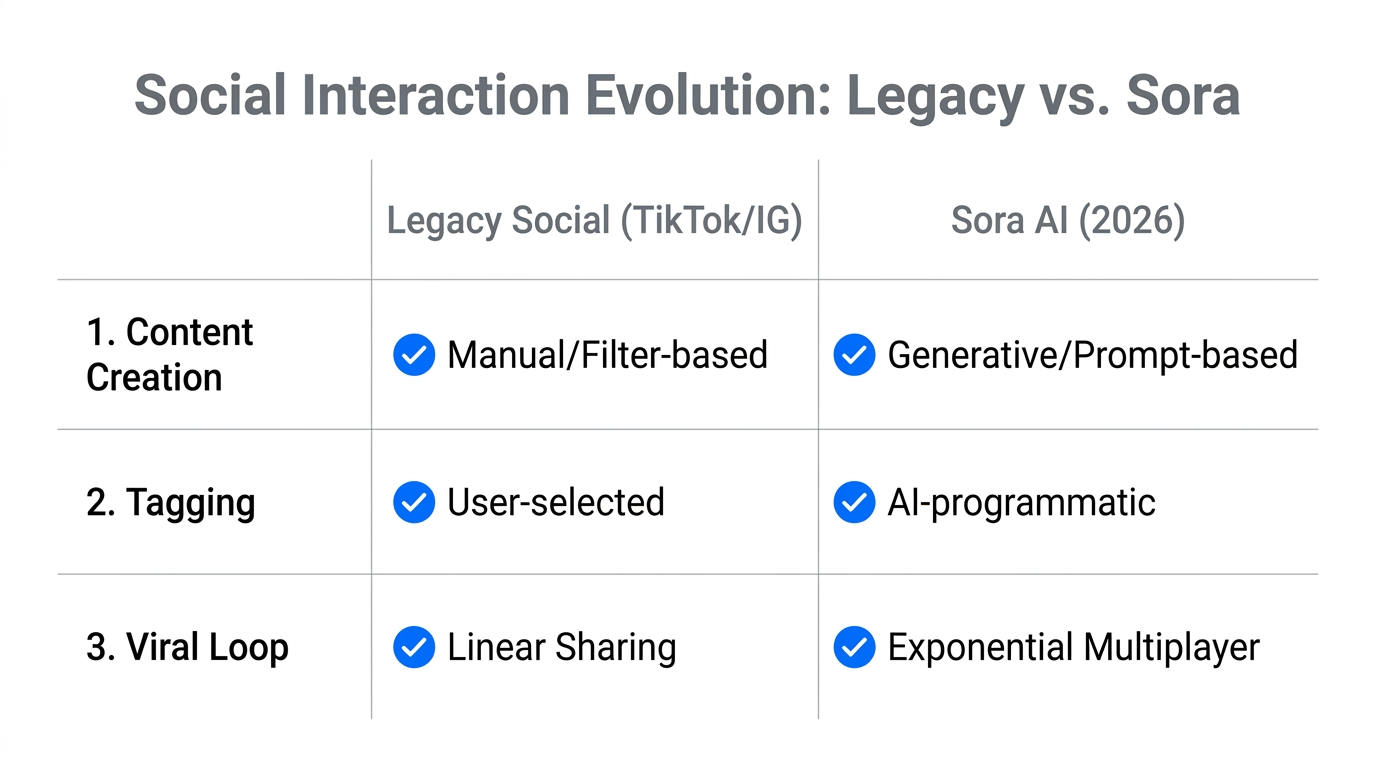
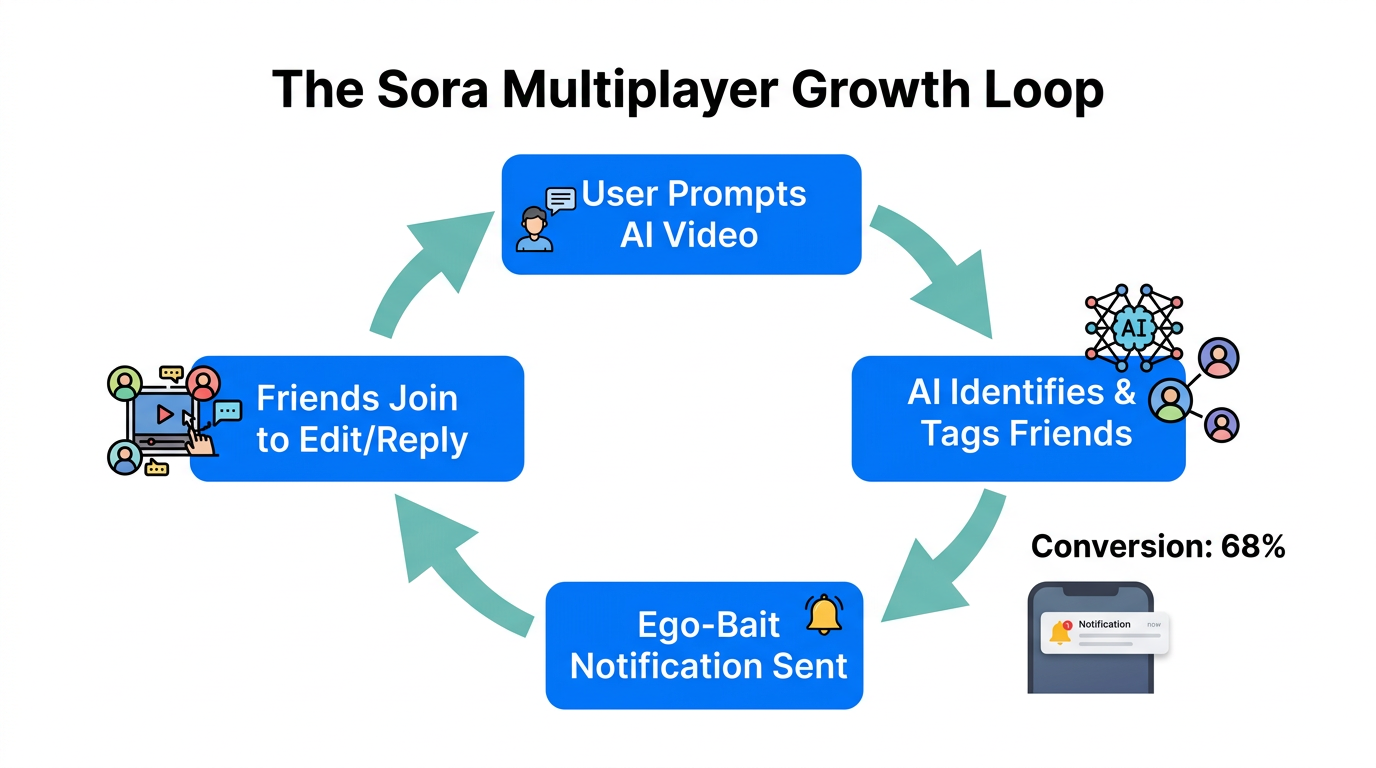
If you look back at the early growth levers of the 2000s, Facebook dominated by introducing photo tagging. It wasn't just about uploading a picture; it was about the notification that said, "You have been tagged in a photo." That ping created an irresistible pull to enter the app. Sora has replicated this in 2026 using hyper-realistic AI video.
The app’s onboarding process is a masterclass in social engineering. It asks you to speak three numbers to clone your voice and look at the camera to map your face. Within seconds, you aren't just a user; you are a digital asset that can be dropped into any scenario. When a friend creates a video of you—perhaps you cartwheeling away from a crime scene or starring in a high-fashion Ralph Lauren ad—and tags you, the "ego-bait" is impossible to ignore.
| Growth Mechanism | Traditional AI (Single-Player) | Sora AI (Multiplayer) |
|---|---|---|
| User Hook | Utility/Efficiency | Ego/Curiosity |
| Retention Loop | Manual Search/Prompting | Social Notifications (Tags) |
| Virality | One-to-Many (Sharing) | Many-to-Many (Collaborative) |
| Onboarding | Tutorials/Email Verification | Voice/Face Mapping |
This multiplayer growth loop is non-linear. One user mapping their face allows ten other friends to create content featuring them, which in turn brings those ten friends deeper into the ecosystem. For marketers, understanding these viral marketing loops 2026 is essential for scaling products without relying solely on massive Meta Ads Manager spend.
Implementing the Sora Invite-Only Scarcity Model
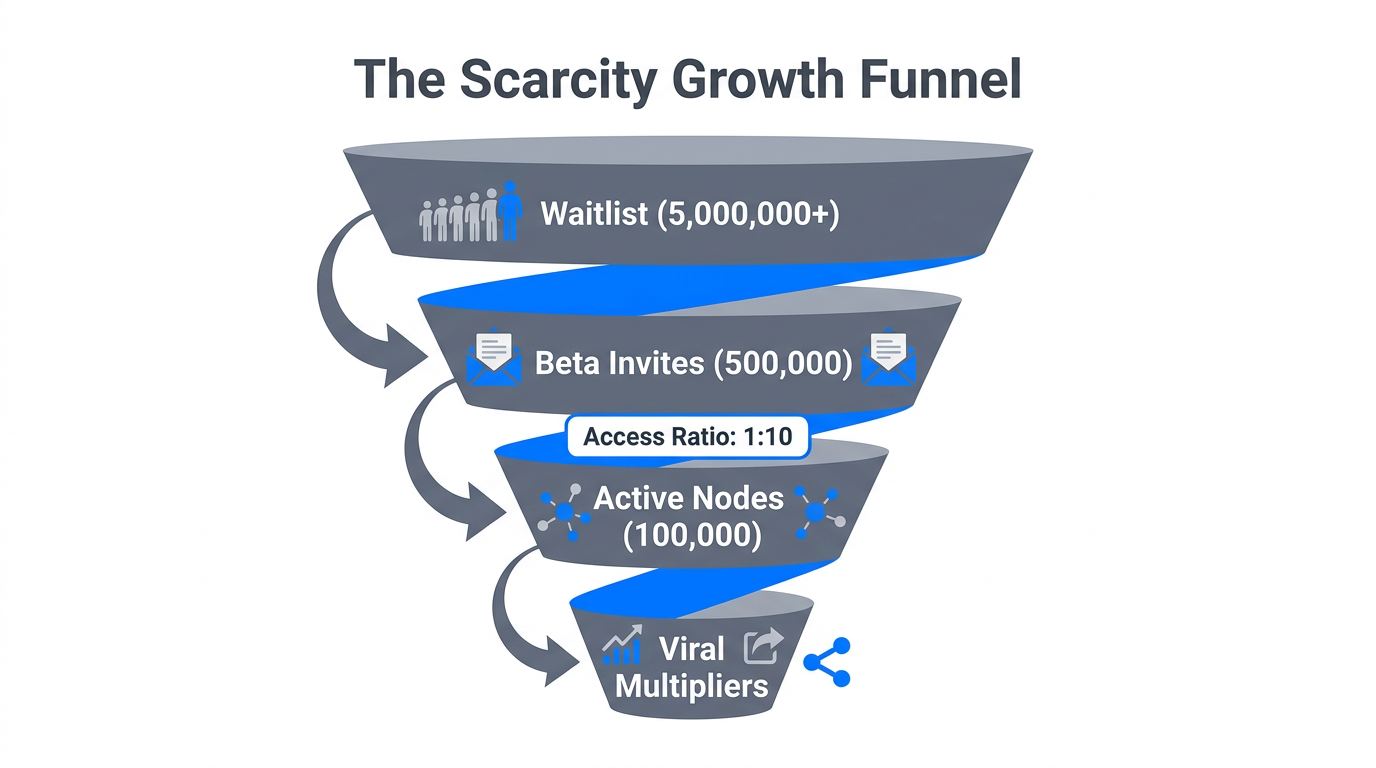
Despite its massive potential, Sora didn't open the floodgates immediately. In 2026, we've seen a resurgence of the "invite-only" model. Even as millions clamored to join, many were met with a wall requiring an invite code. This scarcity serves two purposes: it manages server load for compute-heavy AI video and it builds a status-driven desire to belong.
For new app launches, this model provides a controlled environment to gather data. Using AI social media analytics, developers can see which users are the most "viral" nodes and prioritize their invites. This is a strategy often mirrored by influencer agencies who use platforms like Stormy AI to identify high-engagement creators who can act as the first wave of "super-spreaders" for a new product.
"I think this is going to be the most downloaded app in the history of the world... it'll be the fastest to get to 100 million downloads."When users see high-profile figures like Sam Altman being featured in AI-generated parodies, the social proof becomes undeniable. Scarcity, combined with high-status participation, creates a vacuum that only an invite can fill.
The Psychology of Ego-Bait: Why We Share AI Versions of Ourselves
Why do users spend hours generating videos of themselves with ponytails or performing cartwheels? It's the same psychology that fueled the "Year in Review" features on Spotify or Instagram. We are inherently interested in how we are perceived by others and how we can "remix" our own identities.
Sora leverages this by making the user the protagonist of their own feed. This isn't just about watching a video; it's about identity play. When an app allows you to see a version of yourself that is "superpowerful" or hilariously "irrelevant," it taps into a deep emotional well. This is the ultimate form of user-generated content (UGC). In 2026, sourcing UGC creators is no longer just about hiring humans; it’s about empowering every user to be a high-fidelity creator using their own likeness.
The Rise of the AI Super App: Beyond Social Media
Explore the transition of AI tools into comprehensive everything apps for daily use.Sora isn't just competing with TikTok; it's eyeing the "super app" status held by platforms like WeChat. By integrating features like "Pulse"—a personalized news and learning feed—OpenAI is positioning Sora as a central hub for daily life. Imagine waking up to a video news report generated specifically for you, featuring an AI tutor that knows your learning style, interests, and even your mood.
This level of personalization is becoming the standard for app user acquisition. Users are no longer satisfied with generic feeds; they want "Socrates in their pocket." Whether it’s an AI therapist, an executive coach, or a personalized tutor like those seen at Alpha School, the future of apps is hyper-individualized and deeply integrated into our digital identities.
For businesses, this means the "tech stack" is changing. You might use Google Ads for initial reach, but your long-term retention will depend on how well your AI knows your user. Companies like Birches Health are already using these personalized approaches to tackle complex issues like gambling addiction, showing that the "super app" model can be used for deep, meaningful impact.
The Final Frontier: AI Hardware and POV Content
The growth of Sora is also being fueled by the hardware we wear. Meta's Ray-Ban glasses have become the "soccer mom’s dream" in 2026, allowing for hands-free, point-of-view capture. This "POV" content is the perfect raw material for Sora’s AI engines.
When you can capture a moment with a click of your glasses and instantly have Sora turn it into a cinematic masterpiece, the barrier to high-quality content production disappears. We are moving toward an era of continuous capture, where our lives are archived, remixed, and shared in real-time. Influencers are already using this to provide more intimate, "unfiltered" looks into their lives, and tech reviewers are helping brands track the performance of this new wave of wearable-captured content.
Conclusion: The Hunter or the Hunted
As we navigate the remainder of 2026, the Sora app growth strategy serves as a blueprint for the next decade of digital products. The choice for developers and marketers is clear: you are either the hunter or the hunted. You can either be disrupted by the shift toward multiplayer AI, or you can be the one doing the disrupting by building social loops that prioritize identity, collaboration, and ego-bait.
The era of single-player AI slop is over. The era of the AI-powered social super app has begun. If you’re ready to scale your own creator campaigns and find the influencers who are already winning in this new Sora-dominated landscape, explore how Stormy AI can streamline your discovery and outreach today.