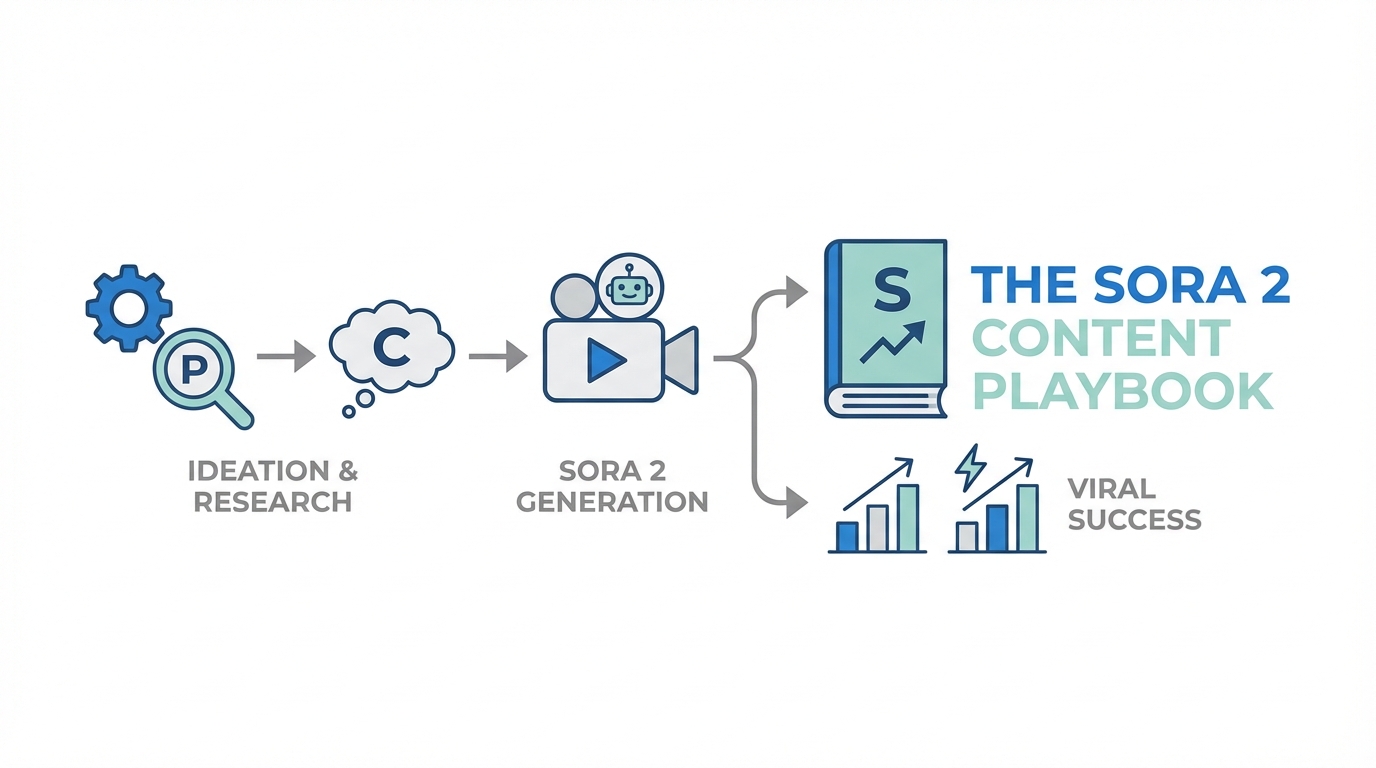
In the rapidly evolving landscape of digital media, the barriers to high-end video production are crumbling. We are entering an era where distribution is the new moat, and the tools we use to capture attention are becoming more powerful than ever. With the release of Sora 2, the ability to generate Hollywood-level visuals is no longer reserved for those with massive budgets; it is now in the hands of any creator with a strategic workflow. This guide explores a comprehensive Sora 2 tutorial that chains the deep research capabilities of Perplexity with the creative intelligence of Claude to build a viral content machine.
Why Distribution is the New Moat in the AI Era
History shows us that those who master new platforms early create massive media empires. Just as early adopters of YouTube between 2006 and 2012 built lasting influence, and those who understood Instagram from 2012 to 2019 dominated the market, Sora 2 video generation represents the next frontier. If you can create viral videos using AI, you own the attention. Once you own the attention, launching mobile apps, SaaS products, or micro-SaaS ventures becomes significantly easier.
The unfair advantage today doesn't lie in having the best camera; it lies in the synthesis of AI tools to move from a raw idea to a high-performing video faster than the competition. By using a structured AI video content workflow, creators can surgically develop prompts that have a much higher likelihood of success on platforms like TikTok and Reels.
Phase 1: Using Perplexity as a Deep Research Agent

Before touching a video generator, you must understand the psychology of your audience. Most creators fail because they guess what people want. Instead, we use Perplexity as a deep research agent to identify "scroll-stopping" triggers. The goal is to move beyond generic content and tap into high-arousal emotions like validation-seeking, FOMO, and pattern recognition.
For example, if you are building a tool like Idea Browser, your prompt to Perplexity should look like this:
"I run a startup that provides validated startup ideas and trends. I need to create short-form video that will go viral for an audience of entrepreneurs. What kind of short-form content will get high engagement? Show examples and frameworks."
Perplexity's deep research capability (accessible via the toggle at the bottom of the interface) will analyze current trends and return frameworks like the Contradiction Hook (e.g., "I have zero coding skills but built a $100k SaaS") or the Micro-Tutorial. This research ensures your video isn't just visually stunning but is psychologically engineered to keep people watching.
Phase 2: The Strategist Prompt for Claude
Once you have gathered deep research data, the next step is to ingest it into Claude. We use Claude as our Social Media Content Strategist. By providing the raw data from Perplexity, we can ask Claude to brainstorm 10 distinct viral video concepts that align with the identified psychological triggers.
The Playbook for Claude:
- Step 1: Copy the entire research output from Perplexity.
- Step 2: Set the persona: "You are a skilled social media content strategist and short-form video expert."
- Step 3: Input the goals and requirements, such as "generate 10 concepts for LinkedIn and TikTok."
This process results in specific, actionable ideas like "POV: You just got your first dollar on Stripe" or "I cloned a $100M SaaS in 4 days." These concepts are much more likely to resonate than a generic product demo because they leverage social proof and controversy.
Phase 3: The AI Video Evaluation Framework

The biggest mistake creators make is stopping at the idea phase. To maximize your how to create viral AI videos strategy, you need an evaluation layer. Ask Claude to rate each of the 10 concepts on a scale of 1-10 based on three specific criteria:
- Hook Strength: How attention-grabbing are the first 3 seconds? Does it use pattern interrupts?
- Emotional Curiosity Trigger: Does it invoke an immediate emotional response or a desire to see the resolution?
- Algorithm Fit: Is it trend-friendly for platforms like TikTok and Reels?
By using Claude as an evaluation agent, you can filter out mediocre ideas and focus your production energy on concepts with a score of 9 or 10. For instance, a concept that remixes a popular trend while adding unique social proof will almost always outperform a standard tutorial.
Phase 4: Sora 2 Prompt Optimization

Now that you have a winning concept, you must translate it into a language the AI video model understands. Claude for video prompts is the bridge here. You should ask Claude to generate a Sora 2 optimized prompt that accounts for the platform's specific technical constraints.
Currently, Sora 2 works best with videos between 10 and 15 seconds. When generating your prompt, ensure you include:
- Synchronized Speech: Sora 2 can generate speech. Use quotes for the exact lines you want the character to speak.
- Visual Elements: Describe the setting (e.g., "person at a desk, cinematic lighting").
- On-Screen Text: Specify exactly what text should appear, though the AI's rendering of text may vary.
- Timing: Explicitly state the duration to ensure the pacing matches the high-energy requirements of social media.
For example, a prompt for a Notion clone ad might describe a screen recording that transitions to a specific tool interface, ending with a clear CTA to a link in bio.
Phase 5: Scaling and Managing Your AI Video Strategy
While AI video generation allows you to create high-quality content solo, scaling a media brand often requires a mix of AI-generated content and human-led UGC (User-Generated Content). Tracking the performance of these videos across multiple platforms is essential to understanding what actually drives conversions for your app or service.

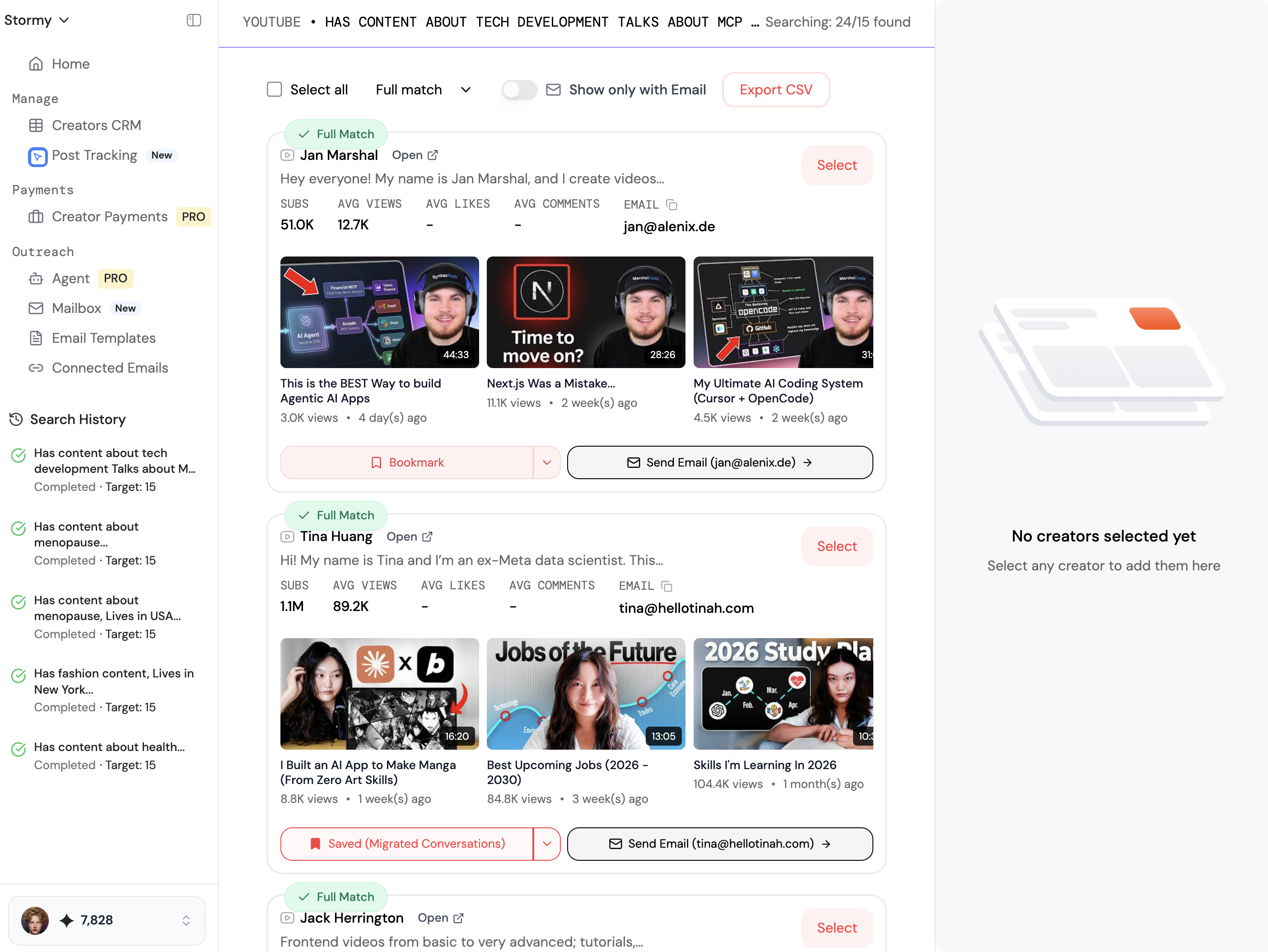
For brands and app developers looking to amplify their reach, tools like Stormy AI can help source and manage UGC creators at scale. By using Stormy’s AI-powered search and discovery, you can find influencers who match the aesthetic and audience of your AI-generated videos, creating a seamless blend of artificial and human content. Furthermore, managing the outreach and collaboration with these creators through a Creator CRM ensures that your distribution moat remains strong and organized.
The Future of AI Video Content
The era of the "blank page" is over. By following this Sora 2 tutorial and workflow—researching with Perplexity, strategizing with Claude, and producing with Sora 2—you can create a constant stream of high-quality content. Remember that iteration is key. If a video doesn't go viral immediately, ask Claude to analyze why and refine the visual style or hook for the next version.
As you build your audience, leveraging platforms like Stormy AI to track your posts and manage creator relationships will provide the operational backbone needed to turn attention into a sustainable business. The power of cinematic storytelling is now accessible to everyone; it’s time to start building your moat.