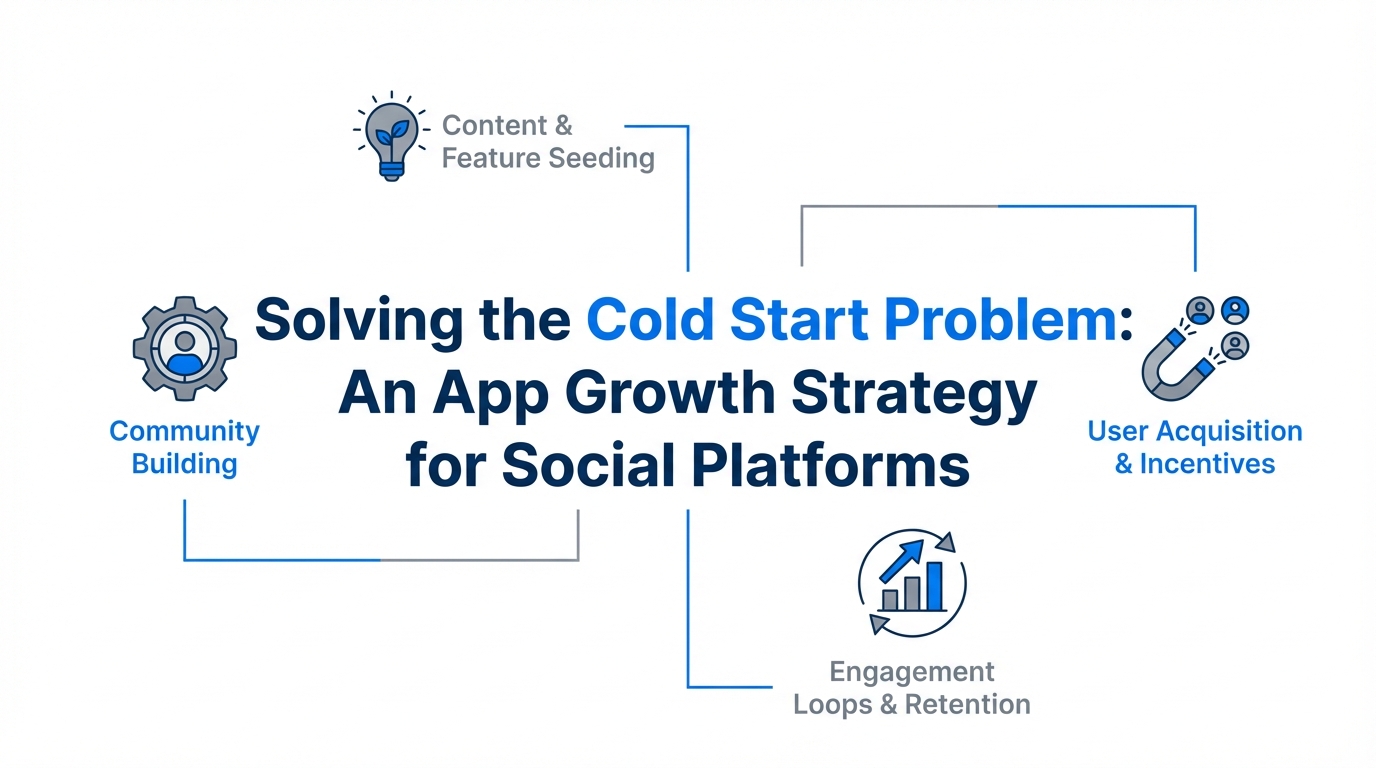
Launching a social app is the ultimate entrepreneurial paradox. For the product to be valuable, it needs users; but to get users, the product must first be valuable. This is the cold start problem app growth specialists have wrestled with for decades. If a new user joins your platform and finds a digital ghost town, they will leave immediately and never return—a phenomenon known as the "revolving door" effect. Building a social app isn't just about code; it's about engineering social density from zero, a concept often explored in Harvard Business Review research on two-sided networks.
Many founders attempt to solve this with massive VC-funded ad spend, but for solo founders building low-ARPU (Average Revenue Per User) products, that path often leads to bankruptcy. Instead, a new generation of entrepreneurs is utilizing a "Density over Breadth" philosophy, combined with hyper-efficient organic UGC machines. By focusing on social app marketing strategy that prioritizes community over clicks, founders like Jay of Nomad Table have scaled to over a million downloads and $65,000 in monthly recurring revenue without a single dollar spent on Meta or Google Ads.
Overcoming the Revolving Door Effect: The 15k Rule
The biggest mistake social app founders make is launching too early to too few people. When you launch a "find friends" or networking app, the utility is entirely dependent on who else is there. If your initial 100 users are spread across 100 different cities, the app is effectively broken for all of them. To prevent this, you must build a massive head-start through app waitlist growth hacks using tools like Waitlist to build pre-launch momentum.
Jay, the founder of Nomad Table, suggests that for a global social product, you need at least 15,000 waitlist signups before you even open the doors. This creates a "Day 1" surge that provides enough initial data for the algorithm and enough human connection to keep the first wave of users from bouncing. Even with 15,000 signups, the conversion to active users on launch day might only be around 40%, leaving you with 6,000 active participants to seed a global ecosystem.
"The app is a revolving door. If you don't have critical mass on day one, users will enter, see no one else, and leave forever. You have to solve the cold start problem before you even launch."
The 'Two-Person Density' Rule: Why Local Hotspots Matter
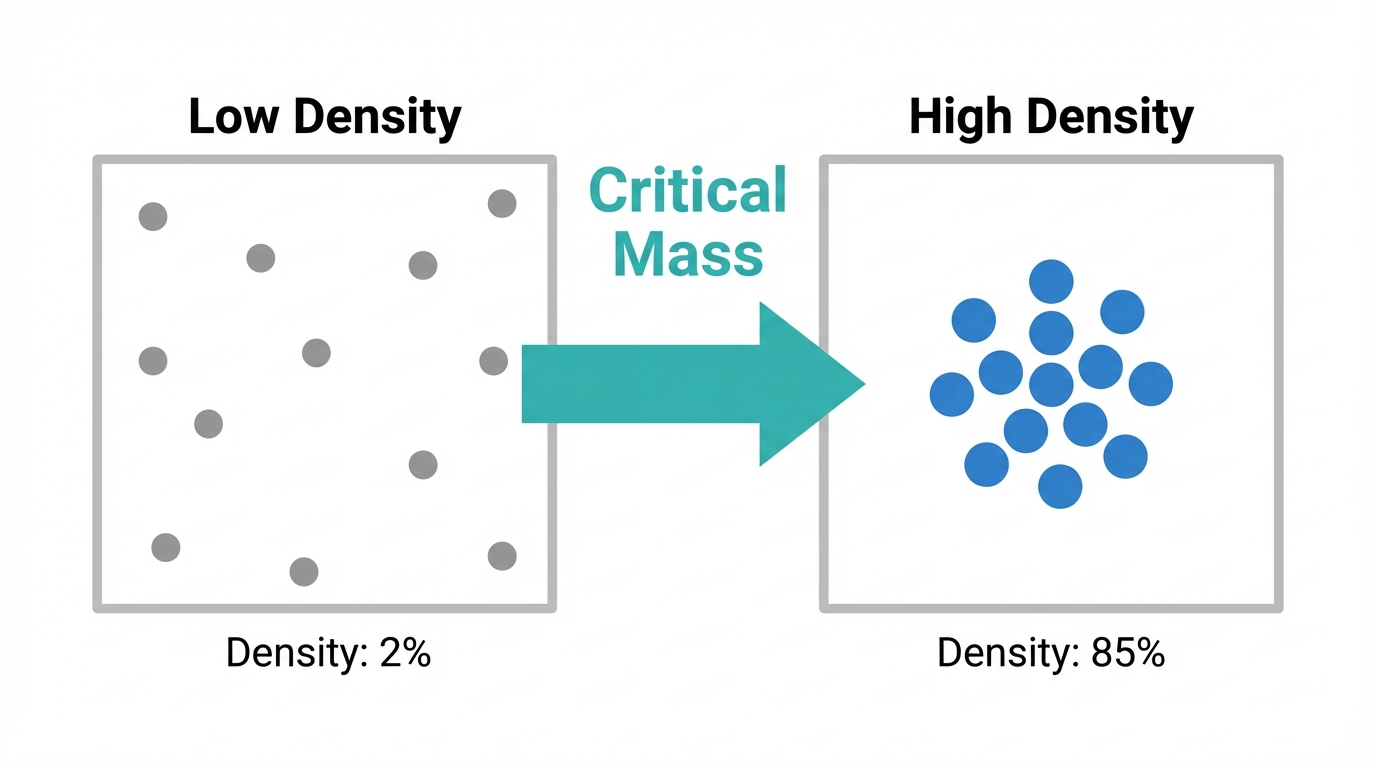
The consumer app entrepreneurship journey requires a shift in how you view success. You don't need a million users to have a successful app; you just need two people in the same place at the same time who want to talk to each other. This is the 'Two-Person Density' rule. Social apps function perfectly in micro-climates even if they are empty elsewhere.
By analyzing travel patterns, Jay realized that he didn't need to win the whole world at once. He only needed to win the popular solo travel hubs. In cities like Barcelona or Bangkok, even a small user base of 20-30 active travelers is enough to create a thriving social experience. This focus on density over breadth allows a social app to feel "alive" to users in key regions, while the founder works on expanding that density city by city.
For more on this, the industry-standard guide is The Cold Start Problem by Andrew Chen, which details how network effects can be engineered from tiny "atomic networks." If you can make the app work for two people in one hostel, you can make it work for two thousand in one city.
Organic vs. Paid: The Low-ARPU Reality
In the world of mobile app customer acquisition, the economics of social apps are notoriously difficult. Unlike a niche SaaS product or a high-ticket betting app, social platforms usually have a lower ARPU. If you are only making a few dollars per user per year through subscriptions or ads, you cannot afford a $5.00 Cost Per Install (CPI) according to recent CPI benchmarks from Business of Apps.
| Strategy | Average Cost | Scalability | Suitability for Social Apps |
|---|---|---|---|
| Paid Ads (Meta/Google) | High ($2-$10 CPI) | Predictable | Low (Hard to recoup ARPU) |
| Organic UGC | Low ($1-$2 CPM) | Viral-dependent | High (Best for growth) |
| Word of Mouth | Free ($0) | Unpredictable | Essential (The endgame) |
Paid ads are a "linear" growth lever: you put $1 in, you get a certain amount of users out. But social apps require exponential growth. This is why solo founders should prioritize organic distribution. By leveraging TikTok and Instagram Reels, you can achieve a "lottery ticket" effect where a single video brings in 100k downloads for nearly zero cost. Modern platforms like Stormy AI streamline creator sourcing and outreach, helping you manage these organic UGC machines more effectively.
The UGC Machine Playbook: Scaling to 44 Million Views
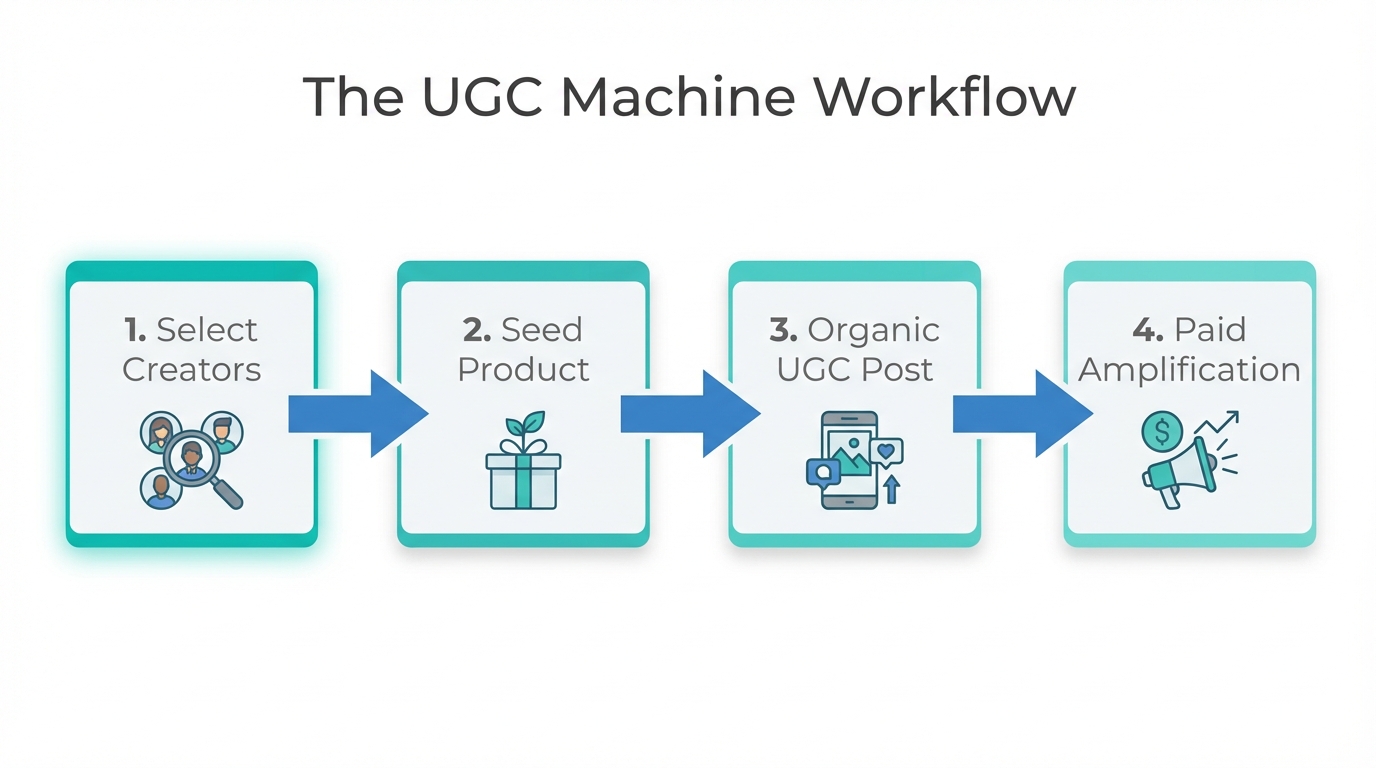
Jay manages a network of 60 creators who generate over 44 million views per month. This isn't done by hiring an agency; it's done by building a proprietary "UGC Machine." Here is the step-by-step playbook for scaling your social app marketing strategy through organic content:
Step 1: The Founder Must Be the First Creator
Do not outsource content until you have personally gone viral. You must understand the specific "hooks" and aesthetics that resonate with your target audience. Jay personally tested every format on his own accounts before ever giving them to a creator. This allows you to give feedback from a place of authority rather than guesswork.
Step 2: The 3-Second Hook Rule
In the modern attention economy, the only metric that predicts virality is the 3-second view-through rate. Jay looks for a 75% to 80% retention rate in the first three seconds. Insights from the TikTok Creative Center confirm that the first few seconds determine a video's success. If your hook rate is below 50%, the video is "cooked."
"I test all the ideas first. I tell creators to stick to my proven formats. If a format hits 80% retention in the first 3 seconds, I know it's going to go viral eventually. It’s a science, not a lottery."
Step 3: Performance-Based Compensation
Instead of high retainers, pay your creators on a CPM (Cost Per Mille) basis based on views. According to data on influencer rates, a range of $1.00 to $2.00 per 1,000 views is standard. This aligns the creator's incentives with your own: the better the video performs, the more they get paid.
To manage this many creators efficiently, you need more than just a WhatsApp group. Using an AI-powered influencer platform like Stormy AI allows you to discover creators in specific niches (like solo travel), vet their audience quality to avoid fake followers, and handle the outreach process automatically while you sleep.
Bridging the Gap: Tools for Conversion
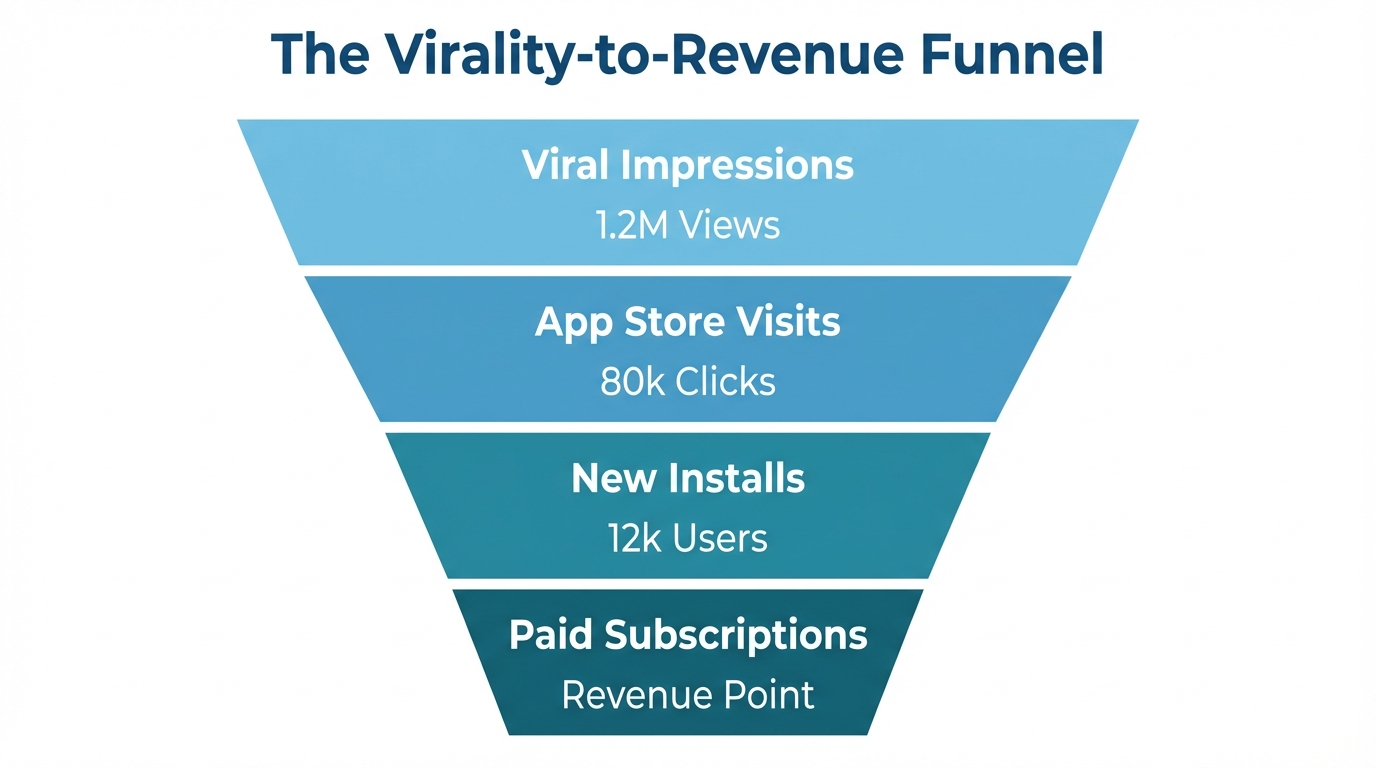
Virality is a vanity metric if it doesn't lead to revenue. To turn those 44 million views into a $65k MRR business, you need a sophisticated monetization stack. Many founders use Superwall to handle their paywalls. Superwall allows you to A/B test your pricing and subscription offers without needing to resubmit your app to the store.
Additionally, for content inspiration, tools like Spy Talk allow you to see what other apps are doing to go viral. By analyzing outlier videos—videos that get 100x the account's average views—you can find "text hooks" and visual styles that are already proven to work in the algorithm.
The 'Return to Tech' Safety Net: Managing Entrepreneurial Risk
One of the biggest barriers to consumer app entrepreneurship is the fear of failure. Jay's story offers a tactical approach to risk management. Before quitting his job in Big Tech, he ensured he left on good terms. Most major tech companies have a "return policy" or "boomerang" culture, often detailed on sites like Levels.fyi, where former employees can be rehired within a year without a full interview process if they left in good standing.
This "back pocket" offer, combined with 6-12 months of savings, creates a psychological safety net. It allows a founder to go "all in" on a social app project for one year. If it hits $65k MRR like Nomad Table, the risk was worth it. If it fails, the founder returns to a high-paying job with a wealth of new skills in UGC, growth marketing, and product development.
Managing risk doesn't mean avoiding it; it means knowing exactly where the floor is before you start to climb. For those looking to follow a similar path, starting with organic content while still employed is a great way to validate the idea before taking the final leap.
Conclusion: Building the Future of Social
Solving the cold start problem app growth hurdle requires a blend of data-driven marketing and relentless organic experimentation. By focusing on density, building a massive waitlist, and scaling a performance-based creator network, solo founders can compete with VC-backed giants. The future of social apps isn't built on broad, shallow reach, but on deep, localized density and the power of authentic UGC.
Ready to build your own creator machine? Start by identifying your winning hooks, then use Stormy AI to discover and automate your outreach to the next 60 creators who will take your app to a million downloads.