In the high-stakes world of performance marketing, the biggest enemy of a healthy ROAS isn't the algorithm—it is creative fatigue. As Meta Ads Manager becomes increasingly automated through black-box features like Advantage+, the manual labor of monitoring CTR decay and rotating assets has become a bottleneck for growth. However, a new paradigm is emerging: Agentic Automation. By leveraging open-source frameworks like OpenClaw, media buyers are shifting from reactive management to autonomous operations. In this guide, we will explore how to implement AI agents that monitor 7/14/30-day performance trends and scale your winners without human intervention.
The Rise of Agentic Performance Marketing
The transition from "Software as a Service" (SaaS) to "Agent as a Service" is more than a buzzword; it is a fundamental shift in how campaigns are managed. According to recent data, 75% of PPC professionals are now using AI for campaign optimization, contributing to a 340% year-over-year increase in the adoption of automated bidding. Unlike legacy tools that follow rigid "if-this-then-that" rules, agents powered by LLMs like Claude 3.5 Sonnet can interpret nuance, identify patterns in creative performance, and execute tasks via natural language commands.
"The shift from rule-based automation to autonomous agents is saving marketers an average of 13 hours per week on manual reporting." [Source: Zapier Automation Trends]
Platforms like OpenClaw have gone viral, amassing over 68,000 GitHub stars because they allow marketers to build "Skills"—modular markdown files that teach an AI how to act as a Performance Auditor or Creative Analyst. While Meta’s native Advantage+ campaigns can deliver a 22% higher ROAS, 58% of top-tier brands still find that agent-assisted management, which combines human strategy with AI speed, consistently outperforms fully black-box solutions.
Implementing the 'Creative Analyst' Skill to Fight Decay
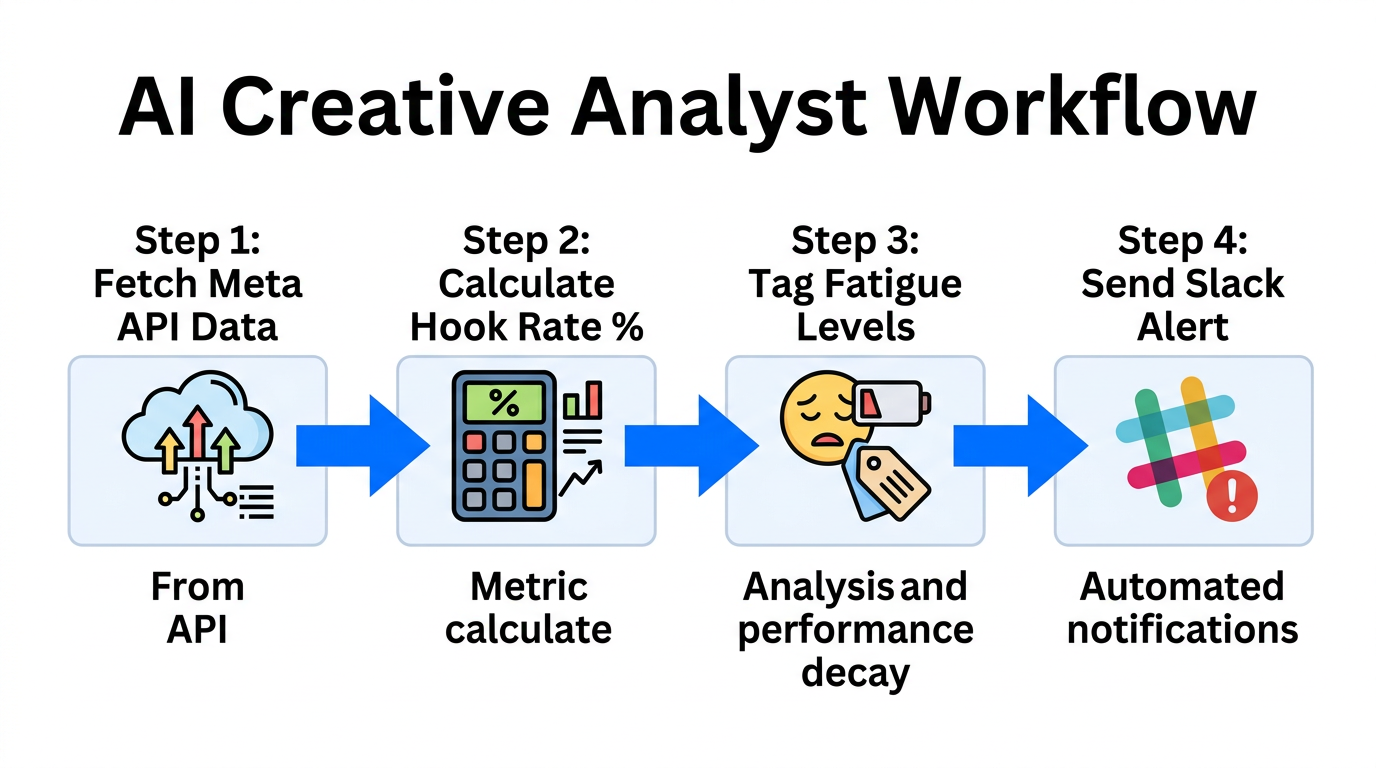
The core of Meta Ads creative fatigue management lies in the timing of your rotation. If you wait for the CPA to spike, you've already lost money. The "Creative Analyst" skill in OpenClaw is designed to track 7/14/30-day CTR trends automatically. By comparing the short-term Click-Through Rate (CTR) against the historical average, the agent can predict when an asset is nearing its expiration date.
To set this up, you define a Skill that pulls data from the Meta Insights API and performs a comparative analysis. The agent doesn't just look at the numbers; it looks at the velocity of decay. If the decay is accelerating, the agent can be programmed to automatically pause the ad and notify the creative team via Slack or Telegram that a new iteration is required. This proactive approach ensures that your account is always running high-intent creative, keeping the performance marketing automation loop healthy.
The 'Scale by 20% Daily' Framework for Winners
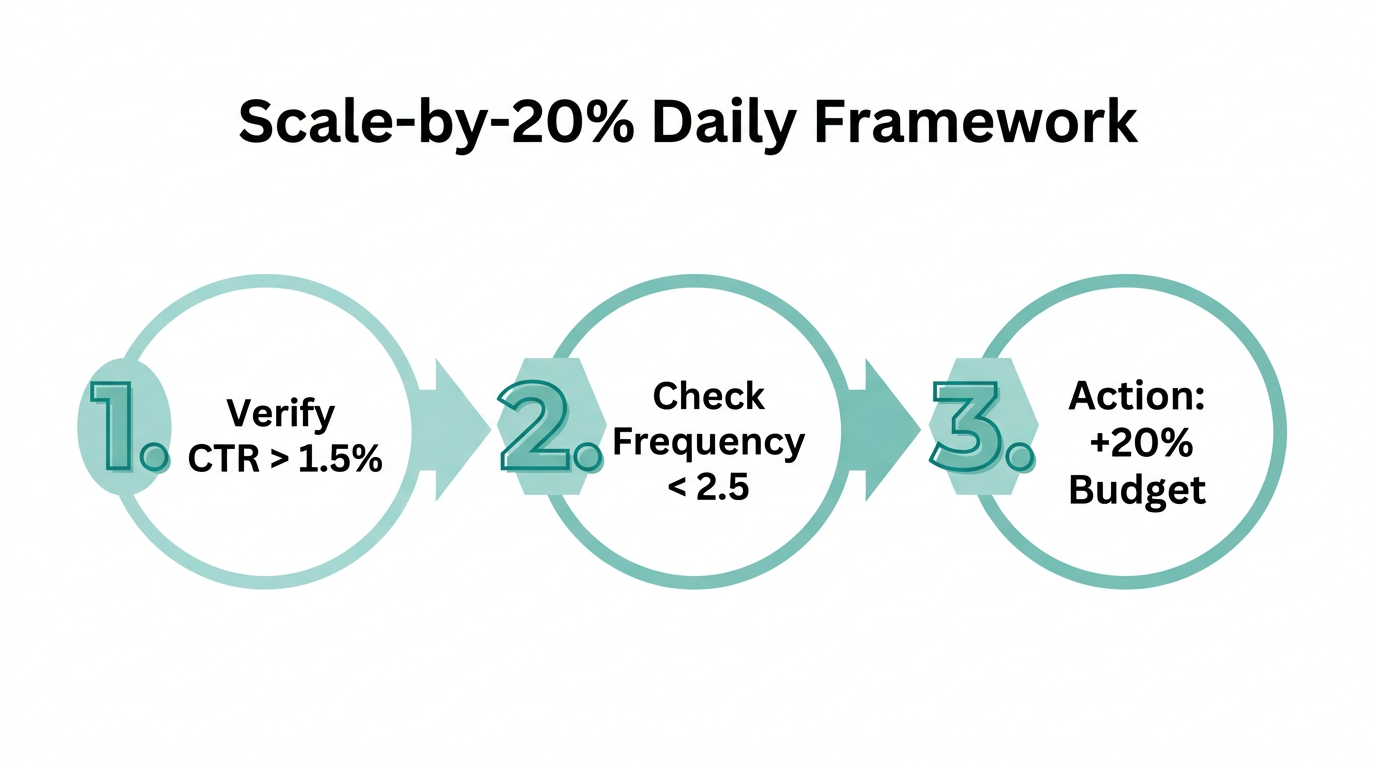
Once your AI agent identifies a winning creative—defined as an asset with stable CTR and a ROAS above your target threshold—the next step is scaling. Aggressive budget jumps often trigger the "Learning Phase" in Meta, which can destabilize performance. The 'Scale by 20% Daily' framework is the gold standard for sustainable growth.
Using OpenClaw, you can automate this budget adjustment. The agent checks the performance at the end of the attribution window (e.g., midnight PST) and, if the criteria are met, increases the ad set budget by exactly 20%. This method keeps the algorithm within its stable state while aggressively pursuing scaling Meta Ads. Success stories from the field, such as a B2B SaaS company reaching a 1.8x ROAS while the founder was away, demonstrate the power of letting an agent handle the tactical heavy lifting.
"Scaling isn't about how much you spend; it's about how much the algorithm can handle without breaking. The 20% rule is the universal speed limit for Meta Ads." [See Shopify's Scaling Guide]
To maintain the volume of creative needed for this level of scaling, brands are increasingly turning to UGC (User-Generated Content). While agents handle the ads, platforms like Stormy AI streamline creator sourcing and outreach, ensuring your "Creative Analyst" agent always has a fresh batch of assets to test and deploy when fatigue sets in.
Preventing Rogue Agents: Anti-Loop Rules and Safety
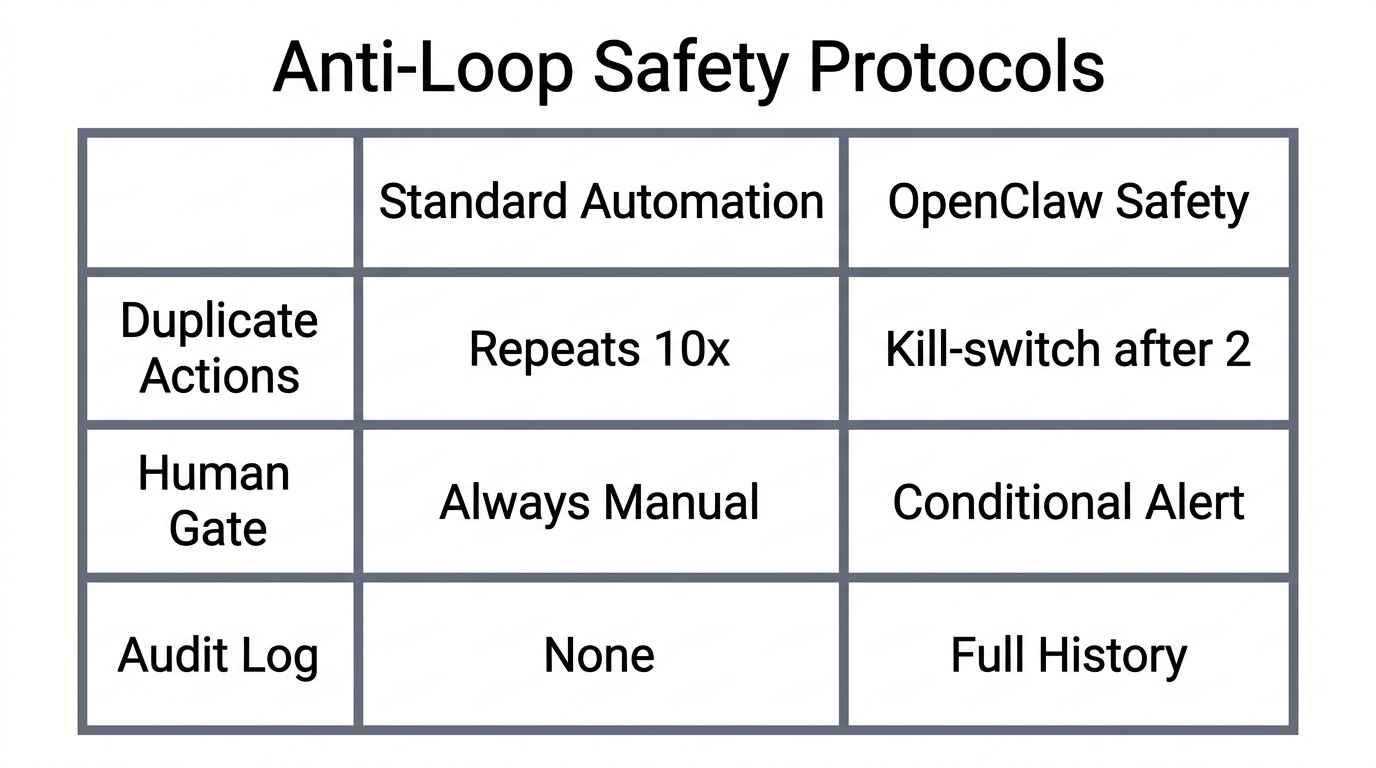
The greatest risk of autonomous agents is the "hallucination" or the