By mid-2026, the digital marketing landscape has undergone a seismic shift. We have officially transitioned from the "Chatbot Era"—where AI merely answered questions—to the Age of Execution Agents. For performance marketers, this evolution is centered around OpenClaw, the open-source autonomous agent framework that has redefined how we handle Google Ads creative fatigue. With over 247,000 GitHub stars, OpenClaw isn't just a tool; it is a dedicated workforce that executes system-level optimizations while you sleep.
The most pressing challenge for growth brands this year is no longer bid management—it is the rapid decay of creative resonance. As AI-generated content saturates every platform, consumer attention spans have thinned, leading to CTR decay faster than ever recorded. This guide explores how to leverage the specialized Creative Analyst and Audience Architect skills within OpenClaw to automate your execution and reclaim your ROI.
"The focus has shifted from agents that talk to agents that do. If your marketing stack isn't executing autonomously in 2026, you're already behind." — Rithik Motupalli, AI Marketing Researcher. [Source: LinkedIn Research]
The Creative Analyst: Solving CTR Decay with Autonomous Loops
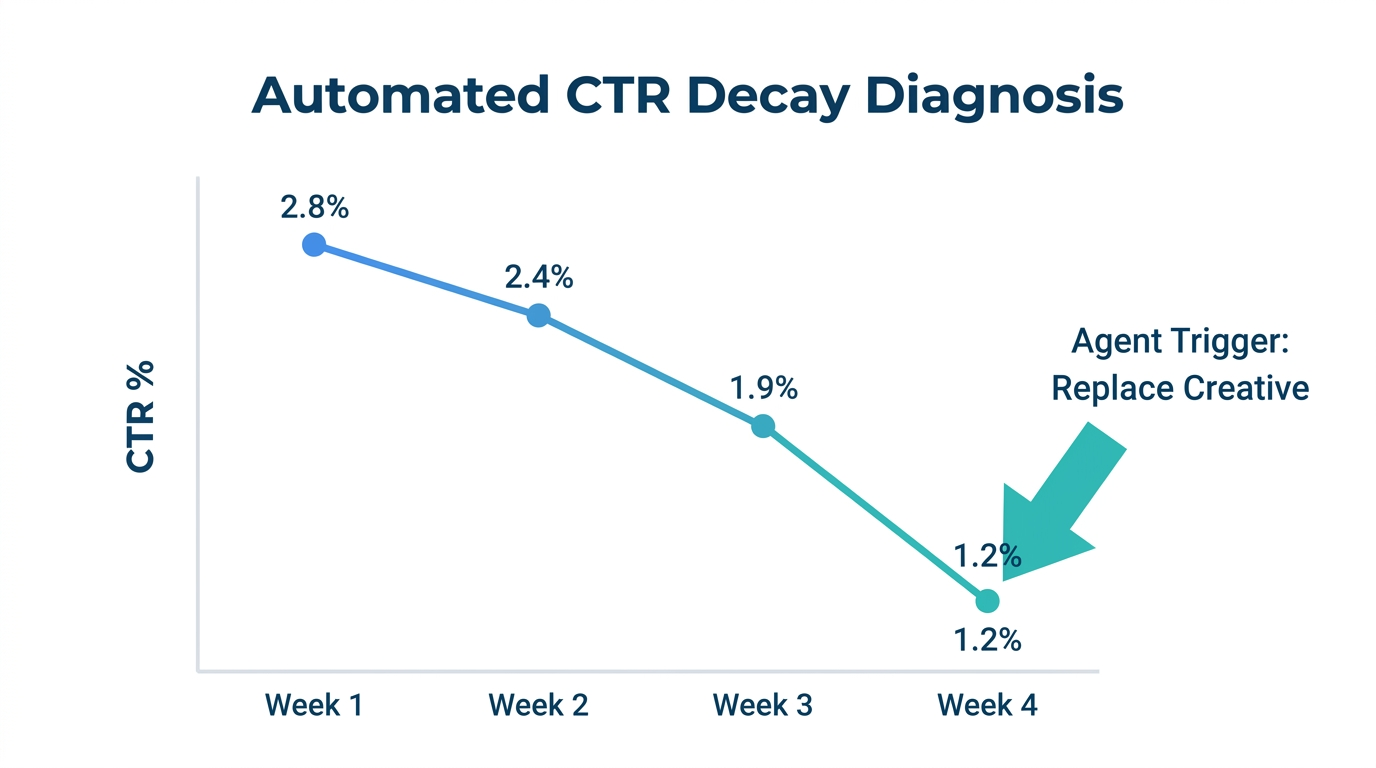
Traditional creative reporting is a post-mortem exercise. By the time a human analyst notices that a campaign’s Click-Through Rate (CTR) has plummeted, thousands of dollars have already been wasted. The Creative Analyst skill in OpenClaw changes this by diagnosing fatigue in real-time.
To master this, you must define specific CTR decay windows. The most effective agents are programmed to monitor performance across 7, 14, and 30-day intervals using data streams from Mixpanel or Google Analytics. This allows the agent to distinguish between a temporary daily fluctuation and a genuine trend of creative exhaustion. When the agent detects a 20% drop in CTR relative to the 30-day baseline, it doesn't just send a report—it triggers a Creative Refresh Loop.
Once the decay is flagged, the agent can be configured to draft three new headline variations based on high-performing historical data and immediately notify your design team via Slack or Figma. This ensures that the "execution gap"—the time between identifying a problem and deploying a fix—is reduced from days to minutes. This level of automation is why modern marketing experiments show such drastic efficiency gains in 2026.
Audience Architect: Precision via CRM Integration
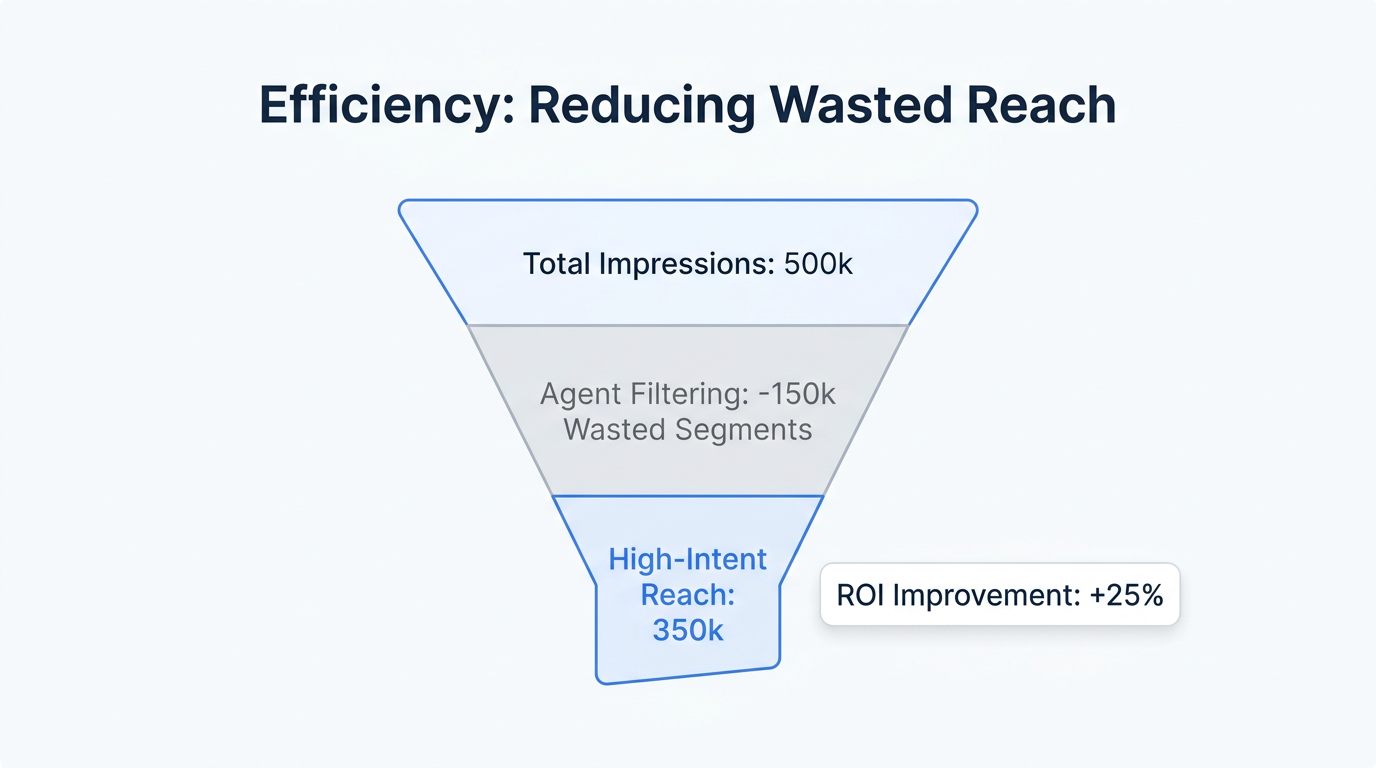
Creative fatigue is often exacerbated by poor targeting. When your ads are shown to the wrong people, your engagement metrics suffer, which Google's algorithm interprets as low-quality creative. The Audience Architect skill solves this by acting as a bridge between your 1st-party data and your Google Ads account.
One of the most powerful strategies in 2026 is Value-Based lookalike audience building. Instead of relying on generic interest stacks, the OpenClaw agent pulls data directly from your CRM (like Stormy AI or Pipedrive), identifies your highest-LTV customers, and pushes those segments to Google Ads as seed lists. By cleaning audience exclusion gaps, marketers are reducing wasted reach by up to 15% in hyper-competitive sectors.
| Metric | Manual Execution | OpenClaw Agentic Execution |
|---|---|---|
| Reporting Time | 15+ Hours/Week | ~2 Hours/Week |
| CTR Decay Response | 48 - 72 Hours | Instant / < 1 Hour |
| Wasted Reach | High (Static Exclusions) | Low (Dynamic CRM Sync) |
| Conversion Lift | Baseline | +2.5% – 4% |
This automated synchronization ensures that your creative is always hitting fresh, high-intent audiences, which naturally extends the lifespan of each asset. To further streamline this, platforms like Stormy AI can be used to source high-quality UGC creators whose content resonates with these specific high-value segments, providing a steady stream of raw material for your OpenClaw agents to test.
The Performance Auditor: Plucking Low-Hanging Fruit
Even the best creative can't save a campaign riddled with "budget leaks." The Performance Auditor skill in OpenClaw acts as a 24/7 watchdog, scanning for keywords that have spent significant budget (e.g., >$500) without a single conversion. In 2026, accounts using these automated auditing playbooks see a 2.5–4% higher conversion rate simply by pruning low-intent traffic.
Beyond pruning, the Keyword Opportunity Finder identifies emerging trends from Google's AI Overviews (SGE). If a specific long-tail query is driving traffic but isn't in your account, the agent adds it as an exact-match keyword. This proactive discovery has led to a 22% boost in ROAS for agencies scaling with agentic search discovery.
"The key to scaling in the age of SGE is capturing long-tail trends before your competitors even see them in their weekly reports."
The Implementation Playbook: Setting Up Your Agent
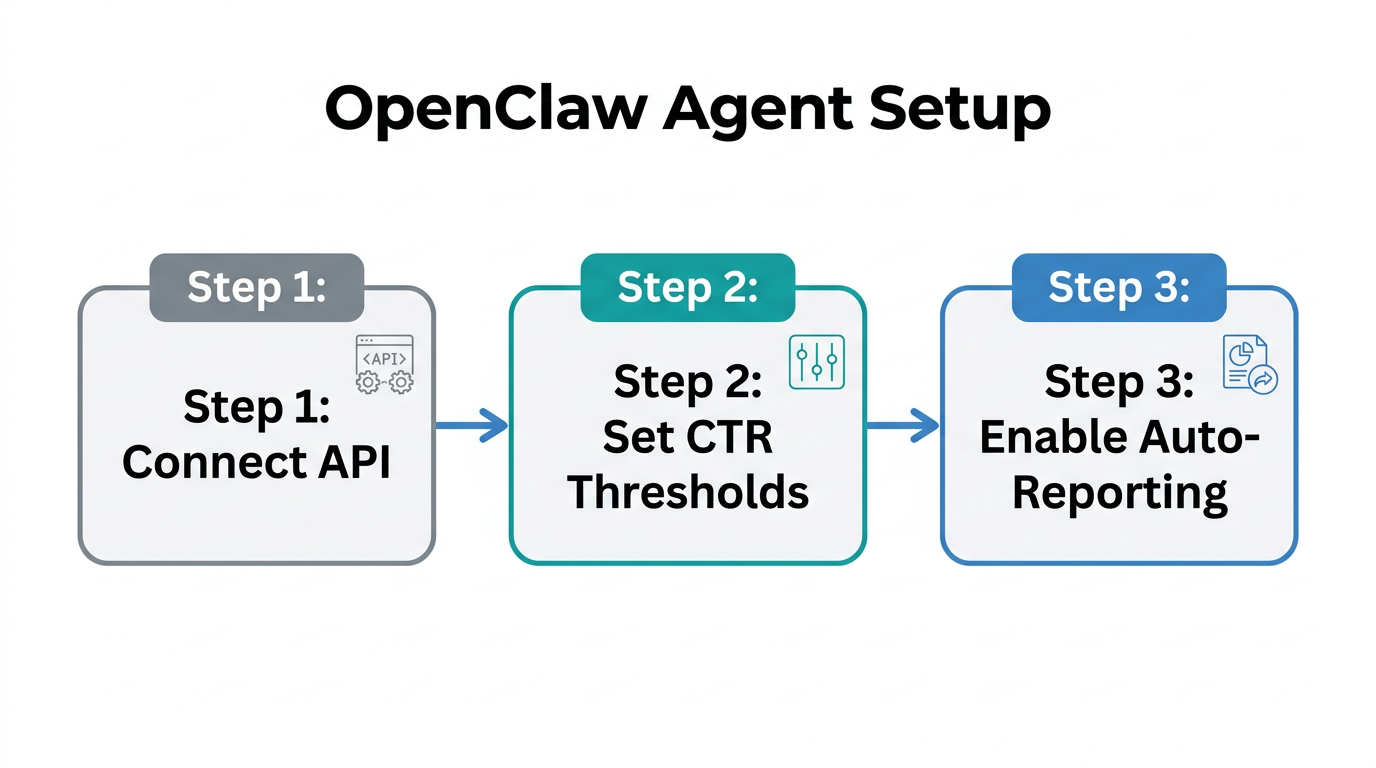
Transitioning to an agentic workflow requires a shift in infrastructure. You cannot run high-frequency execution agents on a local laptop; reliability and security are paramount. Follow these steps to deploy your first OpenClaw execution stack:
- Provision a Dedicated VPS: Use a provider like DigitalOcean or AWS to host your OpenClaw instance. This prevents credential leaks and ensures 24/7 uptime for your cron jobs.
- Configure the Google Ads API: Connect your agent using the official API integration skills. This is more robust than browser automation.
- Set ROI Thresholds: Define what a "winner" looks like. Without clear ROI thresholds in the agent's memory, it may accidentally pause high-spend keywords that provide significant assisted-conversion value.
- Establish Human-in-the-Loop (HITL) Safety: For any budget increase over 20%, require a manual approval. This protects your account from temporary traffic spikes that an agent might misinterpret.
The Future: Bridging Creative and Data
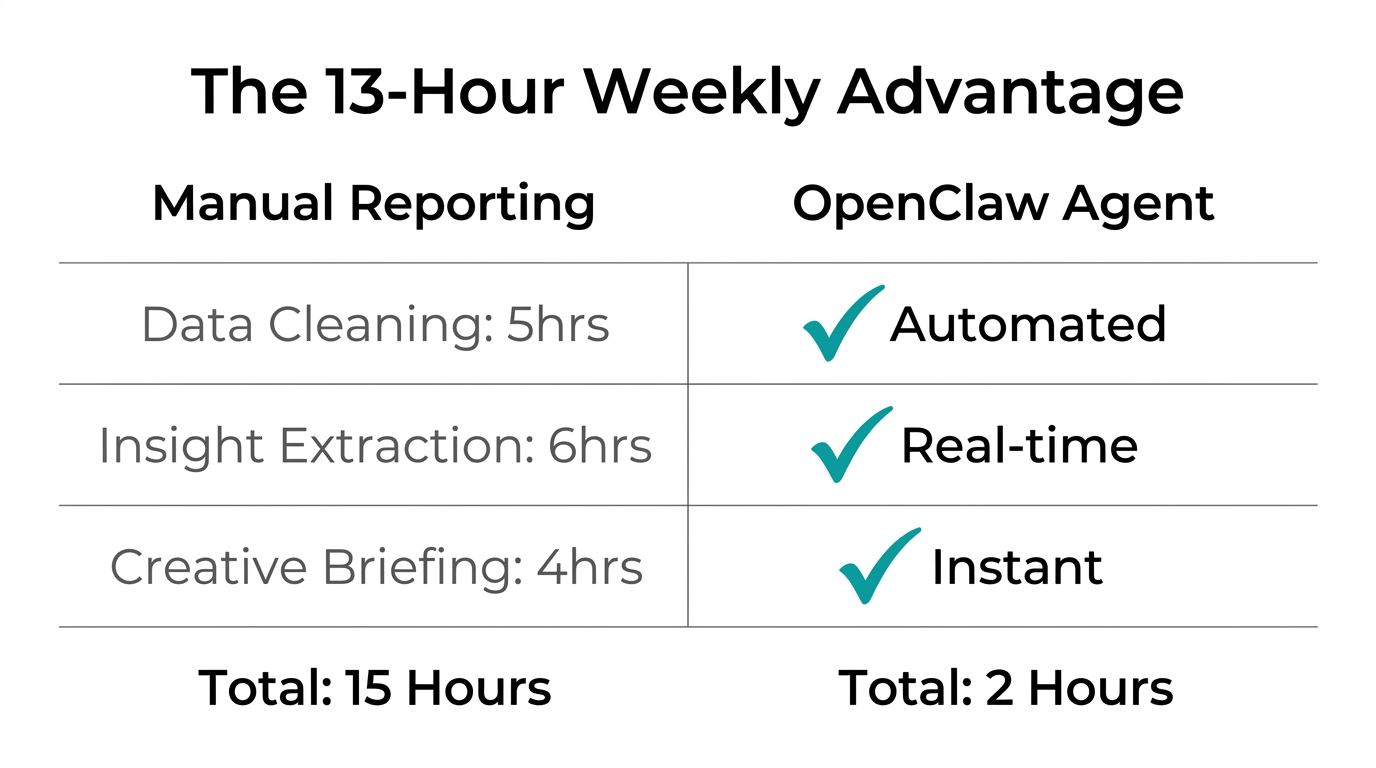
The battle against creative fatigue is a war of attrition. By automating the diagnosis and refresh loop, you allow your human team to focus on high-level strategy and storytelling rather than spreadsheets and manual bid adjustments. As we move through 2026, the 88% of marketers who are expected to adopt AI agents will find that the greatest value lies in these autonomous execution skills.
Whether you are using Stormy AI to find the creators who fuel your creative pipeline or ClawHub to find the latest execution skills, the goal remains the same: maximum performance with minimum manual friction. The era of the digital marketing execution agent has arrived, and it's time to put your Google Ads on autopilot.