In the creator economy of 2026, the dream of the "one-person business" has evolved from a side-hustle fantasy into a multi-million dollar reality. Leading the charge is the realization that you don't need a sprawling team of fifty employees to generate $2.5 million in annual recurring revenue. Instead, modern entrepreneurs are leveraging high-leverage content systems and lean technology stacks to outperform traditional agencies. By mastering a specific content distribution framework, creators are finding that knowledge is the ultimate scalable product, allowing them to work five-hour days while their digital funnels run around the clock.
The Discovery-Trust-Offer Framework: A 2026 Blueprint
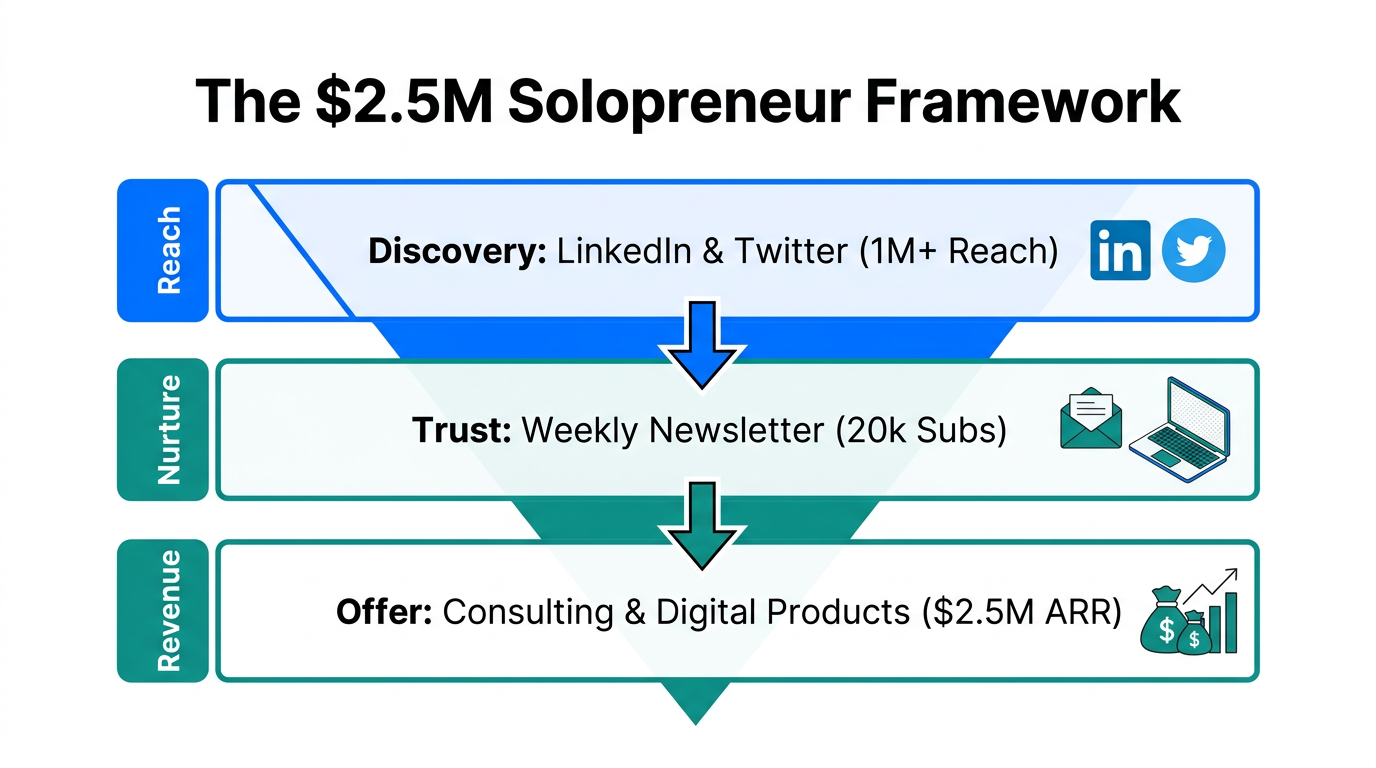
The foundation of a successful solopreneur sales funnel isn't complex software; it's a three-stage psychological journey that moves a stranger from a social media scroll to a paid customer. This model, popularized by high-earning knowledge entrepreneurs, focuses on Discovery, Trust, and the Offer. Unlike traditional sales cycles that rely on aggressive outreach, this framework uses high-value content to pull leads in naturally.
| Funnel Stage | Primary Platform | Goal | Content Type |
|---|---|---|---|
| Discovery | LinkedIn & Twitter | Mass Reach & Awareness | Short-form posts, insights, observations |
| Trust | Email Newsletter / Website | Authority & Relationship | Long-form guides, case studies, deep dives |
| Offer | Digital Product Store | Monetization | On-demand courses, subscriptions, tools |
"Discovery is about getting your name in front of people who have never heard of you. Trust is about showing them exactly how your brain works through long-form expertise."
Phase 1: High-Frequency Discovery on LinkedIn and Twitter
Justin discusses the discovery phase and how to get discovered by new people.
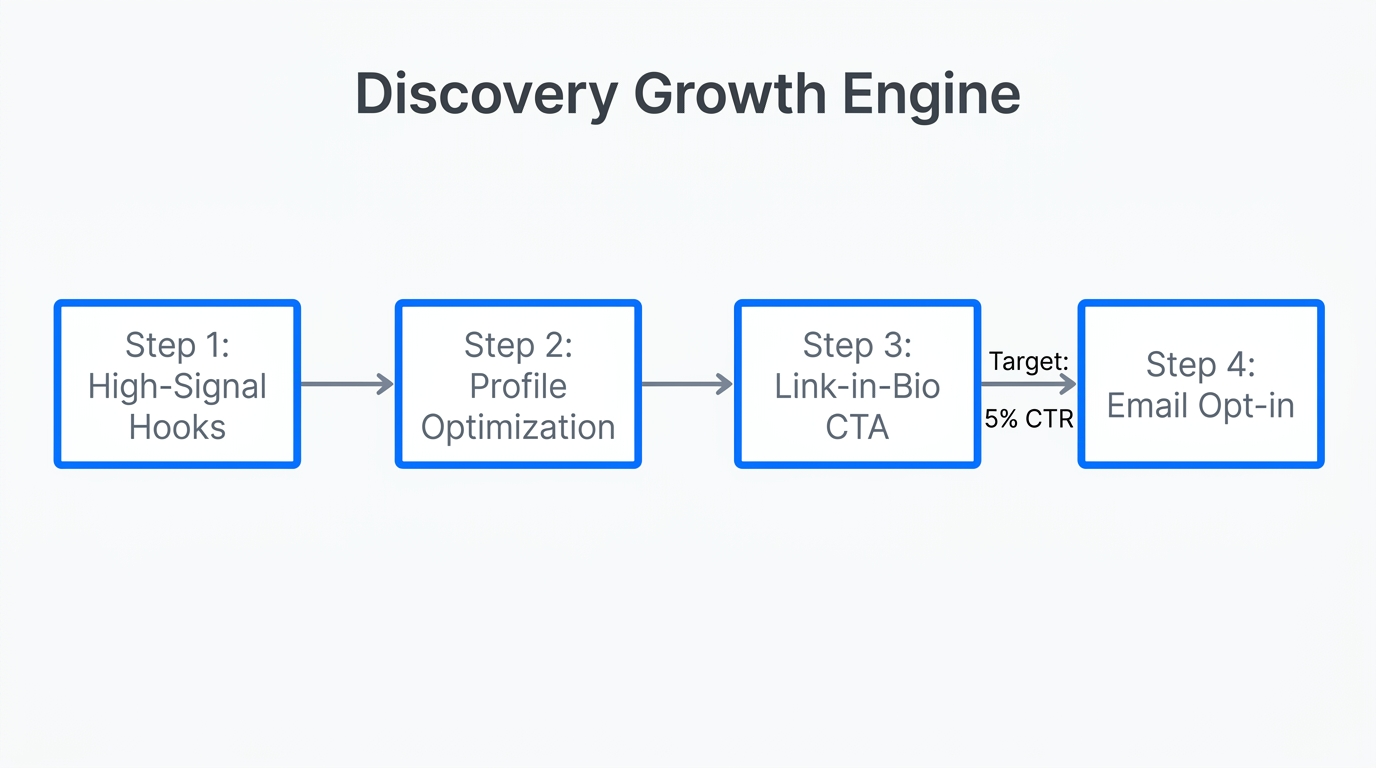
The LinkedIn marketing strategy 2026 requires more than a polished resume; it requires a relentless commitment to presence. To achieve exponential Twitter growth for creators, the baseline is now posting 2-3 times daily. This isn't about spamming the feed; it's about staying top-of-mind in an algorithm that rewards consistency and engagement. When you show up every single day at the same time—such as 8:15 AM Eastern—you train your audience to look for your insights.
Ideation at this scale can be daunting, but top creators treat it like a hypothesis-driven system. They source ideas from everywhere: YouTube trends, aggregator newsletters, and everyday observations. By looking at what is already resonating on other platforms and putting a unique spin on it, you ensure your content has a pre-validated market fit. For those managing multiple platforms, using tools like Stormy AI can help identify which creator niches are currently trending, ensuring your "discovery" content hits the right note with your target audience.
Phase 2: Building Trust Through Owned Media
Learn how a weekly newsletter builds trust and deepens connections with your audience.Once a user follows you on LinkedIn, the next step in the solopreneur sales funnel is capturing their email address. This is the transition from "Discovery" to "Trust." Long-form content, typically delivered via a weekly email newsletter, allows you to demonstrate deep authority that a 280-character post cannot match. This is where you solve specific problems for your audience, providing them with a "weekly masterclass" in their inbox.
High-earning solopreneurs often use a "Weekly Guide" format. Every Monday or Tuesday is dedicated to writing this cornerstone piece of content. By the time a subscriber finishes a 2,000-word deep dive into your methodology, they aren't just a follower; they are a fan who trusts your competence. This trust is the bridge to creator economy monetization. Without this middle layer, your conversion rates on digital products will remain stagnant because the audience hasn't seen the full depth of your expertise.
Phase 3: The 'Soft-Sell' Offer and Product Portfolio
In 2026, the hard-sell is dead. High-pressure webinars and countdown timers have been replaced by low-friction, affordable digital products. The modern solopreneur funnel focuses on a portfolio of products, typically ranging from $100 to $300, which solve very specific, granular problems. For example, instead of a "Business 101" course, you might sell a specific course on "How to Use LinkedIn effectively to build a business" or a specialized "Content System" toolkit.
Another powerful monetization layer is the subscription model. A monthly subscription email—perhaps focusing on advanced copywriting techniques—provides recurring revenue that stabilizes the business. This "soft-sell" approach works because the offer is presented as a natural extension of the free value already provided in the newsletter. If the reader believes you are the person to solve their problem, the purchase becomes an easy decision rather than a persuaded one.
"My offers aren't aggressive. It's just: if you believe I'm the person that can help you solve your problems, here are some affordable options."
The $620/Month Lean Tech Stack
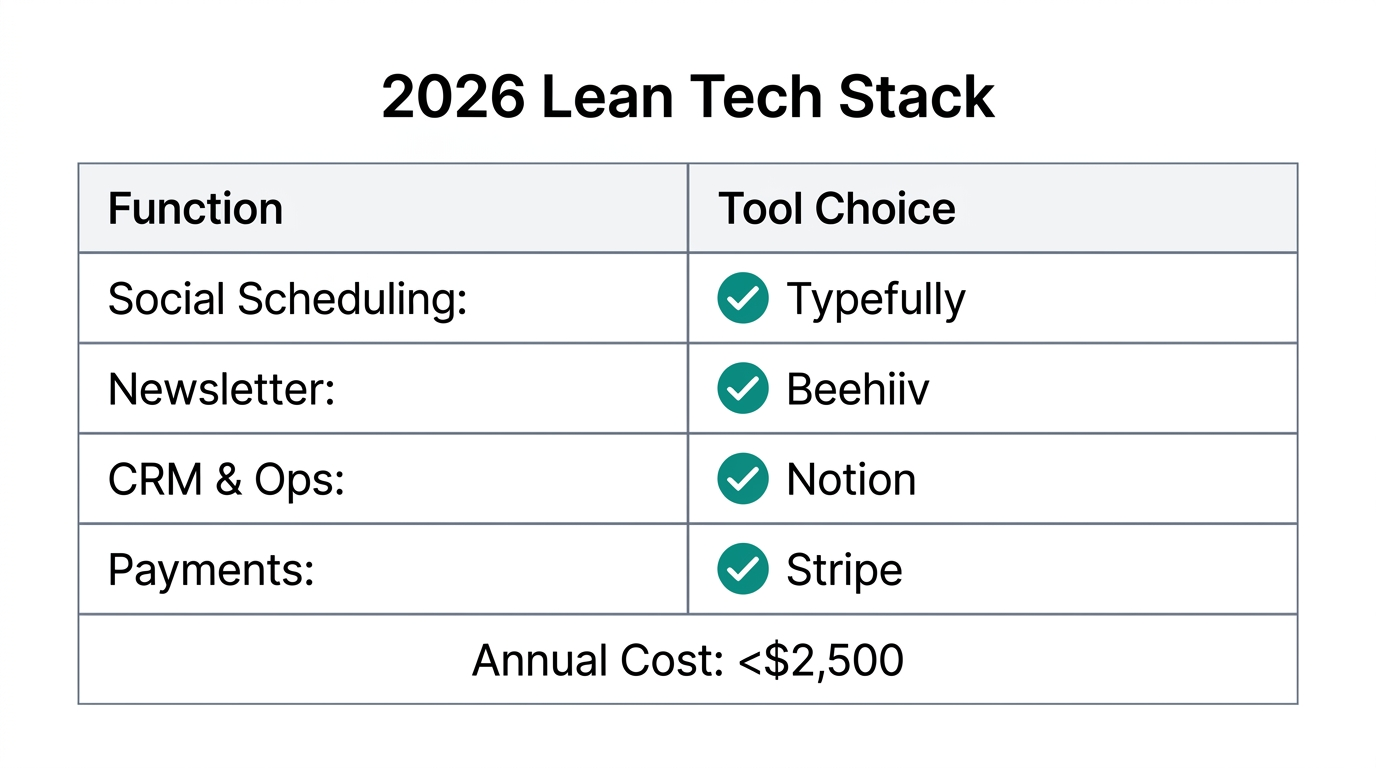
One of the most shocking aspects of a $2.5M solopreneur business is the low overhead. By ruthlessly eliminating unnecessary costs and avoiding employees, creators can keep their total monthly expenses under $700. The focus is entirely on software that automates the workflow, allowing the entrepreneur to stay in their "zone of genius" (creating) rather than managing people or manual tasks.
| Tool Category | Recommended Tool | Function |
|---|---|---|
| All-in-One Hub | Kajabi | Website, courses, and email marketing core |
| LinkedIn/Twitter | Taplio / Hypefury | Scheduling and automated social publishing |
| Organization | Notion / Trello | Content ideation and project management |
| Social Proof | Testimonial.to | Collecting and displaying customer reviews |
Hypothesis-Driven Growth: The Secret to Scaling
Explore why hypothesis-driven growth is essential for scaling a successful one-person online business.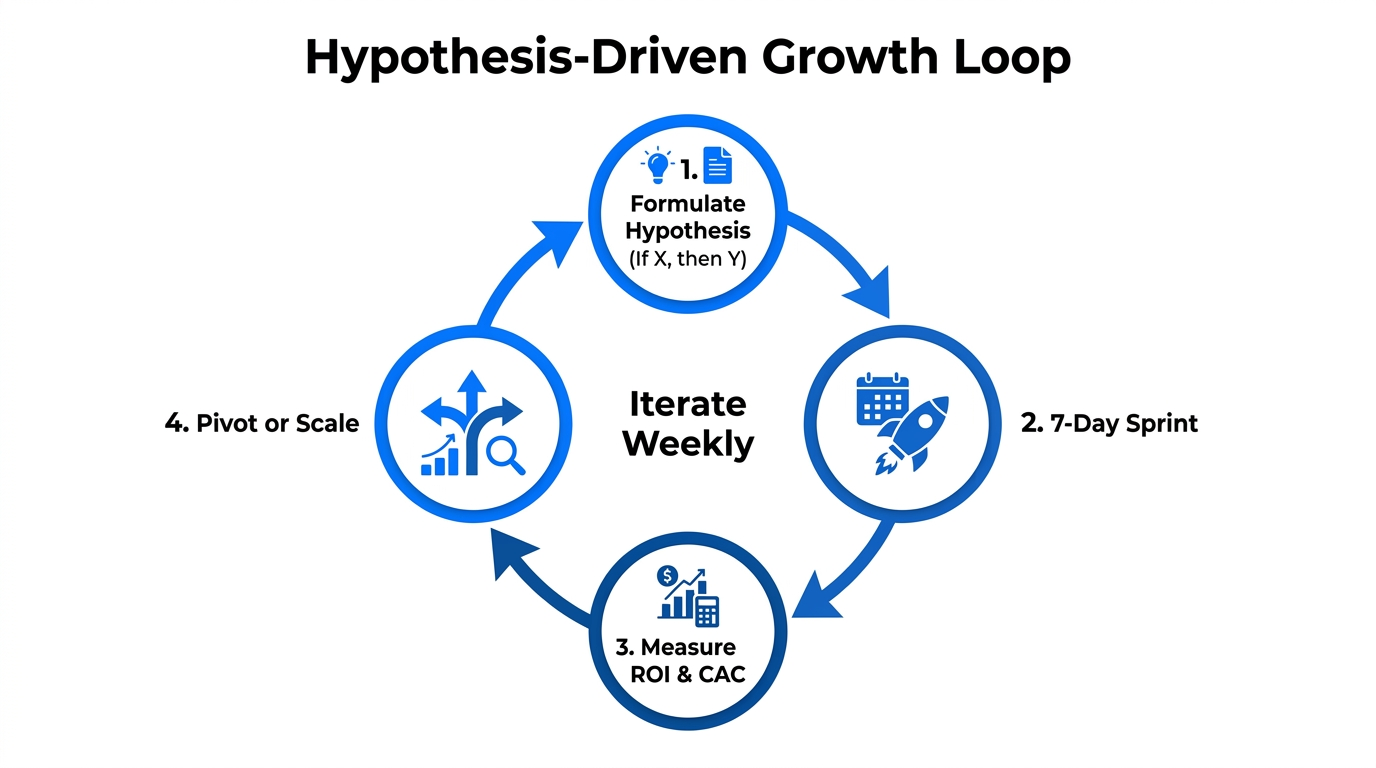
Success in the creator economy isn't about luck; it's about being a hypothesis-driven creator. This involves treating every content angle, headline, and offer as an experiment. If a specific LinkedIn post format generates 5x the normal engagement, you double down on it. If a certain newsletter topic leads to a spike in product sales, you create a series around it. Conversely, if something doesn't work, you eliminate it immediately.
This scientific approach to a content distribution framework prevents burnout. You aren't guessing what your audience wants; you are responding to the data they provide every time they click, like, or buy. For creators looking to scale further, leveraging AI tools like Stormy AI for creator analysis can provide even deeper insights into what content is driving performance in your specific niche, allowing you to iterate faster than the competition.
Conclusion: Starting is the Only Real Hack
Building a $2.5M solopreneur funnel in 2026 doesn't require a background in tech or an executive title. It requires the discipline to pick a topic you are competent in and the courage to start talking about it online. The Discovery-Trust-Offer model is a proven path to financial freedom, but it only works if you begin the discovery phase today. Don't wait to read every book or listen to every podcast—starting will teach you 100x more than consuming. Build your system, test your hypotheses, and let the 2026 creator economy do the rest.