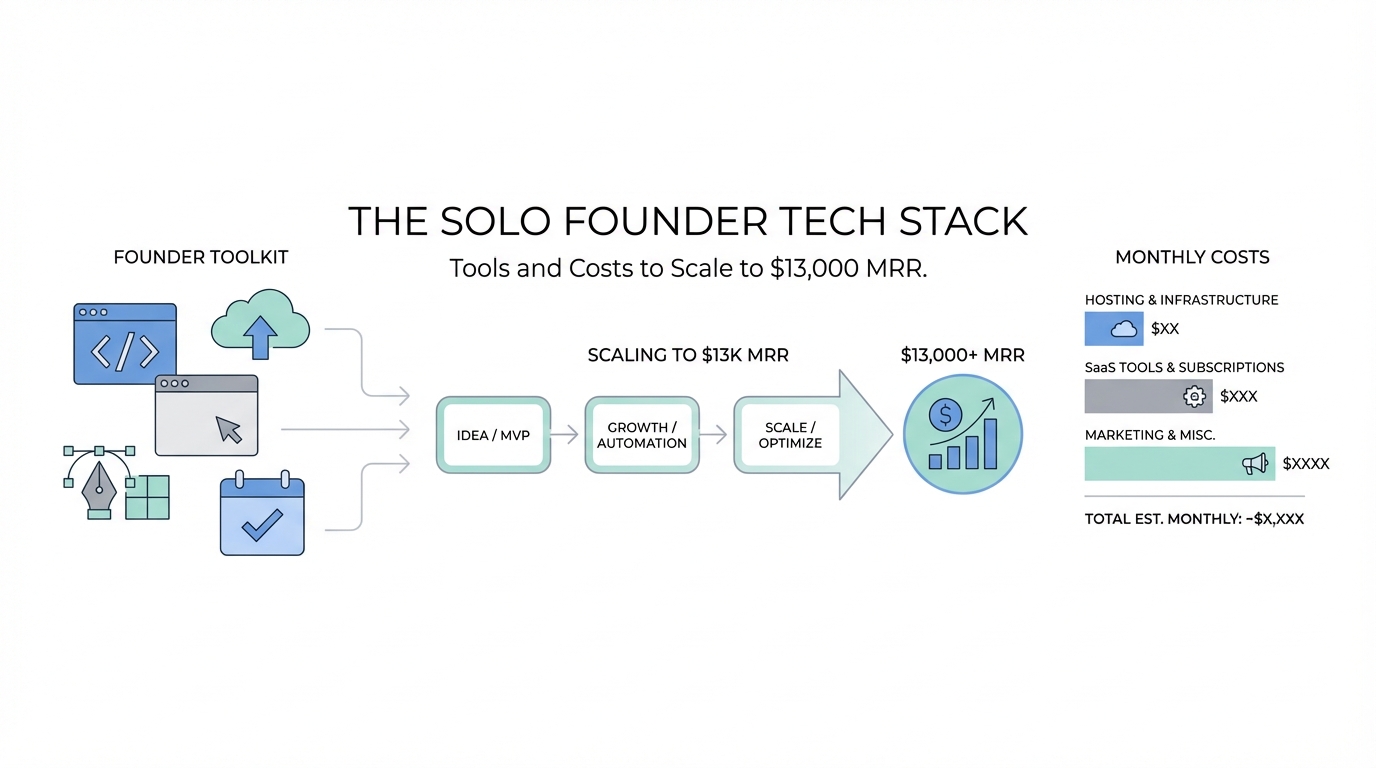
Building a successful software-as-a-service (SaaS) platform as a single individual is no longer a pipe dream—it is a repeatable formula. Rob Hallum, the creator of SuperX, recently proved this by scaling his platform to $13,000 in monthly recurring revenue (MRR) in just four months. This success was not built on luck; it was the result of a disciplined solo developer tech stack and a commitment to radical transparency. For founders looking to navigate the complex world of ai saas architecture, understanding the specific tools and saas infrastructure costs is the first step toward building a sustainable, high-growth business. By focusing on a core set of reliable technologies and leveraging the power of AI-assisted development, solo entrepreneurs can now compete with entire engineering teams while maintaining lean operations and high margins.
The 'Pick One and Ship' Philosophy: Mastering Your Stack
In the world of solo development, the greatest threat to progress is often "shiny object syndrome." Many developers spend more time debating frameworks on social media than they do shipping features. Rob Hallum’s approach is refreshing in its simplicity: pick one stack, learn it deeply, and ignore the noise. The core of his nextjs saas boilerplate consists of Next.js, Node.js, and Tailwind CSS. This combination offers a perfect balance of performance, developer experience, and scalability, allowing for rapid iteration without the overhead of learning a new language every six months.
By sticking to Next.js, founders can handle both the frontend and backend in a unified environment. Tailwind CSS speeds up the design process significantly, enabling developers to build custom, high-converting interfaces without leaving their HTML. This efficiency is critical for solo founders who must manage everything from product development to customer support. When your time is the most valuable resource, reducing the cognitive load of switching between different technologies is a competitive advantage. This philosophy also applies to mobile app developers who are increasingly using these web technologies to build cross-platform tools, often finding influencers through Stormy AI, an AI search engine that helps founders find UGC creators across TikTok and Instagram using natural-language prompts.
The Economics of an AI SaaS: Breaking Down Monthly Costs
While the barrier to entry for building a SaaS has dropped, the cost to run an ai startup can still be significant, especially when dealing with high-volume data platforms. SuperX, which helps users grow their presence on X (formerly Twitter), faces unique infrastructure challenges. The most substantial expense in Rob's budget is the X API, which costs between $2,000 and $3,000 per month. This highlights a crucial lesson for founders: when building on top of a major platform, the API access fee is often your largest fixed cost.
Beyond platform-specific APIs, the ai saas architecture requires heavy lifting from large language models. Rob allocates approximately $1,000 per month to APIs from OpenAI and Anthropic (Claude). These models power the "intelligence" of the app, generating content ideas and analyzing viral trends. To manage the vast amount of data required for semantic search, he uses Zilliz Cloud for vectorized embeddings, which adds another $200 per month to the bill. This setup allows the app to find similar posts and concepts across millions of data points, providing users with actionable insights that a standard keyword search simply couldn't offer.
Infrastructure and Analytics: Building for Stability

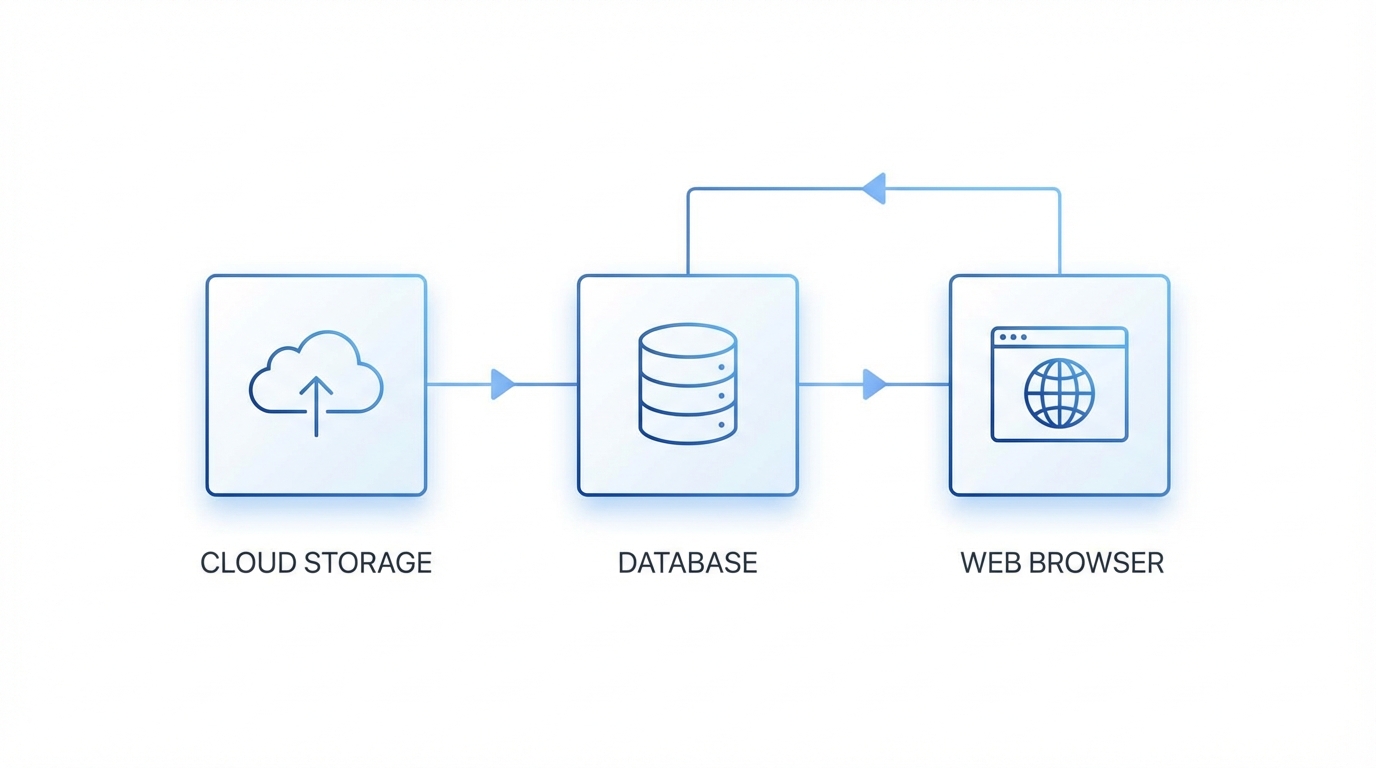
Despite the high costs of APIs, the underlying server infrastructure can remain remarkably affordable. By using AWS, Rob manages to keep server costs at around $200 per month. Interestingly, he opts for SQLite as a database choice, proving that you don't always need a complex, distributed database cluster to scale to $13,000 MRR. For analytics, PostHog serves as the primary tool for tracking user behavior and feature engagement. This is a vital part of the lean startup methodology: you must know exactly what your users are doing to decide what to build next—and what to kill.
Scaling also requires a robust payment processor. Using Stripe ensures that global transactions are handled securely, though founders must account for the standard 2.9% + 30¢ fee per transaction. For mobile app developers looking to integrate similar strategies, using Stormy AI to vet creator profiles and detect fake followers ensures that marketing spend is focused on authentic creators, allowing performance to be tracked with high precision.
AI-Assisted Coding: The Solo Developer's Secret Weapon

The speed at which a solo founder can ship features is now directly correlated to their ability to use AI coding assistants. Tools like Claude 3.5 Sonnet and AI-integrated IDEs have transformed the development cycle. Rob spends roughly $200 per month on AI-assisted coding tools, which he credits for allowing him to build complex features—like an algorithm simulator—in a fraction of the time it would have taken a year ago. This isn't just about writing code; it's about debugging, refactoring, and architecting systems through a collaborative dialogue with an AI that has context over your entire codebase.
For solo founders, this means the "engineering team" is now the developer plus a suite of LLMs. This capability is especially useful when dealing with unstable APIs or rapidly changing platform requirements. When X changes its API structure, a founder can use AI to quickly map out the necessary changes in their solo developer tech stack, ensuring the app remains functional for its 450 active subscribers. This agility is what allows a single person to manage a product that serves tens of thousands of users while traveling the world.
Growth Tools and Distribution

Building the product is only half the battle; the other half is distribution. To drive the 100,000 daily impressions that fuel SuperX's growth, Rob relies on high-quality visual content. Screen Studio is his tool of choice for creating "headbanging" demos that showcase the product's features in a cinematic, professional way. These videos are designed to stop the scroll on social media, making the software feel premium and easy to use. At just $10 per month, this tool provides an incredible return on investment by turning standard screen recordings into viral marketing assets.
The landing page is another critical component. Using Framer allows Rob to maintain a high-converting, beautiful website without the need to code the frontend from scratch every time he wants to test a new headline or layout. This separation between the marketing site and the core application (the nextjs saas boilerplate) allows for faster marketing experiments. When combined with a UGC strategy, these tools create a powerful growth engine. Many app developers use Stormy AI to automate their outreach with AI agents that discover and contact creators with personalized emails, significantly scaling their user acquisition efforts.
The Build-in-Public Playbook: A Step-by-Step Guide

Rob's success is deeply rooted in the "Build in Public" movement. If he had to start from zero today, his playbook for building an audience and a SaaS would follow these seven distinct steps:
Step 1: Set Your Foundation
Before posting, optimize your profile. Use a friendly profile photo of your actual face and keep it consistent. Your bio should be a single, clear sentence explaining what you do. Most importantly, use a pinned post as your elevator pitch, detailing your goal (e.g., "Building my dream SaaS to $10k MRR").
Step 2: Pick a Goal and Commit
Don't just post randomly. Pick a specific goal and document the process of working toward it daily. This creates a storyline that people can follow. People don't just follow products; they follow journeys and the people behind them.
Step 3: The Content Loop
Follow a cycle of four content types: Entertaining (vulnerability or fun demos), Educational (free value), Convincing (selling your product), and Inspirational (sharing milestones). This loop builds trust and sells without being annoying.
Step 4: Systemize What Works
Don't guess what will go viral. Analyze successful profiles in your niche and identify the concepts that work. Recreate those concepts in your own style and voice. Data-driven content creation is the key to consistent growth.
Step 5: Double Down or Kill
Track the performance of every post. When a specific format or topic resonates, make more of it. Conversely, if a feature or a content style isn't working—even if it's your favorite—have the discipline to kill it.
Step 6: Build Real Connections
Avoid AI-generated spam replies. Find people in your niche and provide real value in the comments. Growth comes from building a community and intentional friendships, not just chasing numbers.
Step 7: Leverage Platform Trends
Pay attention to what the platform is pushing. Currently, video is receiving massive reach. By switching from text to video, you can often see a 10x increase in impressions. Adapt your content to the medium the algorithm prefers. You can also use Stormy AI to track individual videos and monitor campaign performance across all platforms in a centralized dashboard.
Conclusion: The Path to $13,000 MRR
Scaling a SaaS to $13,000 MRR as a solo founder requires a unique blend of technical discipline and marketing savvy. By embracing a focused solo developer tech stack and being transparent about saas infrastructure costs, you build more than just a tool—you build a brand. The combination of Next.js, AI APIs, and a rigorous build-in-public strategy allows founders to create "painkillers" rather than "vitamins," solving real problems for a dedicated audience. As Rob Hallum’s journey shows, success in 2025 isn't about luck; it's about building trust through consistent storytelling and using data to systemize your growth. Whether you are building an AI tool or a mobile app, the roadmap remains the same: ship fast, stay vulnerable, and never stop engaging with your community.