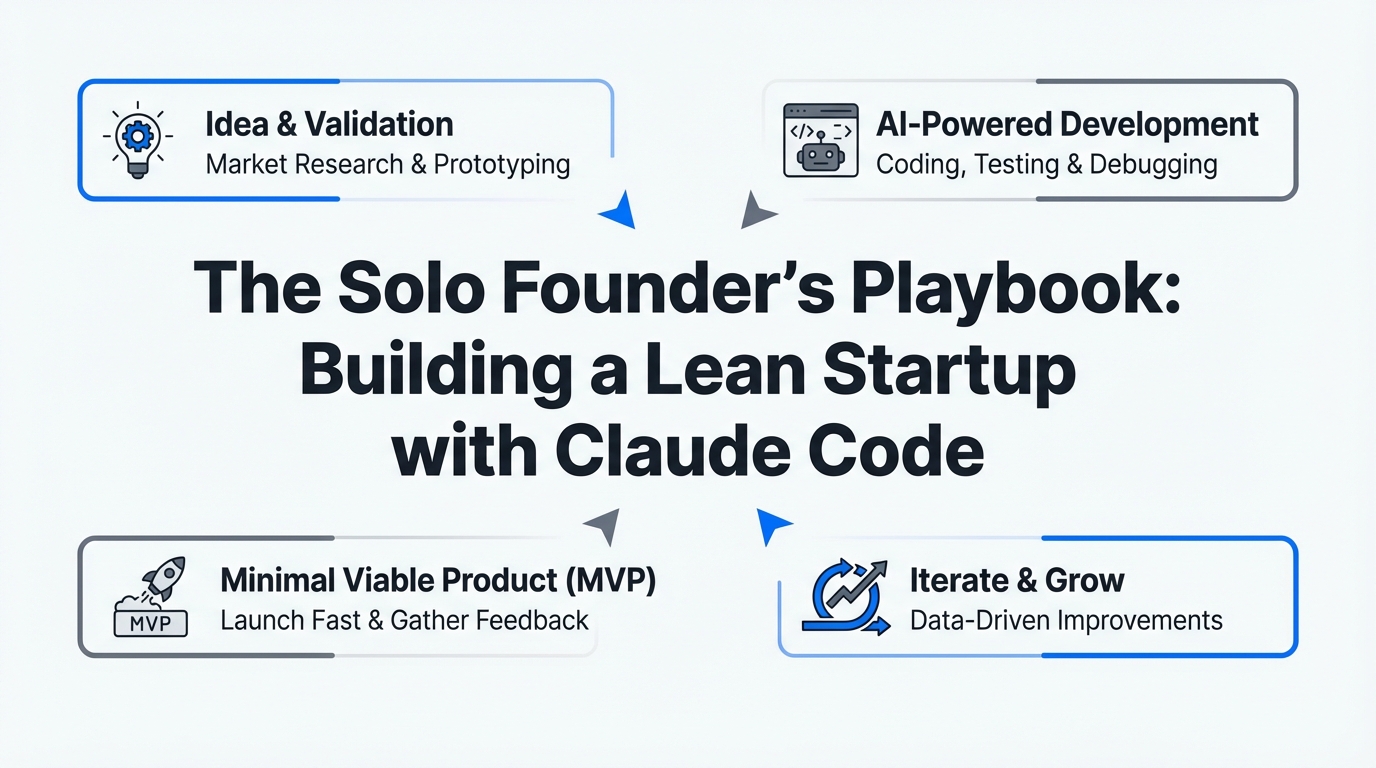
The dream of the solo founder has always been hampered by a single, expensive reality: the technical gap. For years, non-technical entrepreneurs were forced to choose between burning their life savings on outsourced agencies or spending years learning to code before shipping a single pixel. However, the landscape of 2026 has fundamentally shifted from "writing code" to "directing intelligence." With the emergence of agentic command-line tools like Claude Code, the barrier to entry for building complex software has collapsed. This isn't just about autocomplete; it's about a strategic shift toward a lean startup methodology powered by AI agents that act as a technical co-founder with infinite stamina.
The New Era of Lean Startups: From Coding to Directing
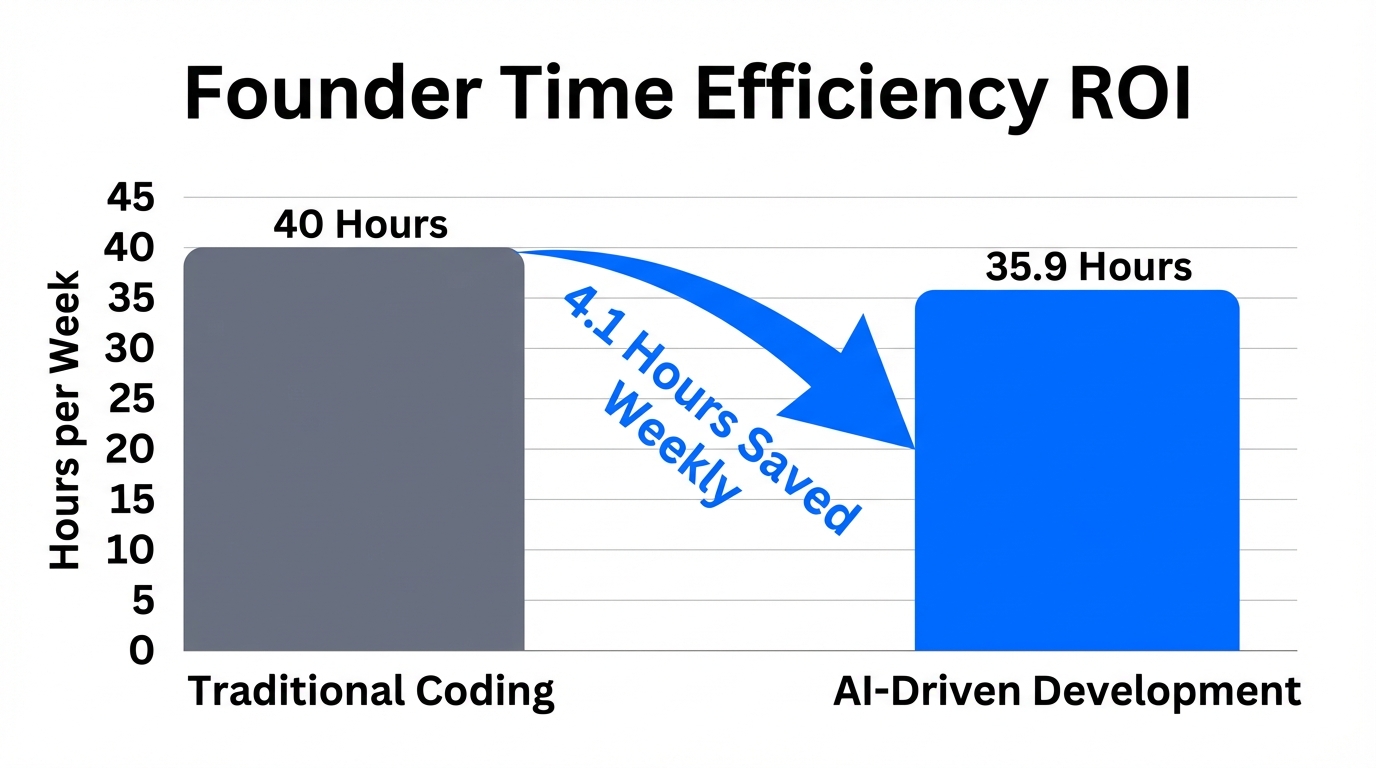
By early 2026, the data confirms that AI agents are no longer just "helpers"; they are massive productivity multipliers. According to the Stack Overflow Developer Survey, a vast majority of developers report significant productivity improvements when using agentic tools. For the solo founder, the most compelling statistic is that daily users of tools like Claude Code save an average of 4.1 hours per week. In a lean startup environment, those four hours represent the difference between meeting a weekly shipping goal and falling behind on your roadmap.
As Claude's capabilities have grown, the industry has moved toward terminal-native agentic workflows. For a founder trying to build a startup with AI, this means you can now manage a complex codebase from your terminal, using an agent that understands the deep context of your entire application—not just the single file you happen to have open.
"Claude Code fundamentally rewires the senior engineer's role from hands-on coder to development director—orchestrating agents to execute complex architectural changes while you focus on system design."
The ROI of AI-Driven Development: Analyzing the Brex Model
Many founders worry about the cost of AI tokens, but the alternative—hiring a full-time engineering team—is exponentially more expensive. Look at the fintech giant Brex, which uses Claude to automate 75% of expense transaction workflows. The result? An estimated $56.5 million in salary savings annually. While a solo founder isn't operating at that scale yet, the principle of AI for entrepreneurs remains the same: how to build an MVP faster while keeping your burn rate near zero.
Organizations like Smartsheet have documented a significant increase in developer velocity since integrating these agentic workflows. For a lean startup, this velocity is your primary competitive advantage against incumbents.
| Metric | Traditional Startup | AI-Agentic Startup |
|---|---|---|
| Time to MVP | 4-6 Months | 4-8 Weeks |
| Weekly Developer Hours | 40+ Hours | Under 10 Hours |
| Technical Debt | High (Speed focus) | Low (Agent-managed refactoring) |
| Cost | $15k+/month (Hire) | <$500/month (API usage) |
Step-by-Step: The 'Plan-Execute' Loop for MVPs
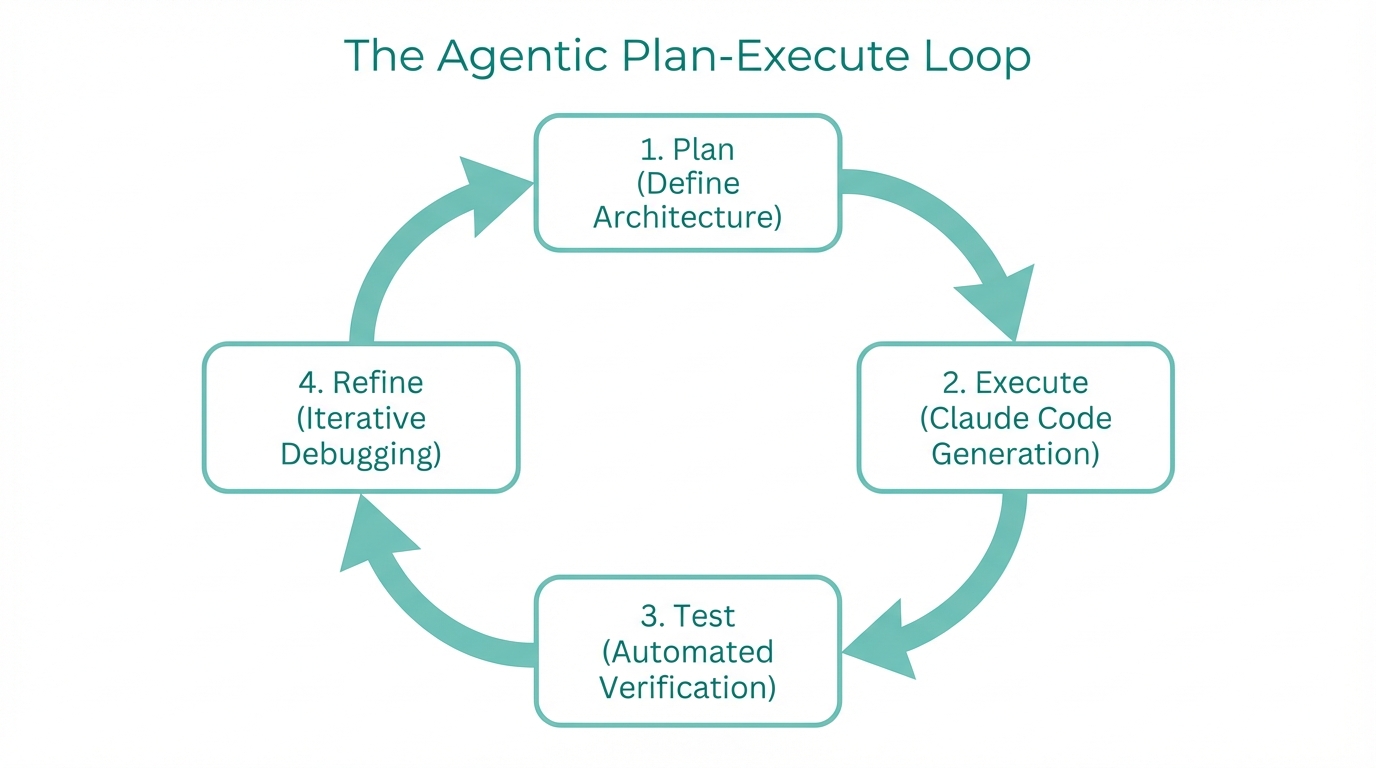
To avoid the "ask and pray" pitfalls common in solopreneur business tools, founders must adopt a rigorous "Plan-Execute" loop. This strategy ensures that the AI doesn't run off in the wrong direction, wasting tokens and your time. According to the official Claude Code documentation, you should never let an agent start coding before it has built a blueprint.
- Invoke Plan Mode: Before any major feature, use the
Shift+Tabcommand or explicitly instruct the agent to analyze the current state of the codebase. - Generate TODO.md: Ask the agent to output a detailed
TODO.mdfile. This serves as your shared source of truth. - Review the Blueprint: As the "Development Director," you review the plan. Does the logic make sense? Does it align with your product vision?
- Execute in Sprints: Once the plan is approved, allow the agent to execute one task at a time, verifying each step before proceeding.
/compact or /clear command frequently. Research from DiamantAI suggests that as sessions grow, performance can degrade. Resetting context saves tokens and keeps the agent sharp.Leveraging 'Vibe Coding' and CLAUDE.md for Brand Consistency
Andrej Karpathy famously coined the term "Vibe Coding," but for a serious founder, it’s about precision. You can maintain a high bar for quality by creating a .claude/ directory with a CLAUDE.md file. This file acts as the DNA of your project. Experts suggest including rules such as "always use TypeScript" or "new features must include unit tests."
By defining these hierarchical rules, you ensure that even as you scale, the code remains consistent with your original vision. This allows you to tackle files that are 18,000+ lines long—a feat that often breaks traditional IDE extensions but is a strength for precision engineering tools.
"The key to scaling as a solo founder is not finding more hours in the day, but increasing the leverage of every hour you do spend."
Transitioning from Builder to Growth Lead
Once your MVP is live, the challenge shifts from building to growth. Many founders get stuck in "tinker mode," constantly refactoring code because it's comfortable. However, a successful lean startup requires you to transition into a role that manages both technical and marketing engines simultaneously. While your AI agent handles the repository, you must handle the user acquisition.
For example, while you use Claude Code to build a mobile app, you might use Stormy AI to discover and outreach to UGC creators who can market that app on TikTok or Instagram. Just as Claude automates your development, platforms like Stormy AI automate your influencer discovery and outreach, allowing a solo founder to run a marketing department with the same "Development Director" mindset.
Common Pitfalls in AI-Powered Startups
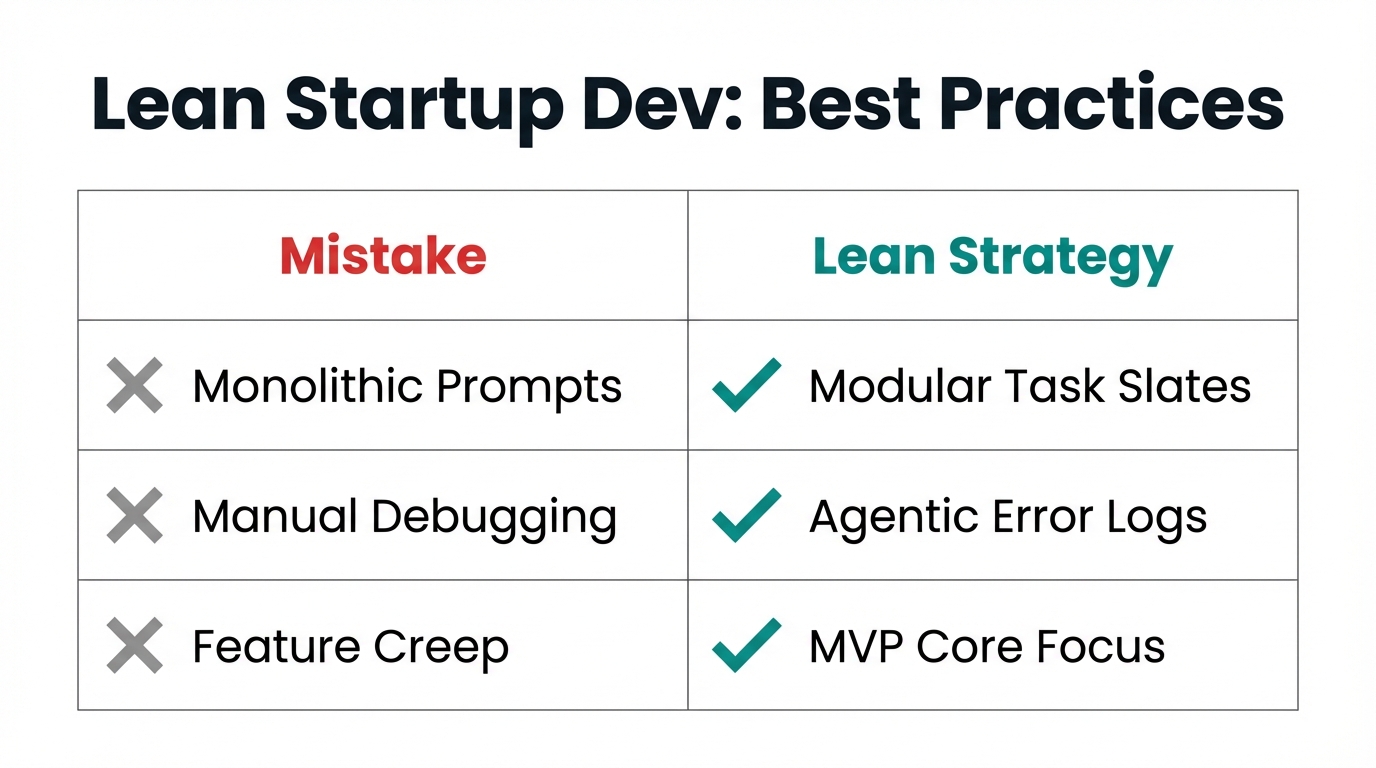
Even with advanced tools, failure is possible if you ignore the fundamentals. Avoid these common mistakes documented in the Reddit community of Claude users:
- Skipping Verification: Never assume the code works just because the agent finished the task. Always insist, "Write the test for this feature and run it before you exit."
- Overusing "Yolo Mode": While autonomous execution is tempting, it can lead the agent down "rabbit holes" that burn through your budget without producing results.
- Ignoring the Browser Bridge: If you're building a web app, run Claude with the
--chromeflag. This allows it to "see" your UI and debug visual issues in real-time, a tactic often discussed by The Bootstrapped Founder.
Final Takeaway: The Founder as Orchestrator
Building a startup in 2026 is no longer about who has the biggest engineering team; it's about who has the most efficient human-AI orchestration. By treating Claude Code as a "Junior Developer with Infinite Stamina," you can bypass the traditional hiring hurdles and focus on what truly matters: product-market fit. Whether you are refactoring a 50,000-line legacy application or launching a brand-new SaaS in a weekend on Shopify, the tools are now in your hands. It’s time to stop learning how to code and start learning how to lead.