Building a software business that generates seven figures in annual recurring revenue (ARR) used to require a floor full of engineers, a massive venture capital injection, and years of development. That paradigm has shifted. Today, a single engineer armed with a solo developer tech stack can move from concept to a million-dollar exit in record time. Take Dawson, the founder of Earnifi, who built an Ethereum airdrop discovery tool that reached over $1,000,000 in ARR as a one-person operation. The most shocking part of his story? The MVP was built in less than five hours. This wasn't a fluke of luck; it was a masterclass in leveraging full stack TypeScript development and modern frameworks to move faster than the competition.
The 5-Hour MVP: From Conviction to Codebase
The biggest mistake most aspiring solopreneurs make is over-engineering before they have validated their idea. Dawson’s approach, shared through Starter Story, emphasizes waiting for conviction before touching the keyboard. He spent weeks letting ideas bounce around in his head, only starting to code once the problem and solution were crystal clear. When he finally opened VS Code, he wasn't wondering what to build—he was simply executing a blueprint.
To replicate this how to build a million dollar app strategy, follow this three-step playbook:
Step 1: Define the High-Value Problem
Earnifi solved a specific, painful problem: Ethereum users often have unclaimed airdrops (essentially free digital coupons) worth hundreds or thousands of dollars but no way to track them. The average user on his platform was finding $750 in unclaimed assets. When your product provides an immediate, quantifiable ROI, marketing becomes significantly easier.
Step 2: Set a Strict Timebox
Dawson built the initial version of Earnifi in just four to five hours. This forces you to focus strictly on the core value proposition. For a solopreneur software engineering project, this means skipping the complex user dashboards, the 'forgot password' flows, and the fancy profile settings. Build the one thing that solves the problem and nothing else.
Step 3: Optimize for the 'Aha' Moment
The MVP was a simple landing page where users entered their wallet address and instantly saw a list of money they could claim. There was no friction, no complex onboarding—just immediate value. This led to 10,000 organic sign-ups in the first 48 hours after a single viral tweet.
The Full-Stack TypeScript Advantage
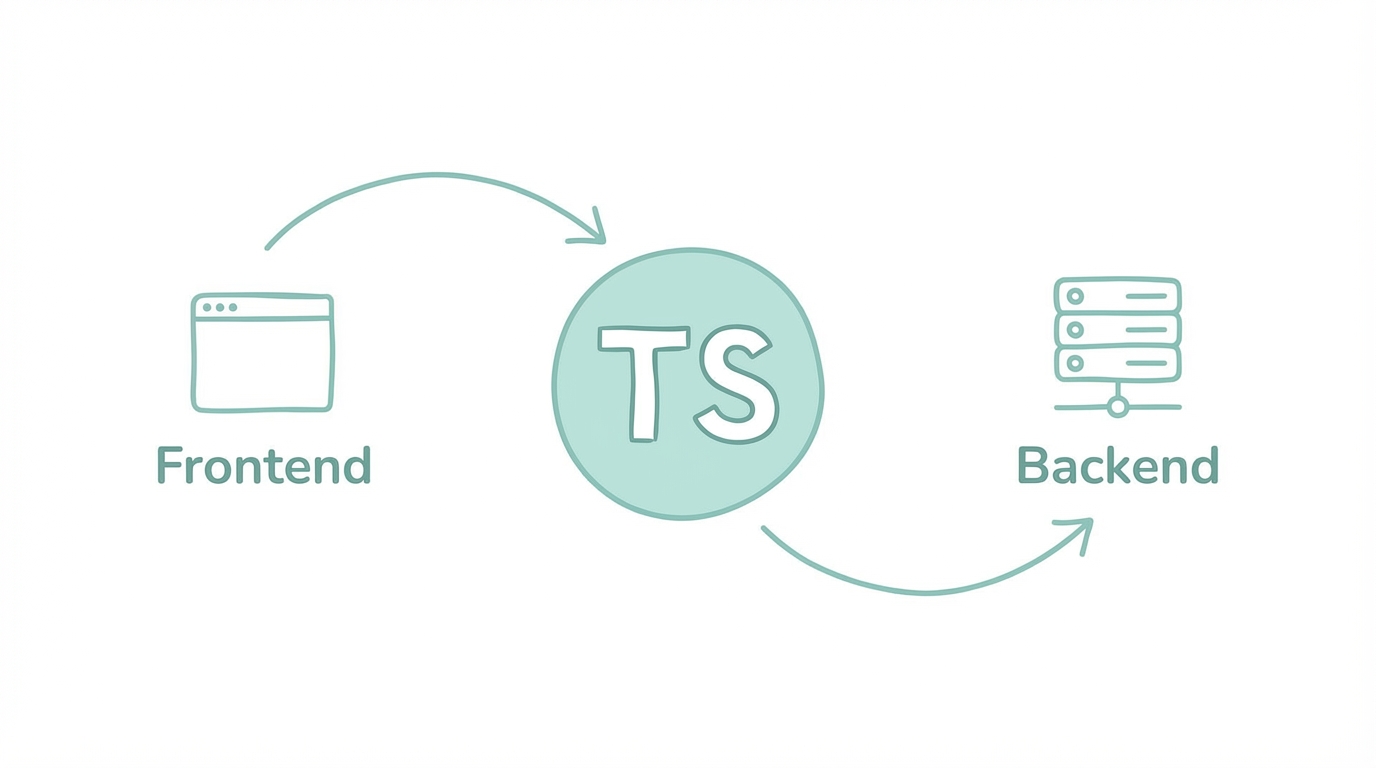
Velocity is the only competitive advantage a solo developer has over a funded startup. To maintain that speed, your solo developer tech stack must minimize context switching. This is why full stack TypeScript development has become the industry standard for high-performance solopreneurs. By using TypeScript across the entire stack, you can share types between your frontend and backend, catching bugs before they ever hit production.
Dawson’s stack was intentionally lean: Node.js on the backend, React on the frontend, and everything tied together with Next.js. This unified language approach allows a single developer to move seamlessly between database queries and UI components without the mental tax of switching syntax or paradigms.
Using Next.js for SaaS development provides several out-of-the-box benefits for solo devs:
- API Routes: No need to set up a separate server architecture; your backend logic lives right alongside your pages.
- Server-Side Rendering (SSR): Critical for SEO and ensuring that users see their data as fast as possible.
- Static Site Generation (SSG): Perfect for high-traffic landing pages that need to load instantly.
Speed as a Growth Feature: Next.js Performance
In the world of solopreneur software engineering, performance isn't just a technical metric—it's a growth feature. Research shows that every 100ms of latency can decrease conversion rates by 7%. When Dawson built Earnifi, he obsessed over making the website load fast for everyone. Next.js for SaaS is specifically designed to handle this, offering optimized image loading, code splitting, and pre-fetching.
High performance directly impacts your ability to scale to $1M ARR in two ways. First, it improves your search engine rankings. Google rewards sites that meet their Core Web Vitals, making it easier to acquire users organically. Second, it builds trust. In niche markets like crypto, where phishing and scams are rampant, a fast, professional-feeling site signals legitimacy. If your site feels like a 'toy,' users won't trust you with their data or their money.
Quality Over Quantity: Building Trust Through Data
A common mistake in how to build a million dollar app is trying to out-feature the competition. Dawson noted that his competitors often included too much 'noise'—tracking every obscure, low-value token—which led to a lower quality of service and decreased user trust. By focusing obsessively on quality, he ensured that every notification a user received from Earnifi was high-value.
This 'less is more' approach is vital for the solo developer. You cannot maintain 50 different features as a team of one. However, you can maintain five features that are executed better than anyone else in the world. Trust is the ultimate currency in digital products. When users know that your data is accurate and your notifications are meaningful, they become your best marketing channel through word-of-mouth.
Solo Dev Operations: Marketing and Automation

Managing a million-dollar business from a MacBook Pro requires a shift from manual labor to automated systems. Dawson’s marketing strategy relied heavily on Twitter and organic community engagement rather than expensive paid ads. He used 'kitschy' campaigns, like tagging users to show them how much money they were leaving on the table, which created a healthy form of community pressure.
His monetization strategy was equally lean: the 'anti-email' strategy. He only sent emails when a user actually had money to claim, resulting in open rates that were 'through the roof.' Once he had a massive list of free users, he implemented a paywall for the most valuable airdrops. This created a clear value exchange: pay a small fee to unlock hundreds of dollars in value.
As your app grows, you might find that organic social media isn't enough to reach the next level of growth. This is where tools like Stormy AI can help source and manage UGC creators at scale. Instead of spending weeks manually vetting influencers to talk about your app, AI-powered discovery tools can find the perfect niche creators who already have the trust of your target audience, allowing you to maintain your solo status while delegating the 'noise' of outreach to automated agents.
The Solopreneur Toolkit for $1M ARR
To survive the journey from MVP to acquisition, you need a setup that protects your focus and your health. Dawson’s 'van life' setup in Colorado included a maxed-out MacBook Pro, a split keyboard for posture, and a 32-inch monitor. But beyond the hardware, the software stack is what keeps the business running while you sleep.
A modern solo developer tech stack should include:
- Framework: Next.js for unified frontend/backend logic.
- Language: TypeScript for type safety and speed.
- Editor: VS Code with custom snippets and AI copilot tools.
- Communication: An automated email system that triggers based on user data.
- Growth: AI agents for creator discovery and outreach to keep the top of the funnel full.
By leveraging full stack TypeScript development and a lean operational model, Dawson was eventually able to exit his business through an acquisition by Bankless, a major player in the crypto media space. His journey proves that you don't need a large team to build something world-changing—you just need the right stack and a relentless focus on solving a real problem.
Final Takeaways for the Solo Developer
Building a million-dollar app as a solo developer is no longer a pipe dream—it is a repeatable technical process. By choosing a solo developer tech stack centered around Next.js for SaaS and TypeScript, you eliminate the friction that kills most early-stage projects. Remember to wait for conviction, build the core value in a matter of hours, and prioritize data quality over feature quantity. Whether you are building the next big Web3 tool or a niche productivity app, the blueprint remains the same: move fast, stay lean, and let your code do the heavy lifting.