In 2026, the marketing landscape has shifted from simple content creation to full-scale "agentic" workflows. For solo-founders and lean marketing teams, the days of spending ten hours a week wrestling with content calendars are over. We are now in the era of autonomous AI marketing agents, where the primary role of the marketer is to act as a creative director rather than a production assistant. By integrating the developer-grade power of Claude Code with the scheduling capabilities of Blotato, businesses are achieving what was once thought impossible: a high-volume, high-quality social presence that runs entirely on autopilot.
The State of Social Media Automation in 2026
Social media automation 2026 is no longer about "set it and forget it" RSS feeds. It is about context-aware intelligence. Claude, developed by Anthropic, has emerged as the preferred "Creative Brain" for marketers who prioritize brand nuance over generic output. Currently, Claude boasts approximately 18.9 million monthly active web users and over 7.38 million mobile app users, according to DemandSage. This rapid adoption is fueled by the model's ability to maintain a consistent brand voice, a feature that has led over 70% of Fortune 100 companies to integrate Claude into their internal operations, as reported by Marketing LTB.
The impact on the bottom line is undeniable. Teams that have moved to AI-driven creative pipelines report a 30% higher ROI and a staggering 50% reduction in production hours, according to data from Stormy AI. This efficiency allows small teams to compete with global agencies by leveraging tools that handle everything from trend discovery to cross-platform formatting.
"In 2026, the divide isn't between those who use AI and those who don't—it's between those who use AI for drafting and those who use it for autonomous execution."
| Feature | Manual Content Management | AI Agentic Workflow (Claude + Blotato) |
|---|---|---|
| Trend Analysis | Manual scrolling/Social listening tools | Real-time querying via Model Context Protocol (MCP) |
| Content Creation | Writing individual posts for each platform | Autonomous repurposing from one master source |
| Scheduling | Manual drag-and-drop calendars | API-driven triggers based on engagement data |
| Workflow Time | 15+ Hours / Week | < 1 Hour / Week (Review Only) |
Why the Claude + Blotato Stack Works
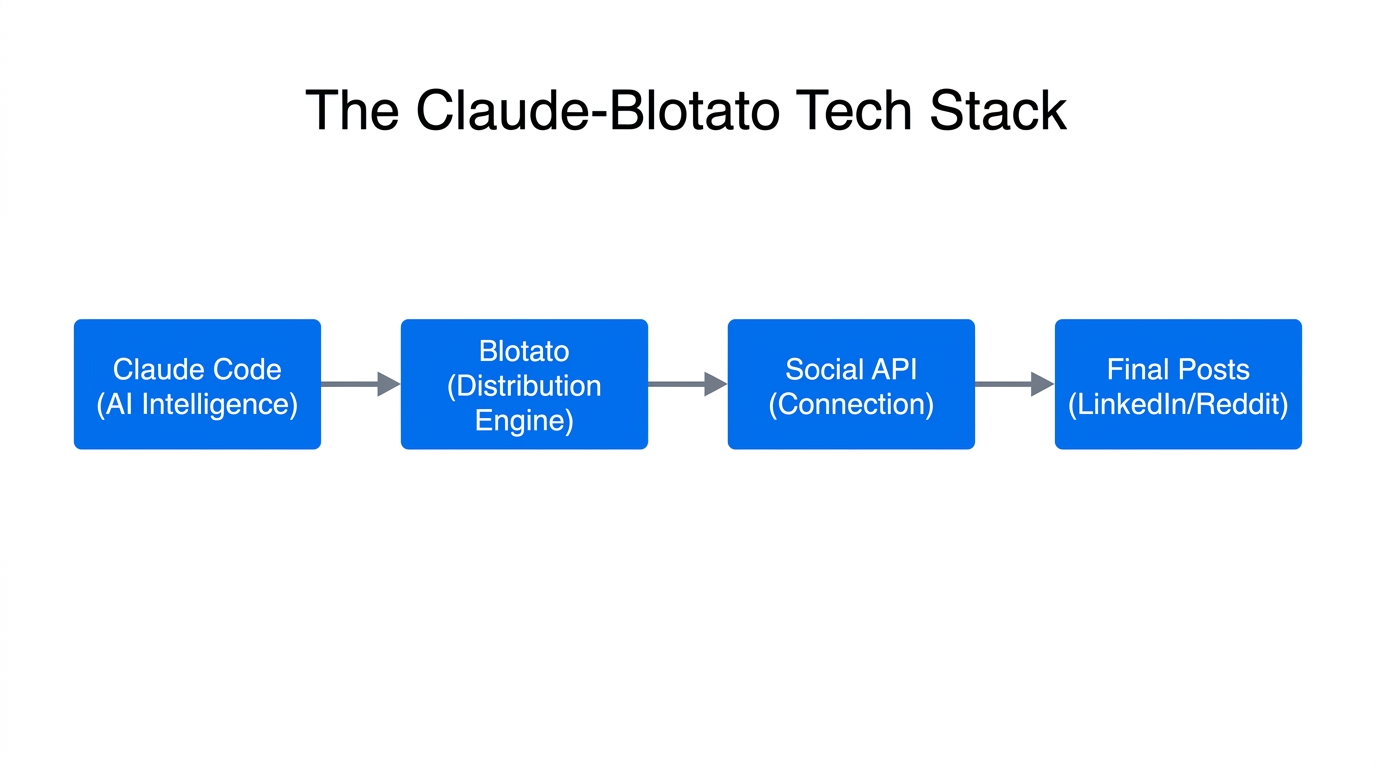
To build a hands-free growth engine, you need two distinct components: a reasoning engine and an execution layer. Claude acts as the reasoning engine. Unlike other models that may lean toward rapid-fire ideation, Claude is the gold standard for long-form storytelling and brand consistency, according to research shared on Zapier. When paired with Blotato, which handles the complex scheduling and platform-specific API requirements, you create a seamless bridge from thought to post.
One of the most significant breakthroughs this year has been the Model Context Protocol (MCP). This allows Claude to connect directly to external data sources. For example, marketers now use MCP servers like Xpoz to query live social trends across X, Instagram, and TikTok directly within the Claude interface. This means your automated posts aren't just based on static knowledge—they are reacting to what is happening right now.
The Hands-Free Setup Playbook
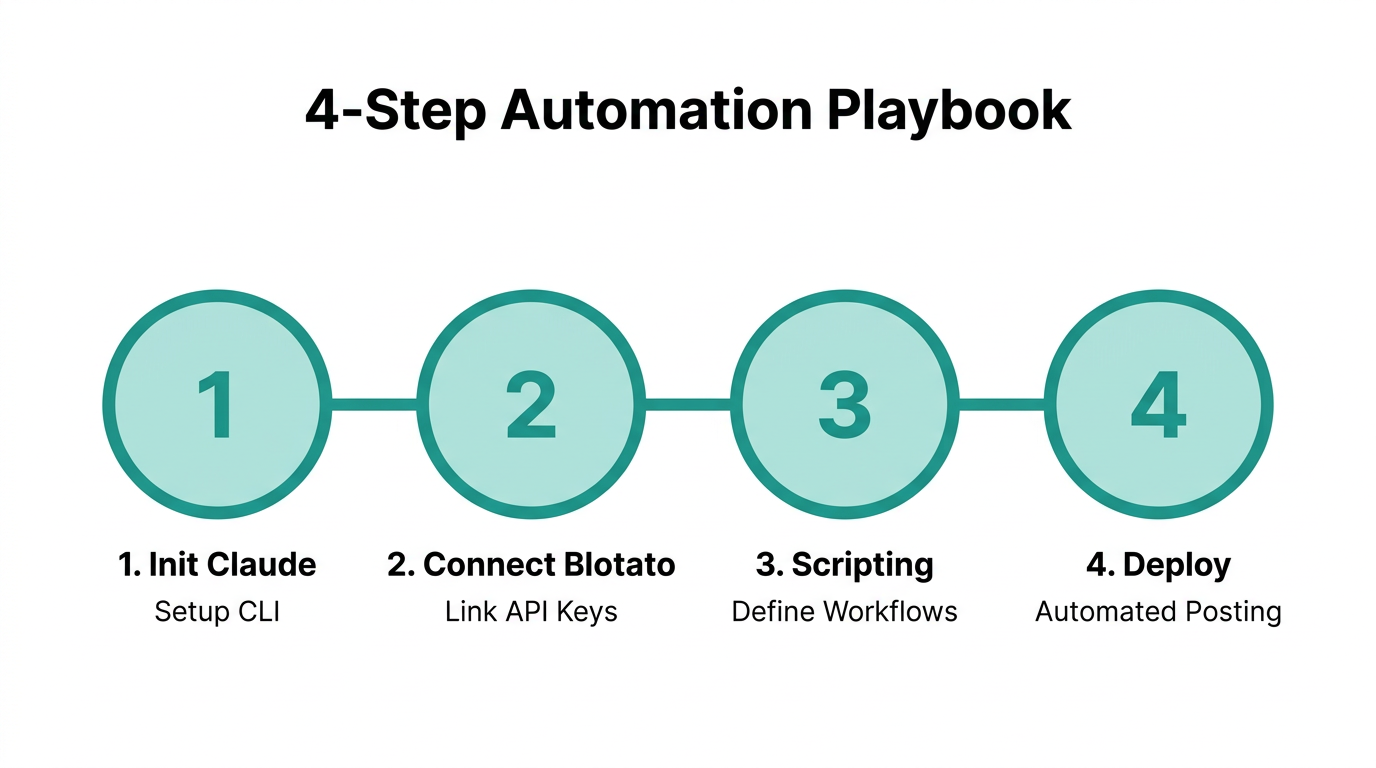
Setting up your automated content engine requires a structured approach. Follow this IPO (Input-Process-Output) framework to ensure high-quality results.
Step 1: Build Your Contextual Workspace
Start by creating a Claude Project. This is where you will store your "Source of Truth." Instead of one-off prompts, upload your 80-page brand style guide, past top-performing social posts, and detailed customer personas. This ensures that every post generated feels human and aligned with your brand voice. Using Claude Projects is essential for avoiding the generic "AI smell" often found in automated content, as highlighted by Social Media Examiner.
Step 2: Connect Claude Code to Blotato
Use Claude Code (the CLI interface) to bridge your local environment with the Blotato API. This allows you to write scripts where Claude analyzes a raw input (like a YouTube transcript or a Notion doc) and automatically sends the formatted results to Blotato for scheduling across LinkedIn, X, and Reddit.
Step 3: Implement Few-Shot Prompting
In your Claude Project, include a "Few-Shot" document containing 5–10 of your best-performing social posts. Instruct the AI: "Generate 3 variations for LinkedIn and 1 for X following the specific structure and tone of 'Best_Posts.txt'." This technique dramatically increases output quality by giving the AI a concrete target to aim for.
"The secret to 2026 automation isn't the prompt; it's the context. The better your project files, the less editing you'll do later."
The 20% Rule: Implementing a Human-in-the-Loop
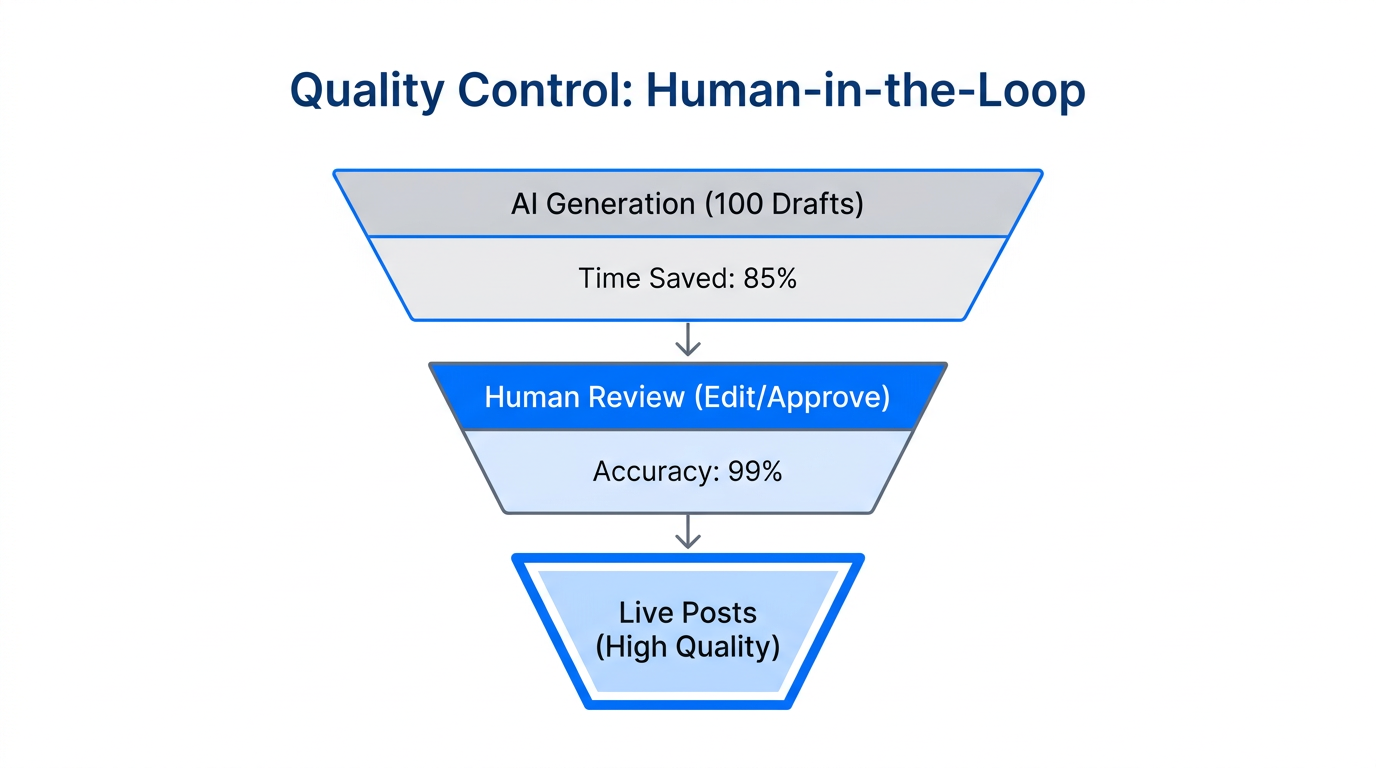
While automation can handle the heavy lifting, total autonomy is a trap. Research indicates that AI still fails in approximately 20% of cases regarding deep empathy and cultural nuance, as noted by Stormy AI. To maintain brand integrity, you must implement a review stage.
- The Buffer Zone: Set Blotato to queue posts as "Drafts" rather than "Scheduled."
- The 15-Minute Sprint: Once a week, spend 15 minutes reviewing the generated queue. Adjust for current events or subtle tone shifts that an AI agent might miss.
- Visual Quality Check: Use Claude's Artifacts feature to generate structured outlines for infographics or briefs for your design team on Canva, ensuring the visual strategy matches the written word, as suggested by Tom's Guide.
Automating High-Value Workflows: LinkedIn and Reddit
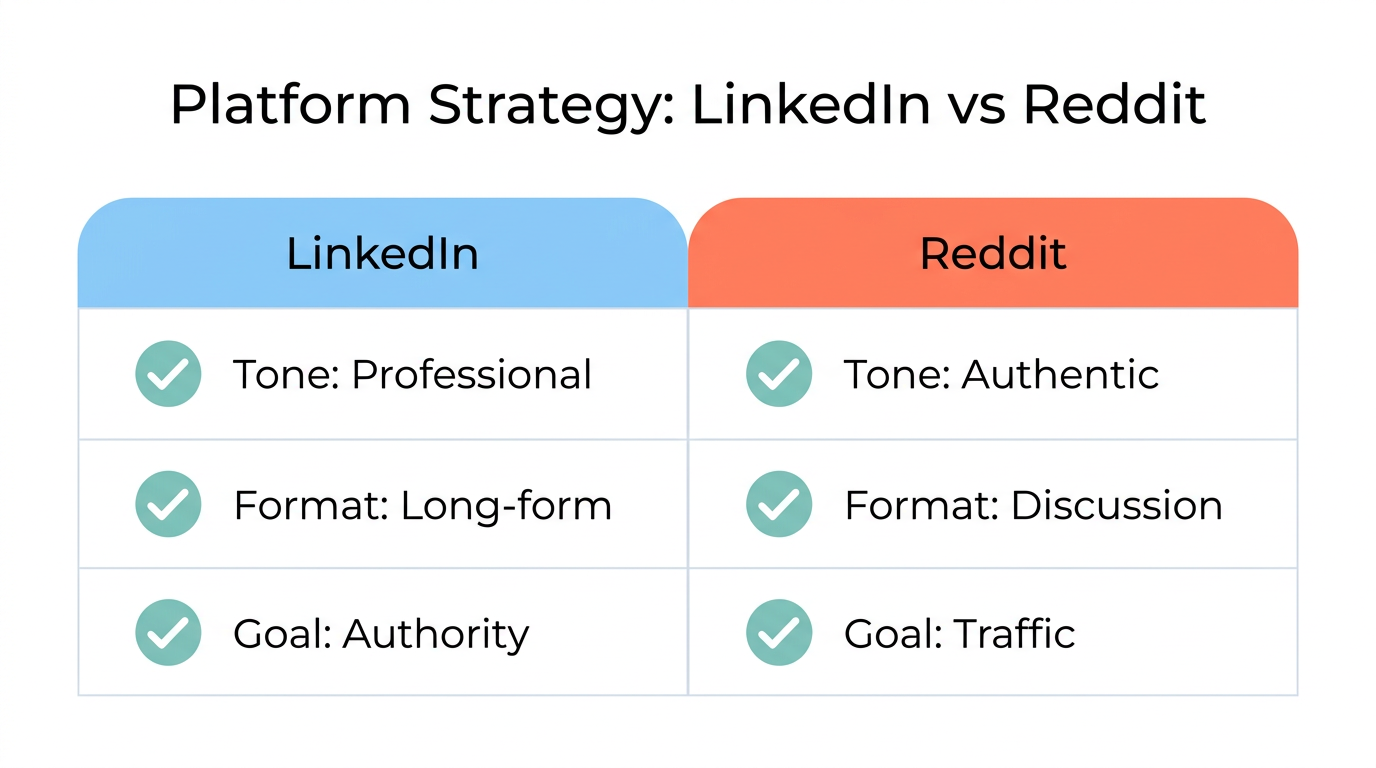
Two of the most time-consuming platforms are LinkedIn and Reddit. In 2026, r/AISEOInsider users have pioneered the "30-Minute Repurposing Sprint" to handle these platforms efficiently.
The LinkedIn Article Workflow
Instead of writing from scratch, feed Claude a raw video transcript or a "messy" meeting note. Use Claude Projects to transform this raw data into a professional LinkedIn post with the "bold but professional" tone of a thought leader. Use Blotato to schedule these during peak engagement hours for your specific industry.
The Reddit Discussion Starter
Reddit requires a different approach. Prompt Claude to identify the most controversial or helpful nugget from your content and turn it into a Reddit-first discussion starter. This avoids the "marketing spam" feel and encourages genuine community interaction. Just as brands use Stormy AI to discover creators who fit their niche, you can use Claude to discover the exact vernacular of specific subreddits to ensure your posts blend in naturally.
Scaling Creative Strategy: Lessons from the Giants
Scaling doesn't mean doing more of the same; it means redirecting saved hours into high-level growth. Take the telecom giant TELUS as an example. By using Claude to build over 13,000 internal AI tools, they saved 500,000 hours of manual labor, much of which was redirected back into creative marketing strategy, according to data from Exafin.
Similarly, Zapier utilizes over 800 AI agents to automate cross-platform social listening and internal communication. For a small founder, this means the hours you save using Blotato and Claude should be spent on:
- Partnering with Influencers: Use tools like Stormy AI to find and outreach to UGC creators who can amplify your automated content.
- Analyzing ROI: Deep dive into Google Analytics or Mixpanel to see which AI-generated topics are driving actual conversions.
- Platform Expansion: While your agents handle LinkedIn and X, use your extra time to experiment with newer platforms like TikTok Shop or LinkedIn Newsletters.
"The goal of automation isn't to work less; it's to work on things that actually move the needle."
Conclusion: Your Future-Proof Marketing Stack
The combination of Claude Code and Blotato represents the cutting edge of social media automation 2026. By setting up a context-rich workspace, utilizing the IPO framework, and maintaining a strict human-in-the-loop review process, solo-founders can achieve the marketing output of a full agency.
Start small: automate your most repetitive platform first, then scale using the hours you've reclaimed. As you grow, remember to feed your AI real data from tools like Ahrefs or Semrush to avoid hallucinations and ensure your content remains grounded in market reality. The era of hands-free growth is here—it's time to build your engine.