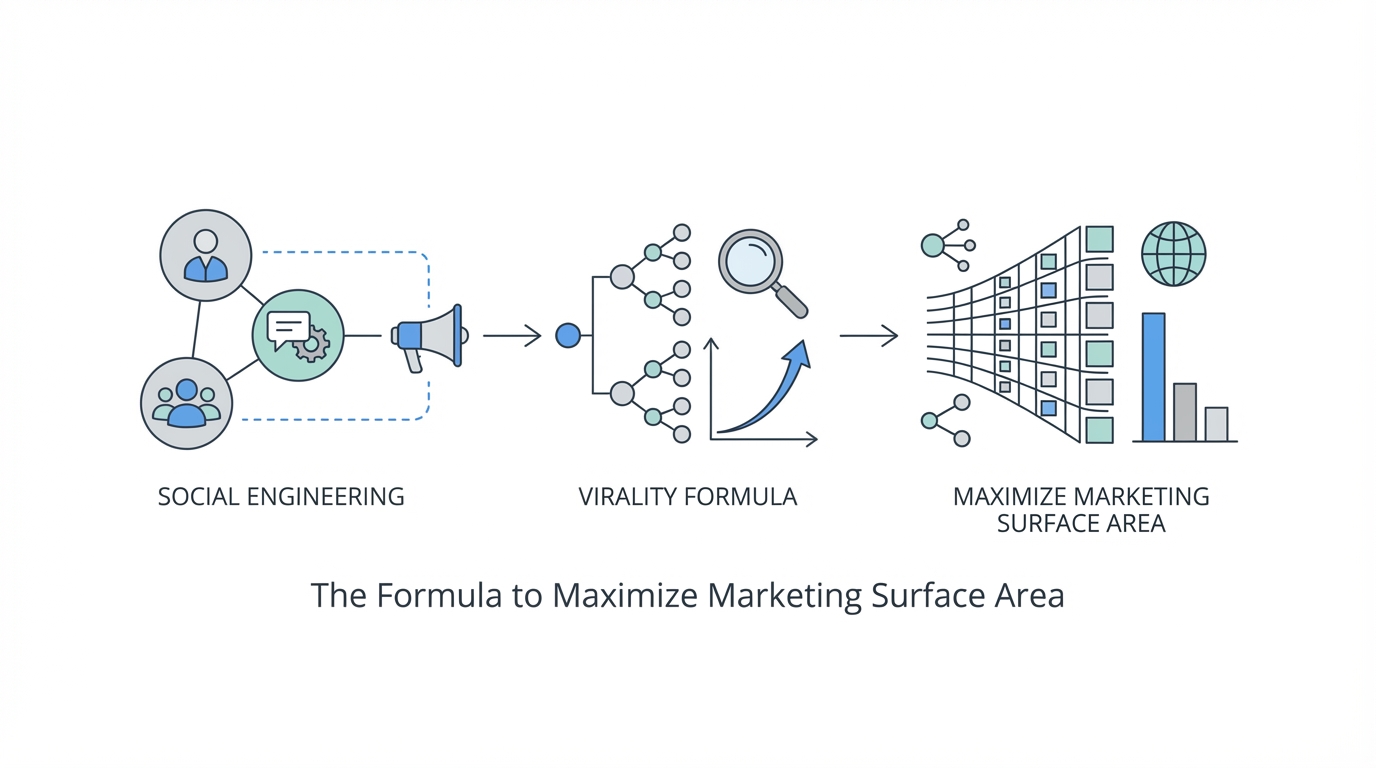
In the modern attention economy, simply paying for a sponsorship is no longer enough to move the needle. Most brands treat marketing as a linear transaction: you pay for an impression, and you hope for a conversion. However, the most successful growth practitioners today don't identify as marketers; they identify as social engineers. By viewing social media platforms as algorithmic ecosystems rather than just billboards, these individuals reverse-engineer attention through a scientific viral marketing formula. This shift in mindset transforms a static sponsorship into a multi-dimensional event that maximizes what we call the 'marketing surface area' for potential virality.
Defining the Social Engineer: Marketing as Science
Traditional marketing often relies on intuition and creative "vibes." In contrast, social engineering treats platforms like TikTok and Instagram as environments governed by mathematical rules. A social engineer looks at a piece of content and asks how it can be structured to trigger the specific triggers of an algorithm. It is the difference between writing a tweet that gets 1,500 retweets versus 15,000 retweets by scientifically adjusting the hook, the emotional resonance, and the timing.
For brands like Autopilot, which manages the famous Nancy Pelosi stock tracker, the goal isn't just to gain followers—it is to build authority and affinity. As noted in the research, social media is built on algorithms, and success requires understanding both the marketplace of attention and the scientific formula behind the content itself. This involves reverse-engineering viral ideas before they are even executed, ensuring that every variable—from the color of the banner to the specific wording of an ad read—is optimized for clip-ability and shareability on X (formerly Twitter).
The Virality Calculation: Stacking the Odds
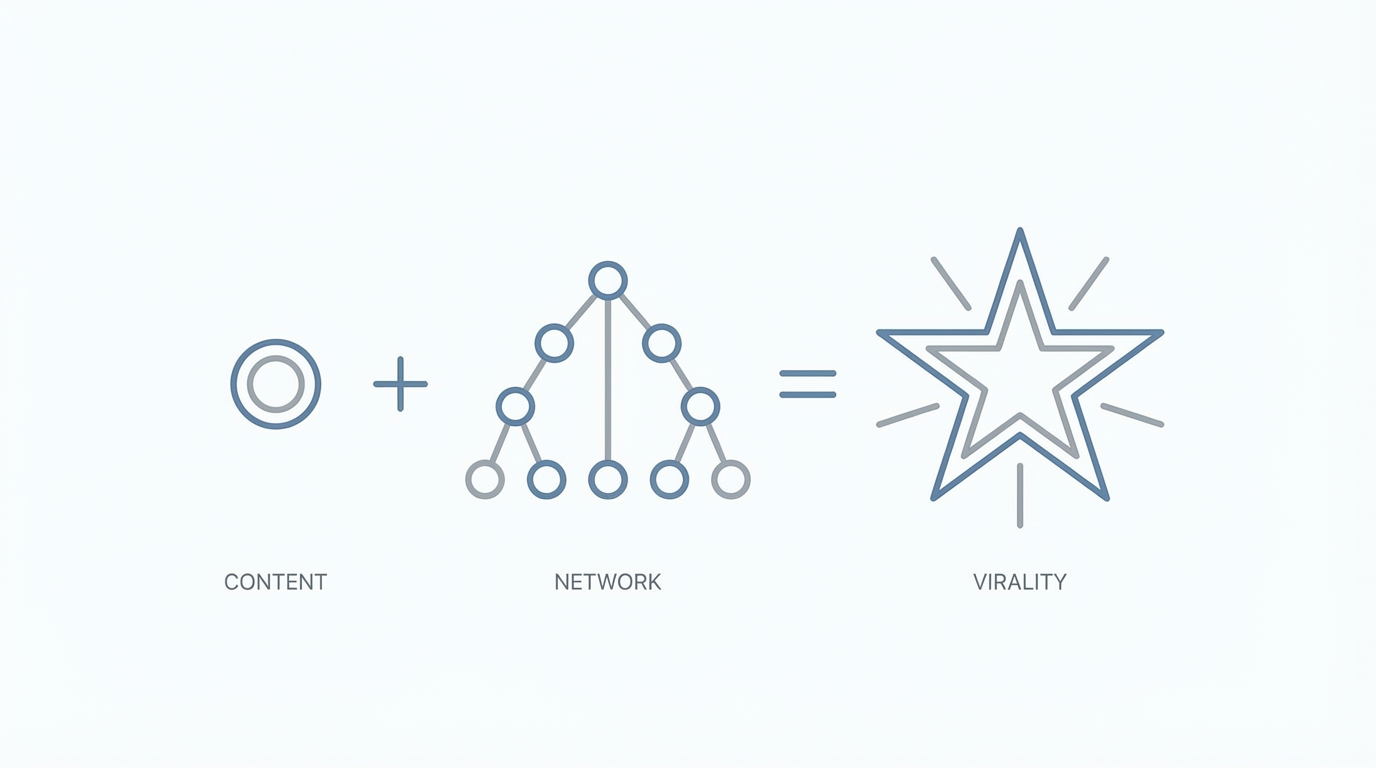
One of the most powerful growth hacking strategies is the understanding that virality is not a binary 'yes' or 'no.' Instead, it is a probability game. A standard sponsorship might give a brand a 5% chance of going viral. By stacking variables and adding creative layers, a social engineer can increase that probability to 30% or higher. This is known as the Virality Calculation.
The calculation works by adding incremental layers to a core event:
- Core Sponsorship (5-10%): Sponsoring a high-visibility event, such as a UFC fight or a major conference.
- Creative Placement (15%): Ensuring your brand is visible from the "noon vantage point" or the primary camera angle so it appears in every highlight clip.
- Guerrilla Stunts (20-25%): Adding an external element, like a fake celebrity or a controversial vehicle, that forces people to pull out their phones.
- Cross-Channel Amplification (30%+): Using pre-built meme pages and authority accounts to seed the content into the algorithm.
By using Meta Ads Manager or Google Ads to boost these organic moments, brands can turn a single stunt into a weeks-long news cycle.
Case Study: The UFC Sphere and the 'Noon Vantage Point'
When Autopilot decided to sponsor the UFC at the Sphere in Las Vegas, they didn't just put their logo on a banner and hope for the best. They applied creative sponsorship ideas designed for maximum "clip-ability." This started with the placement of the "Invest Like a Politician" slogan directly on the back of the octagon. They specifically targeted the noon vantage point, ensuring that whenever a fighter was interviewed or a major blow was landed, the brand was in the frame.
But the real social engineering happened during the ad reads. Instead of a standard corporate script, they wrote the funniest, most riveting ad reads possible for Bruce Buffer. By making the advertisement part of the entertainment, they ensured the moment would be clipped and shared across YouTube and TikTok. This is a primary tenet of the viral marketing formula: your ad should not look like an ad; it should look like a moment people don't want to miss.
Maximizing Marketing Surface Area: Stunts Beyond the Event
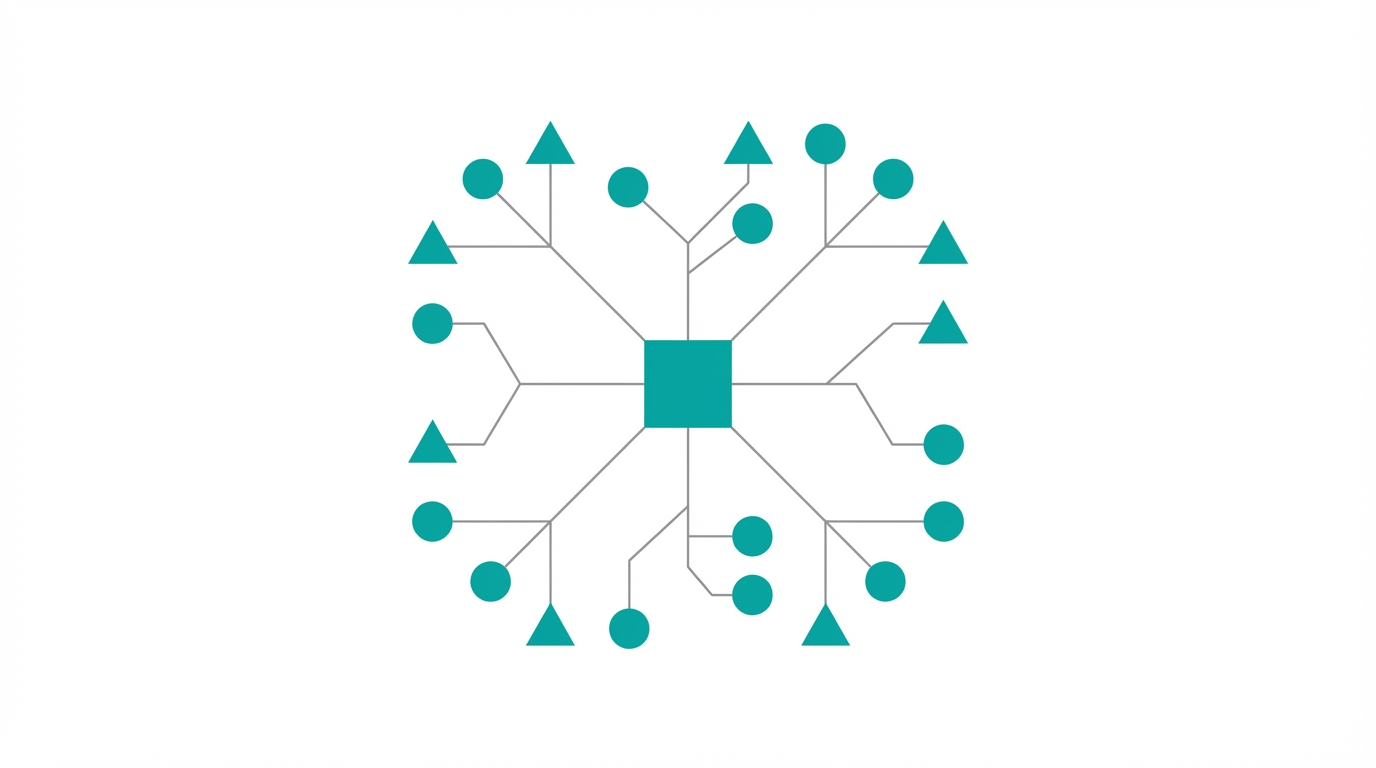
The secret to guerrilla marketing tactics is maximizing the "surface area" for a viral moment to occur. While the UFC 306 fight was the main event, the social engineering team created multiple secondary moments to support it. They sent a fake Nancy Pelosi to sit front row at the fight, creating a spectacle that influencers like the Nelk Boys could interact with. They also wrapped a Cybertruck in "Pelosi 2024" branding and drove it around Vegas to incite reactions.

These moments were designed to be "scroll-stopping." Whether people were flipping off the truck or taking selfies with the fake politician, every interaction was a potential piece of content for TikTok. To manage these types of complex creator relationships and source the right talent for these stunts, tools like Stormy AI can help brands discover creators who specialize in high-energy, guerrilla-style content and manage the outreach process at scale.
Step Zero: Building Authority and Affinity
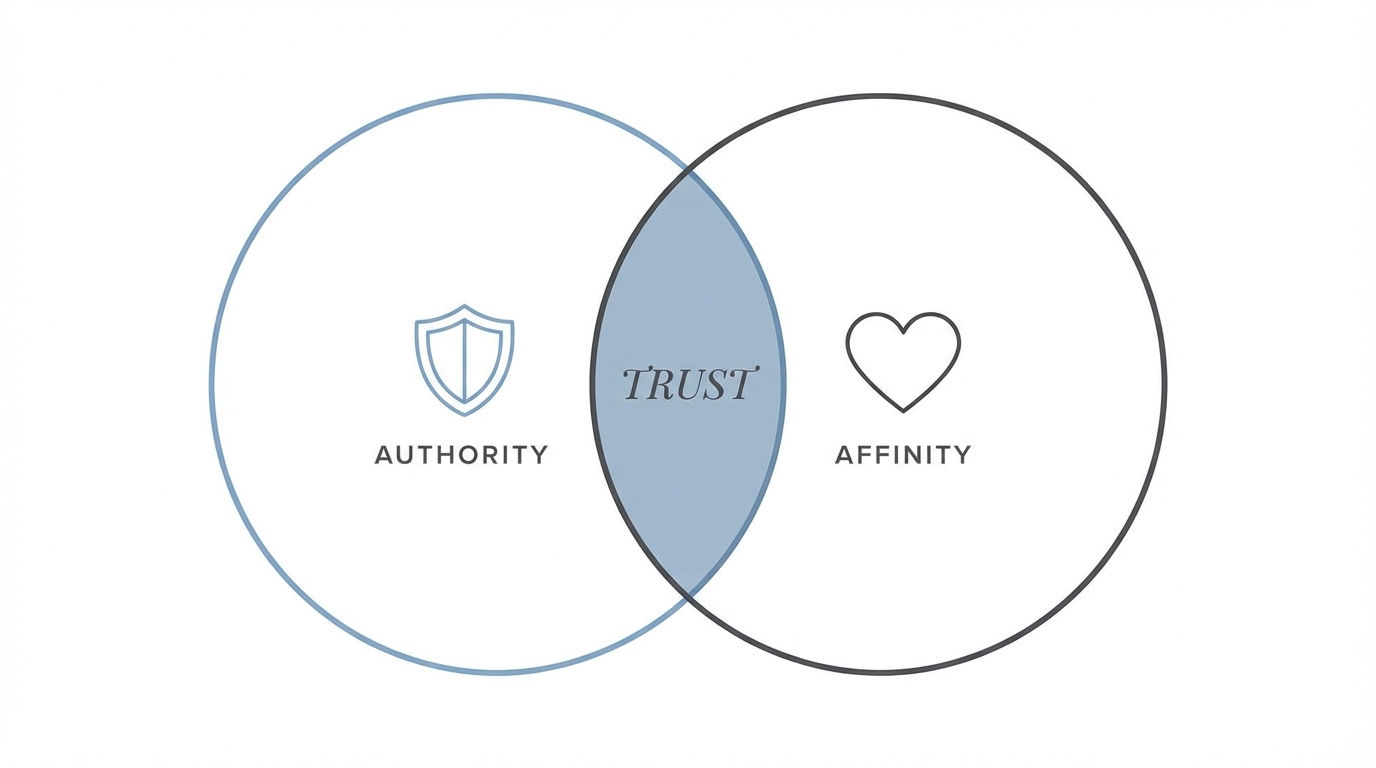
You cannot engineer virality on a foundation of sand. The research highlights "Step Zero": building credibility through investigative journalism and meme pages. Before swinging big with creative sponsorship ideas, you must build an audience that trusts your voice. This is the difference between attention and affinity. Attention is fleeting; affinity is when your audience loves the brand enough to advocate for it.
The playbook for building this authority includes:
- Naming the Movement: Don't just name your account after a brand. Name it after a movement people want to follow, like "Stop the Spend" or the "Pelosi Tracker."
- The Investigative Journalist Approach: Use data-driven content to build trust. For example, instead of just posting a meme about a stock trade, provide the context of the legislative acts that preceded it.
- Marrying Meme and Authority: Use the meme for virality (to reach the masses) and the investigative content for credibility (to convert the followers).
For brands looking to replicate this, identifying the right niche is critical. Using Stormy AI's creator discovery engine, you can find the specific "authority" accounts in your niche—whether it's finance, tech, or even the "plant mom" community—to partner with and seed your investigative content.
The Future: Live Shopping and AI Growth Hacking

The next evolution of social engineering involves unbundling behaviors that are already happening. One major trend is Live Shopping for Western audiences. While live commerce is massive in Asia, it hasn't fully taken hold in the US in the same way. The opportunity lies in making shopping an entertainment experience—similar to how 15-year-olds watch video game streamers on Twitch. Imagine creators live-streaming their own online shopping sessions, asking their chat for advice on what to buy from Shopify stores.

Additionally, AI-powered growth hacking strategies are lowering the barrier to entry for solo founders. From AI agents that can haggle for hotel discounts to apps that identify plants or track calories, the focus is shifting toward utility that triggers the algorithm. If an app makes life easier and has a "scroll-stopping" visual component, it has the potential to generate thousands of dollars in monthly recurring revenue via Stripe with almost zero traditional ad spend.
Conclusion: Engineering Long-Term Loyalty
Social engineering is not just about a one-off viral video; it’s about creating a consistent brand vibe that people want to be associated with. Whether you are using Apple Search Ads to drive app installs or sponsoring the next major sporting event, the goal is to increase your marketing surface area. By stacking variables, building authority through investigative content, and using guerrilla tactics to spark conversation, you move from being a brand that buys attention to a brand that commands it. The formula is clear: focus on the math of the algorithm, but never forget the emotion of the audience.