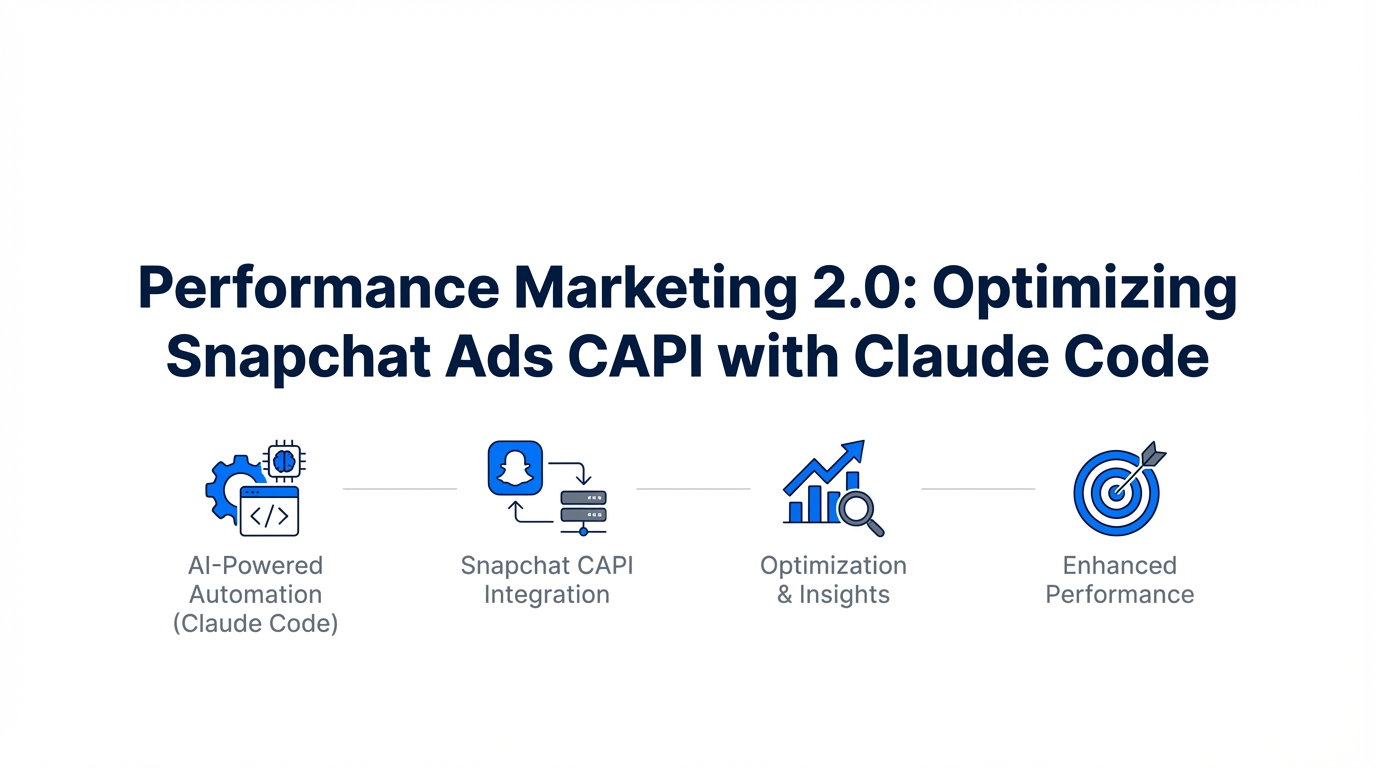
In the rapidly evolving landscape of digital advertising, the transition from simple media buying to algorithmic engineering is no longer a luxury—it is a survival requirement. As of early 2025, Snapchat has solidified its position as a powerhouse for performance marketers, reaching over 850 million Monthly Active Users (MAU). However, the true challenge for modern growth teams isn't just reaching these 709 million global users; it is accurately attributing their actions in a privacy-first world. Enter Performance Marketing 2.0: a strategy that marries the Snapchat Conversions API (CAPI) with the agentic power of Claude Code to build a self-optimizing ecosystem that bypasses browser-based tracking limitations.
The CAPI Imperative: Reclaiming 25% of Your Data
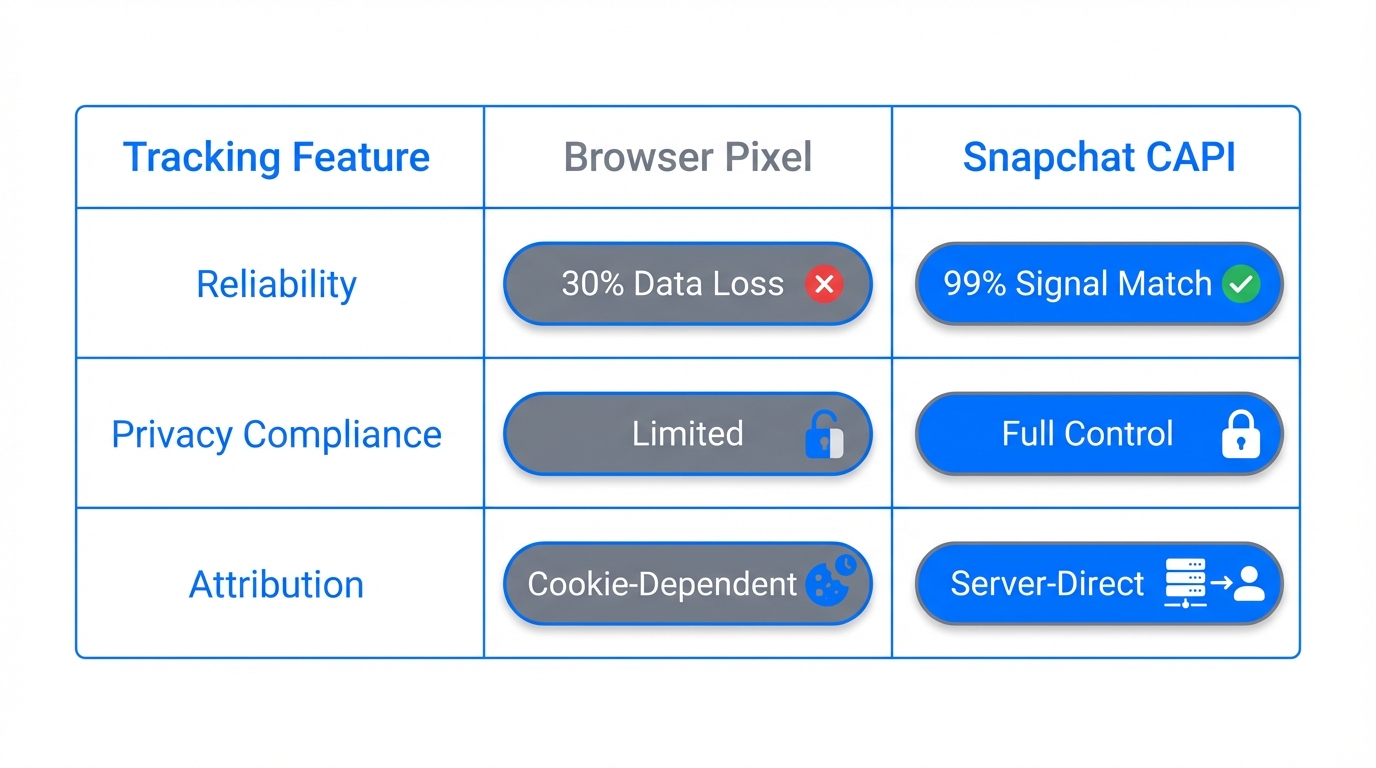
For years, performance marketers relied on the client-side Pixel to track conversions. However, with the tightening of browser privacy and the deprecation of third-party cookies, signal loss has become a silent profit killer. By implementing the Snapchat Conversions API, brands are moving tracking from the user's device to the server. This shift is not just technical—it is financial. Data from Snapchat Business shows that moving to a server-side setup can improve purchase value signals by up to 25%, providing the algorithm with the high-intent data it needs to find your next customer.
The standard Pixel is often blocked by ad blockers or interrupted by slow network connections. Server-side tracking via CAPI ensures that every add-to-cart, sign-up, and purchase is communicated directly to Snap's servers. This direct line of communication is the foundation of ad attribution automation, allowing performance marketing AI to make decisions based on reality rather than fragmented browser data.
"The transition from client-side tracking to server-side CAPI is the single most impactful lever a Snapchat advertiser can pull in 2025 to stabilize their attribution modeling."
Claude Code: The New Ad Ops Assistant
While CAPI provides the data, Claude provides the intelligence to manage it. Claude Code is a terminal-based AI coding assistant that allows marketers to interface directly with their marketing stacks using natural language. Instead of manually auditing spreadsheets in Notion or Excel, marketers can now use Claude to validate and audit Pixel data quality in real-time. This prevents the dreaded "off-target creative" cycle, where the algorithm optimizes for the wrong events because of poor tracking implementation.
By using the Snapchat Ads MCP Server, Claude can connect directly to your Ads Manager. This allows for agentic coding workflows where the AI identifies discrepancies between your backend database and what Snapchat reports. This level of transparency is critical for maintaining a high "Event Quality Score" (EQS), which correlates with a significantly lower Cost Per Impression (CPI).
| Metric | With Basic Pixel Tracking | With CAPI + AI Optimization |
|---|---|---|
| Purchase Signal Accuracy | ~70-80% | 95%+ |
| Average ROAS | Baseline | 26% Increase |
| Cost Per Impression (CPI) | Standard | 49% Decrease |
| Reporting Latency | High (24h+) | Near Real-Time |
Step-by-Step: Building a Snapchat Data Pipeline with DLTHub
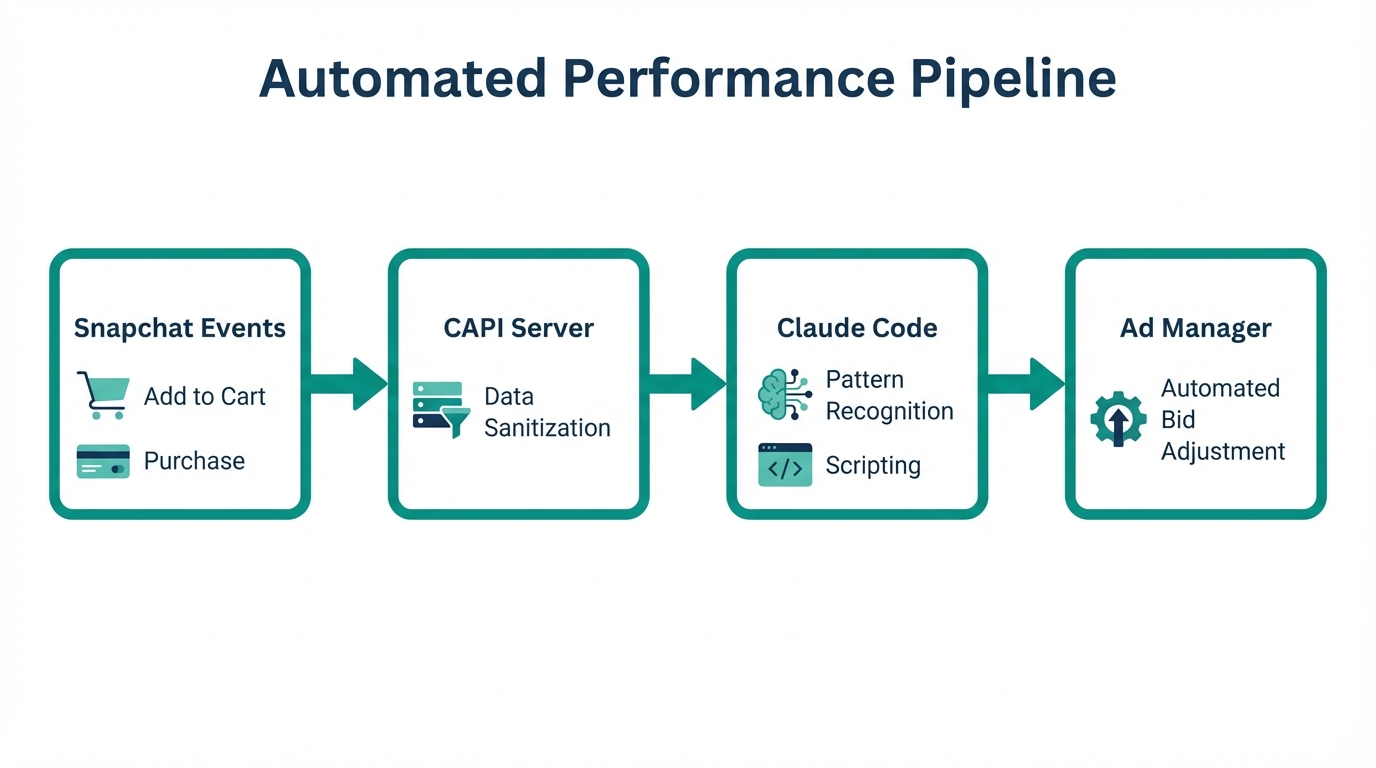
To truly leverage Claude Code data automation, you need a way to sync your ad data into a queryable format. The DLTHub Snapchat Pipeline is a declarative Python tool that simplifies this process. By syncing your marketing data to a database like BigQuery or Snowflake, you give Claude the raw materials it needs to perform deep-dive analysis.
Step 1: Environment Configuration
First, install the Claude Code CLI and set up your project directory. This puts the power of an elite data scientist directly into your terminal.
npm install -g @anthropic-ai/claude-code
cd your-snapchat-project
claude
Step 2: Syncing Data via DLTHub
Use the Snapchat Business SDK in conjunction with DLTHub to create a recurring sync. This ensures your AI assistant is always working with the most recent performance metrics.
Step 3: Auditing with Claude
Once the data is synced, you can prompt Claude to identify trends that are invisible to the naked eye. For example: "Claude, analyze the correlation between our CAPI event match rate and the ROAS of our top-performing vertical videos." This allows you to identify and bypass browser-based tracking limitations by focusing on the channels with the highest data integrity.
Avoiding the 'Set-it-and-Forget-it' Fallacy
A common mistake in modern marketing is over-reliance on platform-native automation. Relying entirely on Snapchat’s Smart Bidding without external oversight can lead to "algorithmic bias," where the system hunts for cheap traffic rather than high-value conversions. Performance marketers using Claude reported saving significant time by implementing automated workflows through tools like Zapier or the Snap Marketing API.
These rules should include automated pausing when ad frequency exceeds a 3–4x threshold, as Snapchat users are known to "tune out" much faster than those on other platforms. By using Claude to write these scripts, you can customize triggers based on your specific unit economics rather than generic platform recommendations. In some cases, taking back manual control via AI-assisted bidding led to a 50% decrease in CPM.
Fueling the Machine: Creative-Led Growth
The best automation in the world cannot save bad creative. Snapchat is a visual-first platform where trends shift weekly. To keep up, sophisticated teams are using AI-driven video production tools like CapCut or Descript paired with automated testing. The demand for native, high-quality User-Generated Content (UGC) is higher than ever.
This is where platforms like Stormy AI become essential. While Claude optimizes your CAPI and attribution, you still need a steady stream of creators to produce the assets. Using Stormy AI's discovery engine, you can find niche-specific creators who fit your brand's aesthetic, ensuring that the "top of the funnel" is as optimized as your technical backend. Integrating these high-quality assets into your automated testing framework is the final piece of the Performance Marketing 2.0 puzzle.
"Automation rules must include automated pausing for ads when frequency exceeds 3–4x. Even the best creative will fatigue on a platform as fast-paced as Snapchat."
The Future: Privacy-First AI Attribution
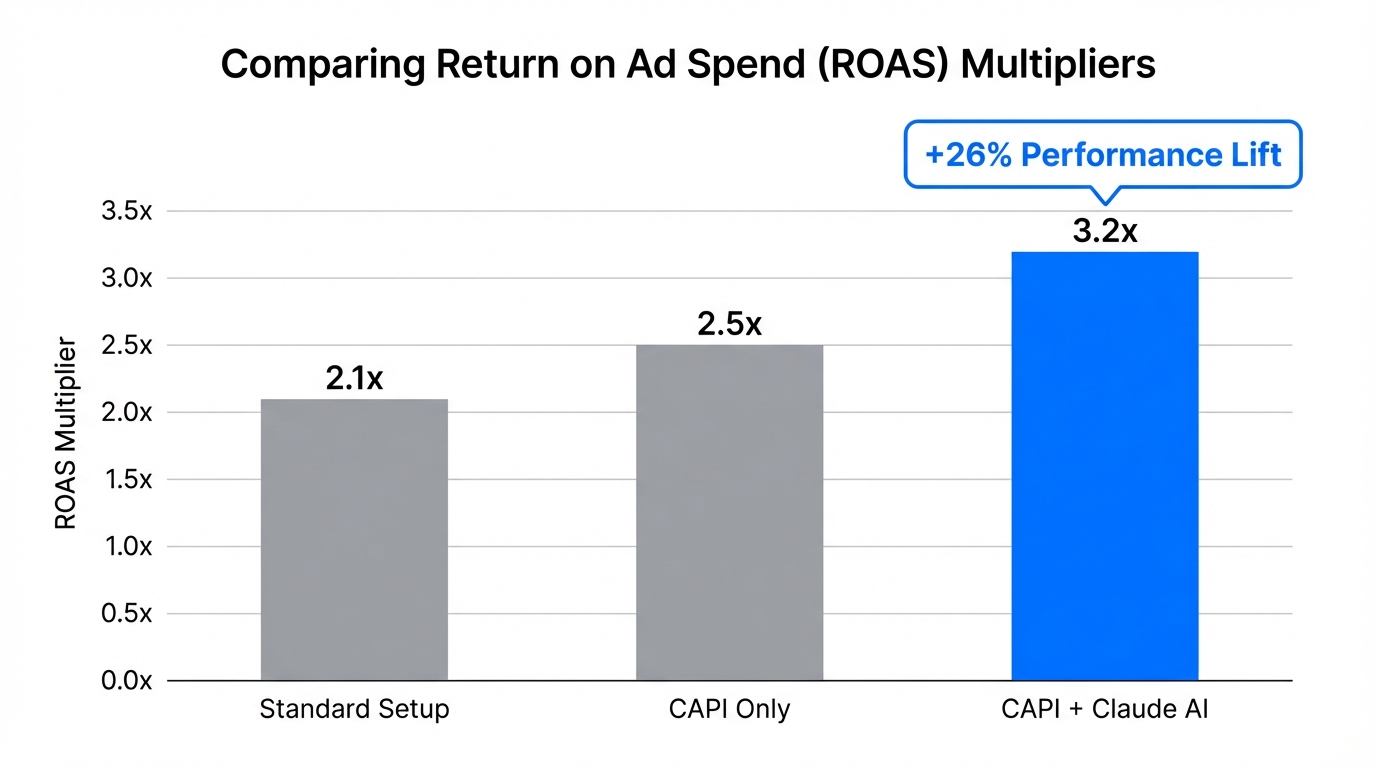
As we look toward 2026, the intersection of AI and privacy will only deepen. We are moving toward 1:1 personalized creative assets that adapt to user personality traits. To stay ahead, performance marketers must master the tools of agentic coding and server-side signal management. By combining the data integrity of Snapchat's CAPI with the analytical depth of Claude Code, you aren't just running ads; you're building a proprietary growth engine.
In summary, the transition to this new era requires a three-pronged approach: accurate signal collection via CAPI, automated data analysis via Claude Code, and high-velocity creative testing powered by UGC sourcing. Brands that master this stack will not only survive the privacy wars—they will thrive in them.