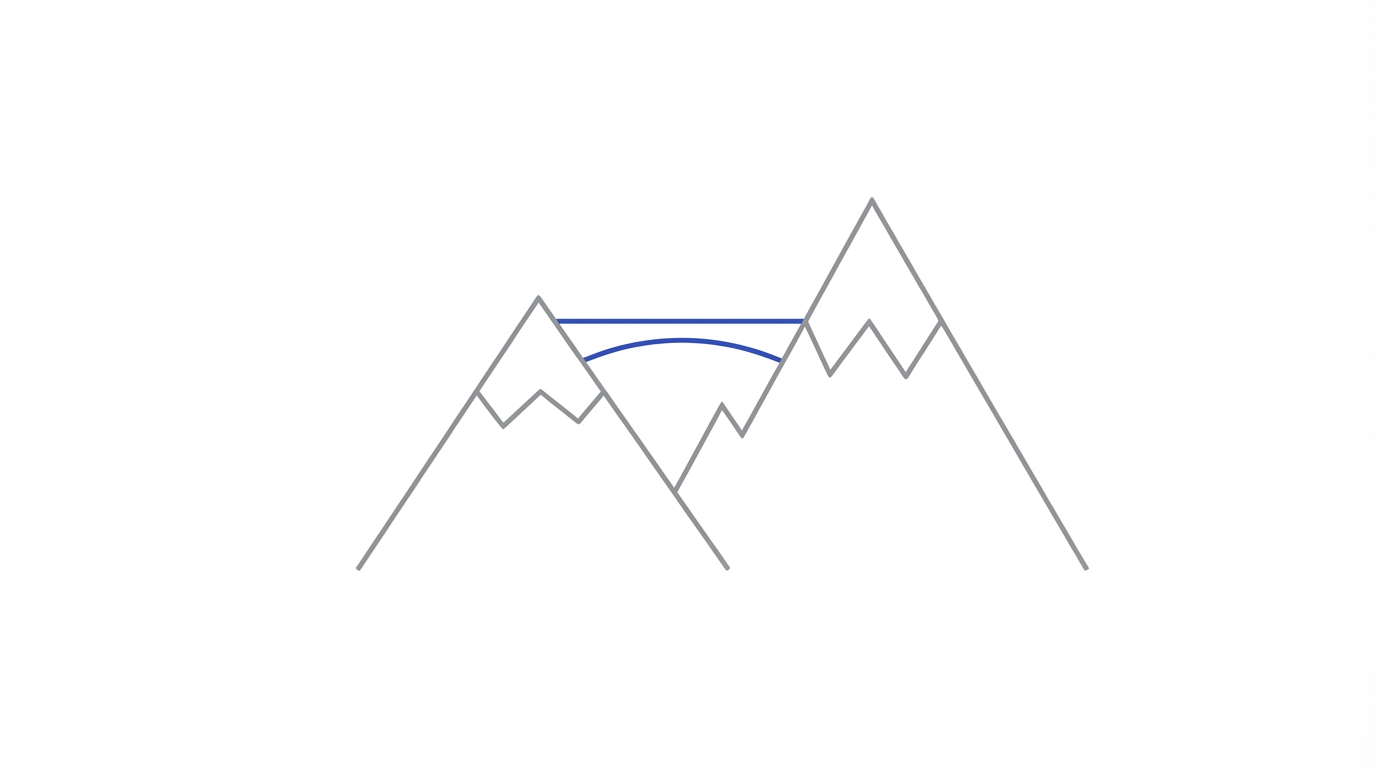
For many founders, the day of the 'big exit' is framed as the finish line. We imagine a sudden, permanent silence where the stress of scaling once lived. But for most, the silence is quickly replaced by a different, more insidious frequency: 'money noise.' This is the psychological urge for 'more' that persists long after you have earned the last dollar you will ever need to spend. Transitioning from the first mountain—where you build your net worth and capabilities—to the second mountain of impact and community requires more than just a large bank balance. It requires a fundamental shift in entrepreneur psychology and a new framework for measuring success.
Defining the 'Money Noise': The Hunger for More

Much like 'food noise' describes the constant mental chatter about the next meal, 'money noise' is the background hum of greed and comparison that plagues successful founders. It is often linked to the hedonic treadmill—the voice that says, even after a multi-million dollar exit, that your self-worth is still directly correlated to your net worth. In the world of high-growth startups, we are trained to obsess over the 10% of the time things go right—the dopaminergic rush of a successful launch on Meta Ads Manager or a breakthrough in user acquisition.
This noise is fueled by a 'Hardness Paradox.' We often justify our continued grind by claiming we are doing it for our families or to set an example, yet our children would usually rather have our presence than our productivity. To overcome burnout and find true life after a business exit, we must recognize that the inertia of work is natural, but the ability to stop and pivot is a skill. As we see in the Atomic Habits framework by James Clear, we do not rise to the level of our goals; we fall to the level of our systems. If your current system is set to 'acquire at all costs,' the noise will never fade.
Second Mountain Problems: Capability vs. Community

In your first career mountain, you focused on building capabilities. You learned how to scale teams, master Google Ads, and navigate complex market dynamics. You likely used platforms like Stormy AI, an AI-powered platform for creator discovery, especially for mobile app marketing and UGC campaigns, to identify trends and discover creators who could amplify your brand’s voice. This phase is about the 'I'—what I can build, what I can earn, and how I can win.
The second mountain is different. It is about community and impact. When you move from building a business to building a community, the metrics change. You are no longer looking for an ROI in dollars; you are looking for an ROI in human potential. This transition is often where founders feel most lost because the 'operating system' for community is the opposite of a SaaS business. To bridge this gap, modern founders use Stormy AI to vet creators and partners, ensuring they are connecting with authentic individuals rather than accounts inflated by fraud. In a SaaS business, you optimize for efficiency; in a community, you optimize for trust. Finding purpose as a founder requires realizing that the tools that got you here—scripts, checklists, and automated workflows—are only half the battle. To lead people effectively on the second mountain, you must become a coach, not just a commander.
The Local Economy Framework: Measuring 'Smiles Per Hour'

One of the most effective ways to silence money noise is to change what you measure. In a macro economy, we look at GDP. In your personal life, a better metric is 'Smiles Per Hour.' This framework suggests focusing on your 'local economy'—the web of relationships including your family, your neighbors, and the people you mentor. If the people in your immediate circle are thriving, the 'macro' problems of the world feel much more manageable.
Consider the example of a founder who, after an exit, decides to become an unpaid assistant basketball coach. On paper, this is a terrible use of 'billable hours.' However, the entrepreneur psychology shift here is massive. Instead of managing a remote team through Apple Search Ads and KPIs, you are helping a high schooler with their math homework so they can stay on the team. You are drilling the same fundamental skills 50 times because you know that reminders matter more than new strategies. This is the essence of finding purpose as a founder: contributing your time and talent to a local bubble where you can see, feel, and touch the results of your effort.
The Mike Beckham Strategy: Silencing Greed Through Radical Giving
How do you actually turn down the volume of the 'more' voice? One tactical approach is the Mike Beckham Strategy. Mike Beckham, the founder of Simple Modern, realized that while he was worth hundreds of millions on paper, the greedy voice in his head only grew louder as his wealth increased. His solution was aggressive, radical philanthropy for entrepreneurs: giving away the vast majority of his annual earnings while they were still coming in, rather than waiting until death.
Beckham suggests that giving should feel like a challenge; it should involve a degree of sacrifice. By capping his personal spending and giving away millions annually, he found that the 'greedy voice' became a whisper. When you realize that buying a luxury car directly subtracts from the amount you can give to a cause you care about, the decision becomes a moral one rather than a financial one. This is a powerful system for anyone trying to overcome burnout by reconnecting with a sense of mission that isn't tied to a quarterly report.
The Playbook for Psychological Change

Change is unnatural; inertia is the default. If you want to transition from a 'wealth-first' to an 'impact-first' mindset, you need a system. Here is a playbook for re-engineering your daily life after an exit:
Step 1: Audit Your 'Food Noise'
Identify the areas where you are 'binging' on success. Are you checking your bank balance ten times a day? Are you constantly looking for the next 'deal' just for the dopamine hit? Use a 5-year diary or a dedicated CRM tool like Stormy AI to track your most meaningful relationships and collaborative goals over time. You will likely find that you have been complaining about the same issues for a decade.
Step 2: Create a 'Local Economy' Project
Find a project where you are the 'assistant,' not the CEO. Whether it's coaching a sports team, volunteering at a shelter, or mentoring through natural-language search tools like Stormy AI, put yourself in a position where your authority is secondary to your contribution. This builds the 'trust' muscle required for second mountain life.
Step 3: Implement Radical Reminders
As a leader, your job is to repeat yourself until your team starts saying the values back to you. Use Chiasmus—a rhetorical structure that creates earworms—to define your new life values. For example: "Ask not what your wealth can do for you, but what you can do with your wealth." These 'slogans' for the soul help override old, greedy thought patterns.
The Hardness Paradox: Why We Need the 'Shackleton' Mindset
We live in an age of incredible comfort. We can order anything with a click and optimize our app marketing campaigns from a beach. Yet, this comfort is making us 'soft.' We often find ourselves overcoming burnout not by resting, but by seeking a harder challenge. This is the Hardness Paradox: the more comfortable our lives become, the more we crave a 'hazardous journey' like the one advertised by explorer Ernest Shackleton.
Shackleton’s famous ad for men to join a 'hazardous journey' with 'small wages' and 'bitter cold' received thousands of applications. Why? Because humans are wired for struggle. If you are a founder who has 'won' the game of business, the reason you feel restless isn't that you need another million dollars; it's that you need a challenge that is un-glamorous, difficult, and critically needed by the world. Whether that is philanthropy for entrepreneurs or using an AI agent from Stormy AI to automate outreach for social causes, finding a 'hard' thing to do will ground you far more than a luxury vacation ever could.
Conclusion: From Net Worth to Legacy
The transition to the second mountain is the hardest 'startup' you will ever build. It requires you to fire your old self—the one who cared about status and acquisition—and hire a new version of yourself that cares about 'smiles per hour' and local impact. Silencing the money noise isn't about getting rid of your wealth; it's about getting rid of the idea that your wealth is your identity. By building systems of accountability, practicing radical giving, and embracing the 'hardness' of community building, you can finally trade those 'bad dollars' for 'good hours.' The last dollar you ever spend has already been earned. Now, the question is: how will you spend the energy you have left?