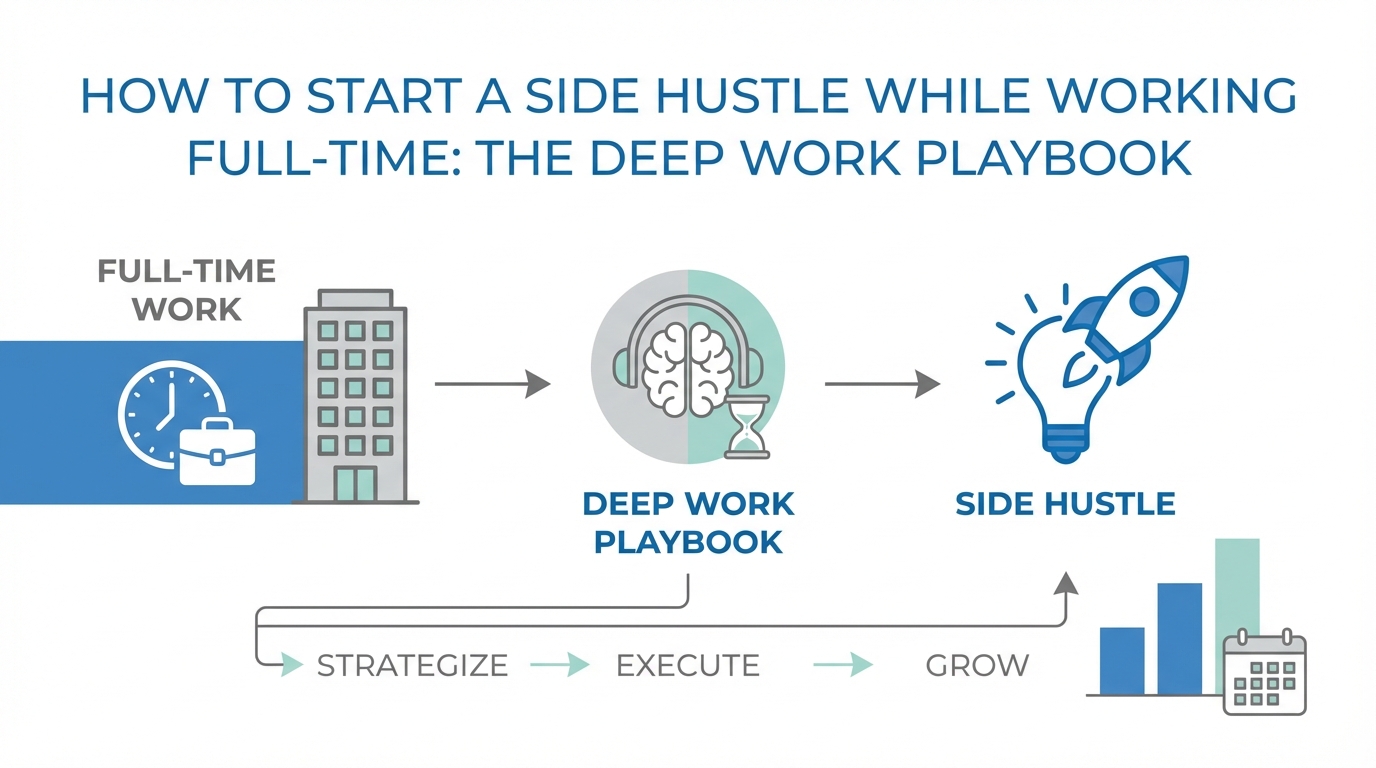
Most professionals trapped in the 9-to-5 cycle believe they lack the time to build their own empire. They spend their commutes listening to business podcasts and their evenings scrolling through success stories, yet the actual execution remains a distant dream. The reality is that learning how to start a side hustle doesn't require quitting your job or sacrificing every waking hour of your weekend. Instead, it requires a fundamental shift in how you manage your cognitive energy. By applying the principles of deep work for entrepreneurs, you can compress a week’s worth of distracted effort into a single, high-intensity morning or evening block, turning a small window of time into a million-dollar business.
The 9-to-5 Paradox and the Fear of the Unknown
Many aspiring founders find themselves in a state of "comfortable dissatisfaction." Like Pat Walls, the founder of Starter Story, they might be earning a six-figure salary in a city like New York, checking all the boxes of conventional success, yet feeling fundamentally empty. The cycle of Zoom meetings and routine coding tasks often leaves little room for creative fulfillment. This emptiness fuels the dream of starting a business, but it is frequently met with a paralyzing wall of self-doubt.
The biggest barrier isn't a lack of ideas or technical skill; it is the confrontation with the unknown. When you spend years following a corporate roadmap, the prospect of building something from zero is terrifying. This fear often manifests as procrastination. Pat Walls describes walking by a local Starbucks every single day for months, telling himself he would go inside and start his blog, only to walk home and watch six hours of Netflix. To break this cycle, you need more than willpower—you need a psychological contract.
The 'Starbucks Contract' Strategy: Creating a Psychological Barrier


To succeed at building a business while working full time, you must separate your "employee self" from your "founder self." The 'Starbucks Contract' is a technique designed to create a physical and mental boundary between your day job and your side hustle. By choosing a specific location—like a coffee shop, a library, or even a dedicated corner of your home—you signal to your brain that it is time to switch modes.
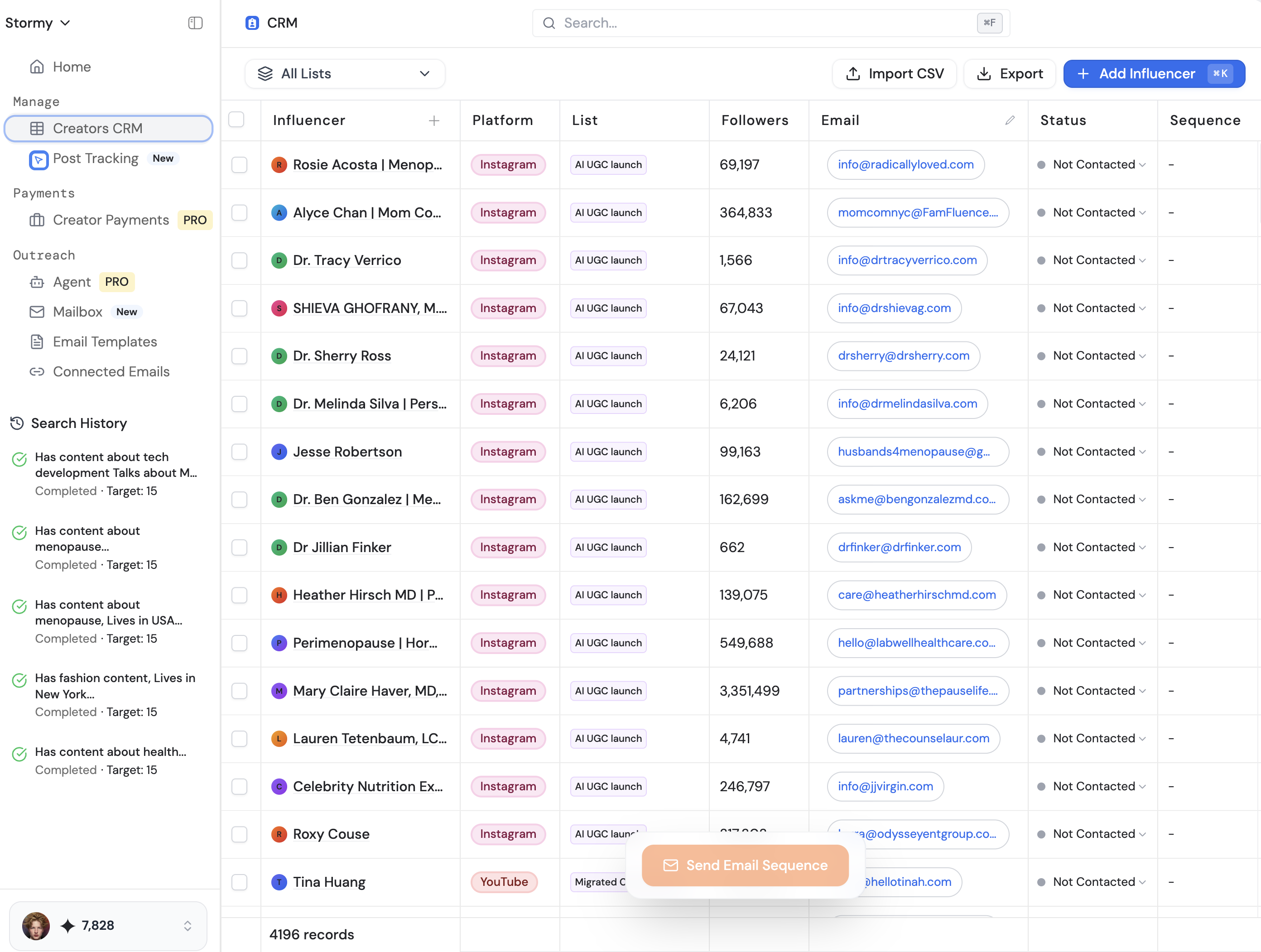
This approach relies on environmental triggers to bypass the resistance of the lizard brain. When you enter your designated space, the "unknown" becomes a structured environment for execution. For Pat, this meant walking into a Starbucks, ordering a coffee, and setting a timer for exactly two hours. During this window, the goal isn't just to work; it is to engage in a state of flow that maximizes every minute. If you are struggling to find creators for your new brand during these blocks, Stormy's AI search can instantly find matching influencers across TikTok, Instagram, and YouTube, saving you hours of manual scrolling.
The Mechanics of Deep Work: Achieving Flow State in Two Hours
In his seminal book, Deep Work, Cal Newport defines deep work as professional activities performed in a state of distraction-free concentration that push your cognitive capabilities to their limit. For a full-time employee, time management for founders isn't about finding more hours; it's about increasing the intensity of the hours you have. A two-hour block of deep work can be more productive than ten hours of "shallow work"—the kind of low-value, distracted task-switching that defines the modern office.
To implement this, you must eliminate all distractions. This means turning off notifications, closing unnecessary tabs, and perhaps using an AI-powered tool to handle the repetitive aspects of business building. For example, if your side hustle involves reaching out to potential partners or creators, you shouldn't spend your precious two hours manually drafting emails. Using Stormy's AI outreach allows you to generate hyper-personalized emails and automate follow-ups, ensuring your business keeps growing even when you aren't in your deep work block.
Consistency Over Intensity: Why Two Hours Daily Beats Weekend Marathons
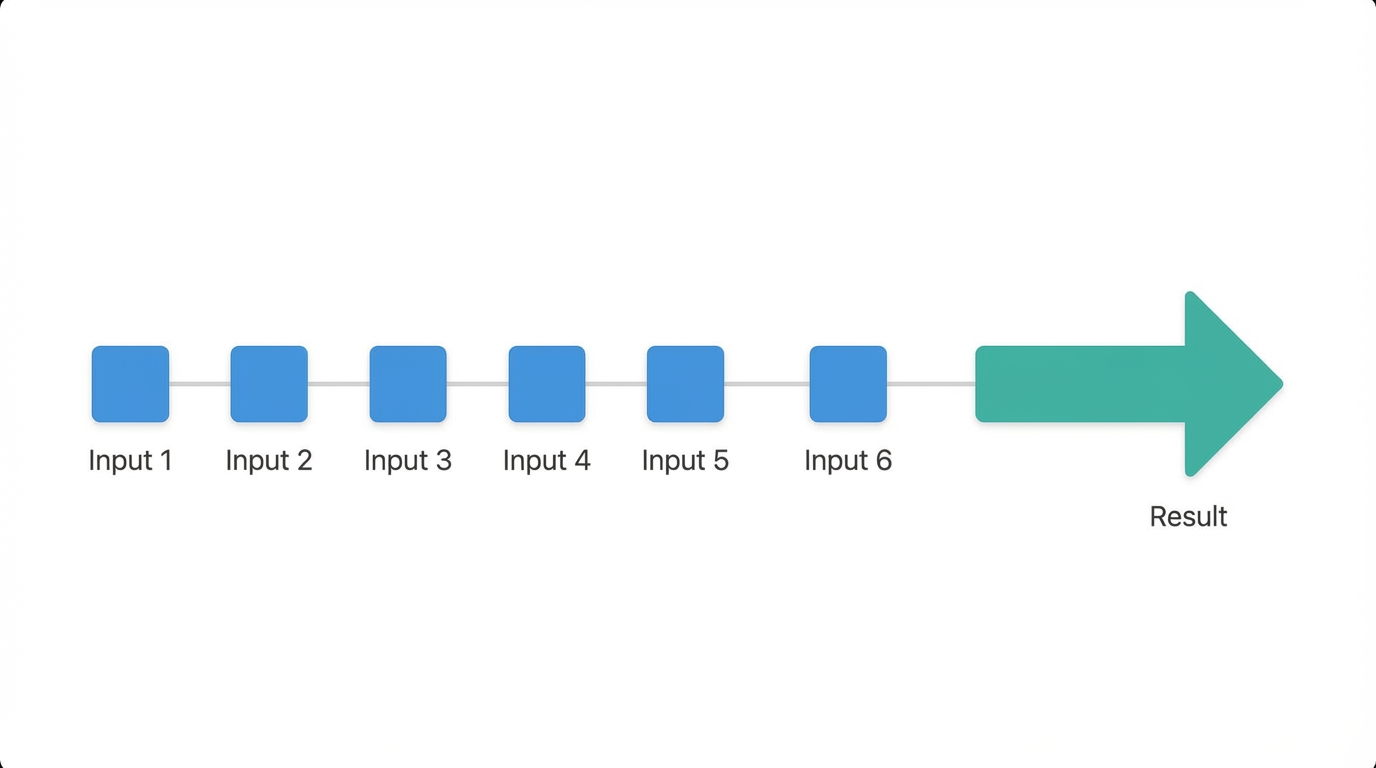
A common mistake when learning how to start a side hustle is the "weekend warrior" approach. Founders try to cram 15 hours of work into a Saturday, only to burn out by Monday morning. The power of the two-hour routine lies in the compound effect. When you work for two hours every day, you maintain context. You don't spend the first hour of your session trying to remember where you left off. The momentum carries from one day to the next, making the entry into flow state almost effortless.
Pat Walls followed this routine religiously. Within one month, he had a name: Starter Story. Within two months, he had a newsletter with 100 subscribers. By month four, he had his first viral moment on Reddit. None of this happened through sporadic bursts of energy; it happened because he gave himself a chance to get lucky every single day. This daily habit transforms a scary, monumental task into a series of small, manageable wins. To keep track of these wins and manage the creators you're collaborating with, Stormy's creator CRM provides a centralized place to monitor every interaction and deal stage.
Validating the Idea and Overcoming the Plateau
Building a side hustle isn't just about writing code or creating content; it's about finding a path to monetization. For many, the first dollar is the hardest. Pat Walls initially focused on building an audience through case studies of other entrepreneurs. He realized that people didn't want to read about VC-backed giants; they wanted to see how someone went from $0 to $10,000 a month. This insight led to a newsletter-first strategy, which is a highly effective way to validate a business idea with minimal overhead.
The turning point for Pat came when he received an email from the CEO of Klaviyo. What started as a simple appreciative note turned into a $12,000 sponsorship deal. For a developer living paycheck to paycheck in New York, this was more than just revenue—it was proof of concept. If you are looking to scale your own affiliate or sponsorship revenue, you need to validate your business model carefully. Stormy's influencer analysis can help you vet potential partners, detecting fake followers and engagement fraud so you only invest time in high-quality collaborations.
The Decision to Go All-In: Navigating the Exit
Landing a five-figure deal while working a full-time job creates a new kind of tension. You have to decide between the safety of a steady paycheck and the potential of your own creation. Many founders sit on the fence for months, paralyzed by the fear of financial instability.
The transition from side hustle to full-time founder is as much a psychological shift as a financial one. Once your business shows consistent growth and has been validated by real revenue, the risk of staying in your job often outweighs the risk of leaving. When you finally make the leap, you can utilize more advanced automation to replace the hours you used to spend at your desk. You can even set up an autonomous AI agent on Stormy that discovers, outreaches, and follows up with creators on a daily schedule while you sleep, effectively becoming your first virtual employee.
Conclusion: Your Two-Hour Playbook
Starting a side hustle while working full-time is not a matter of finding extra time; it’s a matter of claiming it. By using the principles of deep work for entrepreneurs, you can turn a simple Starbucks visit into the foundation of a million-dollar business. Remember, Pat Walls didn't start with a million-dollar company; he started with a $12 domain and a two-hour timer.
If you're ready to stop romanticizing about business and start building, your playbook is clear: find your location, sign your personal contract, and focus on the deep work that moves the needle. Whether you're building a content platform like Starter Story or a niche mobile app, the consistency of your effort will always beat the intensity of your intentions. Start your two-hour block tomorrow, and use Stormy AI to automate the discovery and outreach that will take your business to the next level.