In the ecommerce landscape of 2026, the era of the 'specialist founder' is officially over. We've moved past the time when a Shopify merchant could succeed by being just a Facebook Ads expert or just a product designer. As AI commoditizes technical skills, the most successful brands are now run by 'X-shaped' operators—generalists who possess the fluid intelligence to move across domains, using autonomous AI agents to handle the 'invisible' back-office work that used to require a massive headcount.
Defining the X-Shaped vs. T-Shaped Talent Model for 2026
 5:30
5:30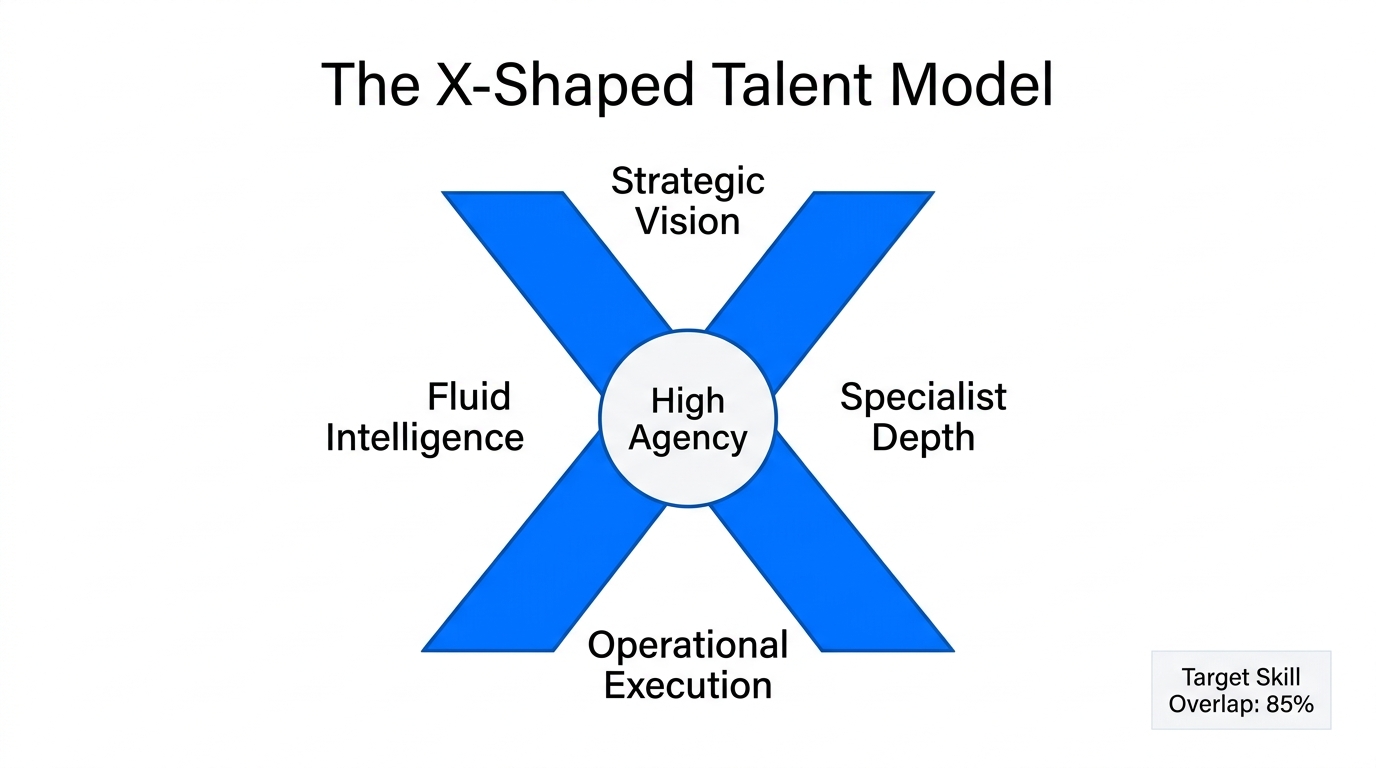
For years, the gold standard in hiring and founder development was the 'T-shaped' person: someone with broad knowledge across many fields but a single, deep vertical of expertise (the 'T' stem). However, as Jess Hertz (COO of Shopify) has theorized in discussions regarding the future of work, we are morphing into an era of X-shaped talent. An X-shaped operator essentially has two 'Ts' crossed; their ceiling is open, and their ability to jump between disciplines—marketing, logistics, customer support, and engineering—is fluid.
In 2026, being an ecommerce generalist is no longer about being a 'jack of all trades, master of none.' It is about being the high-agency architect of a system. While a T-shaped founder might get stuck in the weeds of their specific expertise, the X-shaped founder uses an AI ecommerce employee like Stormy AI to maintain technical depth across every department simultaneously. This allows the founder to remain in the 'decision-making' layer while the AI handles the 'execution' layer.
"The expansion up becomes even more possible... the vertical T and your ability to do different kinds of things means your ceiling is quite open." — Jess Hertz, Shopify COO
Fluid vs. Crystallized Intelligence: The Founder's New Superpower
1:30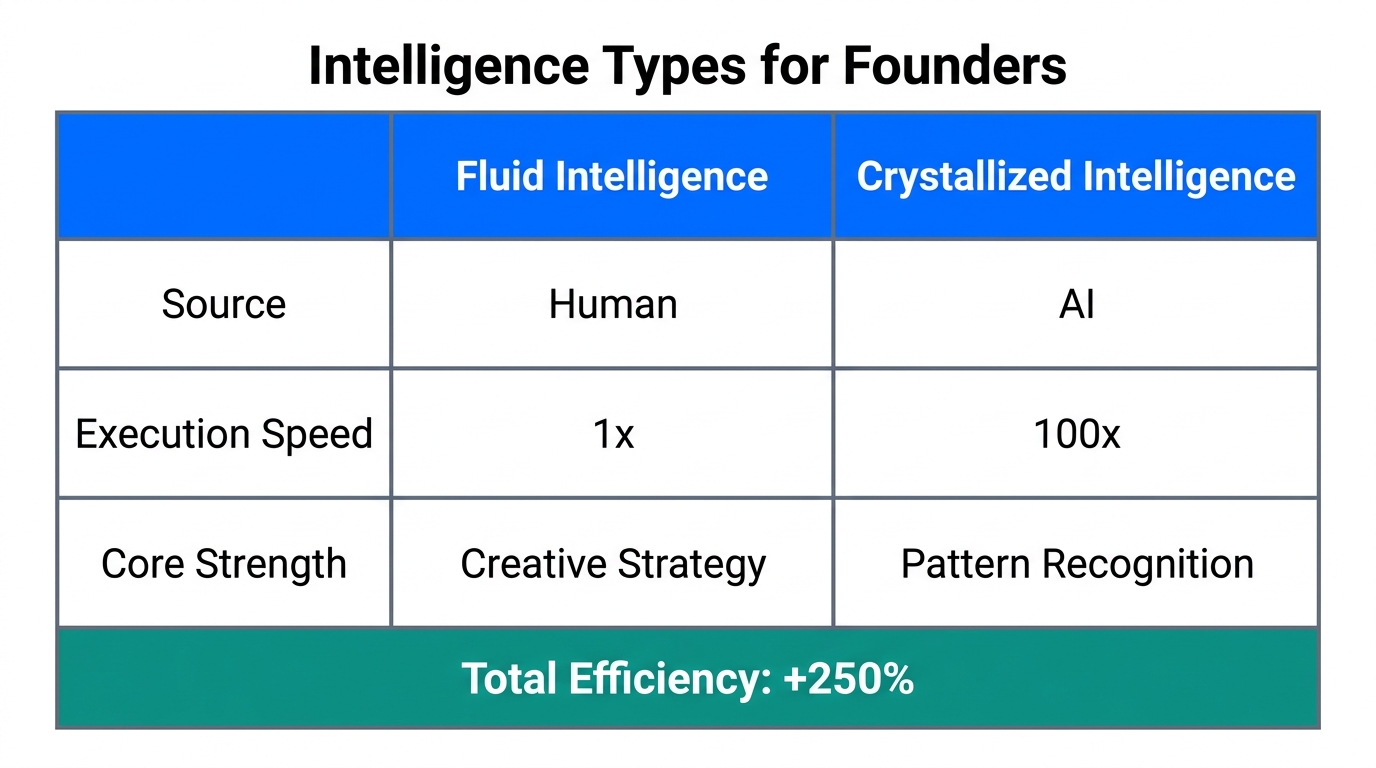
To understand why this shift is happening, we have to look at the difference between crystallized intelligence and fluid intelligence. Crystallized intelligence is the knowledge you have accumulated—the memorized rules of how to set up a Meta Ads Manager campaign or the specific steps to file a claim with a 3PL provider like ShipBob. In 2026, this type of knowledge is cheap. You can ask an LLM for the answer in seconds.
Fluid intelligence, on the other hand, is the ability to solve new problems, identify patterns in real-time, and make high-stakes decisions when things go wrong. This is where the modern DTC founder productivity peak lives. When an AI agent handles the 'invisible' work (the data entry, the supplier follow-ups, the inventory monitoring), it frees up the human founder's fluid intelligence to focus on signal over noise.
| Feature | Crystallized Intelligence (2024 Style) | Fluid Intelligence (2026 X-Shaped) |
|---|---|---|
| Knowledge Source | Memorized SOPs and past experience | Real-time data synthesis via AI |
| Problem Solving | Following a fixed playbook | First-principles thinking for new challenges |
| Role of AI | A tool for writing or generating images | An autonomous teammate that runs ops |
| Scaling Factor | Hiring more specialists | Increasing AI agent complexity |
How AI Agents Bridge the Gap Between Niche Expertise and Store Management
The biggest barrier to becoming a generalist has always been the sheer volume of invisible work. These are the tasks that aren't 'strategic' but are 'essential': checking if a supplier replied to an email, updating a tracking number, or auditing an ad campaign's ROAS. When you are a specialist, you ignore these things in other departments. When you are a generalist, they drown you.
This is where Stormy AI acts as the bridge. Stormy isn't just a dashboard; it is an AI employee that uses a browser, spreadsheet, and inbox to act on your behalf. By delegating these 'depth' tasks to an agent, you maintain the high-level oversight of an 'Adult' in the room while the AI maintains the technical rigor.
For example, instead of manually checking TikTok Shop for suppressed listings, an X-shaped founder tasks Stormy AI to monitor the marketplace daily. If a listing goes down, Stormy doesn't just flag it—it drafts the appeal, links the relevant documentation from a spreadsheet, and asks the founder for one-click approval to send. This is how one person operates like a team of ten.
The X-Shaped Playbook: Automating Technical Depth in Shopify Ops
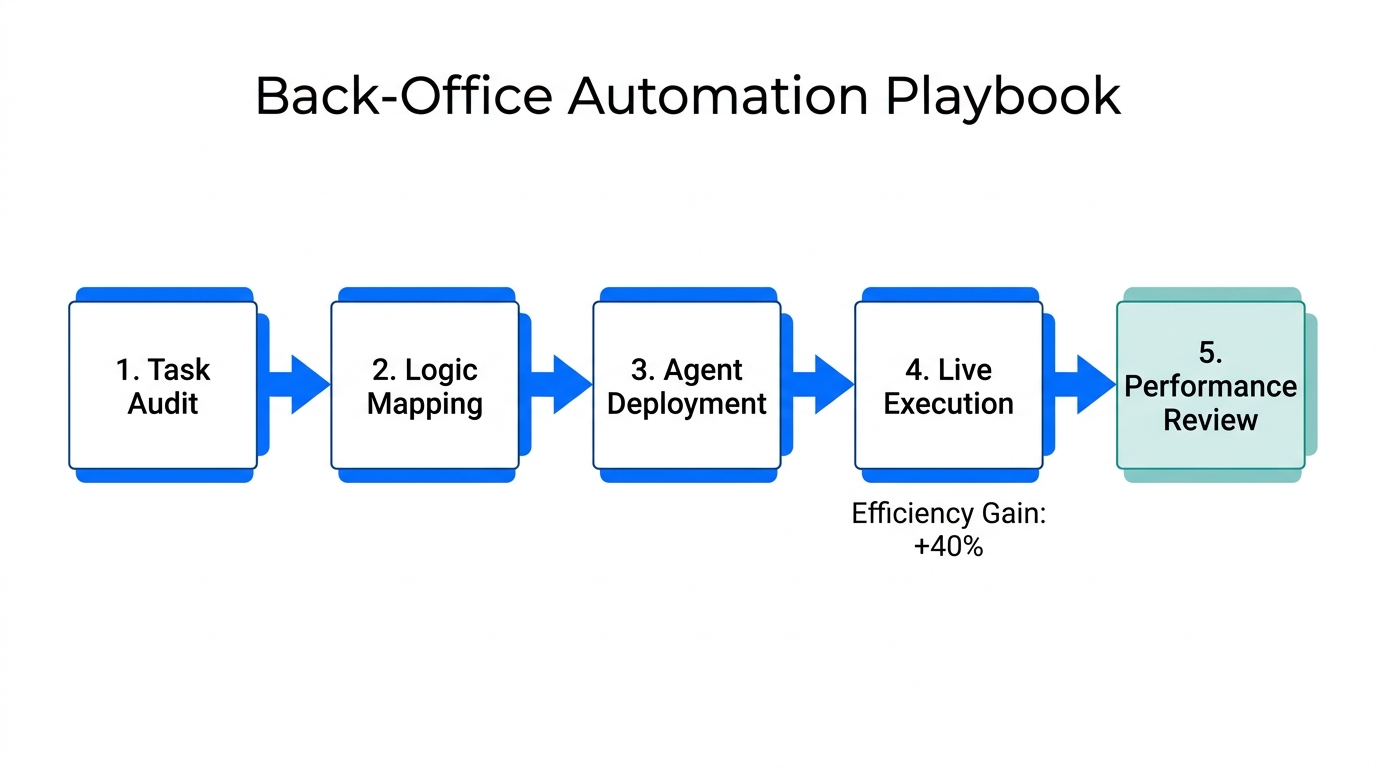
To transition into an X-shaped operator, you must move your 'invisible work' into a living information architecture. Follow this step-by-step playbook to implement Shopify store management automation.
Step 1: Centralize Supplier & Inventory Ops
Most stockouts happen not because of a lack of data, but a lack of follow-up. Use Stormy AI to create a dynamic spreadsheet that tracks every SKU and its lead time. Set a 'remind me' status for Stormy to wake up and email your supplier at Amazon Seller Central or a private factory if a shipment hasn't been marked as 'shipped' by the deadline. This removes the need for you to 'remember' to check on production.
Step 2: Automate the Multi-Channel Ad Audit
An X-shaped operator needs to see the whole board. Ask Stormy to pull daily performance data from Google Ads, Meta, and TikTok Ads into a single workbook. Instead of you spending hours in pivots, Stormy can flag which campaigns have a CPA 20% above the target and suggest budget reallocations based on 2026 market trends. You provide the 'fluid intelligence' to approve the strategy; Stormy provides the 'crystallized intelligence' to fetch the data.
"The coolest part is how you actually get all the information from where you need to get it from, synthesize it, and then force a decision to get made."
Step 3: Triage Customer and Creator Inboxes
Communication is the ultimate time-sink. Stormy AI can monitor your Gorgias or Zendesk tickets, drafting replies for refund requests or shipping disputes. Simultaneously, it can manage your creator outreach on TikTok and Instagram, tracking who has received samples and following up automatically if they haven't posted. This turns your inbox from a to-do list into a decision-queue.
Case Study: The One-Person Shopify COO Architecture
4:30Consider 'Brand X,' a Shopify store doing $8M in annual revenue in 2026. In 2024, this would have required a Customer Service lead, a Logistics manager, and a Media Buyer. Today, it is run by a single X-shaped founder and Stormy AI.
- Inventory Management: Stormy monitors inventory levels in Shopify and creates reorder alerts in a Notion workspace. It automatically emails suppliers for quotes when stock hits the 21-day threshold.
- Marketing Ops: Stormy pulls weekly reports from Triple Whale, summarizes the contribution margin, and flags which creators are driving the highest LTV.
- Support Ops: 70% of inbound queries are drafted by Stormy. The founder spends 15 minutes a day 'approving' or 'tweaking' replies, ensuring the brand voice remains human.
Conclusion: The High Agency Future
As we navigate 2026, the distinction between 'roles' is blurring. The world is turning into a place for generalists who can prove they can do excellent work in one area and then apply that same agency elsewhere. By leveraging AI agents like Stormy AI, you aren't just automating tasks; you are building an information architecture that allows you to act as a COO, CMO, and CEO simultaneously.
Don't let the 'invisible side of work' keep you as a specialist. Step into the X-shaped model, delegate the technical depth to your AI teammate, and focus on making the 'dent' in the universe that only human fluid intelligence can achieve. Whether you are scaling a new brand or managing a legacy store, the path to 2026 success is built on automation, synthesis, and high-agency decision-making.