In 2026, the metrics that built the DTC empires of 2024 are the very ones that lead to bankruptcy today. If you are still relying solely on ROAS (Return on Ad Spend) to judge your brand's health, you are effectively flying a plane with a broken altimeter. As Shopify continues its massive 30.6% YoY growth, the complexity of the back office has reached a tipping point where manual spreadsheets and fragmented dashboards can no longer keep up. The goal for high-growth brands this year isn't just to see data; it's to have an AI teammate who understands ecommerce net profit automation and takes action before the margins slip.
The era of "agentic commerce" is here. We are moving away from descriptive analytics—which simply tell you what happened—toward predictive and autonomous operations. Founders are now looking to reduce the attribution gap on Shopify and shift their focus to the 'Holy Trinity' of 2026 KPIs: Contribution Margin, LTV (Lifetime Value), and nCAC (New Customer Acquisition Cost). This guide breaks down how to build a unified reporting engine that treats your Shopify store as the ultimate source of truth.
The 15% to 30% Reporting Gap: Why Your Ad Platforms Over-Report
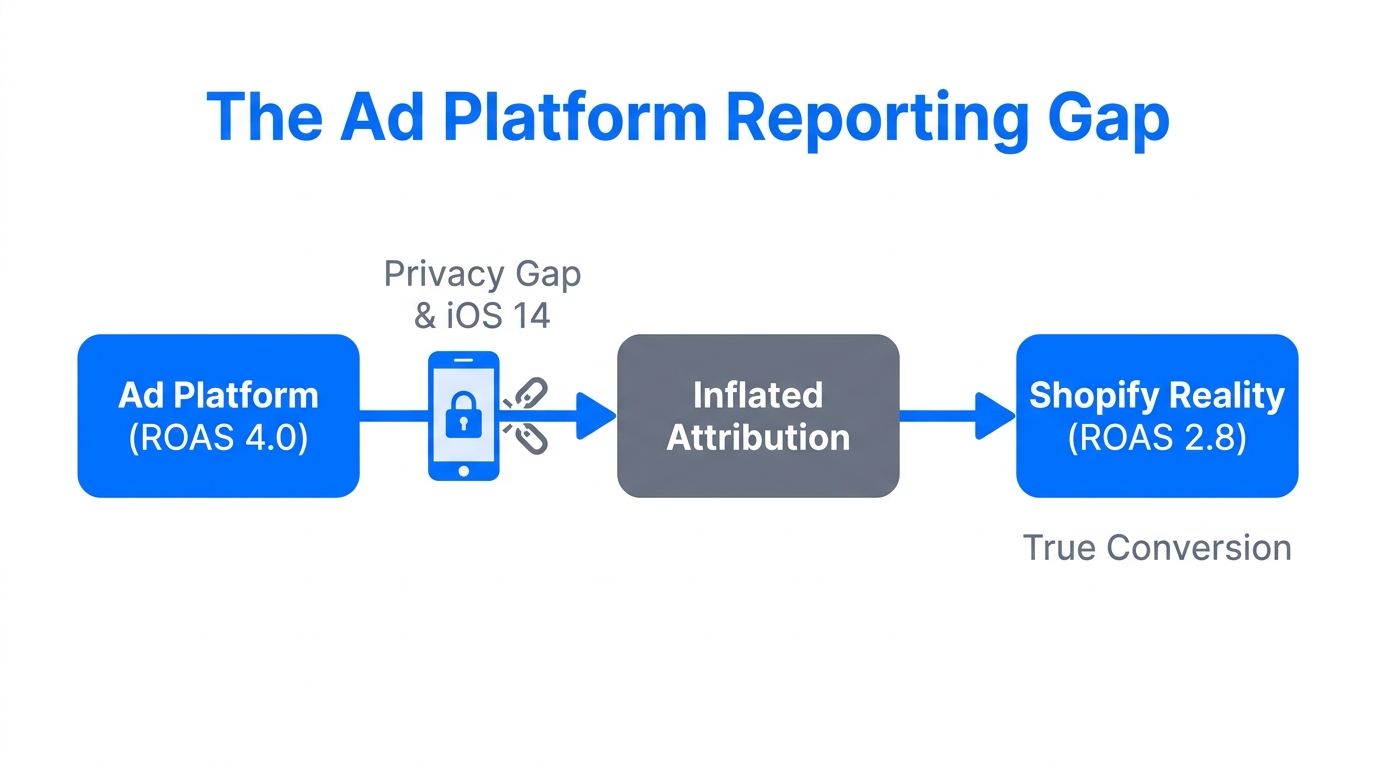
One of the most persistent headaches for Shopify merchants is the discrepancy between what Meta or Google Ads claims and what actually hits the bank account. Due to evolving privacy regulations and cookie restrictions, platforms like Meta Ads Manager often over-report conversions through modeled data, while Google Ads might claim credit for a sale that was already influenced by an organic search. Research shows a consistent 15% to 30% reporting gap between ad platform dashboards and actual Shopify orders.
Relying on these "vanity metrics" leads to over-spending on campaigns that look profitable on paper but are actually eroding your bottom line. To solve this, savvy brands are using first-party tracking pixels and AI reconciliation. An AI ecommerce employee like Stormy AI can sit in the middle of this mess, pulling real-time data from Shopify and cross-referencing it with spend across all channels. Instead of guessing which platform deserves the credit, you get a reconciled view of your Shopify contribution margin across every SKU.
Automating Net Profit: Feeding COGS and Shipping into the Machine
True profitability is hidden beneath layers of hidden costs: COGS (Cost of Goods Sold), shipping surcharges, pick-and-pack fees, and return rates. Most reporting tools require you to manually upload CSVs for these figures, but in 2026, that is a recipe for error. To achieve true ecommerce net profit automation, you need a system that pulls these variables directly into a living P&L via connections to tools like ShipStation or Flexport.
An AI agent can be trained on your marketing calendar and supplier contracts. For instance, Stormy AI can import arbitrary CSVs from your 3PL or suppliers, add columns for dynamic surcharges, and update your profit status across every row. If a supplier increases their lead time or a shipping carrier like FedEx adds a fuel surcharge, the AI updates your Shopify contribution margin instantly. This prevents the common "silent bleed" where a product that was profitable last week becomes a loss-leader this week due to rising logistics costs.
"If your AI report doesn't automatically subtract COGS, shipping, and returns in real-time, it isn't a report—it's a wish list."
The 2026 Reporting Landscape: Stormy AI vs. Triple Whale vs. Polar Analytics
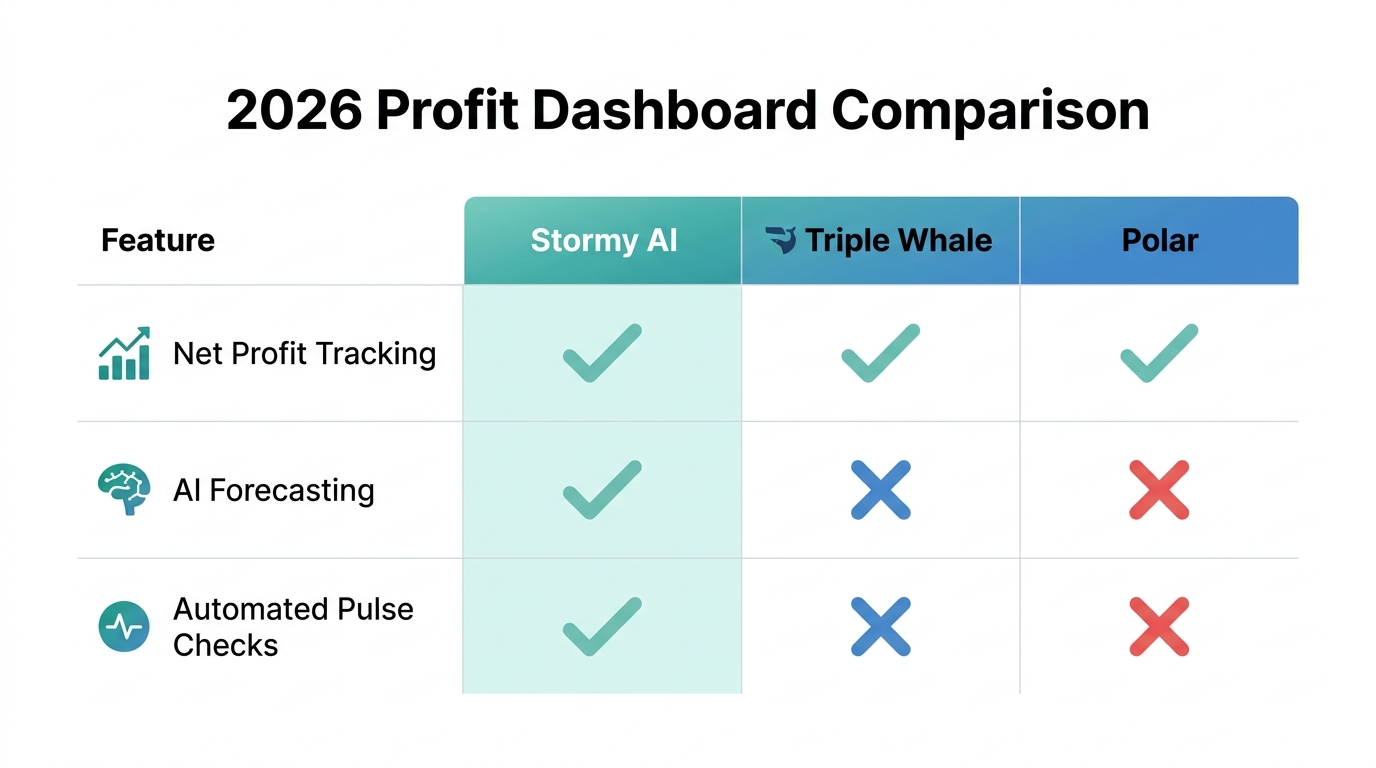
Choosing a reporting partner in 2026 depends on whether you want a dashboard to look at or an employee to work with. While Triple Whale and Polar Analytics have become industry standards for data visualization, they are still fundamentally "passive" tools. You click buttons; they show charts. Stormy AI represents the next evolution: an active agent that uses a browser, email, and spreadsheets to actually fix the problems it finds.
| Feature | Triple Whale | Polar Analytics | Stormy AI |
|---|---|---|---|
| Data Integration | Standard API Connectors | Open Snowflake Warehouse | Browser + API + CSV Agent |
| AI Interaction | "Moby" Chatbot | "Ask Polar" SQL Agent | Autonomous AI Employee |
| Back-Office Action | None (Display Only) | None (Display Only) | Sends Emails, Updates Sheets |
| Reporting Focus | Ad Creative & Attribution | Data-Driven Power Users | Unified Profit & Operations |
| Pricing (2026) | Starts at $299/mo | Starts at $300/mo | Variable based on Tasks |
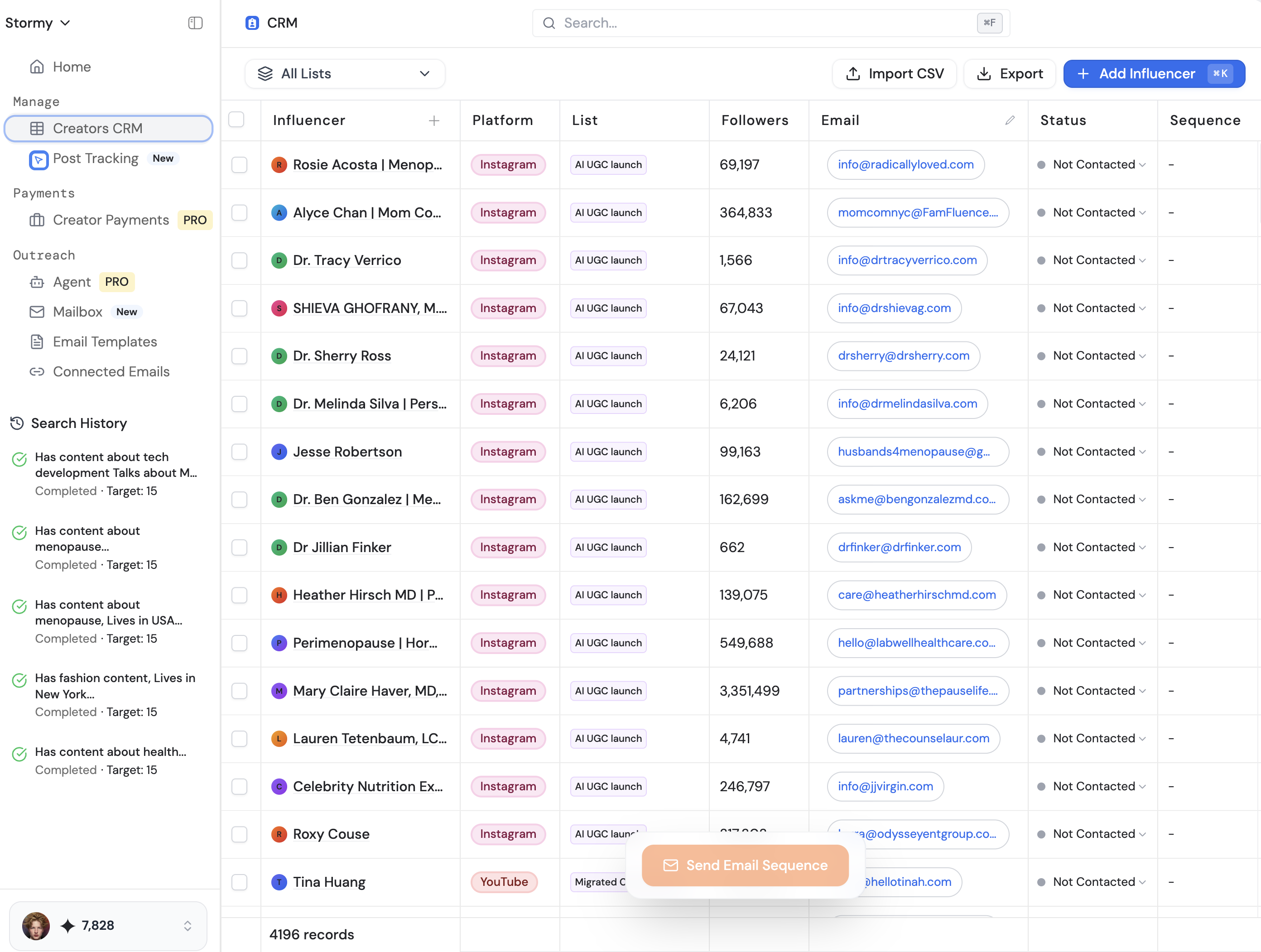
While Triple Whale is excellent for creative-heavy brands, and Polar Analytics provides deep historical data for power users, Stormy AI is the only one that can jump from a reporting sheet to a creator CRM to follow up on a missing post. It doesn't just show you that your influencer campaign has a low ROAS; it can search for new creators, draft outreach, and manage the entire affiliate lifecycle in the background.

The 'Phantom Refund' Problem: Auditing the AI
As we lean more on AI for automation, a new risk has emerged: Financial Hallucinations. A study cited by Neil Patel found that AI reporting tools can have up to a 34.2% error rate when performing complex, multi-step financial reasoning. This often manifests as the "Phantom Refund" problem, where an AI agent incorrectly approves a refund or miscalculates a shipping status, leading to direct cash loss.
To mitigate this, you must implement a "Human-in-the-Loop" (HITL) system. Stormy AI is built with this safety net in mind. Instead of blindly executing refunds, Stormy drafts the response and populates a task review UI for a human to approve. This allows you to scale your support and finance operations without losing control over the "source of truth." By auditing automated returns via platforms like Loop Returns, you ensure your weekly P&L reflects reality, not an AI's best guess.
Implementing a 'Pulse' Check for Real-Time Monitoring
Weekly reporting is good, but real-time "Pulse" checks are better. In 2026, waiting until Monday to realize your AOV (Average Order Value) dropped by 20% on Tuesday is unacceptable. This usually happens because of tracking errors or, more commonly, an active discount code that is being stacked or shared on coupon sites.
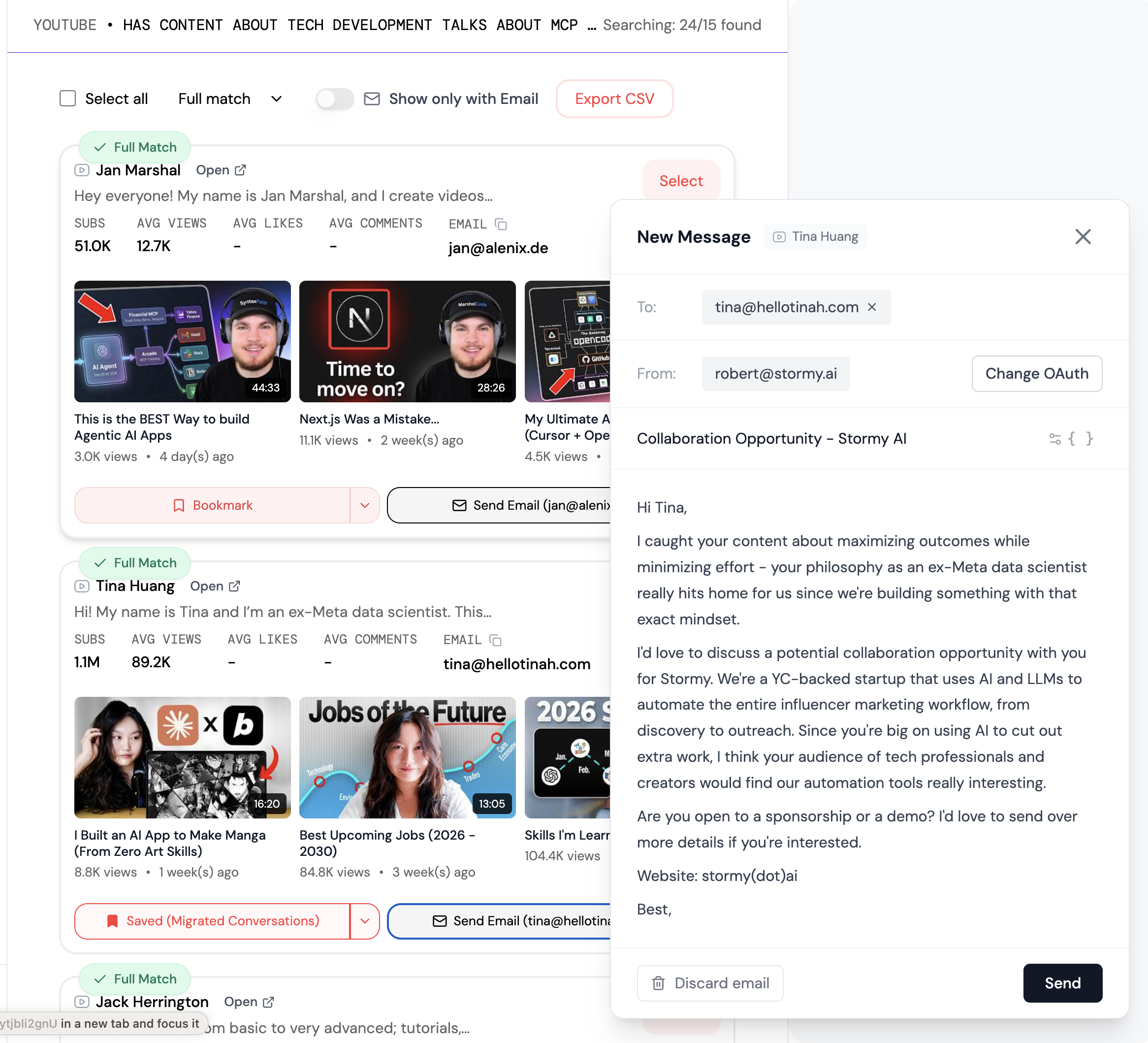
You can set up a "Pulse" check with an AI agent to monitor your Shopify metrics hourly. If your AOV deviates by more than 15% from your 4-week rolling average, Stormy AI can trigger a Slack alert, cross-reference the dip with your Google Ads performance, and even check for suppressed listings on Amazon Seller Central.
Playbook: Setting Up Unified AI Reporting
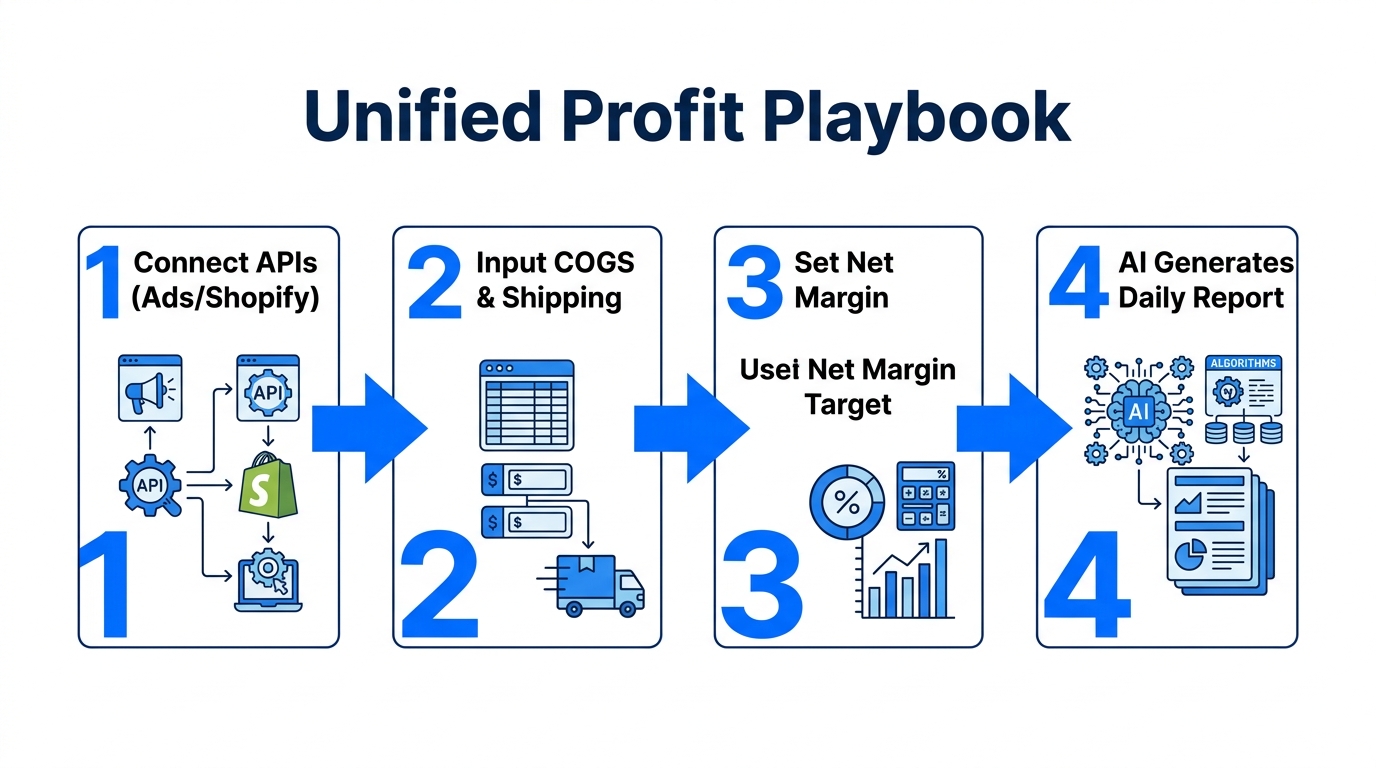
If you want to move beyond ROAS and master your Shopify contribution margin, follow this 2026 playbook:
Step 1: Centralize via First-Party Pixel
Install a pixel like Triple Pixel or Polar Pixel. This bypasses the data loss from iOS 14.5 and subsequent privacy updates, ensuring your AI has the raw data needed to reduce the attribution gap on Shopify.
Step 2: Connect Your Operational Stack
Connect your store to an AI ecommerce employee like Stormy AI. Unlike standard dashboards, Stormy will connect to your Gorgias for support data, your 3PL for shipping costs, and your spreadsheets on Google Sheets for COGS.
Step 3: Define the Holy Trinity Metrics
Stop looking at GMV. Configure your automated sheets to highlight Contribution Margin (Profit after all variable costs), LTV (to see which cohorts are actually profitable), and nCAC (to ensure you aren't over-paying for repeat customers who would have bought anyway).
Conclusion: The Future is Agentic
The transition from Shopify Sidekick vs Triple Whale isn't just about which tool has the better charts—it's about which tool actually runs your business while you sleep. In 2026, the brands that survive are the ones that use ecommerce net profit automation to maintain a disciplined back office. By shifting your focus from the vanity of ROAS to the reality of Shopify contribution margin, you gain the clarity needed to scale with confidence.
Ready to put your reporting on autopilot? Let Stormy AI handle the messy data reconciliation, supplier follow-ups, and profit tracking so you can focus on building the next great brand. The builders of 2026 don't work for their data; their data—and their AI employees—work for them.