The 2026 Shopify Profit Playbook: Scaling to a 2x CAC Model with Triple Whale and Alex Hormozi’s Money Models
Scale your Shopify store in 2026 using the Alex Hormozi 2x CAC model and Triple Whale LTV analysis. Master ecommerce financial modeling for explosive, profitable growth.
In 2026, the global ecommerce market is projected to reach a staggering $7.41 trillion, with online sales accounting for nearly 21.8% of all retail transactions. But for the modern Shopify founder, top-line revenue is no longer the metric that matters. As the duopoly of Google Ads and Meta Ads continues to face rising costs, the most successful brands have moved away from chasing "vanity ROAS" and toward a rigorous Shopify profit playbook. This playbook isn't just about ads; it’s about ecommerce financial modeling that turns customers into a source of immediate working capital.
By blending the aggressive financial frameworks of Alex Hormozi—specifically his "Money Models"—with the real-time attribution and Triple Whale LTV analysis, brands are now scaling with mathematical certainty. In this guide, we’ll break down how to implement the 2x CAC model, escape the "Retargeting Death Spiral," and use tools like Stormy AI to manage the messy back-office operations that these complex models require.
Defining the Goal: Client Financed Acquisition
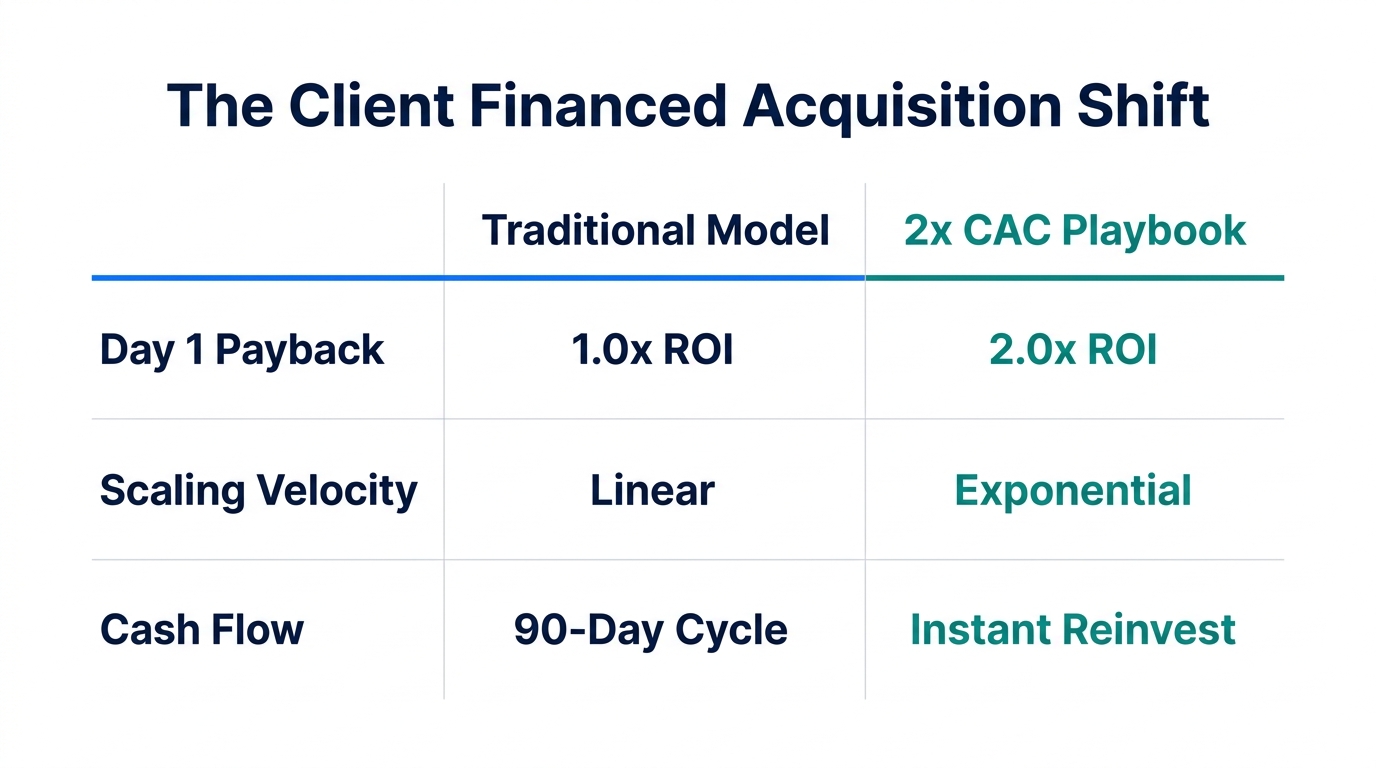
The core of Alex Hormozi’s philosophy is "Client Financed Acquisition." In a world where median Meta CPAs hover around $30.18, you cannot afford to wait six months to break even. The goal is simple: your 30-day gross profit must exceed 2x (CAC + COGS).
When you achieve this ratio, one customer literally pays for the acquisition of the next two. To track this effectively in 2026, you need more than a basic dashboard. You need a unified view of your Shopify marketing efficiency ratio (MER). While your ads might show a 1.71 ROAS, your MER tells the real story of how much total revenue your blended spend is generating. An AI ecommerce employee like Stormy AI handles the cross-platform data pulling in the background, ensuring your 2x CAC targets are being met across Shopify, Meta, and Google without you having to manually refresh five different tabs.
"The key to scaling isn't just better ads; it's a deliberate sequence of offers that ensures the first 30 days of a customer relationship are cash-flow positive."
Sequencing the Offer Stack: Attraction vs. Upsells
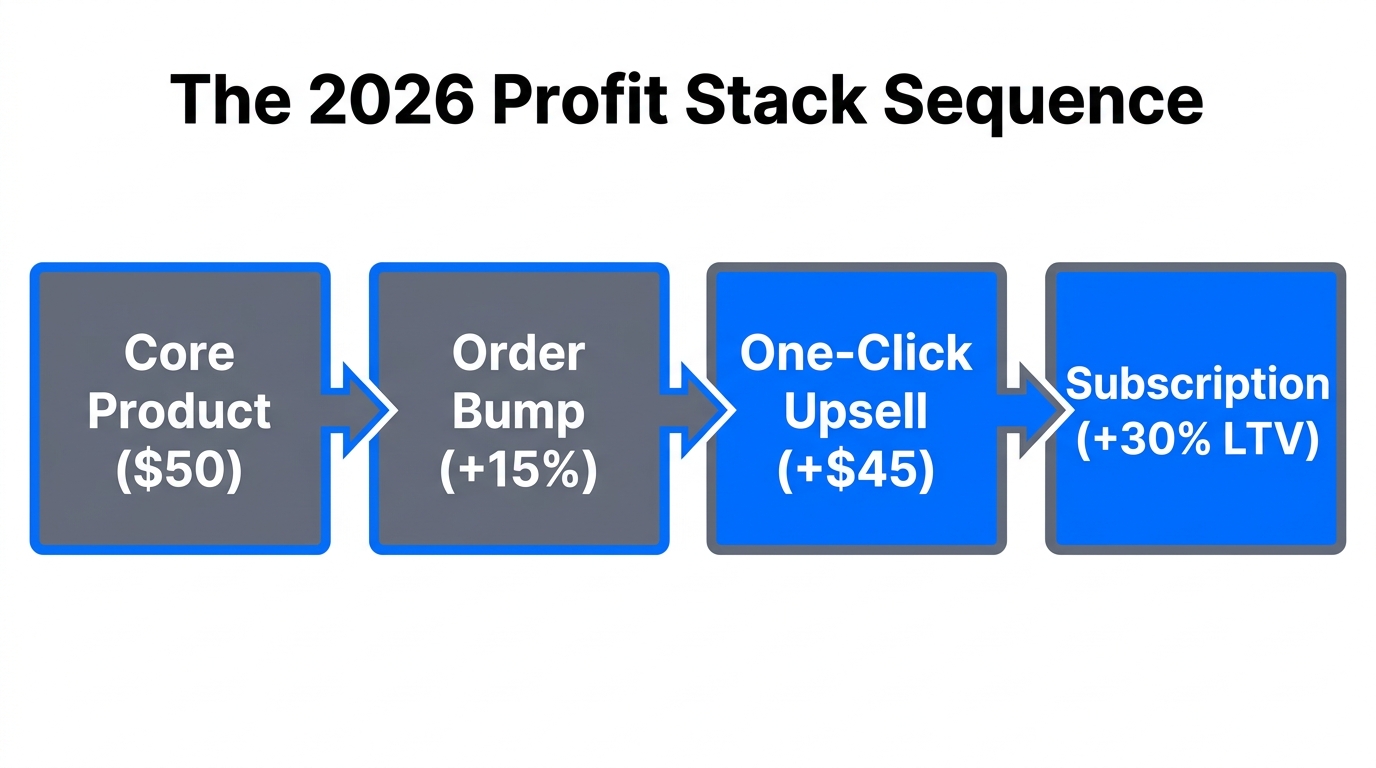
Most Shopify stores fail because they only have one offer. To hit the 2x CAC model, you must sequence your offers to maximize immediate cash flow. Hormozi categorizes these into Attraction Offers and Upsells. Using Triple Whale’s Moby 2, you can now see which specific "Attraction Offers" lead to the highest immediate profit.
- The Attraction Offer: This is your front-end hook (e.g., a "Buy One Get One" or a high-value bundle). Its job isn't to make you rich; it's to get the customer through the door at a predictable CAC.
- The Immediate Upsell: This happens in the checkout or post-purchase flow. According to Hormozi, if 10% of people buy something 10x more expensive, you double your revenue.
- The 48-Hour Follow-up: In 2026, automated AI agents handle this. Stormy AI can monitor your customer's first purchase and trigger personalized email follow-ups via Klaviyo or SMS to offer complementary products, further increasing that Day 30 gross profit.
| Metric | Traditional Model | 2x CAC Model (Hormozi) |
|---|---|---|
| Focus | Last-Click ROAS | Blended Profit / MER |
| Breakeven | 6-12 Months | < 30 Days |
| Ad Spend | Conservative / Capped | Aggressive / Scalable |
| LTV Strategy | Hope for Re-orders | Strategic Upsell Sequencing |
The Pretzel-Shaped Customer Journey & LTV Analysis
The linear marketing funnel is dead. In 2026, we operate in a "pretzel-shaped" journey where customers interact with 8–10 touchpoints—from TikTok Shop to Perplexity AI search results—before buying. Experts note that all-around attribution is now the standard for understanding these complex paths.
Using Triple Whale LTV Analysis, you can segment your customers by their first-purchase product. You might find that customers who buy your "Discovery Kit" have a 60-day retention rate 40% higher than those who buy a single item. This insight allows you to aggressively outspend competitors on that specific entry point. As AJ Orbach (CEO of Triple Whale) mentions, AI has moved from data tools to real-time strategic advisors.
Leveraging 'Total Impact' vs. the Retargeting Death Spiral
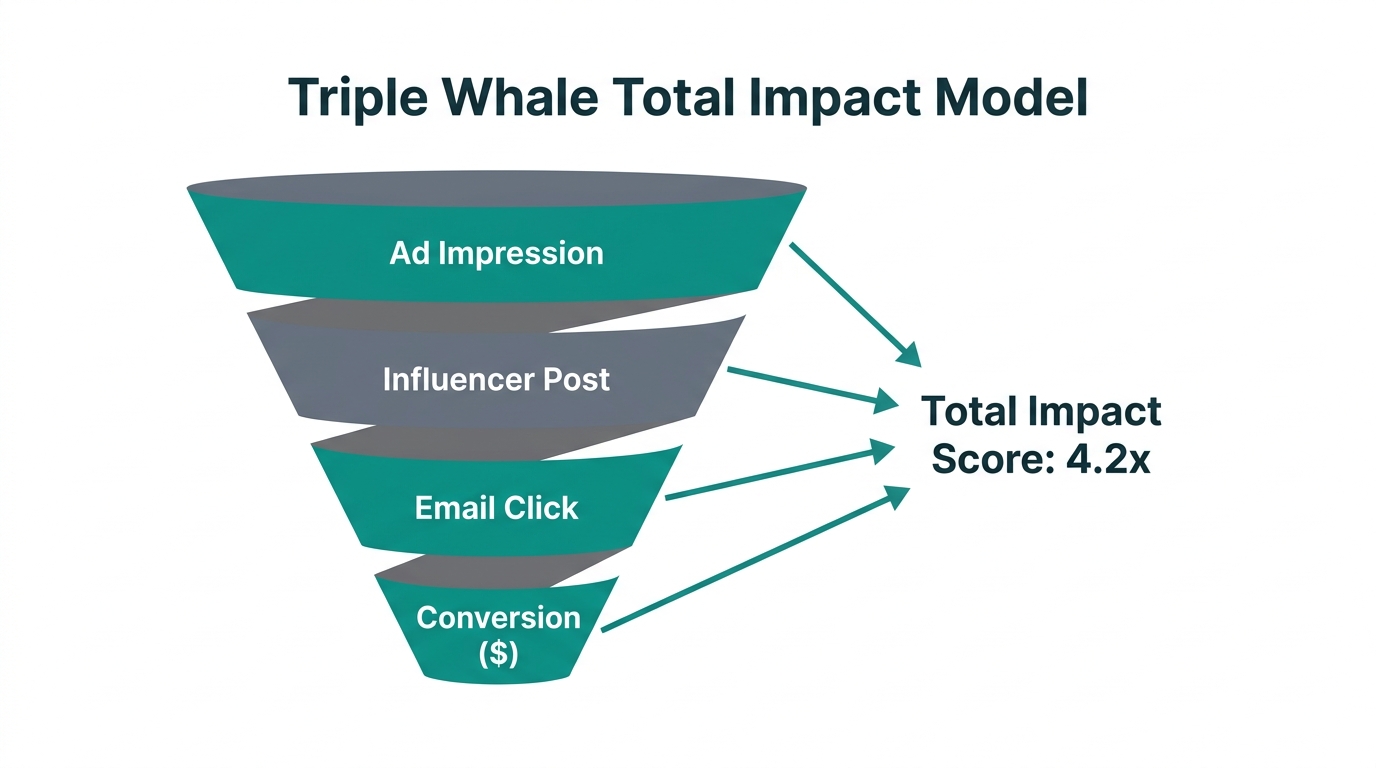
A common trap for Shopify founders is the "Retargeting Death Spiral." This happens when you cut top-of-funnel (ToF) ads because they show a low last-click ROAS, only to see your entire business collapse four months later when your retargeting pool dries up. Skeptics on Reddit argue that precision is often an illusion, but the 2026 consensus is to use tools for direction.
Triple Whale’s "Total Impact" lens credits ToF ads that traditional models ignore. By seeing assisted conversions, you can justify spending more on awareness platforms like TikTok, which is growing at 23.6% YoY. Stormy AI can be tasked to monitor this "Total Impact" daily. If a ToF campaign drops below a certain influence threshold, Stormy can flag it for your review or even suggest budget reallocations based on pre-set logic.
"Scaling in 2026 requires looking past the click. If you don't attribute the influence of top-of-funnel discovery, you're essentially starving your future sales."
Case Study: Ekster and Scaling Efficiency
Look at the accessories brand Ekster. By switching to a unified attribution model, they reduced reporting time by 65% while improving their Marketing Efficiency Ratio by 20%. They didn't just spend more; they spent smarter by understanding the interplay between their channels.
Similarly, brands like SFERRA Fine Linens used these insights to generate over $300,000 in incremental revenue. The common thread? They stopped treating their back office like a manual data entry task and started treating it like a strategic engine. With 80% of ecommerce businesses now using AI for operations, the competitive advantage lies in how fast you can turn data into decisions.
Implementing the 2026 Playbook: A Step-by-Step Guide
Ready to move your brand to the Hormozi 2x CAC model? Follow these steps to set up your Shopify profit playbook infrastructure.
Step 1: Deploy the Triple Pixel & Server-Side Tracking
In 2026, browser-based tracking is no longer sufficient. You must implement server-side tracking to capture the 20-30% of traffic that iOS and cookie-blocking browsers obscure. Use the Pixel Events Manager to audit your event flow in real-time.
Step 2: Connect Your AI Employee
Don't spend your time manually updating spreadsheets. Connect Stormy AI to your Shopify and Triple Whale accounts. Ask Stormy to: "Create a dynamic spreadsheet that tracks our 2x CAC + COGS goal daily and flags any SKU that falls below a 30-day profit threshold."
Step 3: Map the 60-Day LTV Curve
Use the Triple Whale LTV Analysis tool to identify your "Hero Products." These aren't just your best-sellers; they are the products that lead to the highest retention and recurring revenue. Shift your ad spend to favor these entry points.
Step 4: Automate the Follow-up
Use Stormy AI to handle the messy follow-ups with suppliers when inventory for these Hero Products runs low. Stormy can also track creator affiliate posts, ensuring that your top-of-funnel momentum never stalls.
The Bottom Line on Ecommerce Financial Modeling
Scaling a Shopify store in 2026 is no longer about "growth at all costs." It's about sustainable, client-financed growth. By using Alex Hormozi’s money models to structure your offers and Triple Whale to track your real-time Shopify marketing efficiency ratio, you transform your business from a gamble into a machine. When you add an AI teammate like Stormy AI to manage the data and logistics, you free yourself to focus on what actually moves the needle: innovation and brand vision.