It’s 2026, and the old ecommerce playbook of stuffing keywords into a product description and hoping for a Google rank is officially dead. We have entered the era of Generative Engine Optimization (GEO). Today, your product descriptions aren't just for human eyes or legacy search algorithms; they are for autonomous AI shopping agents like Amazon’s Rufus, ChatGPT’s Search, and Shopify’s own Sidekick. These agents "shop" for users by parsing your data, understanding context, and matching intent.
As the global AI-enabled ecommerce market reaches a projected $10.5 billion by the end of 2026, staying competitive means moving beyond basic automation. You need an AI strategy that builds emotional connection while providing the structured data that machines crave. While Stormy AI can manage the messy back-office ops like tracking your inventory and following up with suppliers, your front-end content requires a sophisticated, AI-driven approach to win the sale.
The Shift from SEO to Generative Engine Optimization (GEO)
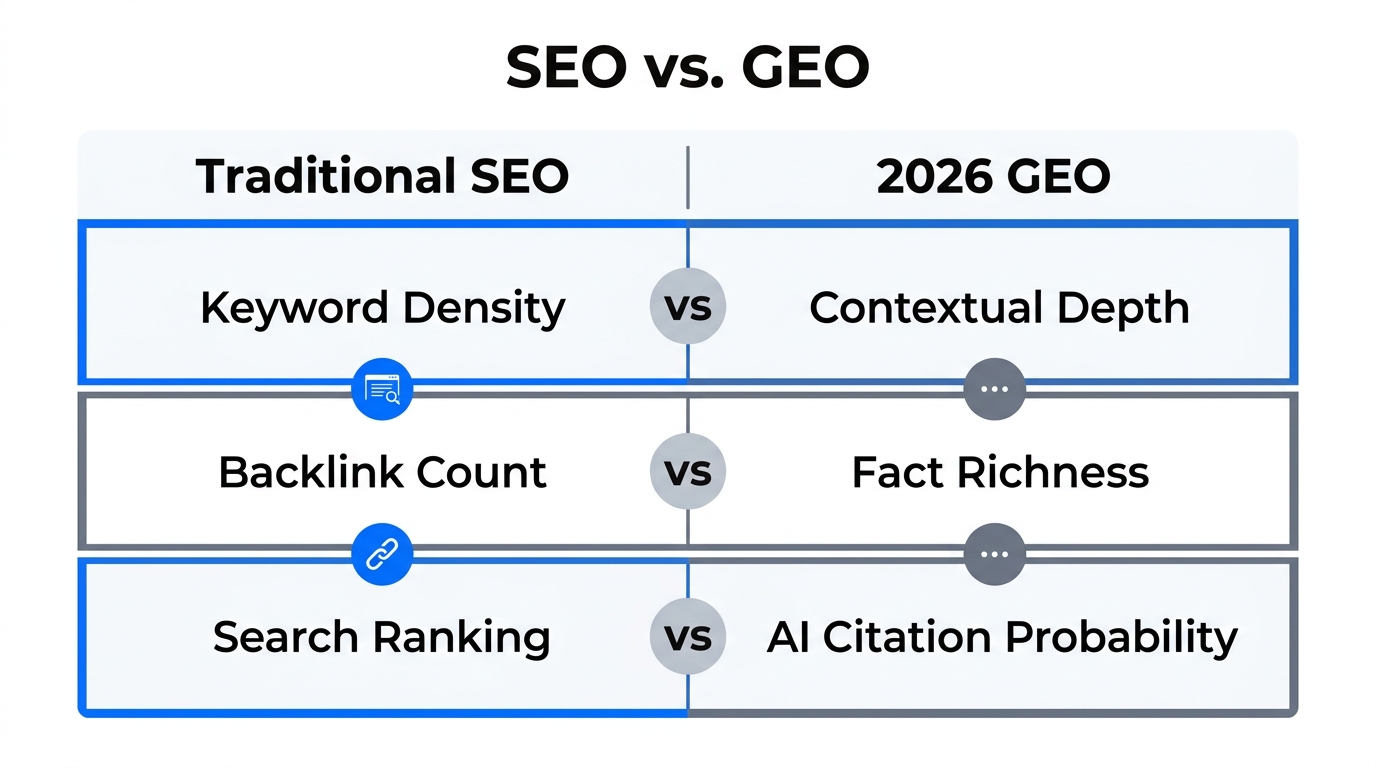
In 2026, Generative Engine Optimization is the new standard. Traditional SEO focused on frequency and backlinks; GEO focuses on expert quotes, structured data, and intent-matching. Why? Because Agentic Commerce is now a reality. When a customer asks an AI assistant, "Find me a waterproof hiking boot for wide feet under $200," the agent doesn't look for keywords—it looks for verified technical specs and scenario-based headings.
"The future lies not in AI versus human, but in AI-human collaboration that combines the best of both worlds."
The P-A-S-B Framework for High-Converting Descriptions
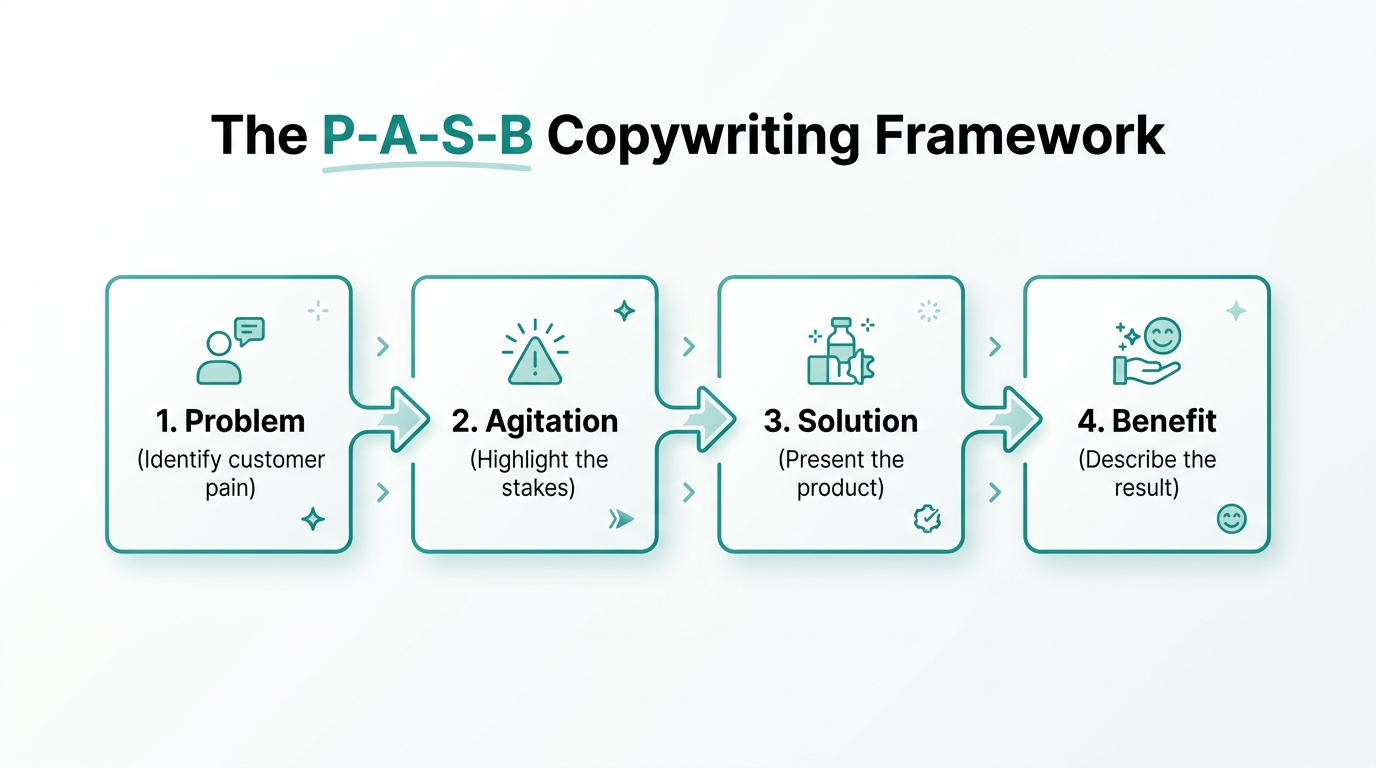
To write descriptions that convert both humans and bots, you must move away from generic AI prompts. In 2026, the P-A-S-B (Problem-Agitation-Solution-Benefit) framework is the gold standard for AI copywriting for ecommerce. Here is how to structure your prompt for any LLM like Claude or GPT-4o:
- Problem: Identify the specific pain point your target audience is facing.
- Agitation: Explain why that problem is frustrating or costly (emotional trigger).
- Solution: Introduce your product as the definitive answer.
- Benefit Stack: List 3-5 bullet points focusing on outcomes rather than just features.
For example, instead of saying "This is a lightweight jacket," the P-A-S-B framework would produce: "Hate feeling weighed down by bulky winter coats? (Problem) Traditional parkas make commuting a sweaty nightmare (Agitation). Our Aero-Lite Shell provides sub-zero protection at half the weight (Solution). You stay warm without the bulk, pack it into a briefcase, and never worry about overheating on the train (Benefit Stack)."
Tutorial: Leveraging Shopify Magic and Sidekick
Shopify’s native AI ecosystem, including Shopify Magic and the Sidekick assistant, has evolved into a proactive store management tool. In the "RenAIssance Edition" of 2026, Shopify Sidekick doesn't just write text; it analyzes your store data to suggest descriptions that match your best-performing brand voice.
Step 1: Activate Sidekick for Content Audits
Open your Shopify admin and call on Sidekick. Ask: "Which of my product descriptions have the lowest conversion rate?" Sidekick will pull data from your analytics and flag the underperformers. From there, you can ask it to rewrite them using the P-A-S-B framework mentioned above.
Step 2: Multimodal Input Integration
Don't just type keywords. Use multimodal inputs. In 2026, you can upload a high-res product photo directly into the Shopify Magic description field. The AI "sees" the texture, the stitching, and the build quality, automatically generating technical specs like fabric weight or port types. This reduces hallucinations—a major pain point in earlier AI models.
The Rich Input Phase: Feeding the Machine
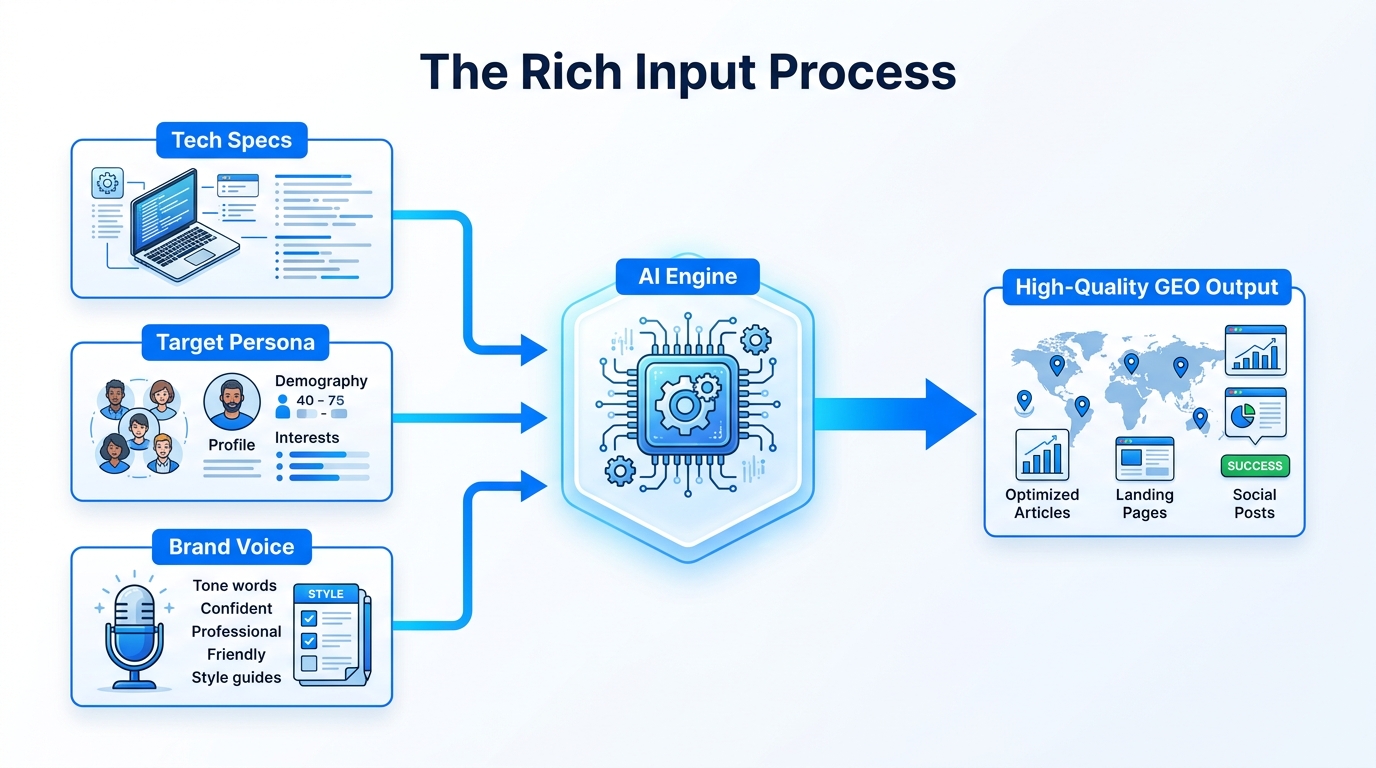
The quality of your output is 100% dependent on your input. To avoid "SEO sludge," you must feed your AI a Rich Input Bullet String. This is a condensed string of data that includes:
- Technical Specs: Material, dimensions, weight, and battery life.
- Target Audience: "Busy parents in urban environments" or "Tech-savvy remote workers."
- Brand Story: A single sentence about your origin or unique manufacturing process.
When Stormy AI monitors your supplier communications, it can actually pull these raw specs from incoming invoices or spec sheets and drop them into a shared workbook. You can then use this data to fuel your AI copywriter, ensuring that your descriptions are grounded in real-world facts rather than AI-generated fantasies.
"We're moving into a period where complexity is handled by systems, not by people. Connected intelligence is the operating model needed to stay relevant in 2026."
Bulk Generation and Human-in-the-Loop (HITL)
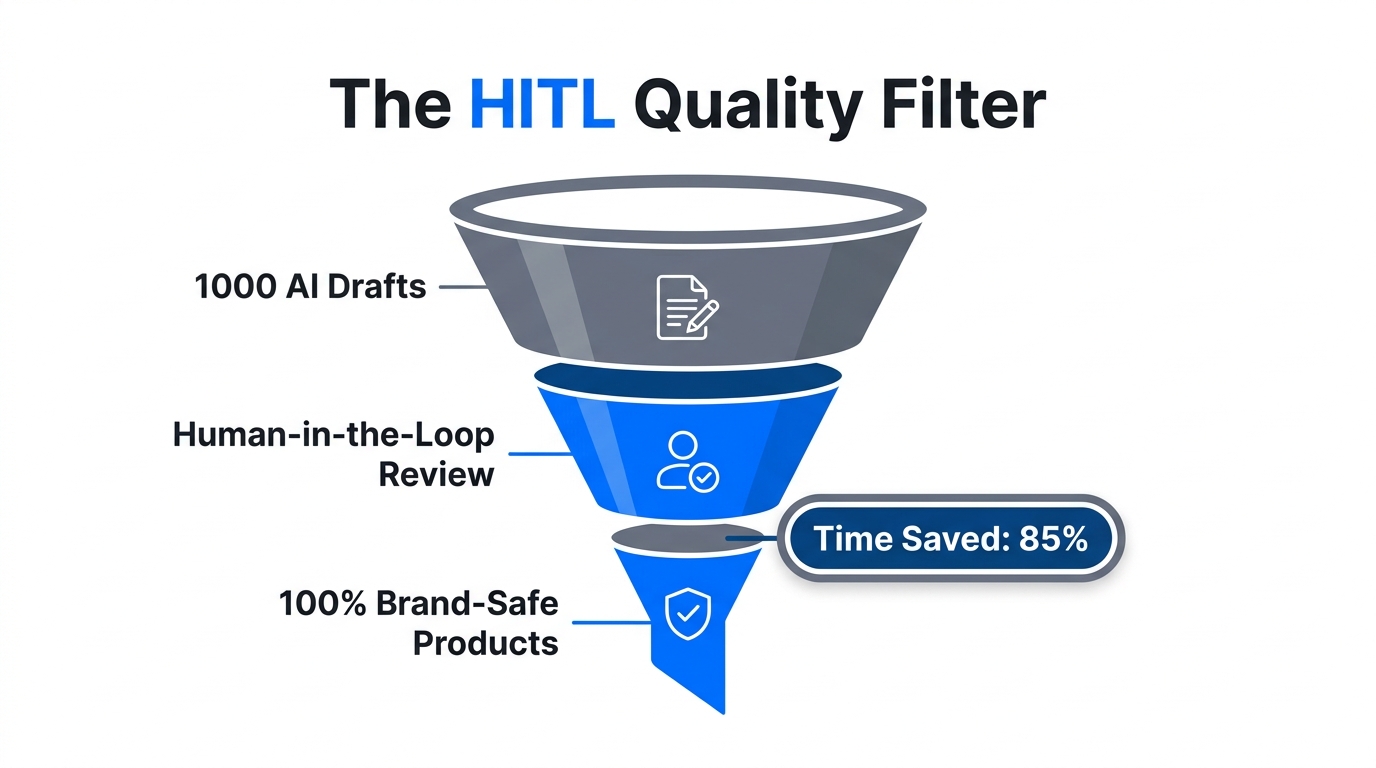
If you are managing a catalog of 500+ SKUs, manual writing is impossible. Tools like Describely or Hypotenuse AI allow for bulk generation via CSV. However, you should never set AI to "auto-publish" without a Human-in-the-Loop (HITL) strategy.
| Metric | Manual Copywriting | AI Generation (2026) |
|---|---|---|
| Speed | 30–60 mins per product | < 10 seconds per product |
| Cost | $50–$200 per description | $0.10–$1.00 per description |
| Scalability | Hard (requires training) | Infinite (bulk processing) |
| Consistency | Low (varies by writer) | Perfect (fixed brand voice) |
Experts recommend a "Review by Exception" strategy. Use AI for 100% of your drafts, but assign a human editor to spend 2-5 minutes on your "Hero" products—the top 20% of SKUs that drive 80% of your revenue. This ensures that your most valuable items have the E-E-A-T (Experience, Expertise, Authoritativeness, Trustworthiness) required to rank in both Google and AI search summaries.
How Stormy AI Automates the Operations Behind the Copy
Generating the description is only half the battle. You also have to monitor those descriptions for listing suppression, broken variants, or outdated specs when a supplier changes materials. This is where Stormy AI acts as your AI ecommerce employee.
While you focus on the creative P-A-S-B framework, Stormy AI handles the following in the background:
- Monitoring Listings: Stormy checks your Shopify and Amazon listings daily for suppressed content or missing images.
- Supplier Sync: If a supplier emails you about a change in fabric weight, Stormy reads the email, updates the spec in your master workbook, and flags the corresponding product description for a rewrite.
- Performance Reporting: Stormy pulls ad performance from Meta Ads and Google Ads to see which product angles are converting, helping you refine your AI prompts for better ROI.
Conclusion: The Hybrid Future
In 2026, the brands that win are those that treat AI as a teammate, not just a tool. By combining the P-A-S-B framework for emotional resonance with GEO strategies for machine readability, you can significantly lift your conversion rates—up to 23.7% according to recent studies.
Don't let your back office get messy while you scale. Use an AI agent like Stormy AI to keep your spreadsheets updated and your operations running on schedule, leaving you free to master the art of AI-driven persuasion. The era of the "one-person brand" is here, powered by a fleet of AI employees doing the heavy lifting.