Why Your 2026 Shopify GTM Strategy Needs OpenClaw: Moving from Omnichannel to Unified Commerce
Transform your 2026 Shopify GTM tactics with OpenClaw. Learn how AI agentic commerce drives a unified commerce strategy for 35% cost reduction and growth.
As we navigate the competitive landscape of 2026, the traditional "omnichannel" playbook has officially reached its expiration date. For high-growth Shopify founders, the challenge is no longer just being present on every platform—it is ensuring those platforms act as a single, living organism. This year, the industry has undergone a radical shift toward Agentic Commerce, where autonomous AI agents manage the heavy lifting of backend operations. At the center of this revolution is OpenClaw, an open-source AI agent harness that is redefining unified commerce strategy 2026 by turning static stores into dynamic, self-optimizing ecosystems.
The Agentic Commerce Revolution: The New Standard for Shopify Brands
In 2026, "Agentic Commerce" refers to the transition from simple automation (if-this-then-that) to autonomous decision-making. Unlike the chatbots of the past, today’s AI agents do not just answer questions; they execute workflows. With Shopify currently powering 5.7 million active stores and holding a 29% market share in the U.S., the sheer volume of data makes manual management impossible for lean teams.
Modern Shopify GTM tactics now prioritize these "digital employees" to handle everything from inventory reconciliation to proactive customer outreach. This isn't just about convenience; it’s about survival in a market where the global Order Management System (OMS) software market is hitting $1.9 billion this year.
"Agentic commerce isn't about replacing your team; it's about giving your brand the ability to think, react, and scale in real-time without increasing your payroll."
Leveraging the Model Context Protocol (MCP): The USB-C for AI
One of the biggest technical breakthroughs enabling the OpenClaw Shopify integration is the Model Context Protocol (MCP). Think of MCP as the "USB-C for AI." In previous years, connecting an AI to your store required expensive custom API development and constant maintenance. Now, Shopify’s native integration with MCP allows OpenClaw to "read" your store data—including live inventory levels, order histories, and FAQs—without a single line of custom code.
By using tools like Composio, merchants can bridge the gap between AI reasoning and store action. This allows your agent to analyze why a certain product is trending on TikTok and automatically adjust the restock priority in your Shopify admin.
Moving from Omnichannel to Unified Commerce
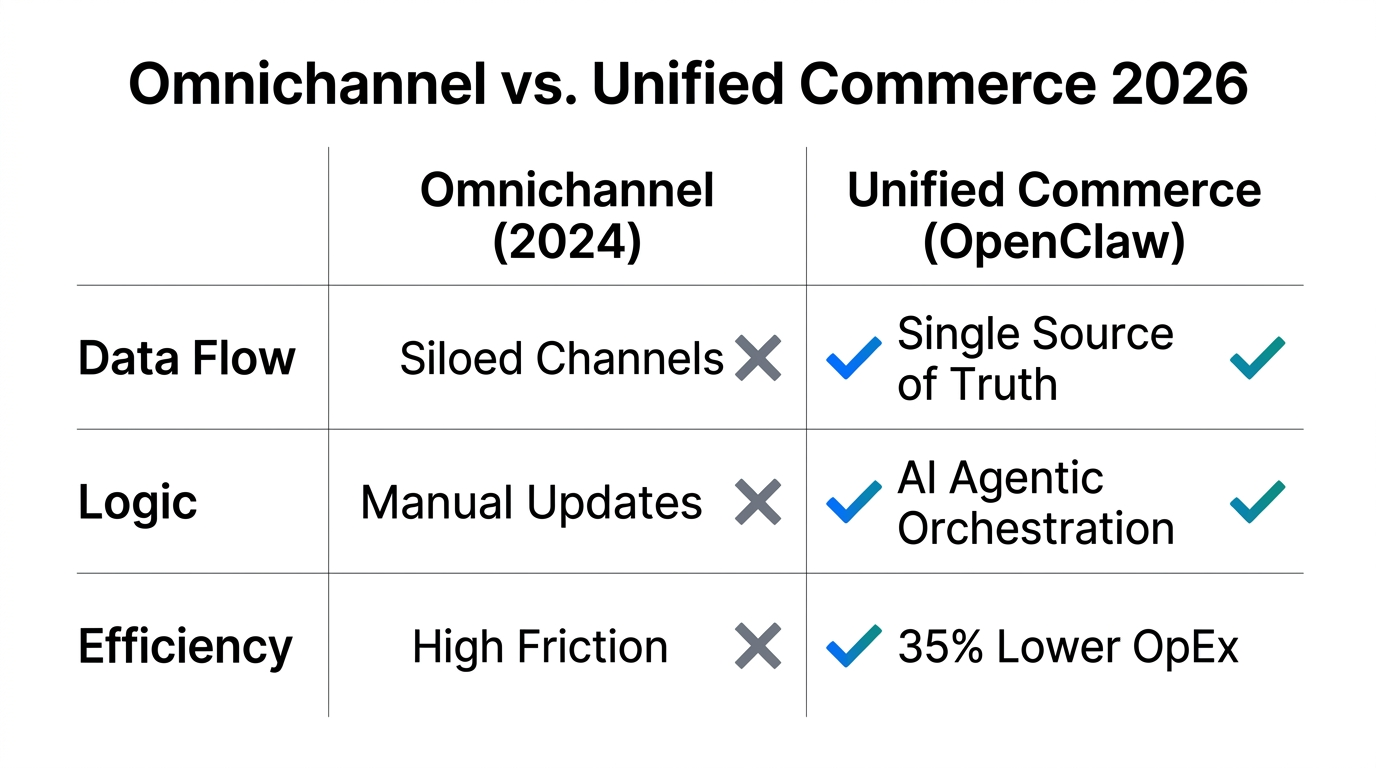
For years, brands struggled with "omnichannel" strategies where Shopify, Amazon FBA, and TikTok Shop operated in silos. In 2026, the goal is Unified Commerce. This means a single AI-driven layer synchronizes every touchpoint in real-time. If a creator’s video goes viral and wipes out your stock on TikTok Shop, OpenClaw immediately updates your Shopify storefront and Amazon listings to prevent overselling.
| Feature | Old-School Omnichannel | 2026 Unified Commerce (OpenClaw) |
|---|---|---|
| Data Sync | Manual or Scheduled (Latency) | Real-time Autonomous Sync |
| Inventory | Siloed by Platform | Global Inventory Pool |
| Customer Support | Reactive (Human-led) | Proactive Agentic Support |
| Efficiency | High Operational Overhead | 35-45% Cost Reduction |
GTM Efficiency: Achieving 35% Cost Reductions
The primary driver for adopting an ecommerce business growth strategy powered by AI is the massive reduction in operational drag. Early adopters are seeing 35–45% cost reductions within the first 12 months. A significant portion of these savings comes from automating "Where is my order?" (WISMO) queries.
WISMO queries typically account for 40–60% of total customer support volume, with each human-handled ticket costing roughly $5 to $6. By implementing OpenClaw via a WhatsApp or Telegram bridge, brands are reducing response times from 4 hours to under 4 minutes, simultaneously slashing costs and boosting CSAT scores.
"By automating WISMO inquiries, brands can reclaim over 50% of their support team's time, allowing them to focus on high-value sales conversations instead of tracking packages."
Building a 'Lean' Brand: Competing with the Giants
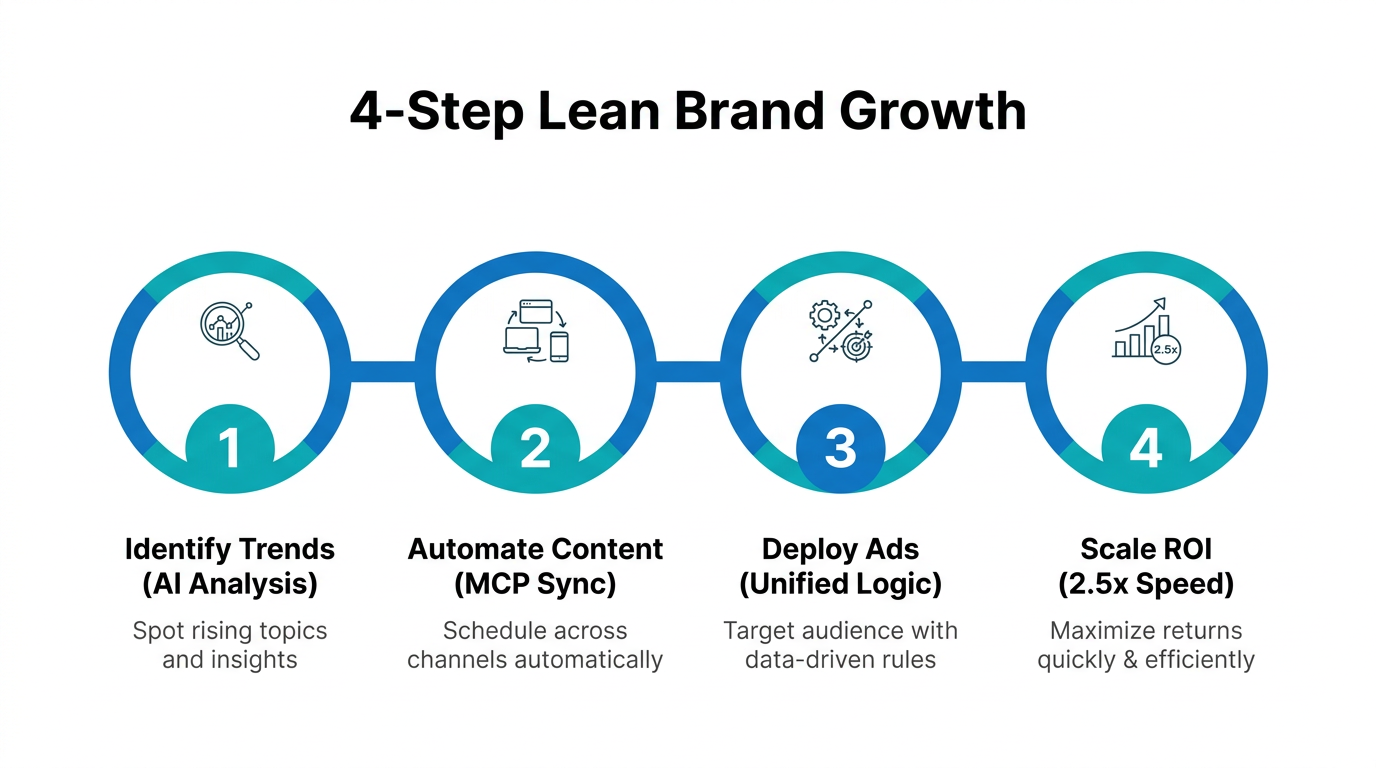
OpenClaw allows a two-person founding team to operate with the logistical sophistication of a Fortune 500 company. While the giants use massive teams to monitor inventory across warehouses, a lean brand can use OpenClaw to monitor stock levels and automatically trigger restock alerts in Slack or Linear.
To fuel this growth, many brands are pairing their backend automation with top-of-funnel creator strategies. For example, using an AI-powered platform like Stormy AI to discover and outreach to thousands of UGC creators ensures the store has a constant stream of traffic, while OpenClaw ensures the backend fulfillment never skips a beat. This combination of automated content sourcing and agentic fulfillment is the definitive 2026 growth stack.
Security and Scalability: Protecting Your Brand
As you scale your AI agentic commerce operations, security is paramount. A common mistake is granting an AI agent full "write" access to your primary database. Expert consensus suggests always running OpenClaw in a Docker container or a dedicated VPS like Tencent Cloud Lighthouse.
Furthermore, use "scoped permissions" through tools like Clawly. This ensures your agent can read_orders and write_fulfillment_orders, but cannot accidentally delete your entire product catalog or change your tax settings—a mistake that can lead to significant audit issues.
Conclusion: The 2026 GTM Blueprint
Moving from omnichannel to unified commerce isn't just a trend; it's a structural requirement for any Shopify brand looking to scale in 2026. By integrating OpenClaw into your Shopify GTM tactics, you are not just automating tasks—you are building a resilient, autonomous business model capable of 35% operational cost reductions.
The roadmap for this year is clear: link your store data via MCP, secure your agents in Docker containers, and use Stormy AI to handle the creator discovery that feeds your automated machine. The brands that win in 2026 will be those that spend less time managing data and more time building relationships with their customers.