In the fast-moving world of digital commerce, most growth strategies have the shelf life of a TikTok trend. We see brands pivot every quarter, chasing the latest algorithm hack or burning through venture capital to acquire users at any cost. Yet, as we navigate 2026, one company seems to have found a "glitch" in the matrix. Shopify, a company now over 20 years old, recently posted a staggering 30% year-over-year growth rate from a multi-billion dollar base. This isn't luck; it is the result of what insiders call Compounding Determinism.
For founders and marketers, the lesson is clear: long-term SaaS business growth is not about radical pivots, but about the relentless, decade-long execution of a single-minded mission. While competitors focused on "the grind" and incremental A/B testing, Shopify and other resilient players like 37signals have doubled down on foundational toolkits. This article explores how you can apply this framework to your own go-to-market strategy to build a business that doesn't just survive but dominates for the next twenty years.
What is Compounding Determinism?
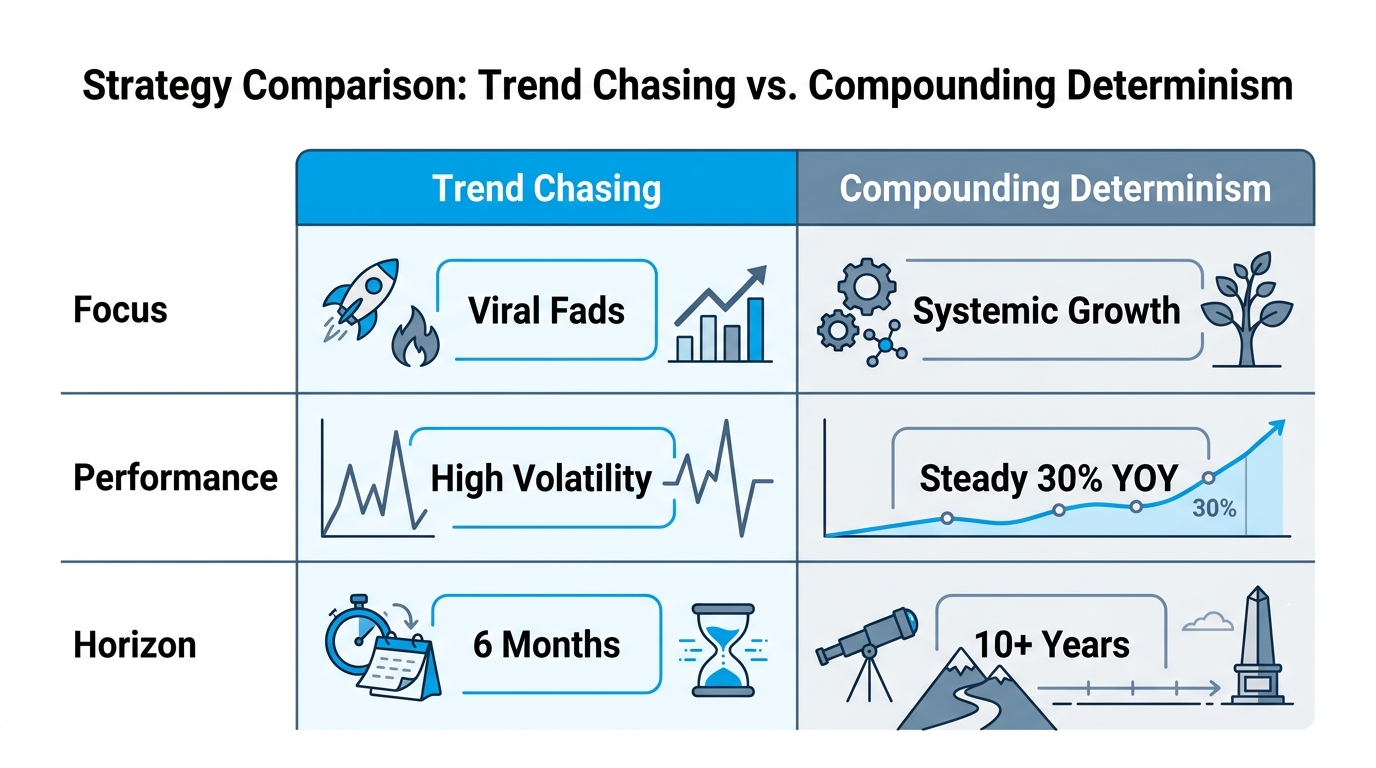
The term "Compounding Determinism" refers to a strategy where a company picks a definitive, long-term vision and refuses to deviate, allowing the value of their core product to compound over decades. It is the opposite of "optionality." Instead of keeping every door open, you lock the door and commit to the room. In 2026, where TikTok Ads Manager and Meta Ads Manager dominate the attention economy, it’s easy to get distracted. Compounding determinism forces you to ignore the noise.
As Shopify's history shows, the mission hasn't changed since Toby Lütke created Snow Devil in the early 2000s: build a toolkit for merchants to create great-looking stores. They didn't try to become a marketplace like Amazon; they stayed a toolkit. By 2026, that consistency has created a moat that is almost impossible to cross. When you solve a foundational problem for 20 years, your go-to-market strategy becomes less about convincing people to buy and more about simply existing as the inevitable choice.
"Compounding determinism over 20-plus years has a tendency to add up in irregular ways where the inflection point sometimes takes a long time to arrive."
The Boardroom Nerd: Why Technical Leadership Scales Better
 37:10
37:10A common myth in SaaS business growth is that founders eventually need to step aside for "professional" CEOs. However, the most successful companies in 2026 are often led by those who maintain a "computer nerd" obsession. Toby Lütke, who sits at the helm of one of the world's largest companies, still identifies as a developer who contributed to the core team of Ruby on Rails.
This technical depth allows for a unique type of leadership. Instead of making decisions based on spreadsheet projections, these leaders make decisions based on technical possibility. For instance, Shopify was incredibly early on the AI and agent explosion because their leadership was "pilled" on the technology before it became a boardroom buzzword. They weren't looking at the ROI of AI in Q3; they were looking at how agents would fundamentally reshape commerce by 2030.
| Leadership Style | Focus Area | Outcome for GTM |
|---|---|---|
| Traditional Corporate | Quarterly Earnings & Margins | Safe, incremental, but often misses paradigm shifts like AI. |
| The "Computer Nerd" | Technical Excellence & Innovation | High-risk bets that lead to 30% YOY growth at massive scale. |
When your Shopify growth strategy involves staying close to the code, you can spot shifts in consumer behavior—like the rise of UGC and influencer commerce—long before the data scientists catch up. For founders, this means your tech stack is your strategy. Whether you're using Linear for project management or Stormy AI for creator discovery, the tools you choose reflect your long-term determinism.
'Ignorant but Correct': The Competitive Advantage of Fresh Eyes
11:32In his 20s, David Heinemeier Hansson (DHH) was giving business advice while still building Basecamp. This was often dismissed as youthful hubris, but it highlights a concept known as "liquid intelligence." Young or first-time founders are often smarter and faster precisely because they are ignorant of the "rules" of an industry. In 2026, being "ignorant but correct" is a legitimate competitive advantage.
When you don't know that "you can't build a project management tool in Chicago without VC money," you just go ahead and do it. This lack of baggage allows you to break paradigms. As noted in the research, ignorance is a benefit for a huge class of problems because you aren't locked into old patterns. You don't ask for permission from gatekeepers like Apple or Google; you just build for the user.
"Just because I was ignorant doesn't mean I was wrong. Ignorance is a benefit for a huge class of problems where knowledge would otherwise lock you into a failing paradigm."
In e-commerce marketing 2026, this means questioning the status quo. Do you really need a $100k/month ad spend on Google Ads, or can you build a more sustainable growth engine through direct creator relationships? Platforms like Stormy AI have democratized this, allowing "ignorant but correct" founders to bypass traditional agency gatekeepers and reach their audience directly through AI-powered outreach.
The 'Luxury of Margins': Profitability as a Strategic Moat
64:10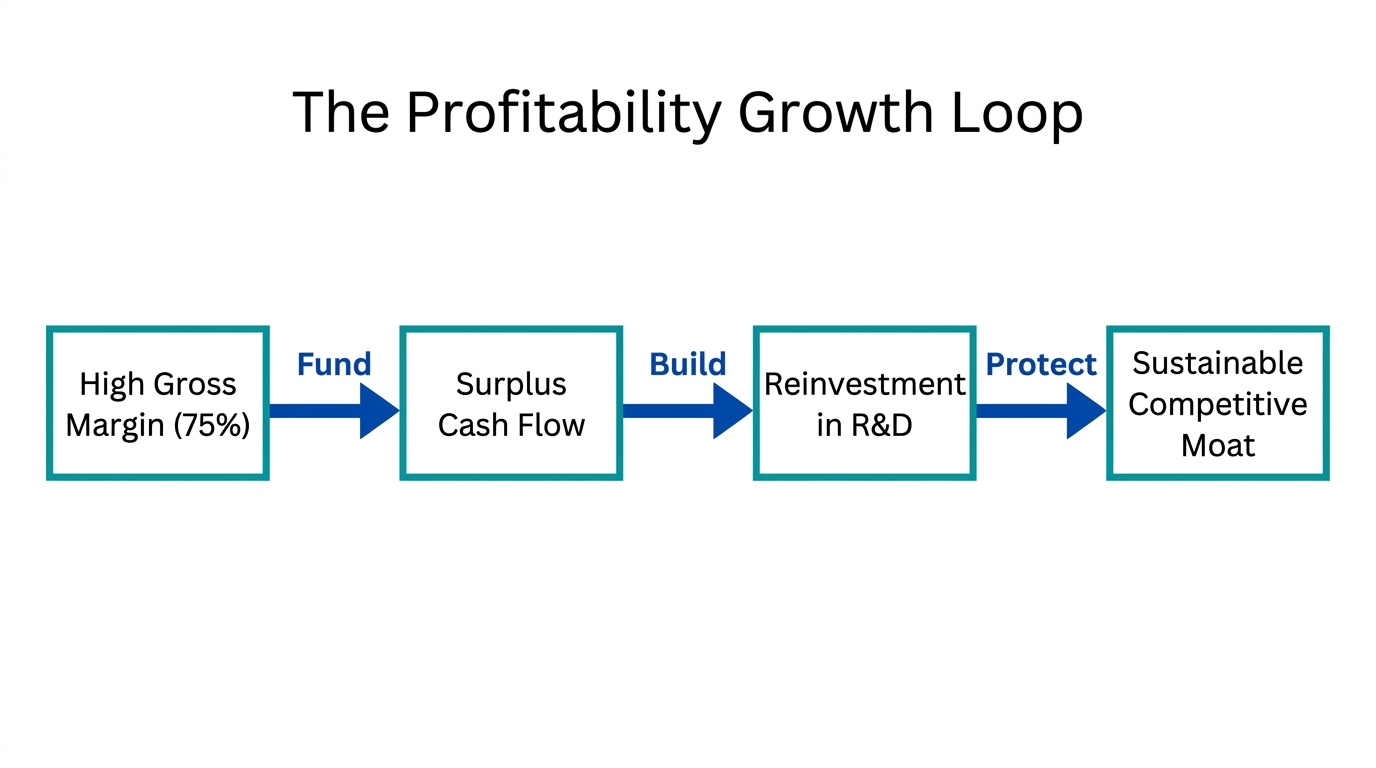
One of the most contrarian takes from the 37signals and Shopify philosophy is the rejection of the "grind" for incremental 0.01% gains. Most SaaS companies in 2026 are obsessed with A/B testing their landing pages to death. However, companies with high margins have the "luxury" to follow taste over data. They don't need to squeeze the lemon for the last drop because they’ve built a product that people actually like.
High margins provide the freedom to be reckless. When you aren't beholden to investors demanding a 16.25% return, you can take stands that others can't. You can fight Apple over App Store fees, or you can spend three years perfecting a new product like HEY without worrying about immediate ROI. This detachment from short-term outcomes actually makes you a better business person.
This margin allows you to invest in a modern growth stack. Instead of hiring a team of 50 to do manual influencer vetting, you can use AI-powered discovery platforms like Stormy AI. This keeps your team lean, your margins high, and your focus on the long-term vision. As the world moves toward automated GTM motions, the winners will be those who use AI to maintain their "luxury of margins" while scaling their output.
Building Your 2036 Toolkit: GTM Tactics for the Next Decade
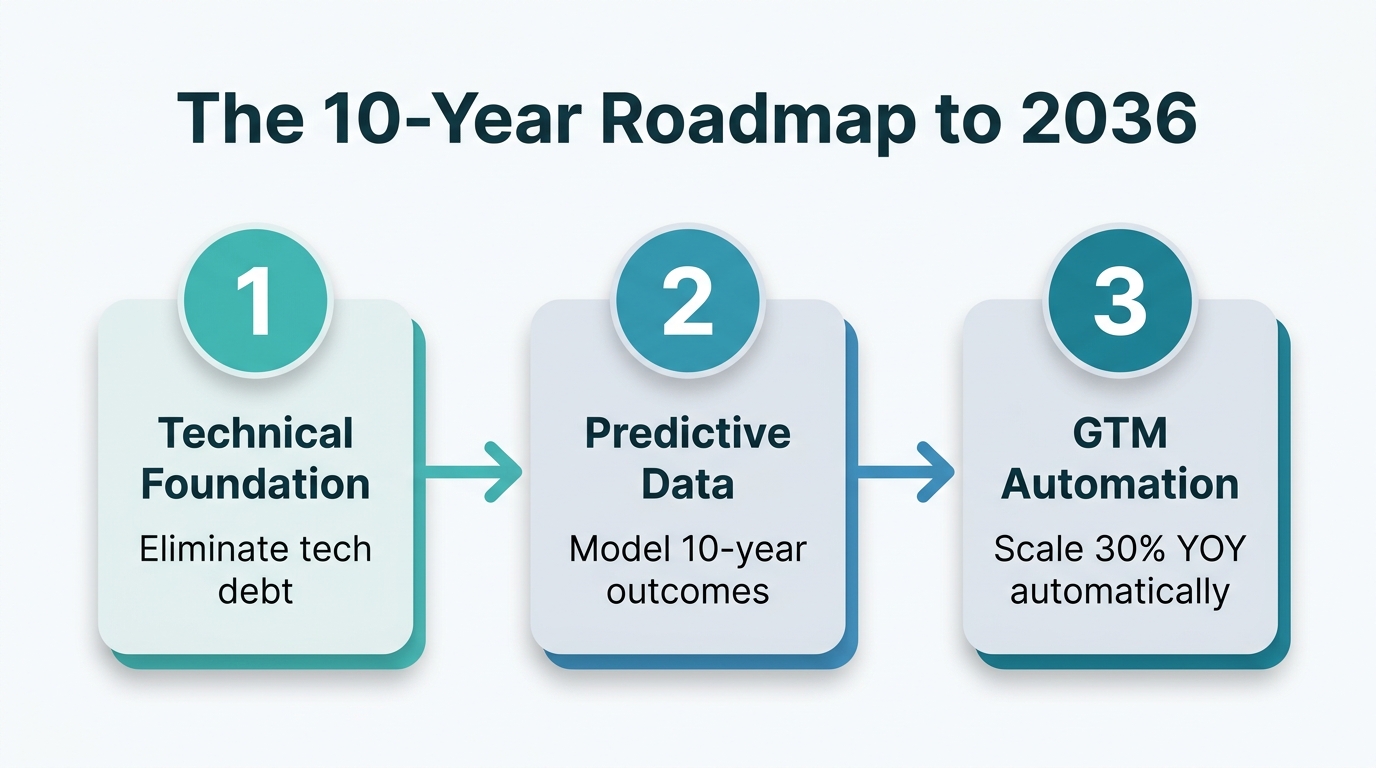
If you want to apply compounding determinism to your go-to-market strategy, you must stop thinking about campaigns and start thinking about foundations. A foundation is a solution to a problem that will still exist in 10 years. For Shopify, that was "selling online." For you, it might be "automating trust" or "democratizing mobile app growth."
- Step 1: Focus on Fundamentals. Tools like Shopify and Basecamp focus on things that don't change: people need to communicate, and people need to sell.
- Step 2: Earn Attention, Don't Buy It. In 2026, the "right hook" of traditional ads is less effective. You must "jab" by sharing interesting, novel, and forthright observations about your industry. Use Beehiiv or LinkedIn to build an audience that values your philosophy, not just your features.
- Step 3: Embrace the AI Agent Revolution. The next decade of growth will be driven by agents. Whether it's Stormy AI's autonomous creator agents or internal AI systems for customer success, the goal is to increase your "liquid intelligence" without increasing your headcount.
- Step 4: Practice Instrumental Detachment. The best way to win is to not be afraid of losing. When you have enough margin to walk away, you have the power to negotiate and innovate on your own terms.
"The vast majority of anxiety that wrecks entrepreneurs are about forces outside of their control. The best you can do is find the steady state where you get maximum productivity without burning out."
Conclusion: The Long Road to the 'Glitch'
Shopify’s 30% YOY growth in 2026 is often viewed as a miracle or a "glitch," but it is actually the most predictable outcome of compounding determinism. By staying a nerd, focusing on margins, and ignoring the pressure to pivot, Shopify has built a toolkit that the world simply cannot do without. In 2026, your Shopify growth strategy shouldn't be about finding a shortcut; it should be about finding a room you're willing to stay in for 20 years.
As you build your own SaaS or e-commerce empire, remember that original thought is possible only when you step out of the echo chamber. Don't be afraid to be "ignorant but correct." Use AI tools like Stormy AI to automate the mundane, but keep your human taste at the center of your brand. The "glitch" is waiting for those who have the patience to see it through.