The era of "destination e-commerce" is officially over. In 2026, your customers aren't just scrolling through Google search result pages; they are asking AI agents like ChatGPT, Gemini, and Claude to find, compare, and even purchase products for them. This shift, known as Agentic Commerce, has turned traditional SEO on its head. Today, success is no longer about ranking #1 for a keyword; it is about Generative Engine Optimization (GEO) — ensuring your Shopify store is the primary data source recommended by the world’s most powerful AI models. With Shopify now holding 30% of the US e-commerce market, according to data from eMarketer, the race to become "agent-ready" is the defining challenge for performance marketers this year.
While legacy brands struggle with messy product catalogs, lean teams are using an AI ecommerce employee to handle the back-office heavy lifting — from monitoring inventory levels to auditing schema markup — so they can focus on high-level GEO strategy. If your store isn't optimized for ai shopping agent discovery, you are effectively invisible to a quarter of the US population that now makes "hands-free" purchases via AI agents.
From Keywords to Intent: The GEO Revolution
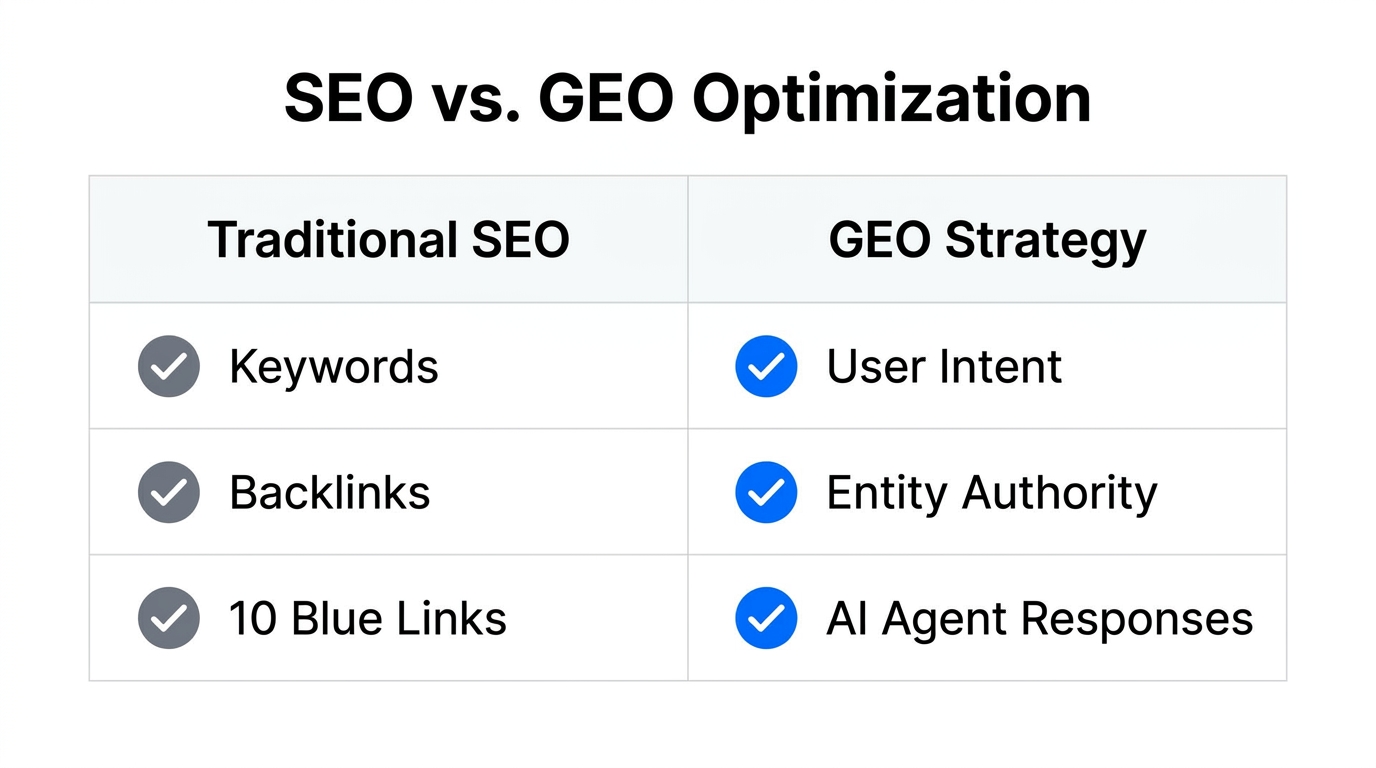
Traditional Shopify SEO in 2024 was about keyword density and backlink profiles. In 2026, shopify seo 2026 is about contextual relevance. AI agents don't look for strings of text; they look for the best answer to a complex user intent. When a user asks, "Find me a sustainable leather weekend bag under $300 that fits in an overhead bin," the AI doesn't just crawl for those words. It looks for verified data points, shipping speeds, and community sentiment.
This is where generative engine optimization comes in. You must optimize for the Andromeda Algorithm and other generative models by providing structured, high-fidelity data. According to the Shopify Commerce Trends report, merchants using AI-driven personalization and agent-ready storefronts report an 18% higher conversion rate. The goal is to move from being a "website" to being a "node" in the Universal Commerce Protocol (UCP).
"The winners in 2026 are those who fix their data foundations first. Every Shopify store should be agent-ready by default; we are building the infrastructure for the era where AI agents do the shopping." — Tobi Lütke, Shopify CEO
Implementing Mandatory Product Group Schema
In the past, basic ecommerce schema markup was a "nice-to-have." In 2026, it is the primary way AI crawlers understand your product variations. Without Product Group Schema, an AI agent might find your main product but fail to realize you have the specific size, color, or material the user requested. This leads to "hallucinations" or, worse, the AI recommending a competitor who has cleaner data.
Why Product Group Schema Matters
Unlike standard Product schema, Product Group Schema links all variants (SKUs) into a single logical entity. This allows AI agents to understand:
- Availability per variant: Is the "Midnight Blue" in XL actually in stock?
- Price fluctuations: Does the leather version cost more than the canvas one?
- Physical attributes: Does this specific variant meet the dimensions requested by the user?
Setting this up manually across thousands of SKUs is a nightmare. This is exactly where an AI ecommerce employee excels. As your digital teammate, AI can audit your Shopify catalog, flag missing schema attributes, and even use Shopify Magic to enrich product descriptions with the specific technical specs AI agents crave. By the time an AI crawler hits your site, the system has ensured every variant is perfectly indexed.
| SEO Factor | Traditional SEO (Legacy) | GEO Strategy (2026) |
|---|---|---|
| Primary Target | Google Search Algorithm | Large Language Models (LLMs) |
| Content Focus | Keyword Density | Natural Language Intent |
| Technical Core | Sitemaps & H1s | Product Group Schema & MCP |
| Trust Signal | Backlinks | Verified UGC & Reddit Mentions |
| Success Metric | SERP Position | Zero-Click Discovery Rate |
The Storefront MCP Server: Your AI Bridge
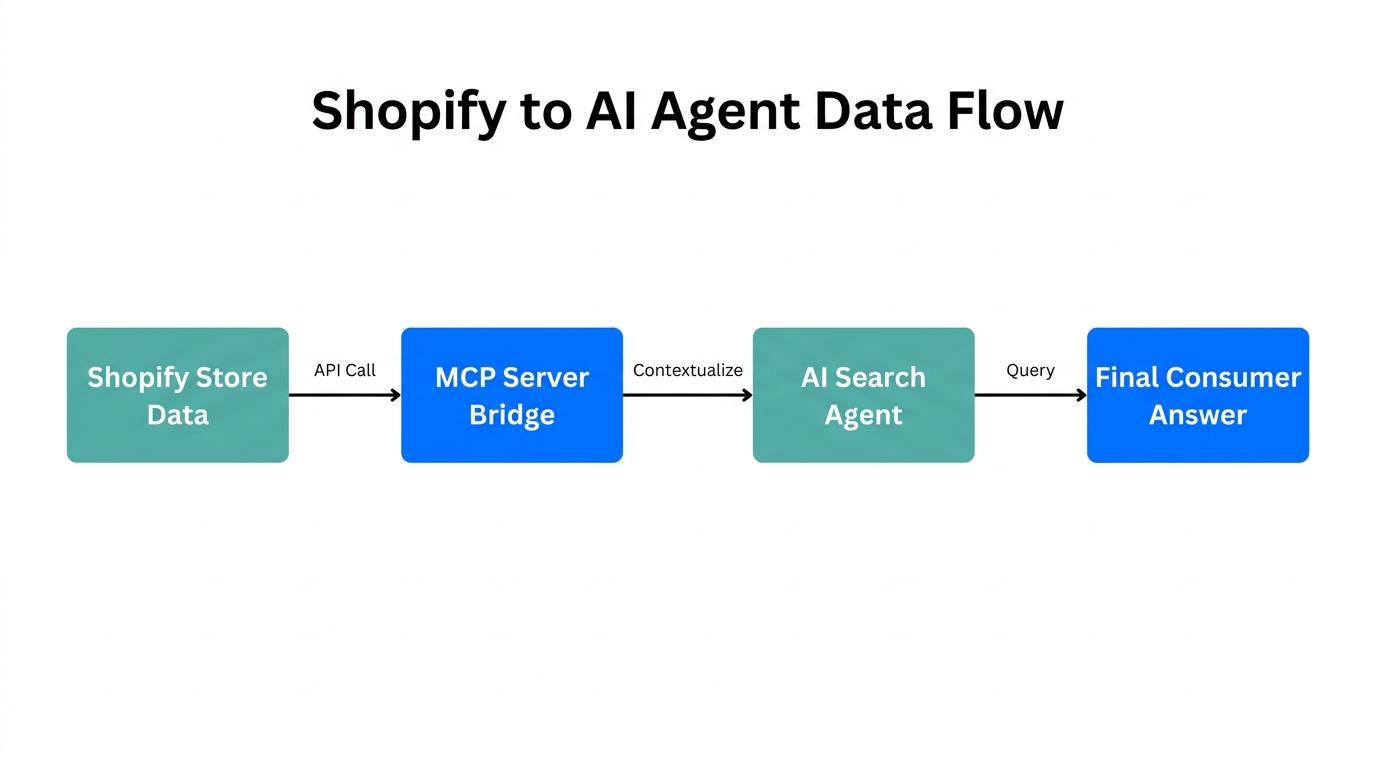
The biggest technical leap in shopify seo 2026 is the implementation of the Model Context Protocol (MCP). An shopify mcp server acts as a live API bridge between your store’s database and an AI model. Instead of waiting for a search engine to crawl your site every few days, an MCP-enabled store allows an AI agent to query your live inventory, active discounts, and shipping logic in real-time.
How to Activate Your MCP Server
According to documentation from Revize.app, this is now available on all Shopify plans through the Universal Commerce Protocol (UCP). Here is the 2026 playbook for activation:
- Navigate to your Shopify Admin and go to
Settings > AI Channels. - Enable the Universal Commerce Protocol toggle. This authorizes trusted AI agents to access your public-facing data.
- Verify your Storefront MCP Server status. Ensure that your "Discovery Layer" is active, which allows agents to browse inventory without human intervention.
- Configure your Checkout Layer. This enables agents to attach payment methods and complete transactions directly in the chat interface.
Once active, an autonomous agent like Stormy AI can monitor this channel to ensure that your MCP server is returning the correct data. If a promotion ends or a price changes, Stormy checks that the AI agents are seeing the update instantly, preventing customer frustration and support tickets.
"The barrier between search and checkout has dissolved. We are laying the rails for the new era of agentic commerce where the transaction happens where the conversation starts." — Jeff Hoffmeister, Shopify CFO
Building E-E-A-T with Verified UGC and Reddit
AI models in 2026 have become highly skeptical of brand-generated content. Following trends reported on Reddit /r/DigitalMarketing, AI crawlers now prioritize unbiased community signals over paid review platforms. To build E-E-A-T (Experience, Expertise, Authoritativeness, and Trustworthiness) for AI search, you must have a footprint where real humans talk.
The Reddit-Style Trust Playbook
AI agents frequently cite Reddit and niche forums as primary sources for "Best [Product]" queries. To win here, you need verified User-Generated Content (UGC). An AI ecommerce assistant can help by discovering creators across TikTok and YouTube who are already talking about your niche, managing the outreach, and tracking the posts that generate the most "trust juice" for AI models.
- Verified Reviews: Use apps like Okendo or Yotpo that feed verified purchase data into your schema markup.
- Forum Presence: Ensure your brand is mentioned in organic discussions. AI agents treat a recommendation in a 500-upvote Reddit thread as 10x more valuable than a standard blog post.
- UGC Video: AI models now "watch" videos to extract sentiment. High-quality UGC on TikTok and Instagram serves as a powerful discovery signal.
Measuring Success: Zero-Click Discovery Rates
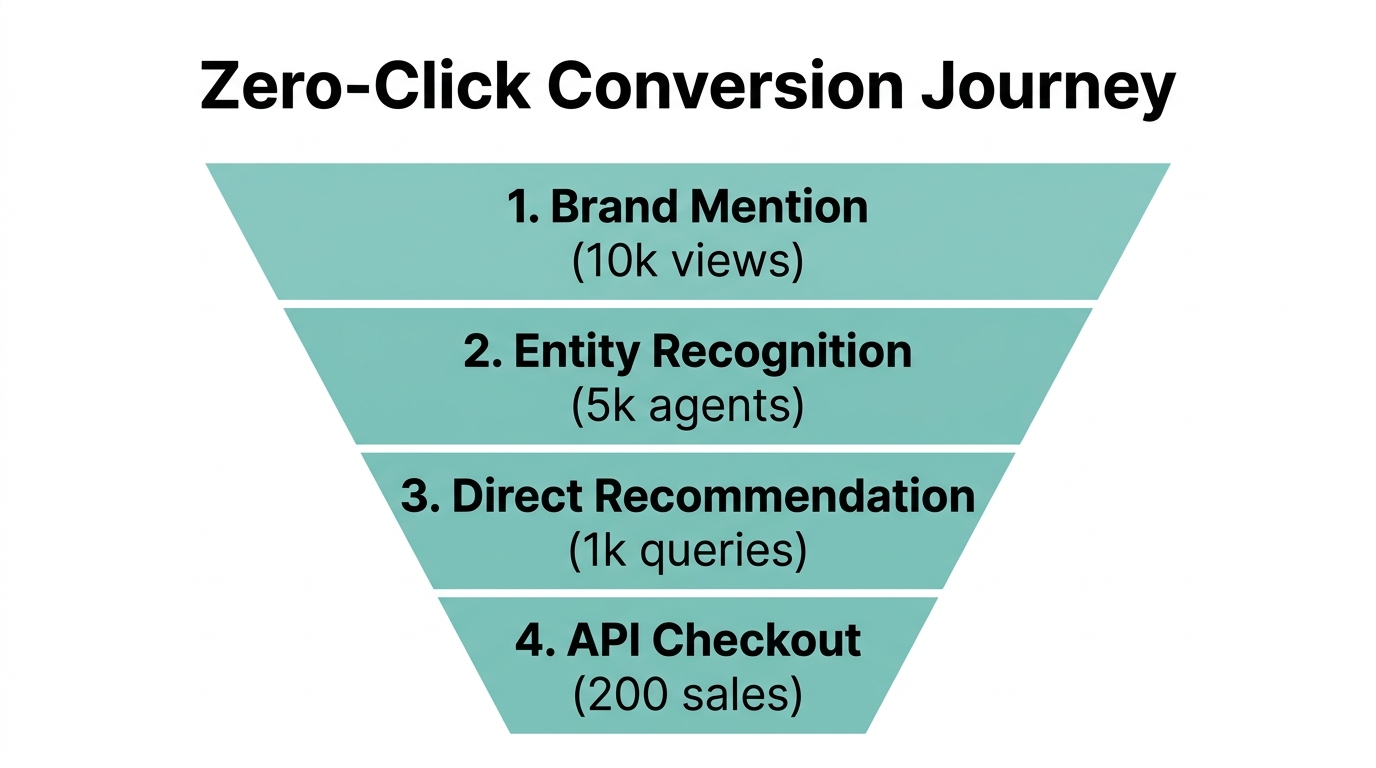
In 2026, a "click" to your website is often a sign that the AI agent failed to do its job. The most important KPI now is the Zero-Click Discovery Rate. This metric tracks how often your product is recommended and purchased within an AI interface without the user ever landing on your Shopify store.
New KPIs for 2026
- Agent Recommendation Share: What percentage of the time does ChatGPT suggest your brand for relevant intent queries?
- UCP Conversion Rate: How many sales are coming through the Universal Commerce Protocol vs. your traditional checkout?
- Sentiment Delta: How has your brand's trust rating changed across LLM training sets?
Tracking these metrics manually is impossible. Stormy AI handles this by pulling data from your Shopify admin, Google Ads, and AI-specific analytics tools, then generating a polished weekly report. Stormy will flag if your "Agent Share" drops, allowing you to investigate if a competitor has updated their ecommerce schema markup 2026 or if your inventory levels are triggering a "low stock" warning in the AI's logic.
Conclusion: Become an Agent-First Brand
Optimizing for shopify seo 2026 is no longer about tricking a search engine; it’s about providing the most accessible, verified, and structured data to the AI agents that now run the world’s commerce. By implementing Product Group Schema, activating your shopify mcp server, and building community trust signals, you position your brand at the center of the agentic economy.
You don't have to do this alone. While you focus on brand strategy and product innovation, let Stormy AI act as your AI ecommerce employee. Stormy will keep your spreadsheets updated, follow up with suppliers, and ensure your storefront is always optimized for the next generation of AI shopping agents. The future of commerce is agentic — make sure your store is ready to answer the call.