In 2026, the barrier to entry for launching a Shopify store has effectively hit zero. With generative AI creating high-fidelity assets and code in seconds, the internet is flooded with brands that look the same, talk the same, and sell the same generic products. To build a durable brand that survives the next decade, founders must stop acting like solo technicians and start acting like Chief Editors. Success this year isn't about who can write the most copy or design the most pages; it’s about who can curate the best experience. By adopting the 'Writer and Editor' model, ecommerce leaders can separate the creative 'drafting' of their business from the rigorous 'refining' required to scale.
The Writer vs. Editor Dynamic: Cultivating 'Fresh Eyes'
 32:30
32:30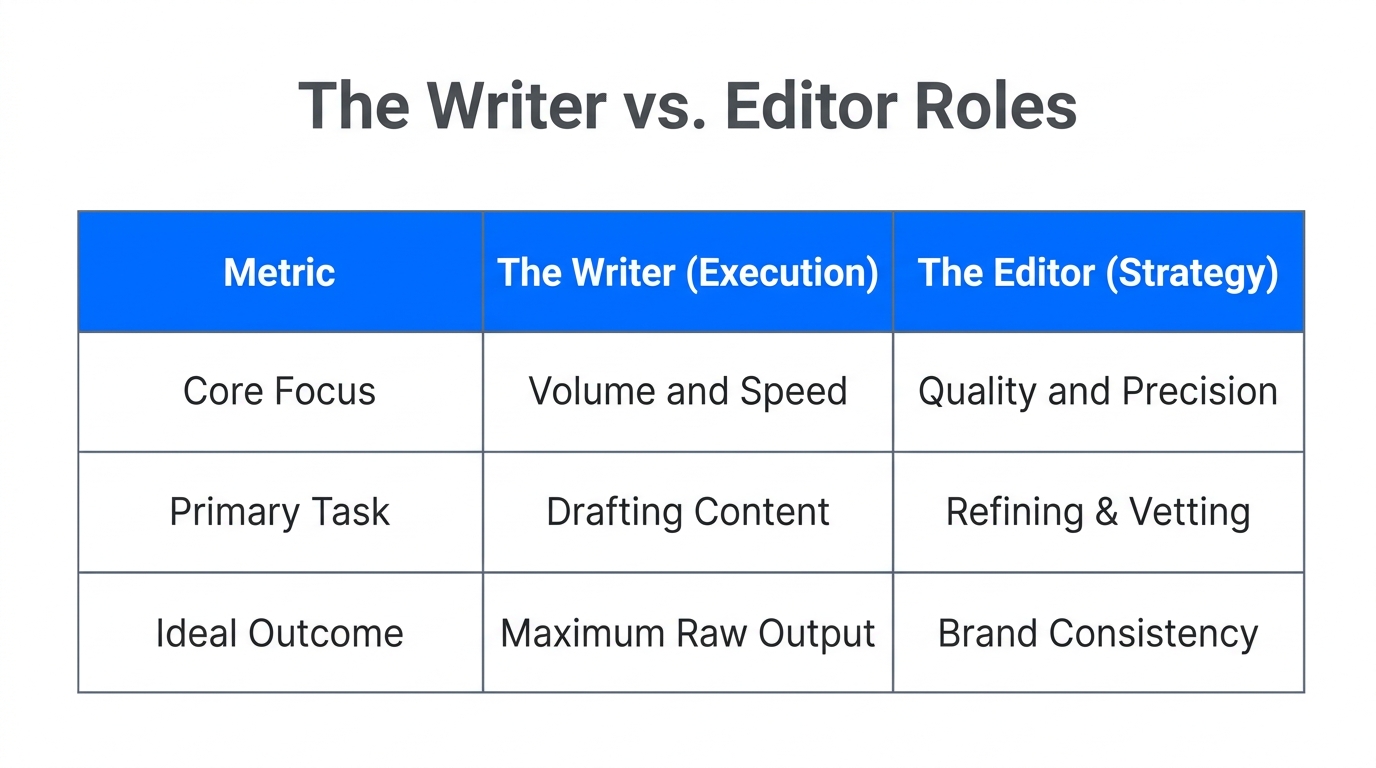
The core of the Shopify founder framework is a cognitive split. In the early stages of a brand, the founder is the Writer: the one staring at the blank page, drafting the first version of the product descriptions, setting up the Meta Ads, and building the initial site architecture. This is the hardest part of the job because it requires overcoming inertia. However, the most successful brands in 2026 understand that the Writer cannot be the final judge of their own work. They need an Editor—a persona that looks at the store with "fresh eyes" to catch the friction points the Writer has become blind to.
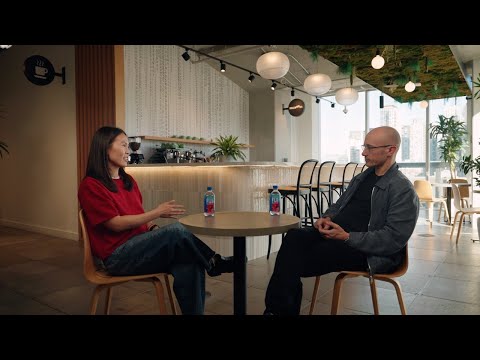
"Building a product requires editors and writers. Great products only come when there is mutual respect for both roles—the writer who faces the blank page and the editor who refines the vision."
In a lean ecommerce organization, you are often both people. The challenge is switching between these modes. When you are the Editor, you must navigate your own store as if you’ve never seen it before. You should be looking for what UX researchers at the Baymard Institute call "UI confusion" or "unforced errors." If a customer has to click three times to find your shipping policy, that’s an unforced error. While you focus on high-level strategy, Stormy AI can act as your technical apprentice, monitoring the back office for listing problems like suppressed images or broken variants that an exhausted 'Writer' might miss during a late-night launch.
The Language of Beauty: Why Intuition Wins in 2026
24:50Data is a commodity in 2026. Every one of your competitors has access to Google Ads benchmarks and Triple Whale dashboards. If you lead solely by the numbers, you will end up with a brand that is mathematically perfect but emotionally hollow. High-level ecommerce leadership requires tapping into what Grandmaster chess players call the "language of beauty."
Intuition isn't just a guess; it is your brain’s neurovisual cortex running a parallel simulation of your entire life’s experience. When a landing page "feels wrong," your intuition is often detecting a trade-off you haven't consciously calculated yet. Maybe the conversion rate optimization (CRO) hack you're using is damaging the long-term luxury perception of your brand. As an ecommerce founder, your job is to have the courage to trust these aesthetics.
How to Use AI as Your 'Junior Writer'
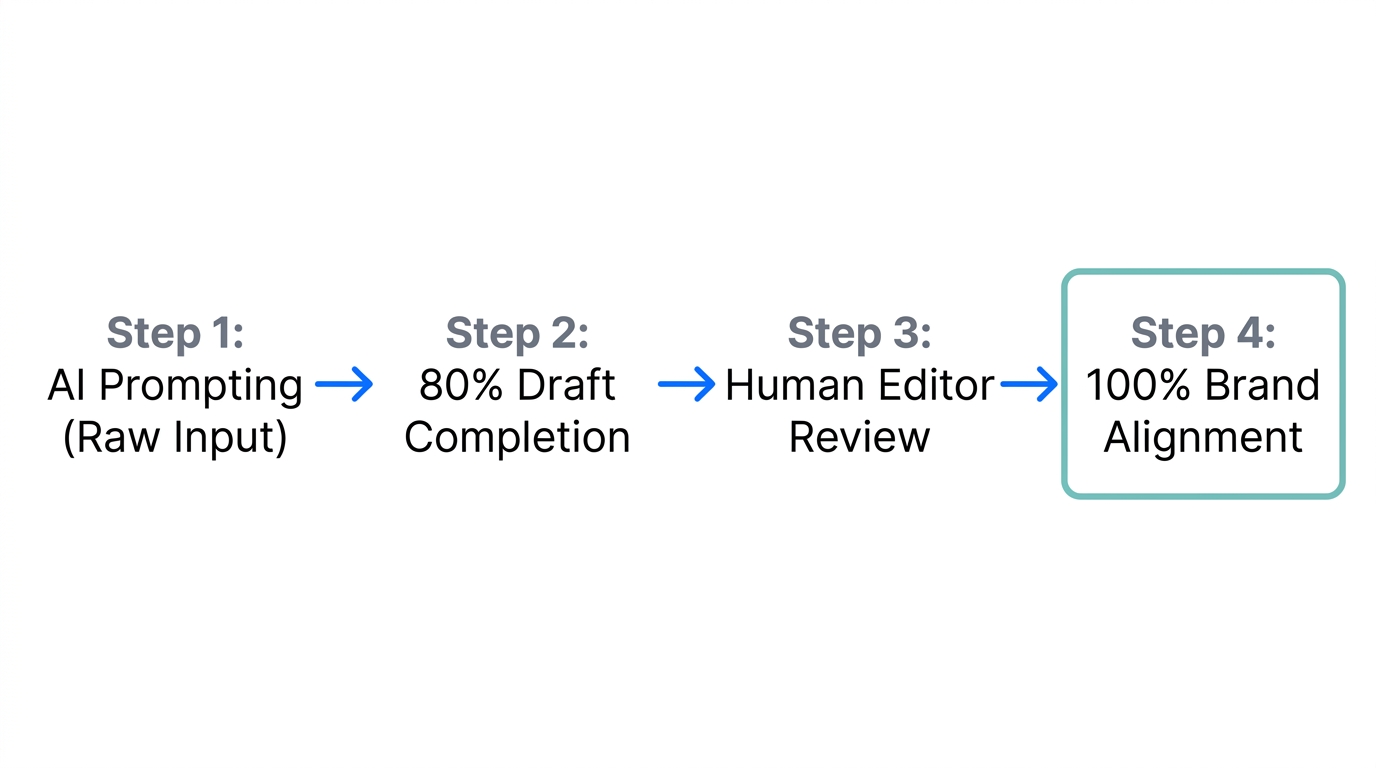
The breakthrough for founders this year is realizing they no longer have to be the primary Writer. You can delegate the "drafting" phase to AI agents. In this model, Stormy AI functions as your Junior Writer. It can draft on-brand customer replies in Gorgias, summarize recurring supplier issues, and pull campaign performance from TikTok Ads Manager into a shared workbook.
Your role shifts from doing the work to editing the work. Instead of spending three hours in an inbox, you spend ten minutes reviewing the drafts Stormy AI has prepared. This allows you to maintain high quality standards without the burnout of manual execution. This is the essence of a modern ecommerce leadership mindset: using AI to handle the messy back office so you can focus on the vision.
| Task Type | Junior Writer (AI Agent) | Senior Editor (Founder) |
|---|---|---|
| Customer Support | Drafts replies for refunds/disputes. | Approves complex or high-value escalations. |
| Marketing Ops | Pulls ROAS data from Meta and Google. | Decides budget shifts based on brand goals. |
| Inventory | Flags stockout risks and drafts POs. | Reviews lead times and vendor relationships. |
| Creative | Generates first-draft product copy. | Refines voice and emotional resonance. |
The Technical PM Mindset: Obsessing Over Domain Modeling
30:00The most durable brands on Shopify are built on deep domain modeling. A common mistake founders make is solving problems locally rather than systematically. For example, in the early days of Shopify, the team chose the word "variants" instead of the industry-standard "SKUs" because they wanted a more truthful representation of how products were actually structured in a merchant's mind. Similarly, they used "handles" instead of "slugs" because they prioritized human-readable architecture.
"You have to understand your domain really, really well and model it durably. It’s a Neo in the Matrix moment where you suddenly see the entire problem for what it is—it's all code, and you can bend physics."
As a founder in 2026, you must think like a Technical Product Manager. When you add a new app or workflow, ask yourself: "Does this fit the long-term model of my business, or am I just applying a bandage to a gushing neck wound?" If you clutter your Amazon Seller Central or Shopify backend with fragmented data, you create technical debt that will eventually slow your growth to a crawl. Use tools like Notion or Stormy AI to maintain a living "source of truth" for your SKUs, vendors, and lead times.
Avoiding Unforced Errors: The 'Toby Tornado' Lesson
13:00In Shopify's internal history, the "Toby Tornado" refers to moments when the leadership (specifically Tobi Lütke) would deep-dive into the code or product and find a lack of quality that required an immediate, top-to-bottom cleanup. For a founder, a "tornado" happens when you realize your Klaviyo flows have been broken for weeks or your Stripe chargebacks are spiking unnoticed.
These are unforced errors. They happen because the founder stopped being the Editor. To avoid this, you need a system of "recurring audits." You don't have to do the audits yourself, but you must ensure they happen. You can ask Stormy AI to wake up every Monday morning, perform a daily inventory pulse across all marketplaces, and audit your ad spend. If something is outside the quality threshold you’ve set, Stormy flags it to you. This keeps the "tornadoes" at bay by maintaining a high floor of operational excellence.
Conclusion: Building for the Next Decade
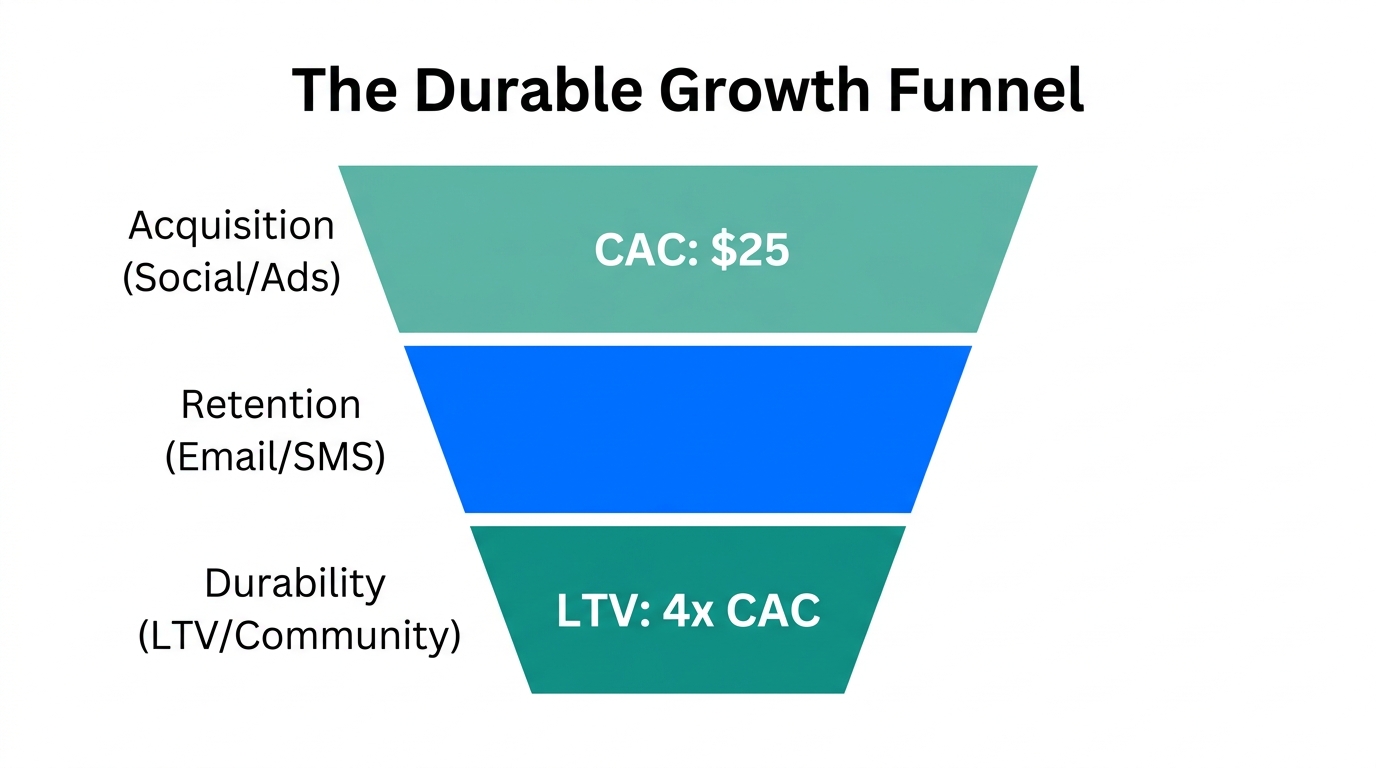
The founders who win in 2026 aren't the ones working the longest hours; they are the ones with the most judicious editing. By separating your tasks into 'Writing' (creation) and 'Editing' (oversight), you create space for the high-level intuition that builds legendary brands. You allow yourself the freedom to focus on the "language of beauty" in your product development while an AI ecommerce employee like Stormy AI handles the spreadsheet ops, supplier follow-ups, and marketing reporting in the background.
Stop trying to be the only person in the room. Embrace the role of the Senior Editor. Trust your intuition, model your domain durably, and use the AI tools available in 2026 to turn your Shopify store from a job into a durable, scaling asset. The future of commerce belongs to the founders who know when to put down the pen and pick up the red marker.