In the fast-paced retail landscape of 2026, the distance between a viral TikTok post and a sold-out notification has shrunk to mere minutes. For growth-focused brands, the biggest threat to scale is no longer customer acquisition, but operational paralysis caused by unpredictable demand. Influencer marketing has evolved into a high-velocity engine where a single mention can trigger an 11x increase in AI-driven orders overnight. To survive and thrive, modern merchants are moving away from reactive logistics toward an integrated ecommerce distribution strategy powered by predictive inventory AI and automated workflows.
The Influencer Paradox: Why Viral Success Often Leads to Operational Failure
The year 2026 has solidified a new reality for digital brands: 64% of shoppers now expect AI to assist with their purchases, and 78% of consumers demand hyper-personalized shopping experiences. However, when an influencer campaign succeeds too well, the resulting surge often breaks traditional supply chains. This is the influencer paradox—the better your marketing performs, the more likely you are to alienate customers through stockouts and shipping delays.
"The key to surviving the 2026 market isn't just finding creators; it's building a supply chain that can breathe with the rhythm of social media trends."Since the beginning of 2025, Shopify has reported a 7x rise in AI-originated traffic, proving that shoppers are increasingly using autonomous agents like ChatGPT and Claude to find and buy products. If your inventory is not physically positioned to meet this automated demand, you lose the sale to a competitor who is. Transitioning to an enterprise-grade automation mindset is no longer optional; it is the baseline for retention.
Harnessing Shopify Flow for Predictive Reordering: The Trigger-Condition-Action Framework
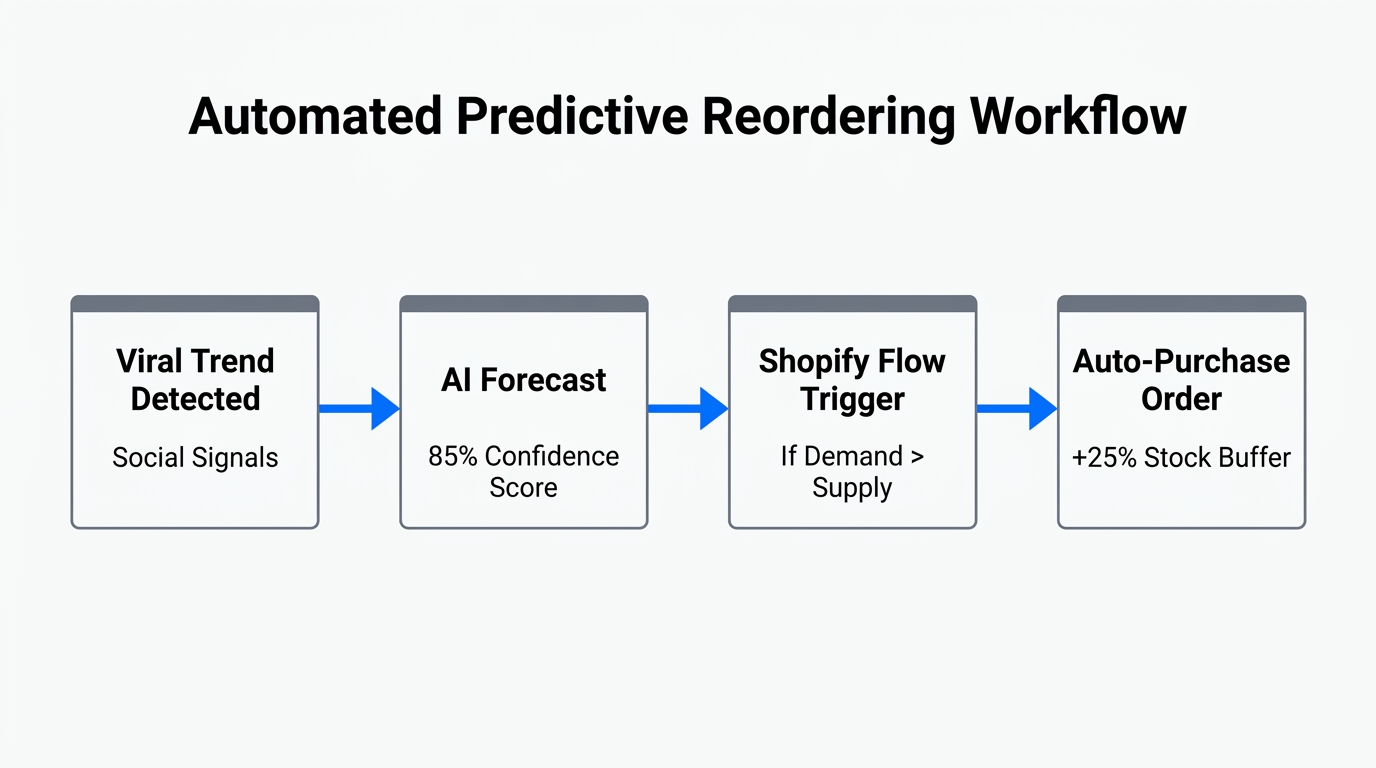
The foundation of a resilient 2026 tech stack is Shopify Flow. By using a Trigger-Condition-Action model, brands can automate the most critical part of their supply chain: the reorder point. Instead of waiting for a manual weekly review, merchants are setting up flows that monitor sales velocity in real-time.
Step 1: Set the Velocity Trigger
In 2026, we don't just track stock levels; we track the rate of change. Use a workflow tool like MESA or Shopify Flow to trigger an alert when a specific SKU's daily sales volume exceeds its 30-day average by more than 50%. This is often the first sign of a viral spike.
Step 2: Apply Predictive Conditions
Before firing off a purchase order, the AI analyzes the context. Is the spike coming from a one-off influencer post, or is it a sustained trend? By integrating social listening data from platforms like Brandwatch, the system can determine if the ai supply chain for influencers needs to be activated for a heavy restock or a tactical micro-fulfillment shift.
Step 3: Execute Automated Actions
Once the condition is met, Shopify Flow can automatically send a draft Purchase Order to your manufacturer or trigger a stock transfer between warehouses. Brands like Incu have used these types of automated restocking protocols to achieve a 300% year-over-year sales boost by ensuring high-demand fashion items never hit zero stock.
| Logistics Phase | Traditional Method (2023) | AI-Driven Method (2026) |
|---|---|---|
| Inventory Tracking | Weekly manual audits | Real-time velocity monitoring |
| Reordering | Reactive based on low stock | Predictive based on social trends |
| Shipping | Standard flat-rate zones | Hyper-local micro-fulfillment |
| Customer Support | Human-led "Where is my order?" | 93% AI agent resolution rate |
Predictive Inventory AI: Anticipating Trends Before They Hit the Feed
Tobi Lütke, CEO of Shopify, has long advocated for "Declarative Commerce." This means merchants define their goals—such as "reduce delivery time by 20%"—and let AI manage the execution. In 2026, this manifests as Predictive Inventory Allocation.
Instead of keeping all stock in one central hub, AI analyzes social media velocity, regional weather patterns, and historical data to decide where stock should live before the orders arrive. If a fitness creator in Los Angeles starts trending, the AI begins shifting predictive inventory ai units to West Coast fulfillment centers. This reduces the shipping distance, costs, and carbon footprint of every order.
"AI transforms the entire team into data scientists. By removing internal bottlenecks, we can react to market shifts in minutes rather than days." — Sean Frank, CEO of RidgeTo identify the specific creators who are most likely to drive these regional spikes, brands are turning to AI search engines. For example, using Stormy AI allows marketing teams to find creators with high engagement quality in specific geographic niches, providing the data points the supply chain needs to pre-allocate stock effectively. When you know a creator in Chicago is about to drop a video, your inventory should already be sitting in a Midwest hub.
Next-Day Delivery as a Baseline: SFN and Robotic Fulfillment
The consumer expectation for next-day delivery has become the standard in 2026. To meet this, the Shopify Fulfillment Network (SFN) has leaned heavily into collaborative robotics. The acquisition of 6 River Systems and their "Chuck" robots has revolutionized the warehouse floor. These robots work alongside humans to expedite picking and packing, significantly reducing the time from "order placed" to "out for delivery."
Integrating ShipBob AI fulfillment services allows even small-to-medium businesses to access this level of technology. ShipBob’s proprietary AI uses data from thousands of merchants to optimize picking routes and box selection, which can cut logistics costs by 5% to 20%. For brands managing high-volume influencer drops, this robotic efficiency is the difference between a successful launch and a week-long backlog.
Strategic Micro-Fulfillment: Localizing Stock for Hyper-Speed
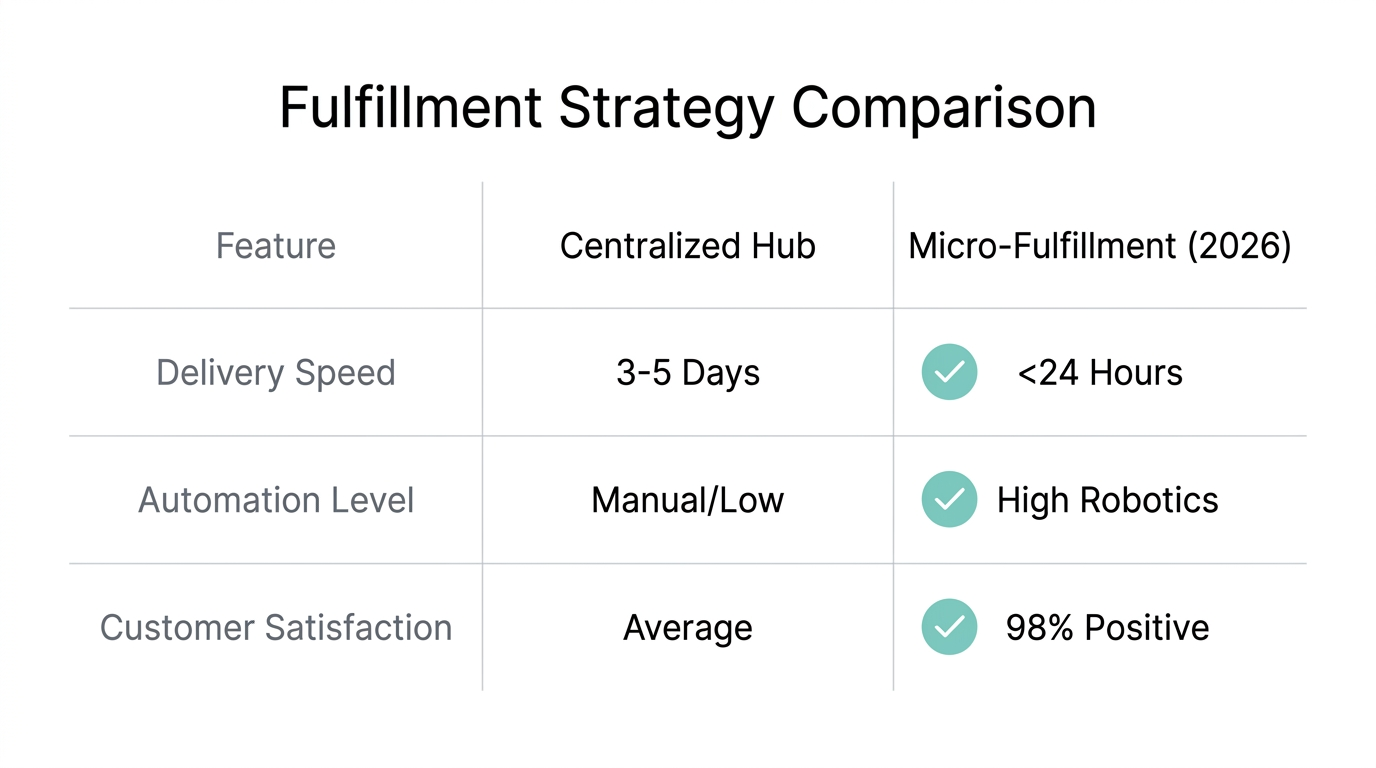
To maintain the next-day standard without ballooning costs, merchants are adopting a hyper-local micro-fulfillment strategy. By using tools like Order Fulfillment Guru, brands can set up smart routing rules that automatically assign orders to the warehouse or retail location nearest the customer.
This strategy is particularly effective for UGC-driven campaigns. If a mobile app developer uses UGC creators to drive app installs and physical merchandise sales, the demand is often concentrated in urban hubs. AI-powered platforms like Shipway can then allocate these orders to couriers that specialize in last-mile urban delivery, further reducing the shipping window.
"The ROI of AI in fulfillment comes from removing friction. Triage, routing, and inventory sync are the invisible engines of 2026 growth."Avoiding "Automated Friction": The Human-in-the-Loop Necessity
A common mistake in 2026 is "automating a broken process." If your manual fulfillment logic is flawed—such as inconsistent SKU naming or messy inventory records—AI will only produce bad results at scale. Before scaling with AI distribution, you must optimize your manual logic. This includes ensuring your data quality is pristine across all warehouses.
Furthermore, over-automation can alienate your most valuable customers. While AI agents can now resolve up to 93% of customer questions using tools like Gorgias and Zipchat AI, high-value or complex returns should still involve a human touch. Brands like Ridge have successfully automated 60% of their tickets, but they maintain a "human-in-the-loop" for sensitive issues to ensure brand loyalty remains high.
The 2026 Distribution Playbook: How to Implement Now
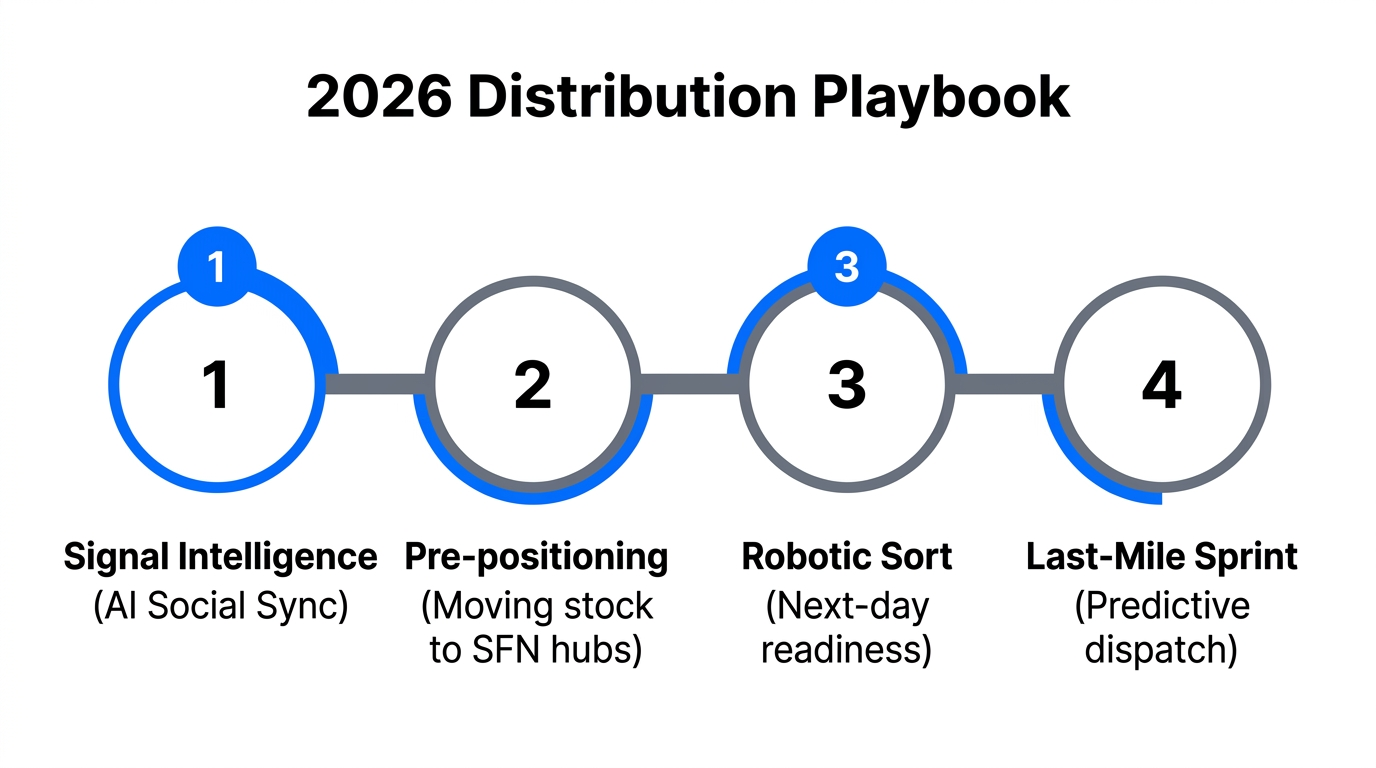
- Audit Your Data: Ensure all SKUs and inventory locations are synced in a single source of truth like Shopify. Messy data leads to AI "hallucinations" in order routing.
- Set Up Velocity Alerts: Use Make.com to connect your social media mentions to your inventory alerts. If mentions of a product spike by 200%, notify your logistics team immediately.
- Diversify Fulfillment: Don't rely on a single hub. Use a 3PL like ShipBob to distribute stock across 3-4 key regional centers based on your customer data.
- Automate Support: Deploy AI agents to handle the influx of "Where is my order?" queries that inevitably follow a viral spike, freeing your team for higher-level strategy.
- Monitor and Iterate: Use predictive inventory AI to review your performance every month. Brands have reduced surplus by 15% just by letting AI anticipate seasonal needs using platforms like Klaviyo for demand forecasting.
In conclusion, the brands that win in 2026 will be those that view their supply chain as a competitive advantage rather than a cost center. By combining the influencer discovery power of Stormy AI with the automated execution of Shopify Flow, you can turn viral demand from a logistics nightmare into a scalable growth engine. The future of commerce is declarative, automated, and hyper-local—start building yours today.