In the high-stakes world of ecommerce, 2026 has become the year of the 'autonomous store.' We are no longer in the era where a founder's value is measured by how many browser tabs they can keep open at 2:00 AM. Instead, the most successful brands on Shopify are those that have moved past the 'gushing neck wound' phase of manual operations. They’ve realized that while the front end of a store is about aesthetics, the back office is about survival. To scale, you have to stop being the mechanic and start being the architect. This shift is powered by Shopify back office automation and the rise of the AI ecommerce employee.
The 'Gushing Neck Wound' Philosophy: Identifying Critical Utility
Shopify’s CEO, Tobi Lütke, often references a visceral concept from Terry Matthews: the 'gushing neck wound.' In the context of Shopify store operations, this refers to the most critical, immediate utility needs that a merchant has. You don't come to a platform because it has a pretty API; you come because you have a problem that is bleeding revenue. In 2026, those wounds are usually inventory stockouts, shipping delays, and unmanaged customer inquiries. According to recent retail logistics data, stockouts alone cost merchants billions in lost potential GMV annually.
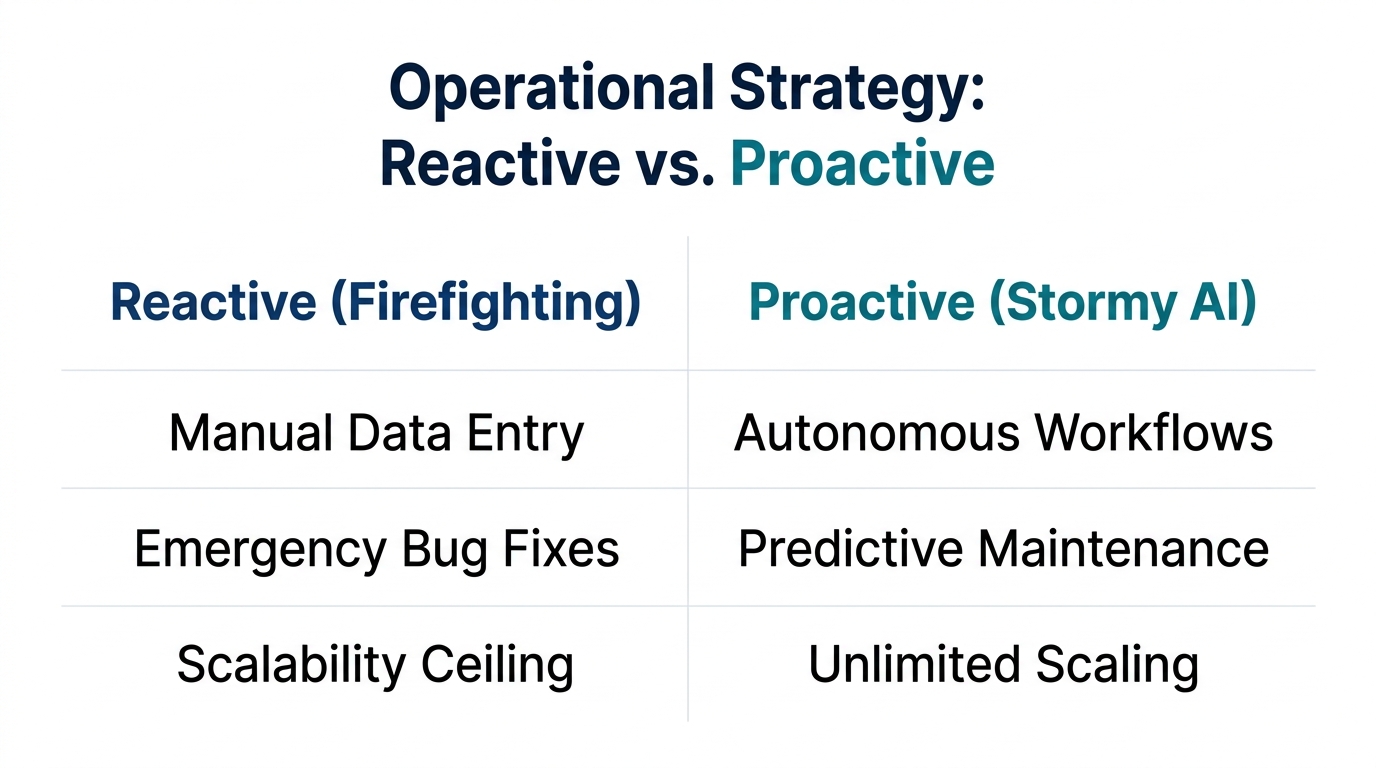
Most Shopify sellers spend 80% of their time on these 'neck wounds.' They are reactive, waiting for a customer to complain or a supplier to miss a deadline before they take action. However, an AI ecommerce employee like Stormy AI changes this dynamic. Instead of waiting for the wound to open, Stormy acts as an autonomous teammate that monitors your Shopify back office, flags stockout risks across Amazon Seller Central and TikTok Shop, and follows up with suppliers before a shipment is even late.
"People have a 'gushing neck wound.' They clearly need to stanch the flow and they do this... they come to Shopify. You come for the utility, you stay for the platform."
The 'Neo in the Matrix' Moment: Seeing the Problem as Code
Discover the 'penny drop' moment when product teams finally grasp complex system problems.
There is a specific point in a merchant's journey—what product leaders call the 'Neo in the Matrix' moment—where you stop seeing your store as a collection of individual tasks and start seeing it as a system of durable models. Suddenly, you realize that every order, every return, and every customer interaction is just data that can be manipulated and automated. This is when ecommerce workflow automation moves from a 'nice to have' to a core strategy involving Domain-Driven Design principles applied to retail.
When you reach this level of maturity, you stop 'checking' your Meta Ads Manager or Google Ads performance manually. Instead, you deploy a Shopify AI agent to pull those metrics into a shared Stormy AI workbook. You begin to understand that 'locations' aren't just physical warehouses; they are primitives that can hold metafields, events, and capabilities that determine your shipping logic and tax rates. By modeling your domain correctly, you can 'bend physics' and solve future problems before they arise.
| Operational Phase | Manual Approach (Reactive) | AI Agent Approach (Proactive) |
|---|---|---|
| Inventory | Wait for 'Low Stock' alert in admin | Stormy AI predicts stockout dates based on current velocity |
| Customer Support | Reply to every Gorgias ticket manually | AI drafts on-brand replies and handles refund routing |
| Marketing Ops | Check ROAS daily in three different tabs | AI summarizes TACOS across Meta, Google, and TikTok daily |
| Supplier Management | Email suppliers when a shipment is overdue | AI sends polite follow-ups based on lead-time reminders |
Automating the 'Contract' Logic: Upsells and Subscriptions
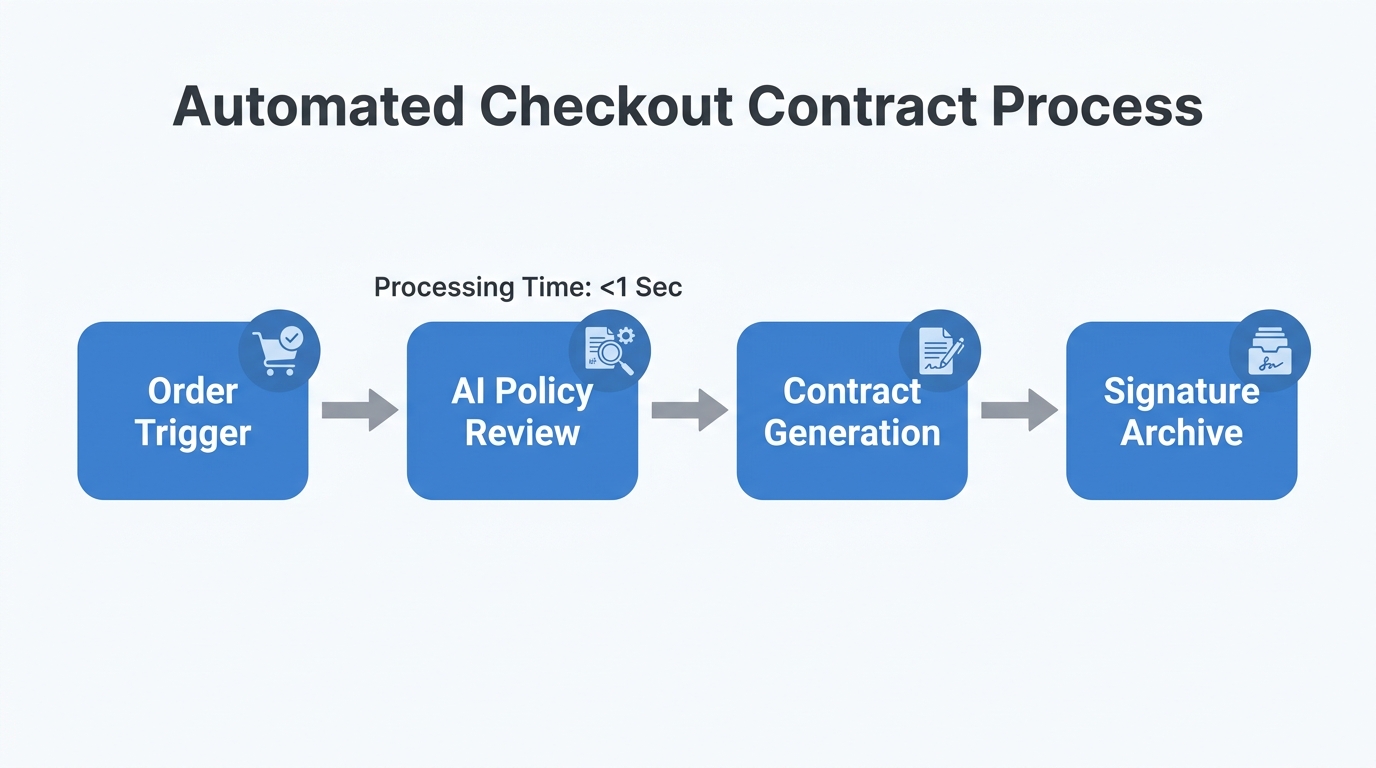
In 2026, the Shopify checkout is no longer a static page; it is a firmly modeled contract between the buyer and the merchant. This contract governs complex interactions like automated checkout extensions, upsells, and subscriptions. The challenge for modern merchants is managing the 'logic' behind these contracts without writing custom code every time a new promo launches.
Using tools like Shopify Functions, merchants can now model discounts and shipping rules that were previously impossible. However, the 'busy work' of managing these extensions—ensuring the prices are correct, tracking the conversion lift, and updating the logic—is exactly where an AI ecommerce employee thrives. Stormy AI can monitor your checkout performance and flag if a specific upsell extension is causing cart abandonment, effectively acting as an automated editor for your sales funnel.
"Checkout is that contract happening a million times over. By modeling it more firmly... you can solve not just the problem now, but actually in the future."
Case Study: The $10M Solopreneur in 2026
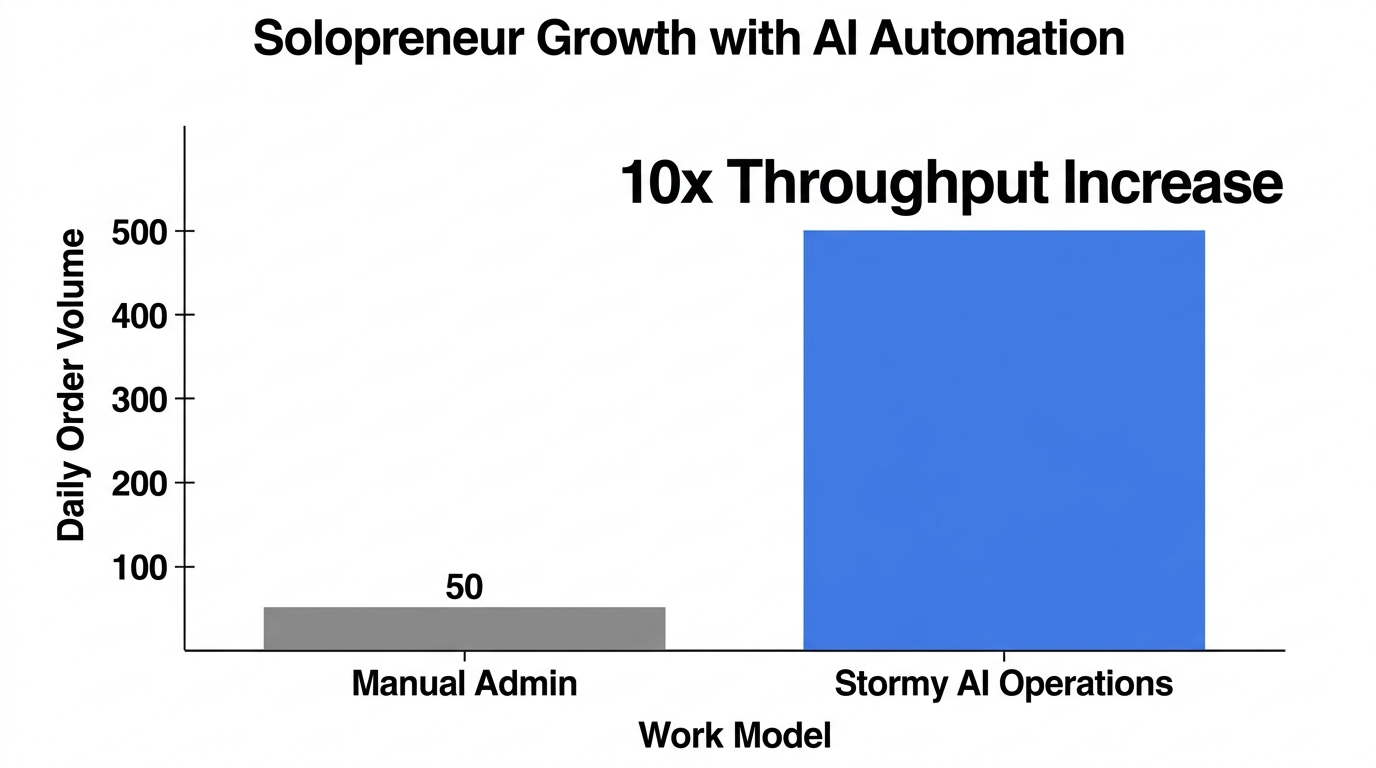
Consider the story of a one-person Shopify brand specializing in high-end home goods. In previous years, reaching $10M in GMV would require a team of five: a customer support lead, an operations manager, a media buyer, a creator coordinator, and a bookkeeper. Today, this founder uses Shopify back office automation to run the entire operation solo.
The Stack:
- Front End: Shopify Plus with headless Hydrogen components.
- Operations: Stormy AI acting as the back-office manager.
- Support: Gorgias integrated with Stormy for ticket triage.
- Marketing: TikTok Ads and Klaviyo for automated retention.
Instead of manually sourcing influencers, the founder uses Stormy AI to discover creators across TikTok and Instagram with natural-language searches. Stormy then drafts personalized outreach, tracks the affiliate posts, and manages the creator CRM in a dynamic spreadsheet. When an ad on Meta drops below a 2.0 ROAS, Stormy flags it in the weekly performance report, allowing the founder to spend their time on creative strategy rather than data entry. This is the ultimate example of Shopify store operations being 'solved' by AI.
Why Developer Ergonomics Matter for Store Owners
Learn why high-quality developer tooling is essential for fostering a healthy software ecosystem.Even if you aren't writing the code yourself, the developer ergonomics of the apps you choose will determine how well your store can be automated. Apps that use standard Shopify metafields and metaobjects are 'AI-friendly.' They allow a Shopify AI agent like Stormy AI to read and write data across your tech stack without custom integrations.
Tobi Lütke emphasizes that we 'communicate through code.' If an app has messy APIs or non-standard data structures, it creates 'busy work' for the entire ecosystem. When choosing your stack, prioritize tools that 'play well' with others. This ensures that when you want to automate a new workflow—like syncing Stripe payouts with your Shopify P&L—the AI can navigate the system as if it were 'all code.'
"The net amount of busy work we are pumping into the ecosystem... will come back at us in the absence of killer applications that never got developed because someone just walked away."
The New Workflow: AI as the Writer, You as the Editor
Explore the symbiotic relationship between editors and writers in the product development process.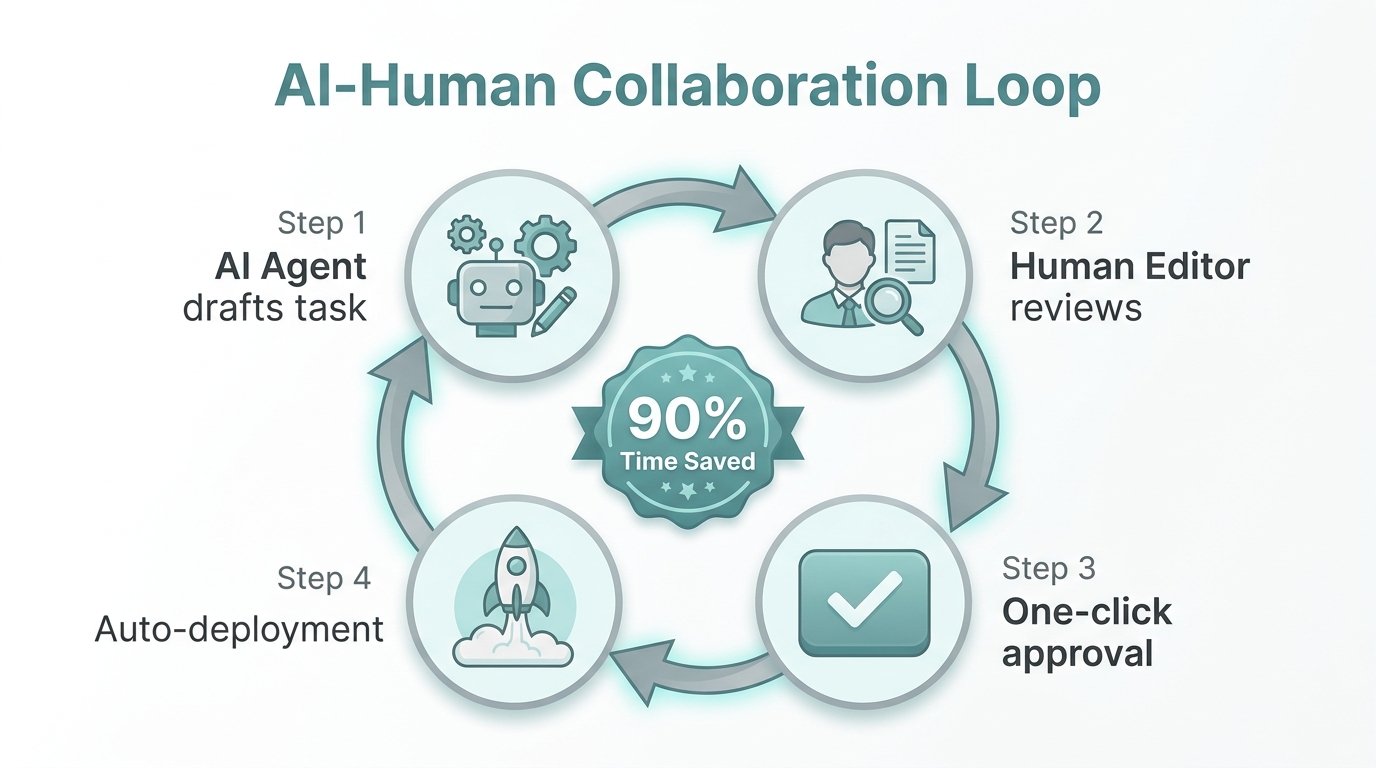
Operating a Shopify store in 2026 requires a shift in mindset: building a product requires both editors and writers. In the past, the merchant had to be both. They had to 'write' the emails, 'write' the ad copy, and 'write' the logistics plans. Today, ecommerce workflow automation allows the AI to be the 'writer'—handling the first drafts of support replies, creator outreach, and performance reports.
Your role as the merchant is to be the 'editor.' You provide the intuition and the courage to make the final call. When Stormy AI suggests a budget move based on Google Ads performance, you are the one who understands the brand's long-term vision and gives the final approval. This partnership allows you to 'speedrun' your decision-making and scale your brand to heights that were previously impossible for a small team.
Conclusion: Moving from Reactive to Proactive
The brands that will dominate Shopify in the latter half of this decade are those that recognize that manual labor is a 'gushing neck wound.' By embracing Shopify back office automation, you move beyond the daily toil of 'checking boxes' and start building a durable commerce engine.
Whether it's managing complex automated checkout extensions or using a Shopify AI agent to run your creator CRM, the goal is the same: to reach that 'Matrix moment' where your business is a set of optimized, autonomous workflows. Don't wait for the next operational crisis to start automating. Hire an AI employee like Stormy AI today and start building for the future of commerce.