In 2026, the definition of a "lifestyle business" has fundamentally shifted. We no longer talk about four-hour workweeks; we talk about ambient ecommerce businesses—operations that run in the background of your life with zero daily human input. According to Shopify CTO Mikhail Parakhin, the "top 10 percentile" of merchants are now outgrowing their peers by treating AI not as a tool, but as a core infrastructure. The era of the "One Hour Company Stack" is here, where a founder can vibe-code an entire brand's logic in the morning and have an AI ecommerce employee like Stormy AI managing the back office by lunch.
The Rise of Ambient Ecommerce and the Tokenmaxxing Era
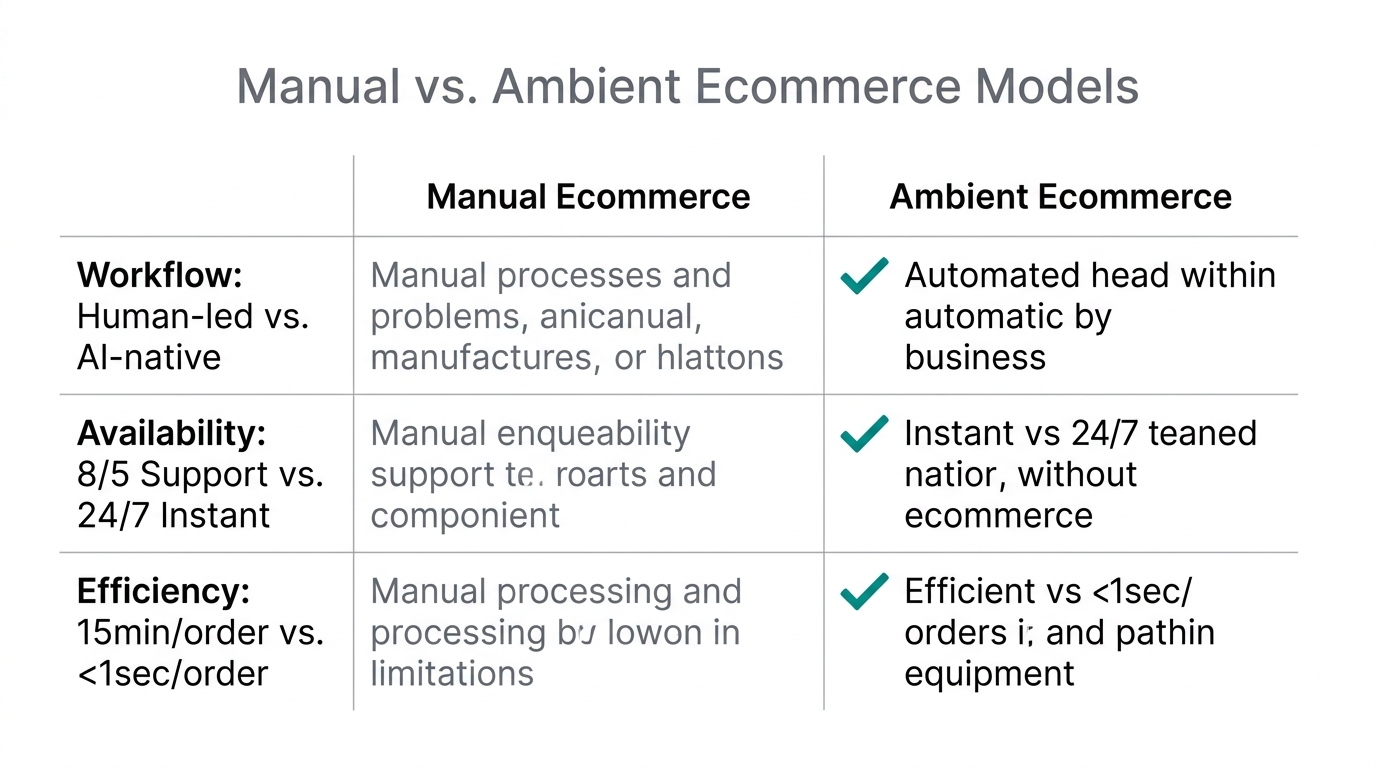
The global AI in ecommerce market has skyrocketed to $10.5 billion in 2026, a massive leap from the foundational years of 2024 and 2025 (Elogic). But the real story isn't just the market size; it's the shift to "Tokenmaxxing." This is the practice of applying unlimited AI reasoning (using GPT-5 or Claude 4.5 class models) to complex business workflows rather than just simple text generation.
An ambient business monitors markets, identifies inventory gaps, and executes ad iterations autonomously. It doesn't wait for a human to log in and click "approve." Instead, it uses high-level reasoning to bridge the gap between your Shopify store, TikTok Shop, and Amazon Ads accounts. This is where Stormy AI excels—it acts as the autonomous teammate that can use a browser, manage a spreadsheet, and follow up with suppliers while you focus on high-level strategy.
"In 2026, the arrow of progress points toward businesses that run themselves. The agent economy means agents are now hiring other agents to solve problems before the founder even knows they exist."
The 90-Day Shopify Automation Playbook
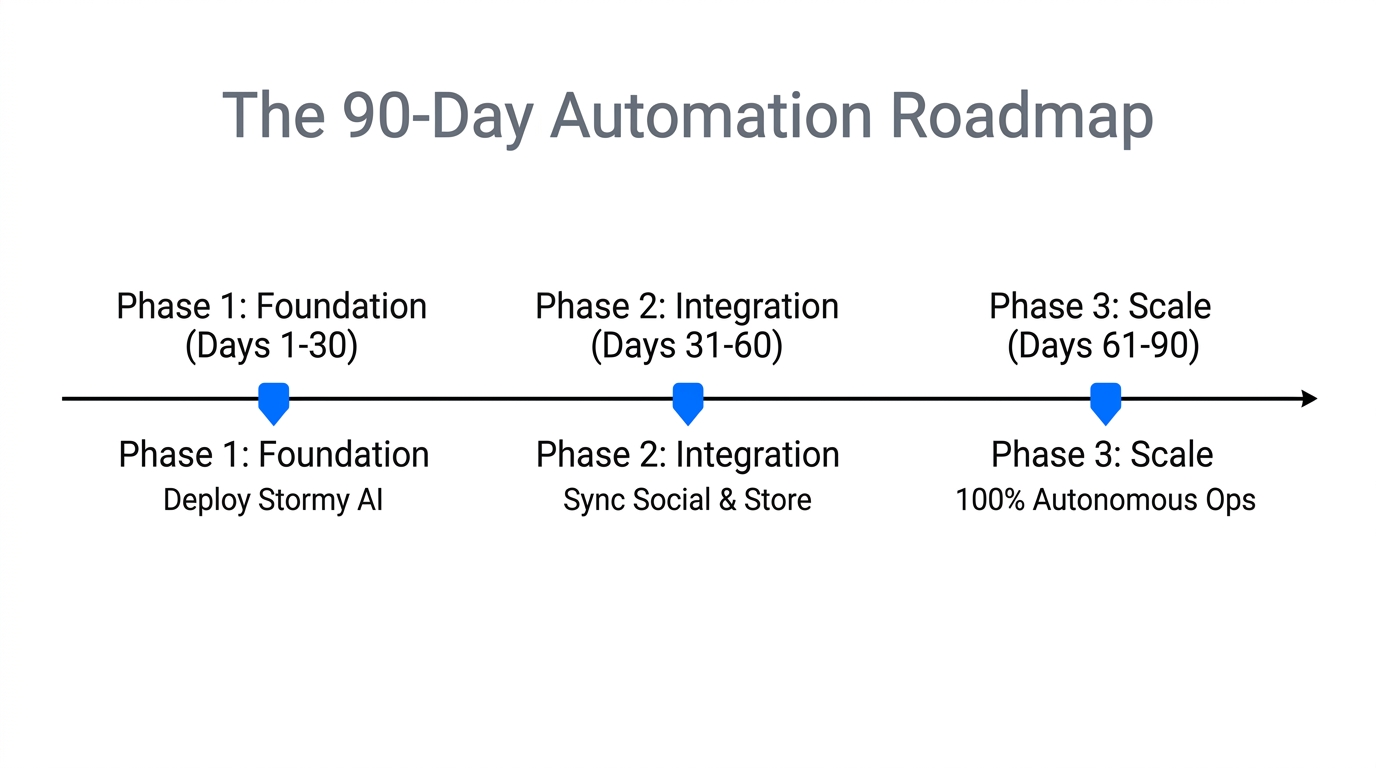
Building an autonomous Shopify store isn't an overnight task. It requires a methodical transition from manual labor to agentic commerce. Following the practitioner playbook used by leading DTC brands, you should structure your rollout into three distinct phases.
Phase 1: Days 1–15 – Identifying High-Volume Workflows
The first step is identifying the bottlenecks. For most stores, this is customer support and returns. You should deploy conversational AI like Tidio Lyro or Gorgias to handle the bulk of your multi-channel inquiries. Modern AI agents now resolve 60–67% of tickets autonomously, slashing support costs by half (Gorgias).
Phase 2: Days 16–45 – Integrating AI Rules and Thresholds
Once the support front-end is automated, move to the back office. This is where you connect your Shopify back office automation to your inventory and finance stack. Use Luca AI as your "AI Co-Founder" to unify data across Meta Ads Manager and Stripe. During this phase, Stormy AI begins monitoring your SKU performance, flagging listing issues, and keeping your master operations spreadsheet updated without you lifting a finger.
Phase 3: Days 46–90 – Predictive Intelligence Layering
The final phase involves Tokenmaxxing your supply chain. You layer in predictive intelligence tools like Prediko to forecast stockouts. In 2026, predictive AI even allows for "Zero-Click Buying," where consumables are shipped to customers based on historical usage patterns before they even click the buy button.
| Tool Category | 2026 Market Leader | Primary Benefit |
|---|---|---|
| Unified Ops | Stormy AI | Runs the messy back office, follows up with suppliers, and manages sheets. |
| Finance/Analytics | Luca AI | Replaces manual reporting and provides a unified "single source of truth." |
| Inventory | Prediko | AI-powered restocking alerts and predictive supply chain modeling. |
| Creative/Ads | Photoroom | Reduces photo editing costs to near zero using batch AI processing. |
Case Study: How Doe Beauty Saved $30,000 Per Week
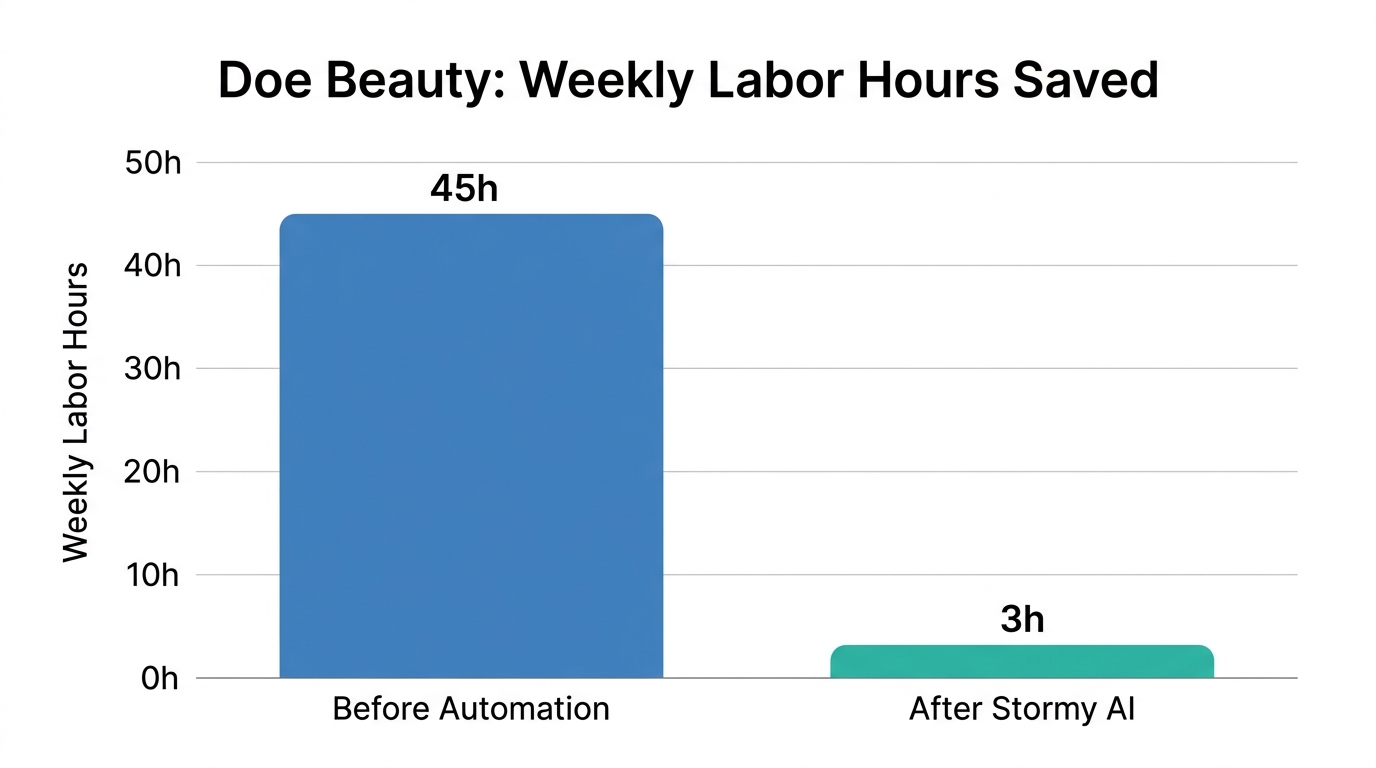
One of the most cited examples of Shopify back office automation is Doe Beauty. By utilizing Shopify Flow + AI, they automated their global supply chain management. This didn't just save them four hours of manual labor per day; it resulted in a $30,000 per week reduction in operational costs (Shopify).
Doe Beauty's success highlights the importance of decoupling growth from headcount. While their revenue scaled, their need for a large back-office team didn't. They let AI handle the "boring" tasks—checking inventory levels, updating order statuses, and communicating with manufacturers—allowing the founders to focus on brand building and product innovation.
"The secret to $30k/week savings wasn't a fancy new marketing tactic; it was automating the 500 tiny decisions that happen in the warehouse and the inbox every single day."
Bridging the Gap: Shopify, TikTok Shop, and Amazon
The biggest challenge for DTC brands in 2026 is "Tool Chaos"—having 10+ disconnected apps that create data silos (Luca AI). This is where an AI ecommerce employee becomes indispensable.
Stormy AI acts as the glue. It can:
- Monitor Marketplaces: Check for suppressed listings on Amazon Seller Central or broken variants on TikTok Shop.
- Execute Ad Iterations: Pull campaign performance from Google Ads and TikTok Ads Manager, then drop a weekly ROAS report into your shared workbook.
- Follow-up via Email: Read inbound threads from suppliers and draft polite follow-ups if a shipment is late, linking every conversation back to your operational spreadsheet.
AEO: The New SEO for 2026
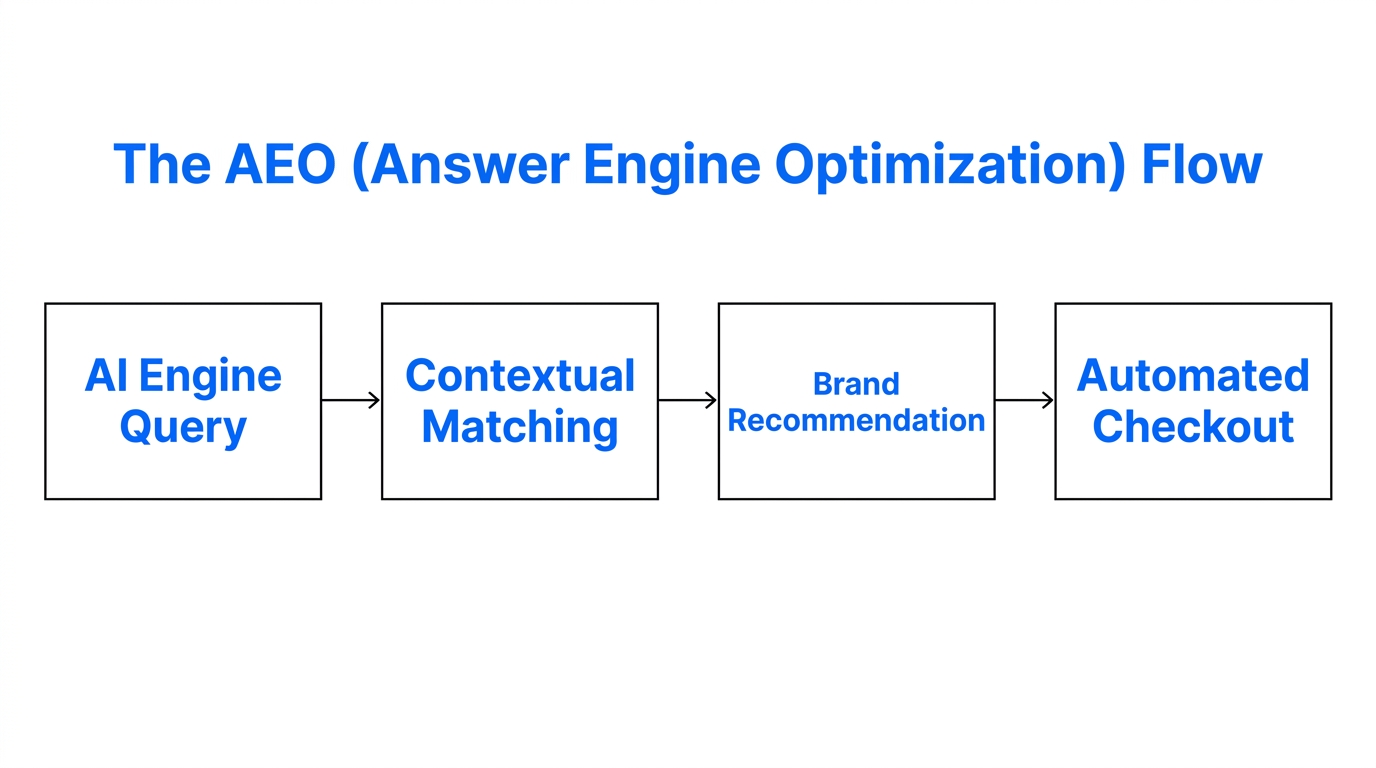
Search Engine Optimization is dead; long live Answer Engine Optimization (AEO). Traffic to US retail sites from generative AI sources grew 4,700% year-over-year by the end of 2025 (Triple Whale). If your store isn't optimized for AI agents to "read" and "recommend," you are invisible to the modern consumer.
To prepare for an autonomous Shopify store future, you must transition from keyword-stuffing to Schema-rich metadata. AI agents favor products described by contextual use cases (e.g., "waterproof bag for 15-inch laptop commuting") rather than just a list of features. Brands are now even tracking "Perception Drift"—monitoring how AI models' descriptions of their brand change over time relative to their actual marketing.
"In 2026, your best customer isn't a human with a credit card; it's an AI agent with a budget and a mission to find the best product for its user."
Managing the Risks: AI Hallucinations and Legal Compliance
With great automation comes great liability. The FTC has begun aggressively fining brands for overstating AI capabilities or using "AI-powered" widgets that fail ADA compliance standards (FTC). Furthermore, "Zombie Privacy" risks—where AI chatbots record sessions without explicit prior consent—have led to high-profile wiretap lawsuits (JDSupra).
To mitigate this, you must treat your AI employees with the same rigor as human ones. Set approval thresholds for refunds and large budget moves. Stormy AI is designed with this "Human-in-the-loop" philosophy, flagging high-risk decisions for your review while handling the mundane repetitive tasks autonomously.
The Future is Ambient
The transition to an ambient ecommerce business is no longer optional for founders who want to remain competitive in 2026. By layering the One Hour Company Stack with an AI ecommerce employee like Stormy AI, you can scale to seven or eight figures while maintaining a lean, agile team.
Start with the 30-day conversion sprint: rewrite your top 20 product descriptions for AI agents, deploy Photoroom for bulk asset generation, and connect Stormy AI to your Shopify back office to begin monitoring your operations. The goal isn't just to work less; it's to build a business that is smarter, faster, and more resilient than any human-only operation could ever be.
Are you ready to let your store run itself? Explore how Stormy AI can become your first AI employee today.