In 2026, the digital advertising landscape has undergone its most radical transformation yet. Global ad spend has finally surpassed the $1 trillion mark, with digital investment claiming a massive 68.7% share according to Dentsu. For Shopify founders, however, this milestone is bittersweet. While there is more opportunity than ever, the total deprecation of third-party cookies has turned once-reliable tracking into a black box. Success this year isn't about who has the biggest budget; it's about who has the cleanest data. To survive the "Algorithmic Era," brands must move away from browser-based hacks and toward a robust first-party data marketing 2026 infrastructure. This playbook explores how to integrate wetracked.io and Shopify Audiences to regain control over your attribution and scale profitably.
The Death of Third-Party Tracking and the Rise of First-Party Data
By 2026, the shift from AI automation to "AI Elevation" has become complete. We are now in a world where "Agentic AI" performs end-to-end workflows like budget reallocation and creative testing without human prompts, as noted by the Digital Marketing Institute. But an AI agent is only as good as the data it feeds on. If your tracking is broken, your AI is essentially flying blind, optimized for the wrong signals.
With mobile-first traffic now accounting for 79% of all Shopify store visits, the precision of mobile tracking has become the ultimate competitive advantage. Yet, brands are still seeing a significant conversion gap: mobile conversion rates currently average 1.2% compared to 1.4% for desktop, according to TechnologyChecker. This gap is often a tracking failure, not a user behavior failure. Relying on pixels that are easily blocked by modern browsers is no longer a viable strategy for Shopify attribution tools in the current market.
"The total deprecation of third-party cookies has made Meta Conversions API (CAPI) and Google Enhanced Conversions mandatory, not optional, for any brand spending over $10k per month."
Why wetracked.io and Server-Side Tracking is Mandatory
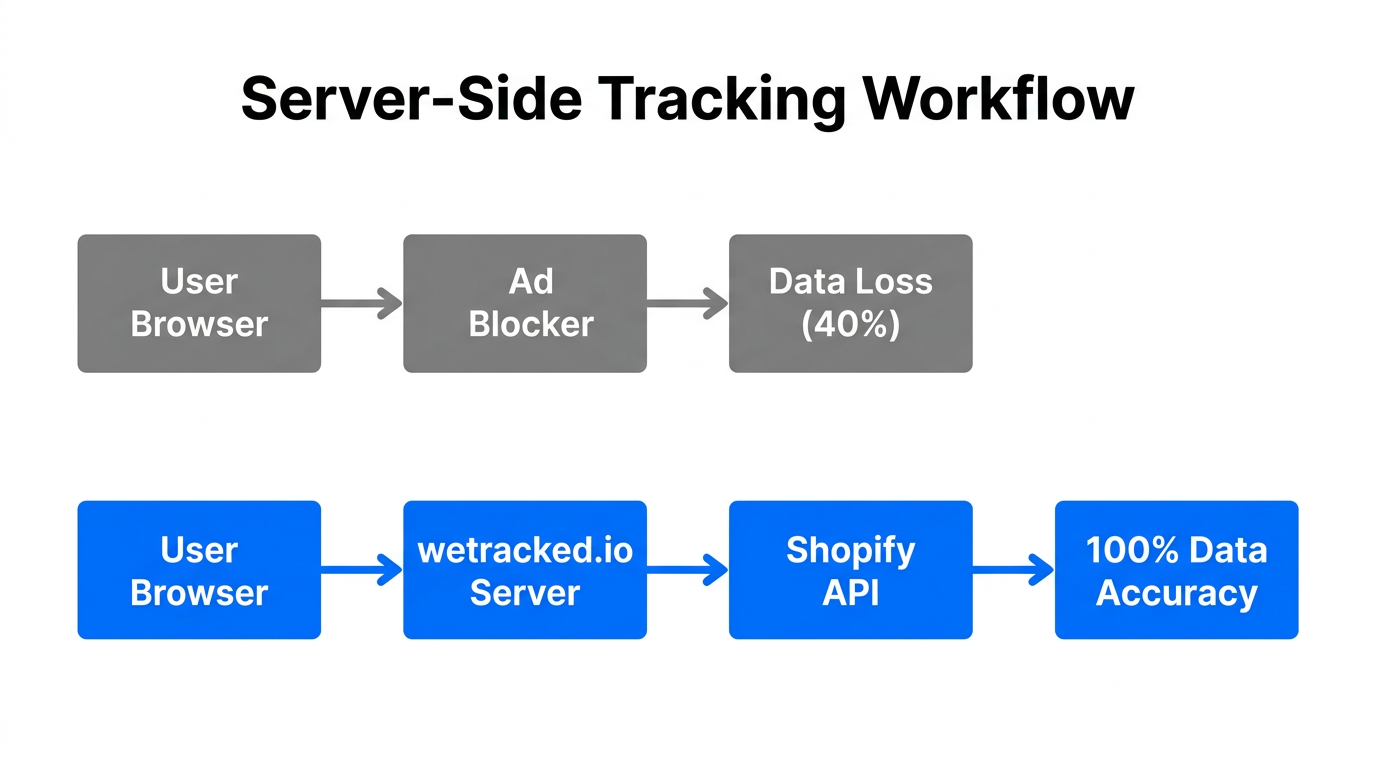
Traditional browser-based tracking is dead. Ad blockers, privacy settings, and the general unreliability of client-side scripts mean you are likely losing 20-40% of your conversion data. This is where wetracked.io becomes essential. By implementing server-side tracking Shopify, you are capturing backend revenue data directly from your Shopify server and sending it to your ad platforms.
When you use wetracked.io, you are bypassing the browser's limitations. This allows Meta Ads Manager and Google Ads to optimize based on real sales rather than partial, pixel-based signals. This is critical because programmatic buying now captures between 83–87% of all digital ad dollars, according to reports found on SEOLHR. If your programmatic bids are based on incomplete data, you are overpaying for customers you’ve already acquired or missing out on high-value prospects entirely.
Implementation of Meta CAPI and Google Enhanced Conversions
The technical setup involves more than just a plugin. Using Analyzify or similar GTM-based integrations, you should ensure that every purchase triggers a server-side event with high-match parameters (email, phone, city). Tools like Cropink highlight that these first-party identifiers are the only way to maintain attribution accuracy in a cookie-less landscape. Structural Speed—the reliability of real-time data flow—is the new competitive advantage, as emphasized by expert Neil Kettleborough.
Leveraging Shopify Audiences to Find High-Intent Buyers
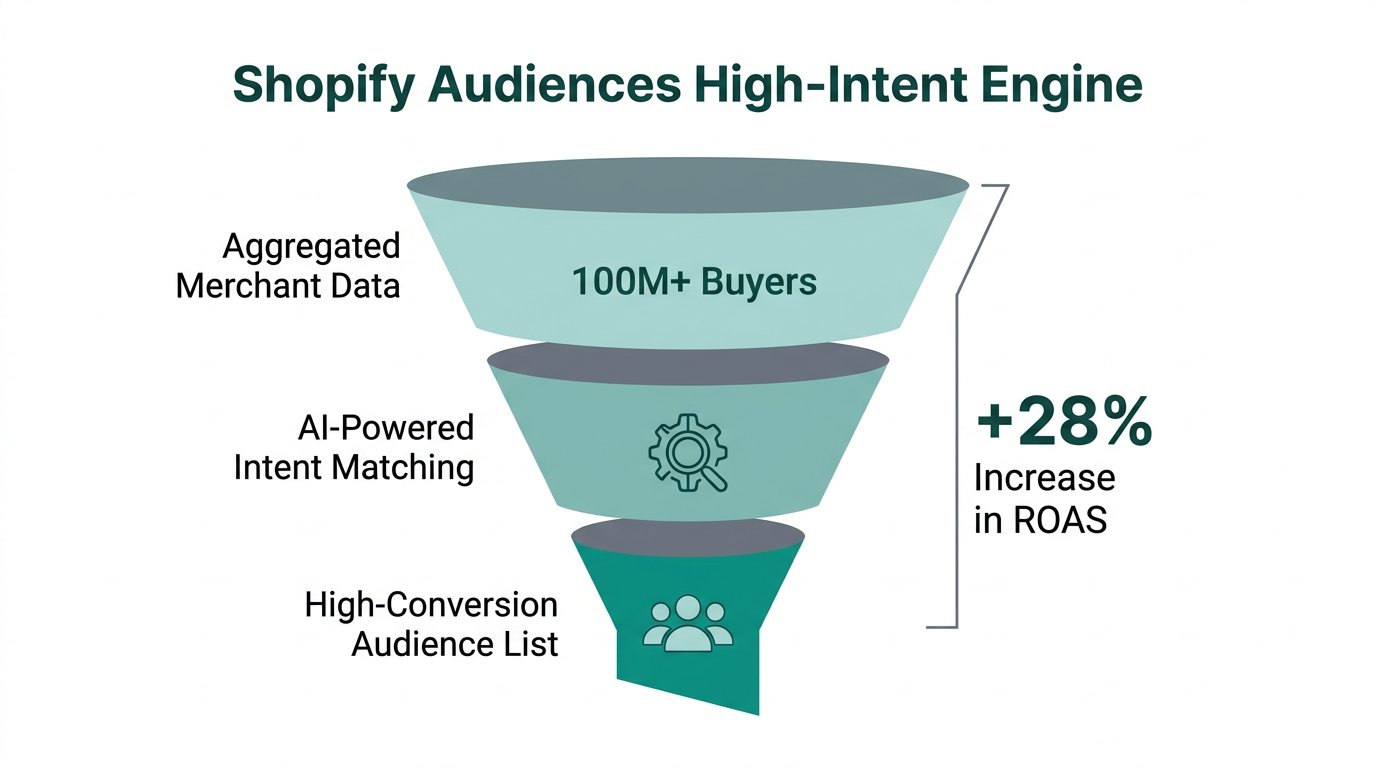
If wetracked.io is the "receiver" of data, Shopify Audiences is the "transmitter." In 2026, Shopify has leveraged its massive proprietary data set to create a walled garden that rivals Meta and Google. By using Shopify Audiences, you are accessing lists of high-intent buyers based on actual purchase behavior across the entire Shopify ecosystem.
This is particularly effective for bypassing platform tracking limitations. When you export these custom audience segments to TikTok Ads Manager or Meta, you aren't relying on their pixels to find "people interested in fitness." You are targeting "people who have bought fitness products in the last 30 days." With TikTok adoption peaking at nearly 30% among high-traffic Shopify stores according to StoreCensus, these high-intent segments are the fuel for modern social commerce.
| Feature | Traditional Tracking | wetracked.io + Shopify Audiences |
|---|---|---|
| Data Source | Browser-based Pixel | Server-side + Purchase History |
| Accuracy | 60-80% (blocked by iOS/Browsers) | 99% (Direct from Shopify API) |
| Optimization | Estimated Conversions | Actual Backend Revenue |
| Targeting | Interest-based (Inferred) | Intent-based (Actual Behavior) |
The 2026 Analytics Stack: Triple Whale and Northbeam
Once your first-party data is flowing, you need a way to interpret it. Modern Shopify founders are moving away from the single-source-of-truth myth and toward a multi-model attribution approach. This is where Triple Whale and Northbeam come into play.
One of the biggest mistakes in 2026 is ignoring "View-Through" conversions. Data from Layerfive suggests that up to 95% of ad impact happens when users see but don't click ads. If you rely solely on "Last Click" attribution, you will likely cut profitable top-of-funnel budgets that are driving future sales. A famous case study involving Travelpro showed that 20% of their purchases were influenced by PR channels like NYT Wirecutter—a signal they only caught after implementing advanced attribution models.
"2026 is about building balanced channel mixes and reallocating spend based on real performance signals instead of habit." — Mia Healy, Triple Whale.
To maximize this stack, integrate tools like Cometly or Aimerce.ai to get granular visual data on customer journeys. When you combine the server-side precision of wetracked.io with the machine learning insights of Northbeam, you create a feedback loop that allows your AI bidding agents to operate with surgical precision.
Bridging the Gap: UGC and Influencer Attribution
As retail media evolves into "Commerce Media" (focused on curated marketplaces according to the WFA), the role of creators has never been more vital. However, creators are notoriously difficult to track via traditional pixels. In 2026, brands are using first-party data to better understand the "creator lift"—the indirect increase in branded search and base-level sales following an influencer campaign.
For brands sourcing UGC to fuel their Advantage+ or Performance Max campaigns, managing these relationships requires specialized tools. Platforms like Stormy AI streamline creator sourcing and outreach, allowing you to find influencers who fit your niche and then track their performance through the same first-party lens you use for your paid ads.
Common Pitfalls: App Bloat and Branded Cannibalization
While building your tech stack, it is easy to fall into the trap of "App Bloat." Installing too many single-use Shopify apps slows down your store's Core Web Vitals. In 2026, Google uses these vitals as a direct ranking factor for ad quality scores. According to Ingenious Netsoft, a page load time over 3 seconds increases bounce probability by 90%. Use high-performance themes from providers like Halothemes to ensure your site remains lightning-fast even with robust tracking scripts.
Another critical error is branded traffic cannibalization. Allowing Performance Max (PMax) or broad match Search campaigns to bid on your own brand name without exclusions can inflate your ROAS while resulting in zero incremental growth. Experts at Stan Consulting recommend running a high-priority "Standard Shopping" campaign for your top 20 margin products alongside PMax to maintain control and visibility.
The 2026 Implementation Playbook
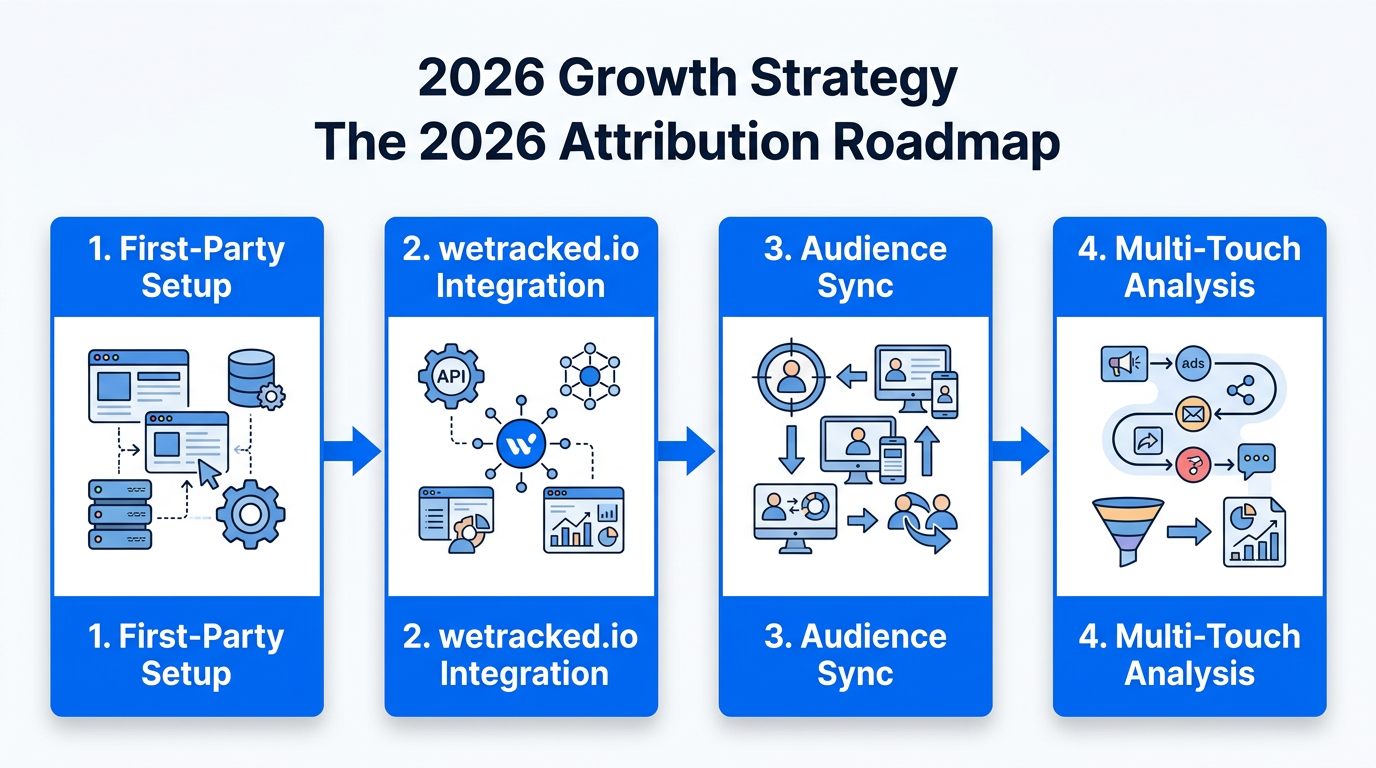
To future-proof your Shopify store today, follow these sequential steps to build your first-party data fortress:
- Audit Your Tracking: Use a tool like wetracked.io to compare your Shopify backend orders against your Meta/Google dashboard. Identify the percentage of "missing" data.
- Implement Server-Side CAPI: Set up the Meta Conversions API and Google Enhanced Conversions via wetracked.io to ensure 99% data parity.
- Activate Shopify Audiences: Sync your purchase data to create high-intent seed audiences for your prospecting campaigns.
- Establish a Multi-Touch Model: Use Triple Whale or Northbeam to view your "Total Impact" ROAS, accounting for view-through and influencer-driven lift.
- Optimize Creative Cycles: Use AI to generate and iterate creative weekly. Brands doing this see CAC drops of up to 27% according to If This Then Data.
- Retention focus: Use Klaviyo for AI-driven retention and ReConvert for post-purchase upsells to maximize the LTV of the data you've captured.
Conclusion: The First-Party Future
As we navigate 2026, the brands that win will be those that treat their data as their most valuable asset. By solving attribution through wetracked.io and leveraging the proprietary power of Shopify Audiences, you aren't just tracking sales—you're building a resilient marketing engine that can withstand any privacy shift. Stop relying on the browser and start owning your backend signal. Whether you are scaling through Meta Ads, TikTok creators found on Stormy AI, or automated PMax campaigns, the foundation remains the same: first-party data is the only truth that matters in the trillion-dollar ad economy.