Strategy-First Growth: Scaling Your Shopify App GTM with Claude Code in 2026
Master your Shopify GTM strategy 2026. Learn how to use Claude Code and Vibe Coding to accelerate merchant acquisition and scale Shopify app growth effectively.
In the rapidly evolving digital landscape of 2026, the barrier to entry for software development has essentially dissolved. As of March 2026, the Shopify App Store hosts over 17,213 apps, representing a staggering 49% increase year-over-year according to recent marketplace research. For app developers and growth managers, this saturation means that technical execution is no longer the primary differentiator. Success now hinges on a Strategy-First GTM (Go-To-Market) approach that prioritizes merchant psychology and user-flow validation over raw code output.
By leveraging autonomous agents like Claude Code, teams are reversing traditional development cycles to focus on what actually drives merchant acquisition on Shopify: solving high-value problems with surgical precision. This guide outlines the 2026 playbook for scaling your Shopify app growth using the latest AI-driven methodologies.
The Strategy-First Validation: Reversing the 70/30 Cycle
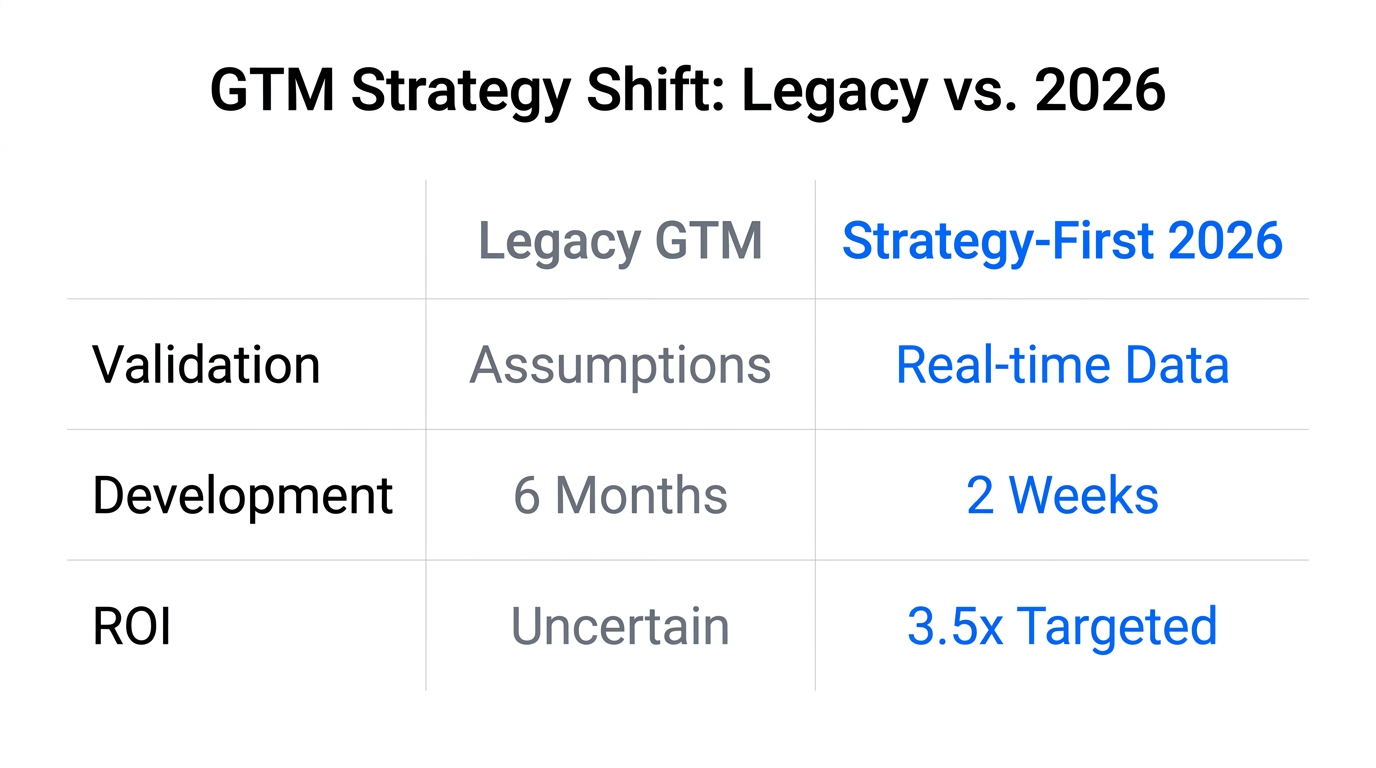
In previous years, engineering teams spent 70% of their time on execution and only 30% on strategy. In 2026, this ratio has flipped. Because 95% of developers now use AI tools weekly—and over half manage their entire engineering workload through agents like Claude Code—the speed of building is nearly instantaneous. According to DesignRush, the dominant growth trend this year is "Strategy-First Validation," where developers spend 70% of their time mapping user flows and validating market demand before a single line of production code is written.
This shift is driven by the fact that 87% of Shopify merchants use at least one app, but they are increasingly discerning. They don't want more features; they want intuitive workflows that save them time. Using Claude Code allows you to rapidly prototype these workflows, shifting the focus from "How do we build this?" to "Is this worth building?"
"The 2026 growth winner isn't the fastest coder, but the strategist who uses AI to validate ten high-level 'vibes' before committing to a single architecture."
'Vibe Coding' with Claude Code: Prioritizing Merchant Experience
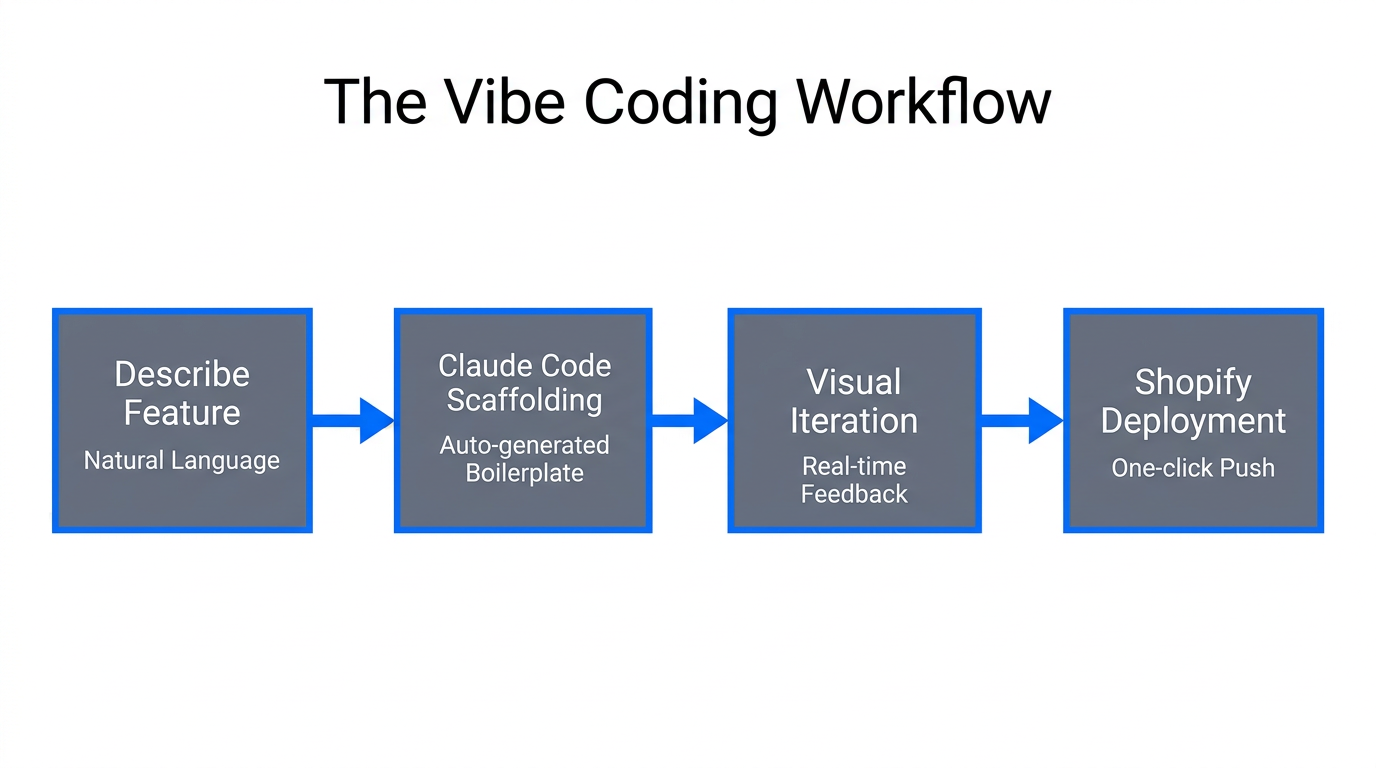
The term 'Vibe Coding' has transitioned from a niche developer meme to a legitimate GTM strategy in 2026. It describes a workflow where developers provide high-level logic and aesthetic goals, while terminal-native agents like Claude Code handle the heavy lifting of Shopify CLI integrations and boilerplate. This allows growth managers to iterate on the "vibe"—the user interface and emotional response of the merchant—without getting bogged down in GraphQL fragments.
The Action AI Workflow
Unlike the "Chat AI" era of 2024, Claude Code functions as an "Action AI." It doesn't just suggest code; it executes terminal commands, manages Git commits, and edits files autonomously. This is critical for Shopify App Store optimization because it allows for real-time adjustments to SEO-critical elements like app listing descriptions and embedded UI components.
| Feature | Traditional Development (2024) | AI-Native GTM (2026) |
|---|---|---|
| Prototyping Speed | Weeks | Hours |
| Focus Area | Syntax & Debugging | User Flow & Conversion |
| Iteration Cycle | Manual PR Reviews | Autonomous Agent Pull Requests |
| Data Integration | Bespoke API Glue Code | Model Context Protocol (MCP) |
To implement this, experts recommend a Hybrid Tooling approach. Use Cursor or WaveSpeed AI for real-time UI/UX edits while delegating complex refactors and documentation to Claude Code. This ensures that the "aesthetic vibe" remains polished while the technical foundation remains robust.
Leveraging the Model Context Protocol (MCP) for Live Data
The most significant technical leap in 2026 is the Model Context Protocol (MCP). Often described as the "USB-C for AI," MCP allows Claude to connect securely to live Shopify data—orders, inventory, and product attributes—without custom middleware. For your Shopify GTM strategy 2026, this means your app can offer hyper-personalized marketing features out of the box.
"MCP is the bridge that finally allows AI agents to 'see' the store's reality in real-time, turning generic apps into intelligent growth partners."
By adding the Shopify Dev MCP Server, your AI agent can read documentation and API schemas in real-time. This enables developers to build features like "AI-driven inventory forecasting" or "Personalized Discount Dashboards" using the official Polaris Design System with minimal friction. This level of technical sophistication was previously reserved for apps with million-dollar R&D budgets; now, it is accessible to any developer with a terminal.
Merchant Acquisition: From Validation to Scale
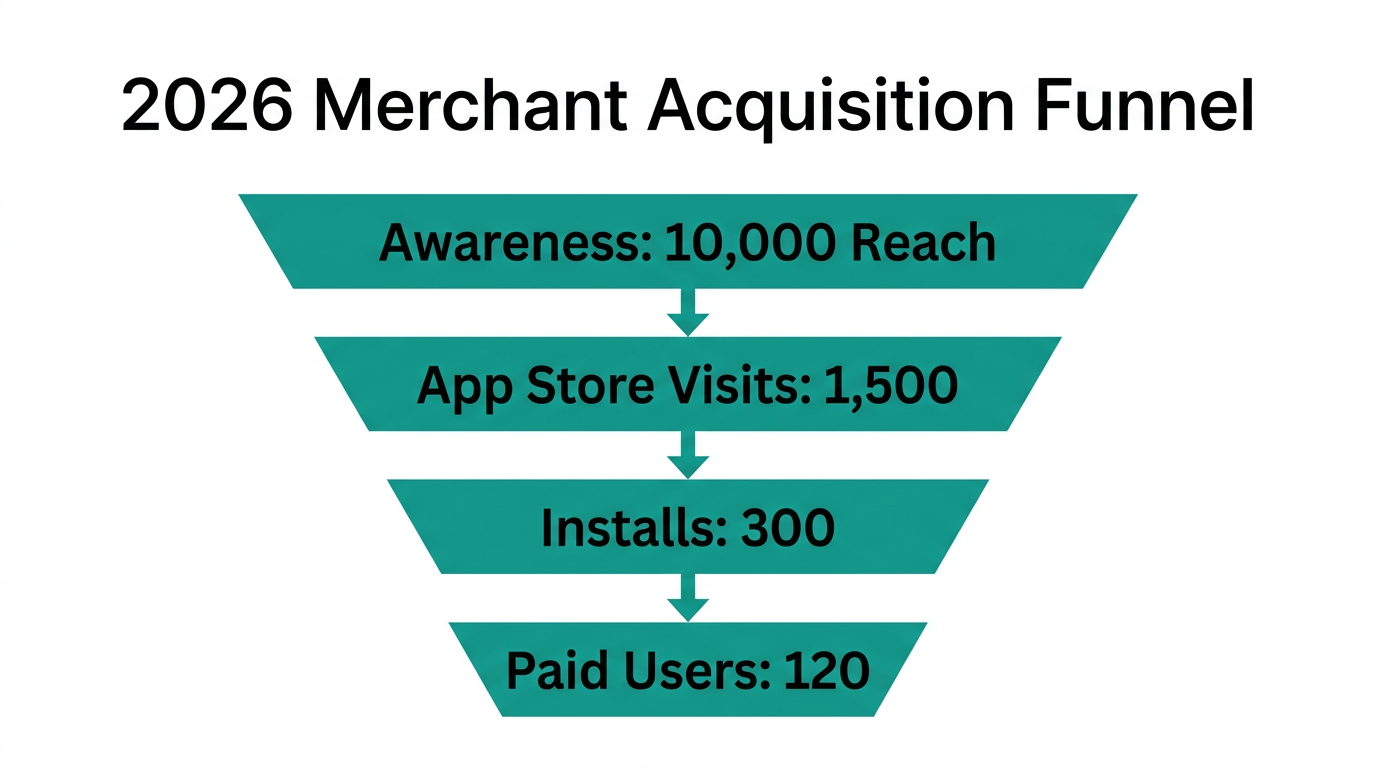
Once you have validated your app's core "vibe" and technical feasibility, the focus shifts to merchant acquisition Shopify. In 2026, the most successful apps leverage AI not just to build, but to market. This involves using Claude Code to automate the generation of Remix-based landing pages that are pre-optimized for search engines.
To stand out in the crowded marketplace, social proof is non-negotiable. Many app developers now use platforms like Stormy AI to find and collaborate with UGC creators who can demonstrate the app's value to merchants on TikTok and LinkedIn. By combining AI-generated efficiency with human-led social proof, you create a marketing flywheel that is difficult for traditional competitors to match.
Common Growth Mistakes to Avoid in 2026
While Claude Code is incredibly powerful, relying on it blindly can lead to catastrophic GTM failures. Experts at XgenTech warn that the most common mistake is skipping human oversight for QA. AI-generated code may look perfect but can fail in edge cases like VAT compliance or multi-currency conversion.
- Ignoring GDPR & Data Privacy: Claude might overlook mandatory GDPR webhooks unless explicitly prompted. Ensure you are using secure HMAC verification for all Shopify webhooks.
- Poor Data Taxonomy: If your underlying product data is messy, AI features will fail. Clean taxonomy is the prerequisite for any AI-driven Shopify app.
- Tool Chaos: Integrating too many AI agents without a clear hierarchy leads to contradictory code. Treat Claude Code as your "Lead Engineer" and maintain a central "Context Refresh" every 2-3 hours to keep the agent aligned with your goals.
Playbook: Using Claude Code for Retention and Support
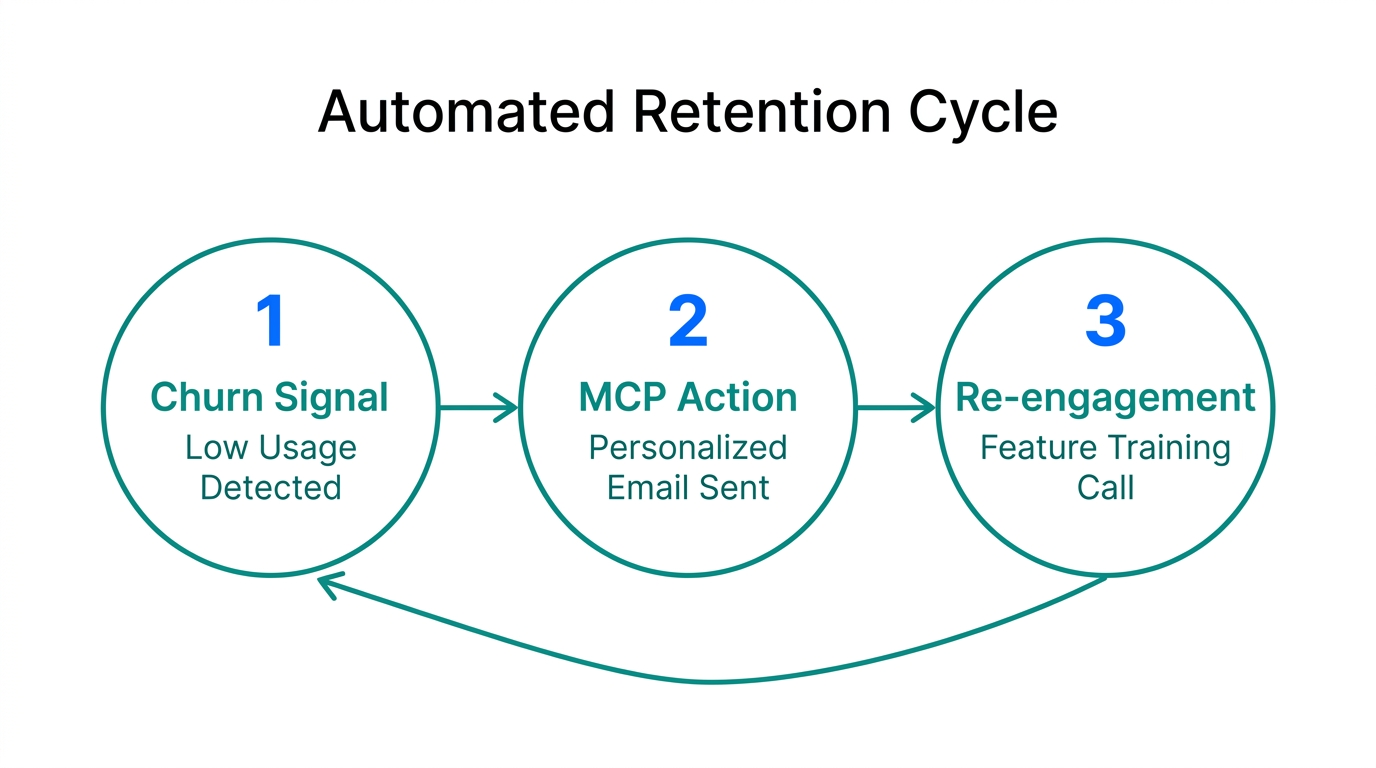
The final pillar of a successful Shopify app growth strategy is retention. In 2026, merchants expect 24/7 support. You can use Claude Code to automate the creation of your entire support ecosystem.
- Step 1: Automated Documentation: Use Claude to scan your codebase and generate a comprehensive knowledge base in Notion or your app's help center.
- Step 2: Support Agents: Leverage the Shop-Chat-Agent template to build a custom AI support bot that understands your specific app's logic.
- Step 3: Feedback Loops: Use AI to analyze merchant reviews (similar to the ReviewMate app) to identify which features should be built next in your Strategy-First cycle.
Conclusion: The Future is Strategy-First
The era of "building for the sake of building" is over. In 2026, scaling a Shopify app requires a sophisticated blend of AI-native execution and human-led strategy. By mastering tools like Claude Code and the Model Context Protocol, you can cut your development time in half and reallocate that energy toward merchant acquisition and retention.
Remember, while AI provides the speed, your strategy provides the direction. Focus on the "vibe," validate the data, and use modern platforms like Stormy AI to amplify your reach. The merchants of 2026 are waiting for apps that don't just work—but work smart.