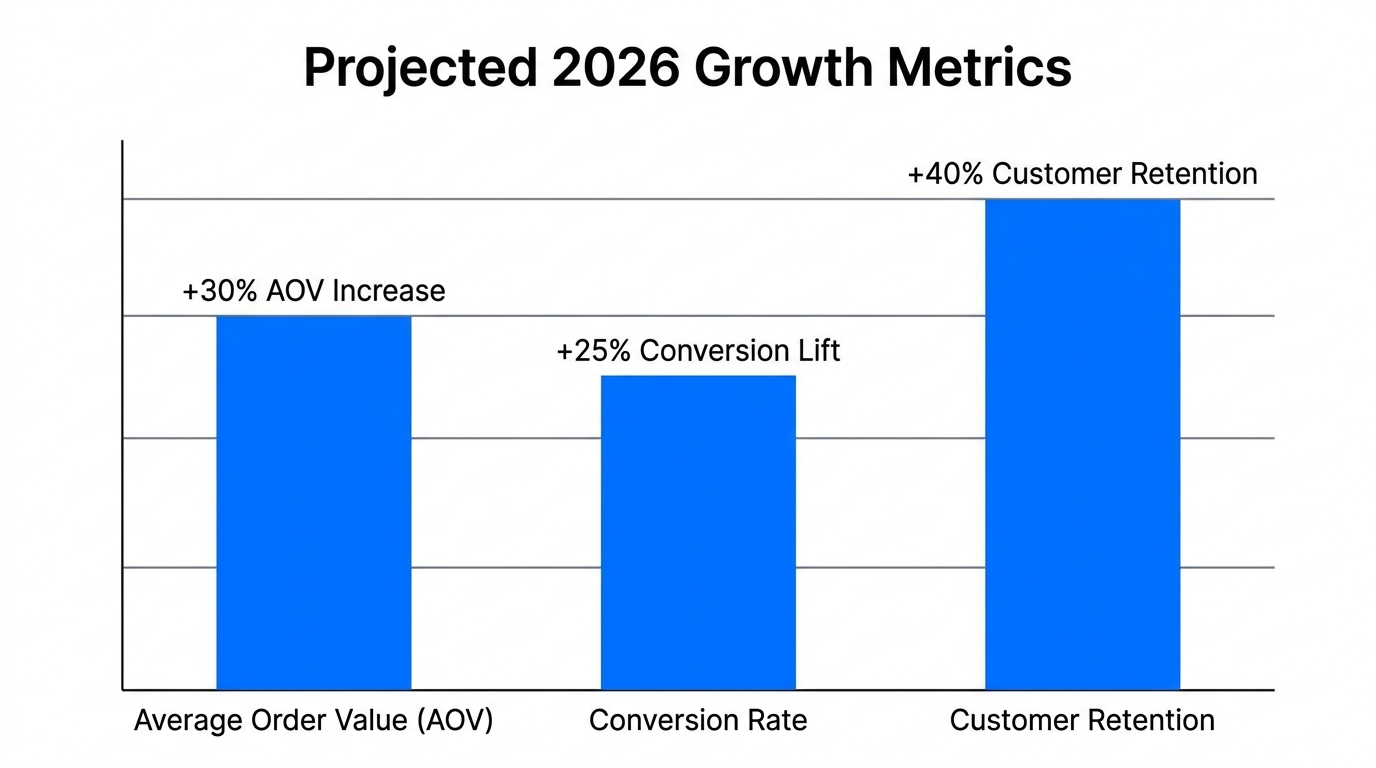
In the high-stakes world of 2026 ecommerce, the traditional line between "support" and "sales" has officially vanished. For years, Shopify merchants viewed their helpdesk as a cost center—a necessary hurdle to deflect tickets and resolve complaints. But as we move deeper into the Agentic Era, the most successful brands are firing their "deflection bots" and hiring Digital Sales Associates. This shift toward conversational product discovery is helping stores increase their Average Order Value (AOV) by as much as 30% while simultaneously slashing support costs. Today, an AI ecommerce employee like Stormy AI doesn't just answer "where is my order?"—it actively guides the checkout, monitors behavioral signals, and acts as a tireless growth partner for your brand.
The Rise of the Digital Sales Associate in the 2026 Agentic Era
By the end of 2026, experts project that AI will handle 95% of all customer interactions, with 80% of routine queries resolved without any human intervention. We are no longer in the era of simple "if-then" logic. Modern AI agents are now sophisticated enough to understand semantic intent—meaning they don't just look for keywords; they understand the problem a customer is trying to solve.
The global market for AI-driven customer service is set to reach $15.12 billion this year, according to research from Grand View Research. This massive investment isn't just about saving money (though AI resolution costs average just $1.00 - $3.00 vs. $13.50 for humans). It's about revenue. 67% of online retailers have now adopted e-commerce AI, and 67% of those retailers report a direct increase in sales from better product discovery and instant answering.
"2026 is the year support becomes a profit center. The best systems now connect past interactions to present intent to anticipate what’s next—that’s contextual intelligence in action."
When you hire an AI teammate like Stormy AI, you aren't just installing a plugin. You are adding a team member who can monitor your Shopify store, check inventory levels, and engage with customers the moment they show signs of hesitation. While a traditional support agent waits for a ticket to arrive, a Shopify AI sales agent is already working to secure the next conversion.
Conversational Product Discovery: The End of Search Filters
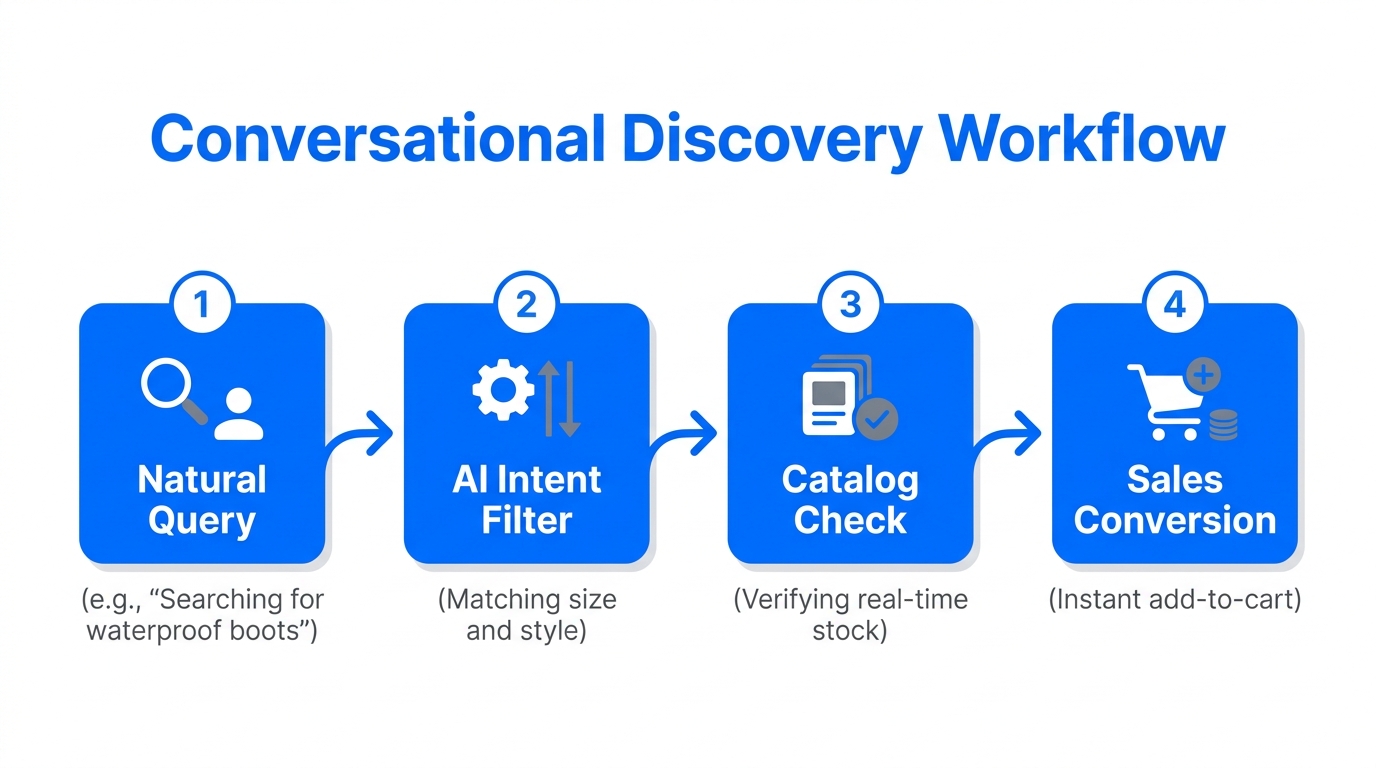
In the old world of ecommerce, customers spent minutes clicking through sidebar filters—size, color, material, price—hoping to find the right item. In 2026, that friction is a conversion killer. Conversational product discovery allows customers to describe their needs in plain language. Instead of searching for "blue dress size 6," a user can type: "I'm looking for something for a summer wedding in Tuscany that won't wrinkle in my suitcase."
To pull this off, your AI needs Real-Time Catalog Grounding. Tools like eesel AI and Tidio's Lyro connect directly to the Shopify Admin GraphQL API to query live stock levels, Shopify Metafields, and product specifications. This prevents the AI from recommending an out-of-stock item, which is one of the quickest ways to erode customer trust.
A Stormy AI employee takes this a step further by bridging the gap between the front-end chat and the back-office ops. For instance, if a customer asks for a product that is low on stock, Stormy can simultaneously answer the customer and flag the inventory risk in a shared workbook for the operations team to handle reordering.
Shopify Behavioral Engagement AI: Stopping Exit Intent Before it Happens
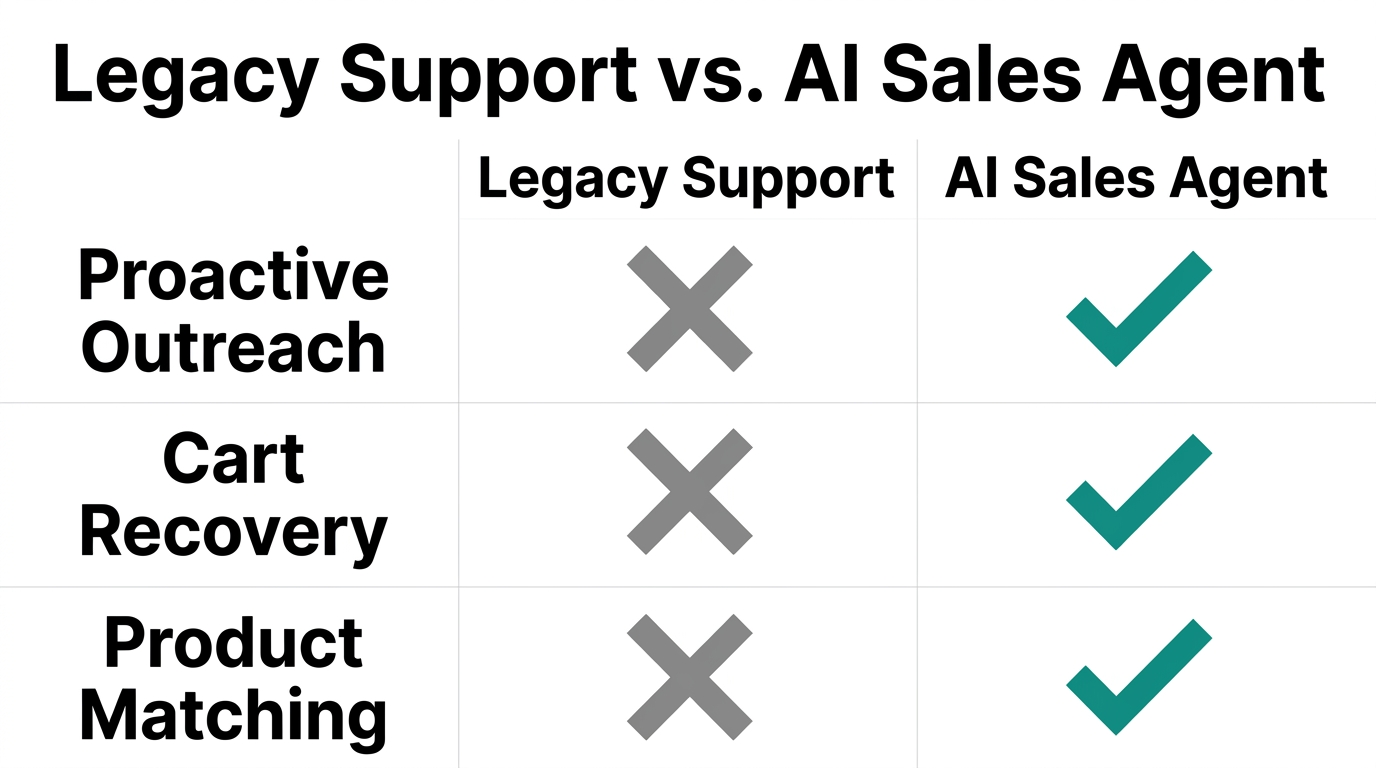
One of the most powerful trends this year is the move toward predictive service. Rather than waiting for a user to click the chat bubble, advanced AI agents monitor behavioral signals like erratic cursor movement, rapid scrolling, or long periods of inactivity on the checkout page.
These are known as "Hesitation Moments." By setting up proactive triggers, your Shopify AI sales agent can intervene with a timely prompt: "I see you're looking at the sizing chart. Just so you know, this model runs a bit small—most customers size up!" According to data from AeroChat, proactive engagement at these critical junctures can drive 20% to 38% higher conversions.
| Feature | Traditional Support (2023-2024) | AI Sales Agent (2026 Era) |
|---|---|---|
| Focus | Ticket Deflection | Revenue Generation |
| Engagement | Reactive (Wait for query) | Proactive (Behavioral triggers) |
| Data Source | Canned Macros / FAQ | Real-time Shopify API / Catalog |
| Cost per Interaction | $8.00 - $15.00 | $0.10 - $1.00 |
| Scalability | Linear (Hire more people) | Exponential (Infinite chats) |
Case Study: 27% AOV Boost for Luxury Retail
A high-end jewelry brand on Shopify Plus recently redesigned its service model to prioritize AI consultations over traditional support. By integrating their AI agent with deep product metadata and customer purchase history from Klaviyo, they were able to offer hyper-personalized styling advice.
- 27% increase in Average Order Value (AOV).
- 18% decrease in cart abandonment rates.
- 34% growth in Customer Lifetime Value (CLV) due to the personalized "high-touch" feel of the AI.
"The efficiency gap in 2026 is binary: brands that use AI agents to sell are thriving; those using them only to 'deflect' are losing customers to the competition."
Real-Time Catalog Grounding & Action-Oriented AI
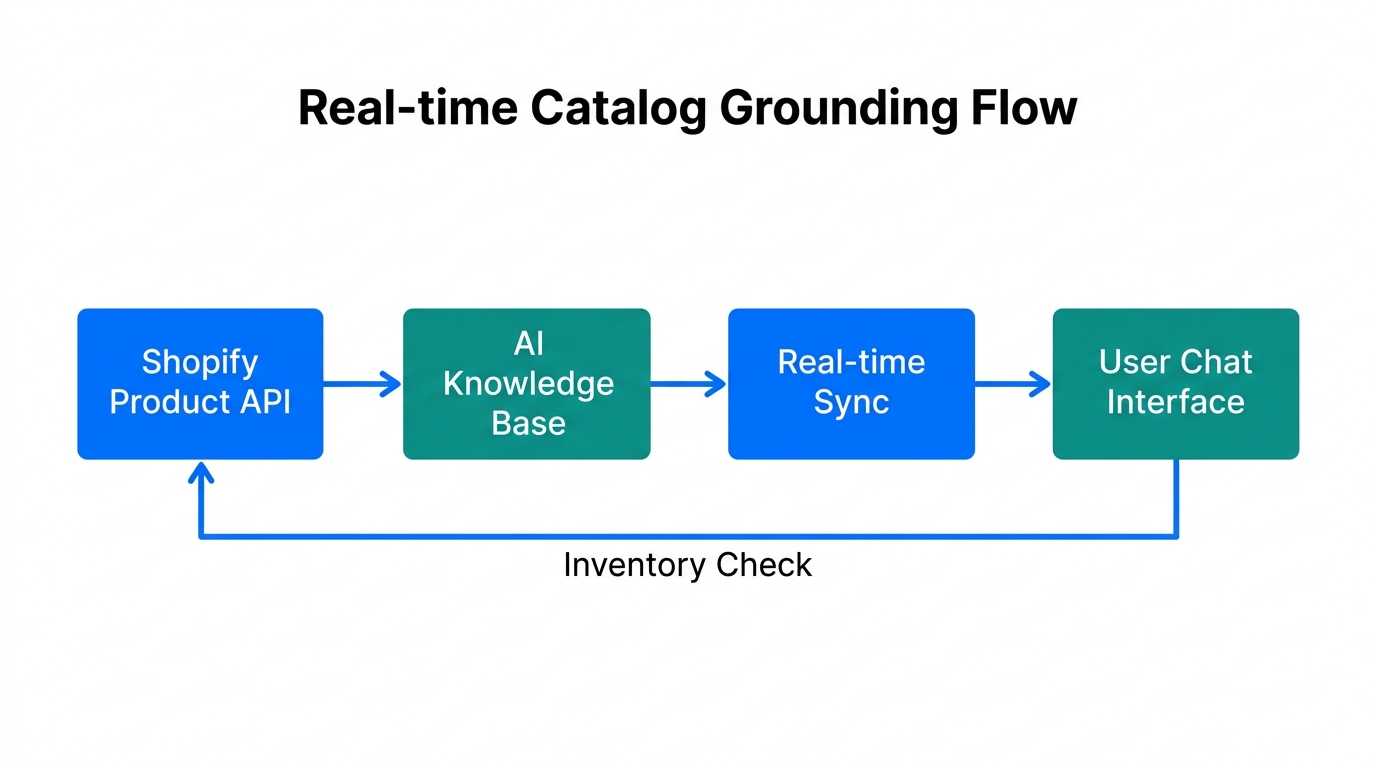
To transform support into sales, your AI needs permission to act. In 2026, we've moved past agents that just talk. Autonomous AI agents now execute tasks using the Shopify Draft Orders API and Refunds API. This means your agent can:
- Create a draft order with a custom discount for a hesitating customer.
- Process a replacement order for a damaged item instantly.
- Change a shipping address in Shopify before the fulfillment team even sees the ticket.
Platforms like Stormy AI excel here by acting as the "central nervous system" for your back office. While your Gorgias or Zendesk integration handles the chat, Stormy can wake up at 2 AM to follow up with a supplier who missed a shipment deadline or update a spreadsheet with the day's ROAS from Google Ads and Meta Ads.
The 2026 Playbook: Setting up your AI Sales Associate
Transitioning your support into a sales channel doesn't happen overnight. Follow this 5-step playbook to ensure your AI teammate is ready to drive revenue.
Step 1: Audit and Expand Your Knowledge Base
AI is only as good as the data it consumes. If your FAQs haven't been updated in months, your AI will hallucinate outdated policies. Audit your Shopify Magic settings or external helpdesk macros. Ensure every product has rich descriptions and metafields for the AI to reference. Poor data quality is the cause of 62% of AI failures in ecommerce.
Step 2: Connect Live Data Streams
Integrate your AI with Shopify, Klaviyo, and AfterShip. The AI needs to know exactly who it's talking to—their past orders, their loyalty tier, and the real-time location of their current package. Use the Shopify AI Toolkit (MCP) to allow agents to query live data directly.
Step 3: Implement Hesitation Triggers
Don't be passive. Use behavioral engagement software to set up triggers for high-intent pages. If a user spends 45 seconds on a "compare models" page without clicking, have the AI offer to help them choose. This is where conversational product discovery happens.
Step 4: Set Human-in-the-Loop Thresholds
Avoid the "Trust Gap." Studies show 64% of customers still prefer human access for emotionally charged issues like billing disputes. Program your AI to hand off to a human if it detects "angry" sentiment keywords or if the conversation exceeds three back-and-forth exchanges without a resolution.
Step 5: Hire an AI Employee for the Messy Back-Office
While your sales agent handles the customer, who handles the follow-up? This is where Stormy AI comes in. Stormy can monitor the "Conversations" log in tools like Jotform or Tidio, summarize recurring product complaints, and drop them into a task for your product developer to fix. It ensures that the insights from your support-turned-sales channel actually result in better business operations.
The Future: Machine-to-Machine Commerce
Looking ahead to 2030, Gartner predicts that 20% of commerce will be machine-to-machine. In this world, your Shopify AI sales agent won't just be talking to humans; it will be negotiating with the customer's personal AI agent to find the best price and delivery window. The infrastructure you build today—connecting your catalog to an agentic layer—is the prerequisite for surviving that shift.
For now, the goal is simpler: Stop letting support tickets sit in a queue and start letting your AI teammate close sales. By automating the routine (WISMO, returns, sizing) and proactively engaging during hesitation moments, you turn your helpdesk from an expense into your store's most effective sales rep.