AI Profit Margin Analysis for Shopify: Using Prisync and Inventory Planner by Sage for Maximum ROI
Learn how to optimize Shopify gross margins in 2026 using Prisync dynamic pricing and Inventory Planner by Sage. Eliminate dead stock and win price wars with AI.
In 2026, the e-commerce landscape has officially transitioned from a "growth at all costs" mentality to a "sustainable margin protection" era. Shopify merchants no longer find success simply by scaling ad spend; they win by tightening the screws on operational efficiency. With rising customer acquisition costs and logistics complexity, profitability is the only benchmark that matters. Leading Shopify stores are now achieving 20%+ net margins by leveraging AI-driven tools like Prisync and Inventory Planner by Sage to eliminate the two biggest margin killers: dead stock and ruinous price wars.
The New Benchmarks: Shopify Profitability in 2026
As we navigate 2026, the data is clear: a healthy Shopify brand must maintain a 40%+ Gross Margin and a 10%+ Net Margin to remain viable. According to recent profit benchmarks, any store operating below a 5% net margin is in the "danger zone" due to the volatility of 2026 ad costs, which typically consume 15–30% of total revenue.
We are also entering the era of "Agentic Commerce." Harley Finkelstein, President of Shopify, has described 2026 as the "year of the builders," where AI agents handle the complexity of inventory and pricing, allowing merchants to focus on brand identity. With AI-driven search orders rising 15x since last year, your infrastructure must be ready for autonomous buyers who prioritize price and availability over traditional brand loyalty.
"The value in 2026 is not in expert opinions, but in repeatable rules that AI can apply at scale to protect margins against market volatility."
Predictive Inventory Management: Reducing Overstock by 40%
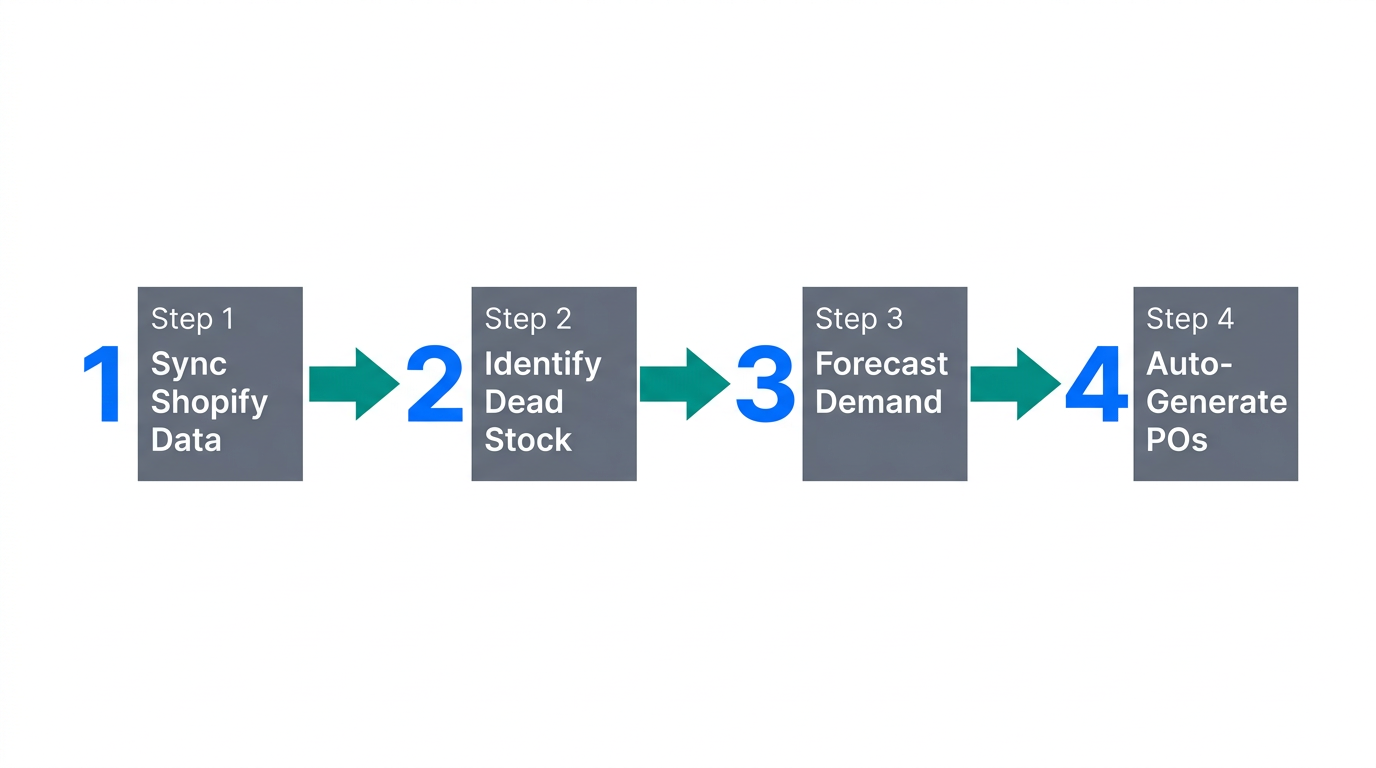
Dead stock is the silent killer of Shopify gross margin optimization. When capital is tied up in unmoving SKUs, you lose liquidity and incur high 3PL storage fees. This is where Inventory Planner by Sage becomes essential. By utilizing advanced time-series forecasting, this tool helps merchants predict exactly what they need, and when they need it.
Leveraging the Facebook Prophet Model
One of the core features of a modern predictive inventory management AI is the use of the Facebook Prophet model. This open-source forecasting tool is designed for handling data with strong seasonal effects and several seasons of historical data. In the context of Shopify, it allows you to predict 90-day SKU-level demand with startling accuracy. By analyzing past sales cycles, promotions, and even external market factors, Inventory Planner by Sage helps you avoid the dreaded "Out of Stock" notification on your bestsellers while reducing overstock costs by up to 40%.
For brands with heavy logistics requirements, these predictive models are game-changers. For instance, Chronopost saw an 85% increase in sales by optimizing delivery routes and customer notifications using similar AI-driven predictive campaigns. When your inventory matches your demand, your entire supply chain becomes a profit engine rather than a cost center.
Prisync Dynamic Pricing: Winning the Buy Box Without Losing the Margin
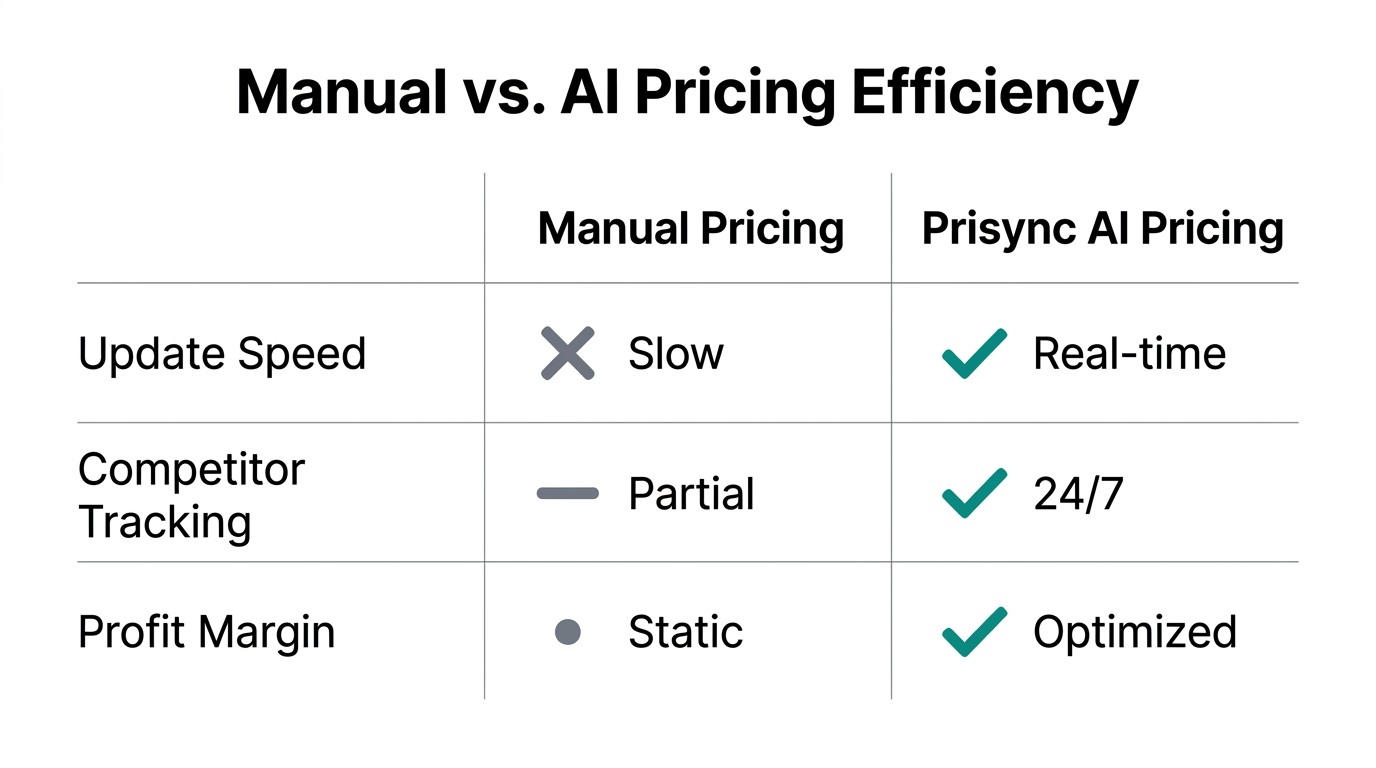
In a hyper-competitive 2026 market, static pricing is a recipe for failure. If your price is too high, you lose the sale to a competitor; if it's too low, you leave money on the table. Prisync dynamic pricing for Shopify automates the delicate balance of competitive positioning and margin protection.
Setting Smart Price Floors
The biggest fear merchants have with dynamic pricing is a "race to the bottom." Prisync solves this by allowing you to set strict price floors. You can program the AI to never drop the price below a point that yields a specific gross margin percentage, regardless of what competitors are doing. Conversely, when a competitor runs out of stock, Prisync can instantly raise your prices to capture the increased demand and maximize profit per unit.
| Feature | Manual Pricing | AI Dynamic Pricing (Prisync) |
|---|---|---|
| Update Frequency | Weekly/Monthly | Real-time / Hourly |
| Competitor Tracking | Manual checks (Slow) | Automated 24/7 Monitoring |
| Margin Protection | Human Error Prone | Hard-coded Price Floors |
| Revenue Impact | Static | Avg. 15-25% Lift |
"Dynamic pricing isn't about being the cheapest; it's about being the most strategically priced at every single second of the day."
Building a Unified Profit Stack for 2026
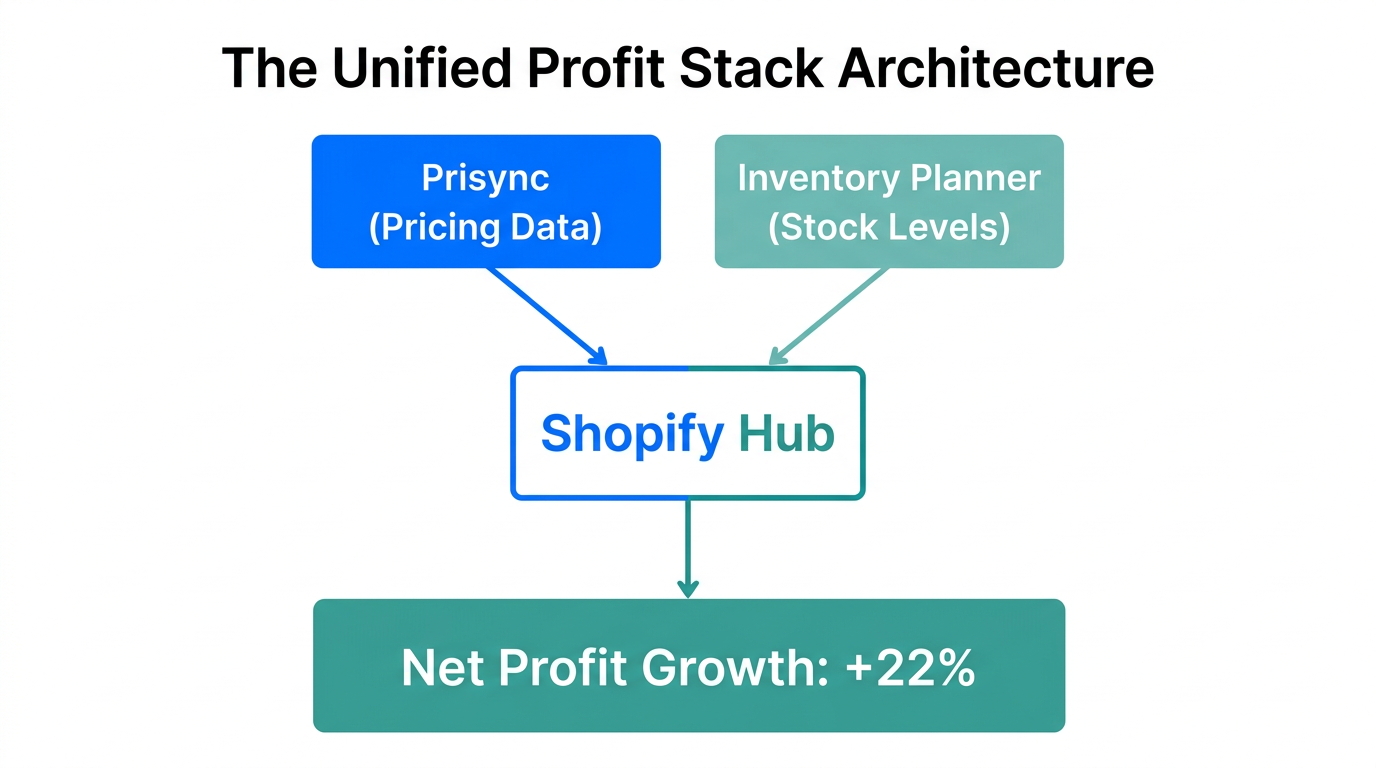
To achieve e-commerce demand forecasting in 2026, you cannot rely on siloed data. You need what experts call "connected intelligence." This involves linking your inventory data, your pricing engine, and your marketing attribution into a single source of truth. Tools like Luca AI and Triple Whale are leading this charge by calculating True Contribution Margin—automatically factoring in Stripe fees, shipping costs, and return rates in real-time.
When you integrate these tools, you move away from the "Dashboard Trap." Instead of looking at 10 different apps, you see one clear number: your actual profit. This is essential when running high-velocity campaigns. For example, brands like Ekster reduced reporting time by 65% and improved their Marketing Efficiency Ratio (MER) by 20% by using AI agents to synthesize these data points.
The Influencer Variable
One often overlooked factor in Shopify gross margin optimization is the impact of creator marketing. A single viral post can wipe out your inventory in hours, leading to backorders and customer service nightmares. Smart merchants use platforms like Stormy AI to discover and vet creators, ensuring that marketing pushes are synchronized with inventory levels tracked in Inventory Planner by Sage. If Stormy AI helps you find 100 micro-influencers for a campaign, your predictive inventory tool should already have the stock ready to meet that projected 15x surge in search-driven orders.
Playbook: Automating Your Margin Protection
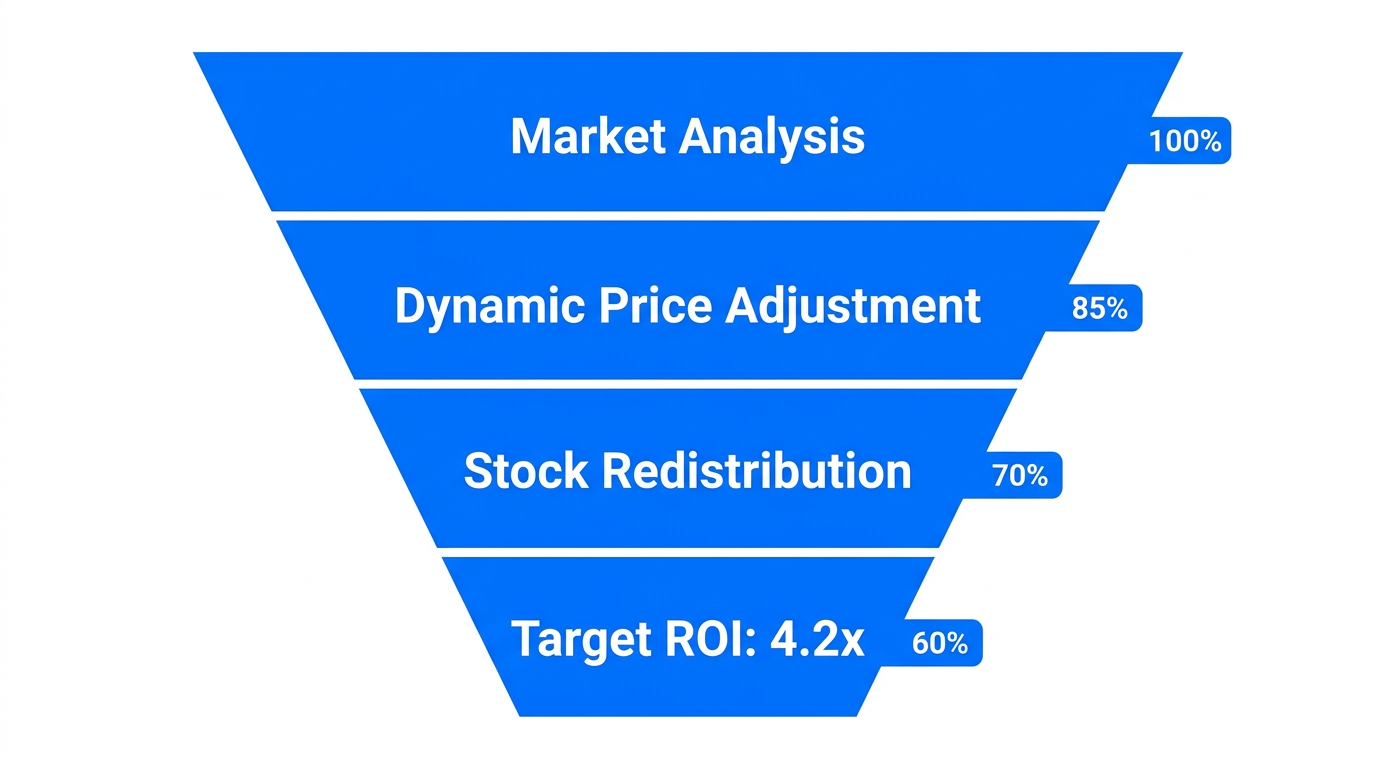
If you want to maximize your ROI this year, follow this three-step automation playbook:
- Step 1: Clean Your Data. Avoid the "Garbage In, Garbage Out" (GIGO) principle. Ensure your Shopify SKU data and historical sales are accurate before feeding them into Stocky or Inventory Planner.
- Step 2: Define Your Rules. In Prisync, set your "Minimum Desired Profit" rule. Tell the AI: "Always stay $2 below Competitor X, but never go below a 35% gross margin."
- Step 3: Sync Marketing to Stock. Use AI-driven attribution tools to turn off Google Ads or TikTok Ads automatically when a SKU's predicted "days of stock remaining" hits less than 7.
Conclusion: The Future of Shopify is AI-Driven
The era of manual spreadsheets and "gut feeling" pricing is over. To thrive in 2026, Shopify merchants must embrace predictive inventory management AI and dynamic pricing as core infrastructure. By using Prisync to protect your price floors and Inventory Planner by Sage to eliminate overstock, you aren't just selling more—you're keeping more of what you earn.
Start by auditing your current gross margins. If they are under 40%, it is time to automate. Whether it is using Klaviyo for predictive marketing or Stormy AI for creator-led growth, the tools exist to make 2026 your most profitable year yet. Don't let your margins be a casualty of the price wars—let AI win them for you.