By mid-2026, the traditional search bar is no longer the primary gateway to your Shopify store. We have officially entered the era of Agentic Commerce, where the buyer isn’t always a human clicking through a collection page. Instead, it is an AI agent—powered by models like GPT-5 or Claude 4.5—browsing, comparing, and executing purchases autonomously. This shift has birthed a new discipline: Answer Engine Optimization (AEO). If your store isn't visible to these agents, you are invisible to 40% of the market that now uses predictive AI to handle their shopping.
"Traffic to US retail sites from generative AI sources like Perplexity and Gemini grew 4,700% year-over-year by the end of 2025—2026 is the year this becomes the default."
As a Shopify operator, you can no longer rely on keyword-stuffing for Google’s legacy crawlers. You need to enable Agentic Storefronts and optimize your data for the Agentic Commerce Protocol (ACP). This tutorial will walk you through the technical setup and the strategic shifts required to win the 'Share of Model' in this Zero-Click buying environment.
The Shift from SEO to AEO: Why Keywords are Dead
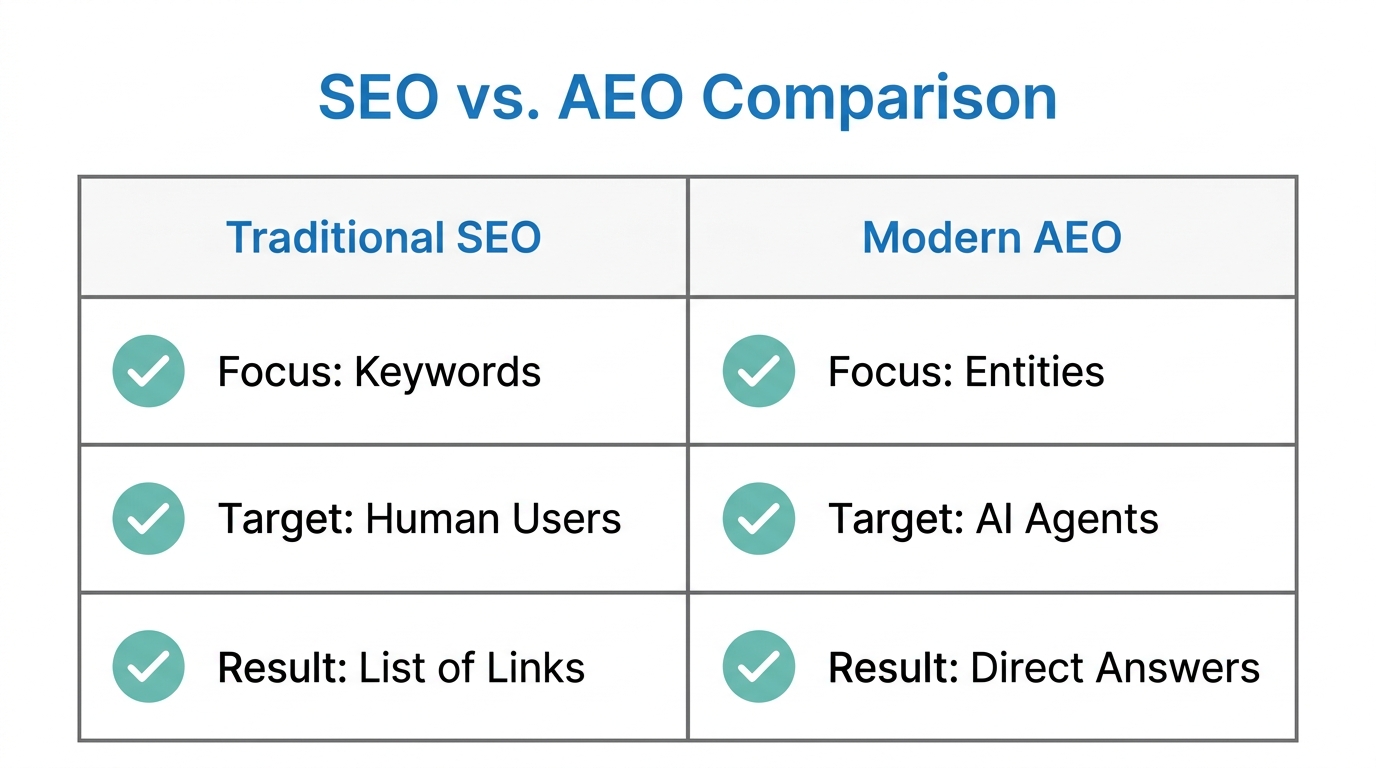
In 2024, we optimized for "best waterproof backpack." In 2026, we optimize for an AI agent asking: "Find me a waterproof bag for a 15-inch laptop that is suitable for a rainy Seattle bike commute and costs under $150." This is the core of Answer Engine Optimization (AEO)—providing the LLM (Large Language Model) with enough context and structured data to "recommend" your product with high confidence.
| Feature | Legacy SEO (2024) | Modern AEO (2026) |
|---|---|---|
| Primary Target | Google Search Algorithm | AI Agents & LLMs |
| Content Focus | High-volume keywords | Use-case context & Intent |
| Metadata | Basic Meta Tags | Schema-rich ACP Metadata |
| Goal | Click-through rate (CTR) | Recommendation Probability |
While traditional search engines wanted humans to visit your site, AEO focuses on the Zero-Click outcome. The AI agent retrieves the information, confirms it meets the user’s criteria, and uses the Agentic Commerce Protocol (ACP) to execute a secure "Instant Checkout" without the human ever seeing your homepage. To play in this game, you must first enable the infrastructure.
Step 1: Enabling Shopify Agentic Storefronts
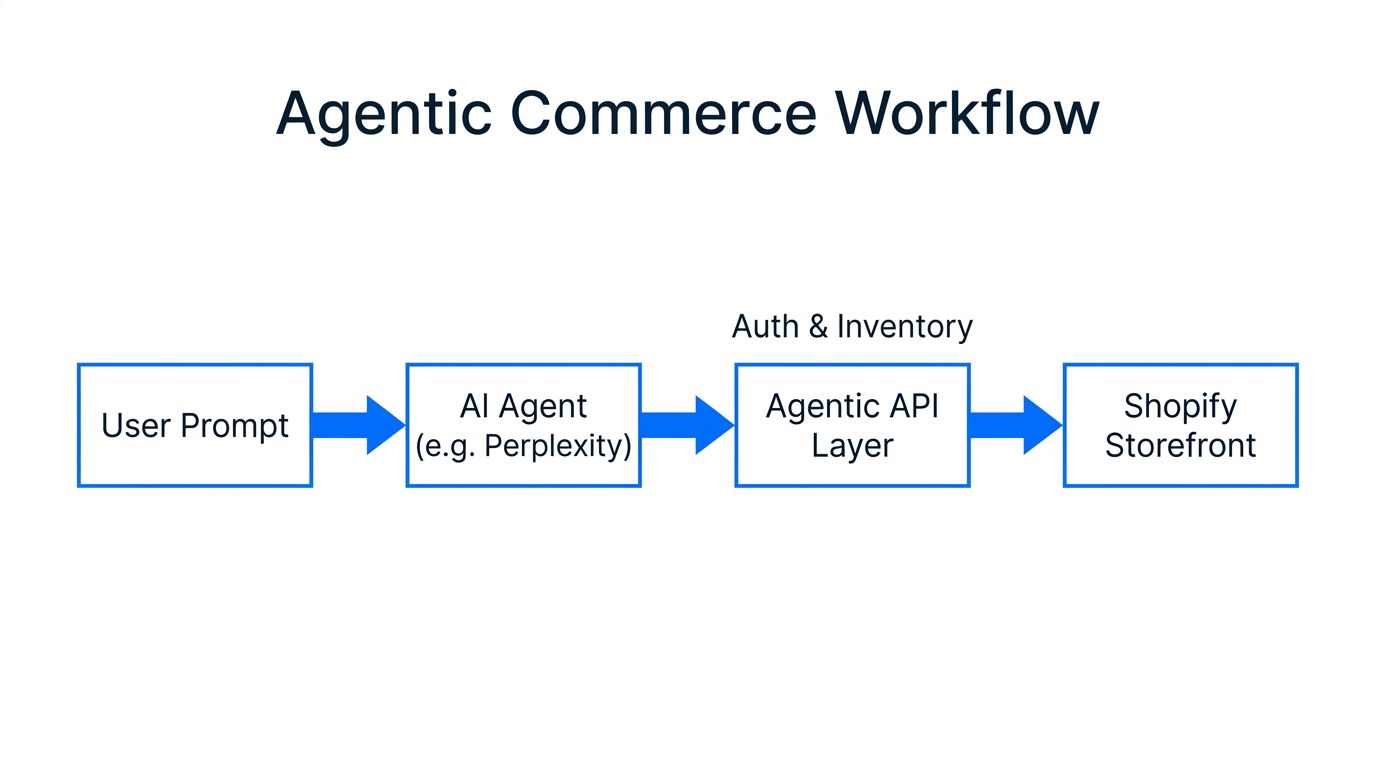
Introduced in the Shopify Winter Edition 2026, Agentic Storefronts allow Shopify merchants to syndicate their entire product catalog directly into the discovery engines of ChatGPT, Microsoft Copilot, and Perplexity. Here is the step-by-step technical playbook:
- Requirement Check: Ensure you are on a Shopify Basic plan or higher. Most importantly, every SKU must have a valid GTIN (Global Trade Item Number). AI agents use GTINs as the "source of truth" to verify product authenticity across the web.
- Navigate to Settings: In your Shopify Admin, go to Settings > Marketing > Shopify Catalog.
- Activate ACP: Toggle on the "Enable Agentic Discovery" button. This opts your store into the Agentic Commerce Protocol.
- Grant Permissions: You will be asked to grant read access to "Verified Agents." This allows authorized LLMs to crawl your real-time inventory and pricing without hitting your standard frontend rate limits.
Once enabled, your store is technically ready. However, just being "reachable" isn't enough. You need to be desirable to the agent. This is where Stormy AI comes in—acting as your AI ecommerce employee, Stormy AI can automatically audit your entire catalog to ensure every product has the necessary schema to be picked up by these agents.
Step 2: Optimizing for Contextual Intent
AI agents don't care about your flowery brand storytelling; they care about utility. In 2026, "Tokenmaxxing"—the process of providing maximum relevant information for AI reasoning—is the standard. Your product descriptions should move from feature lists to situational context.
The AEO Playbook for Descriptions:
- Define the Persona: Explicitly state who the product is for. (e.g., "Best for tech professionals who commute by bike.")
- Solve for 'Edge Cases': AI agents are often asked about specific constraints. Include data about weight, temperature ratings, and compatibility that humans might overlook but agents require for filtering.
- Use Schema-Rich Metadata: Use tools like vector search optimization, ensuring your store’s internal metadata matches the way LLMs interpret language.
"The top 10 percentile of Shopify merchants are growing faster because they treat AI as daily infrastructure, not a one-off tool." — Mikhail Parakhin, Shopify CTO
Step 3: The Importance of GTINs and Schema
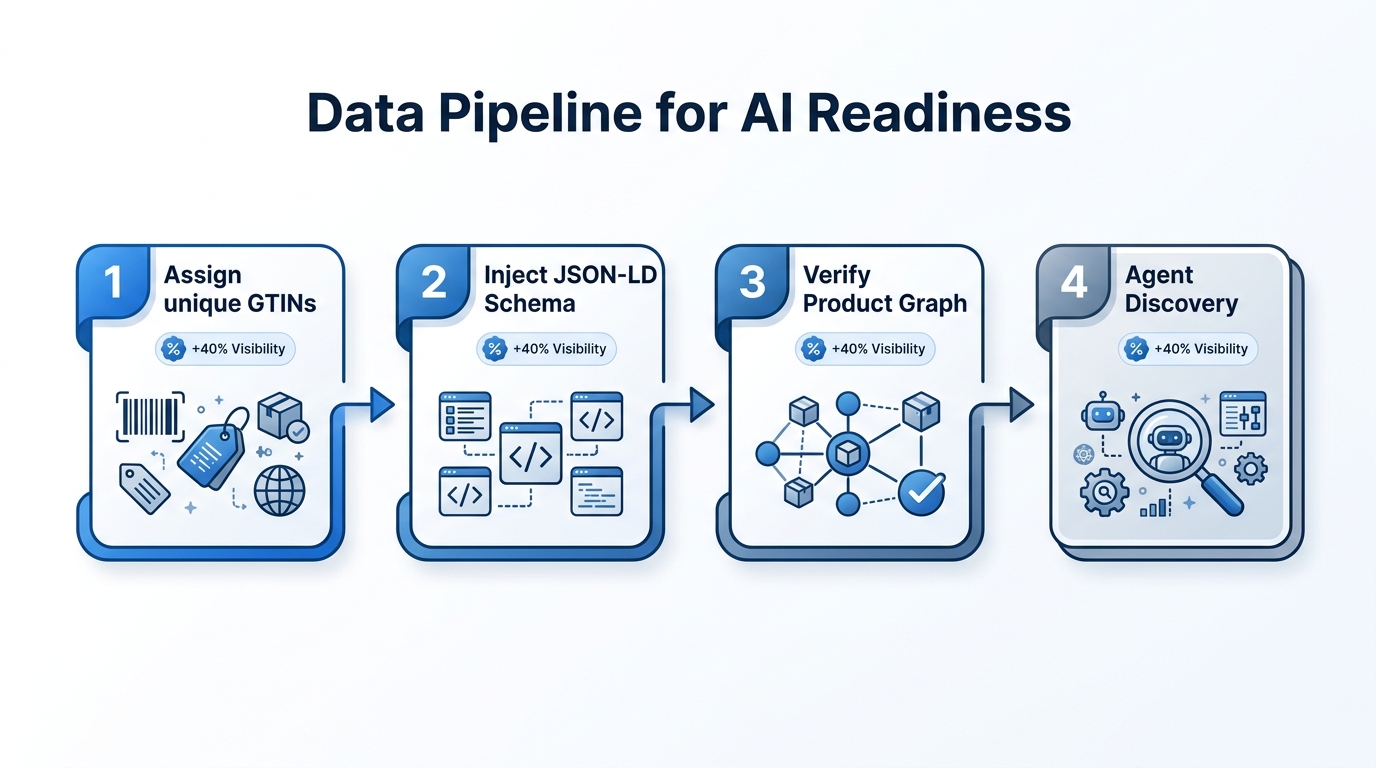
In the 2026 landscape, Dirty Data is the biggest killer of growth. Inconsistent attributes cause AI agents to "hallucinate" or simply skip your store in favor of a competitor with cleaner data. Inconsistent product tags are a liability.
Stormy AI helps solve this by acting as your back-office manager. You can ask Stormy AI to "Import my Shopify CSV, identify any missing GTINs, and cross-reference them with the manufacturer database." Stormy then updates the rows, sets a reminder to check for fulfillment issues, and keeps your catalog agent-ready without you lifting a finger.
Step 4: Measuring 'Share of Model' Metrics
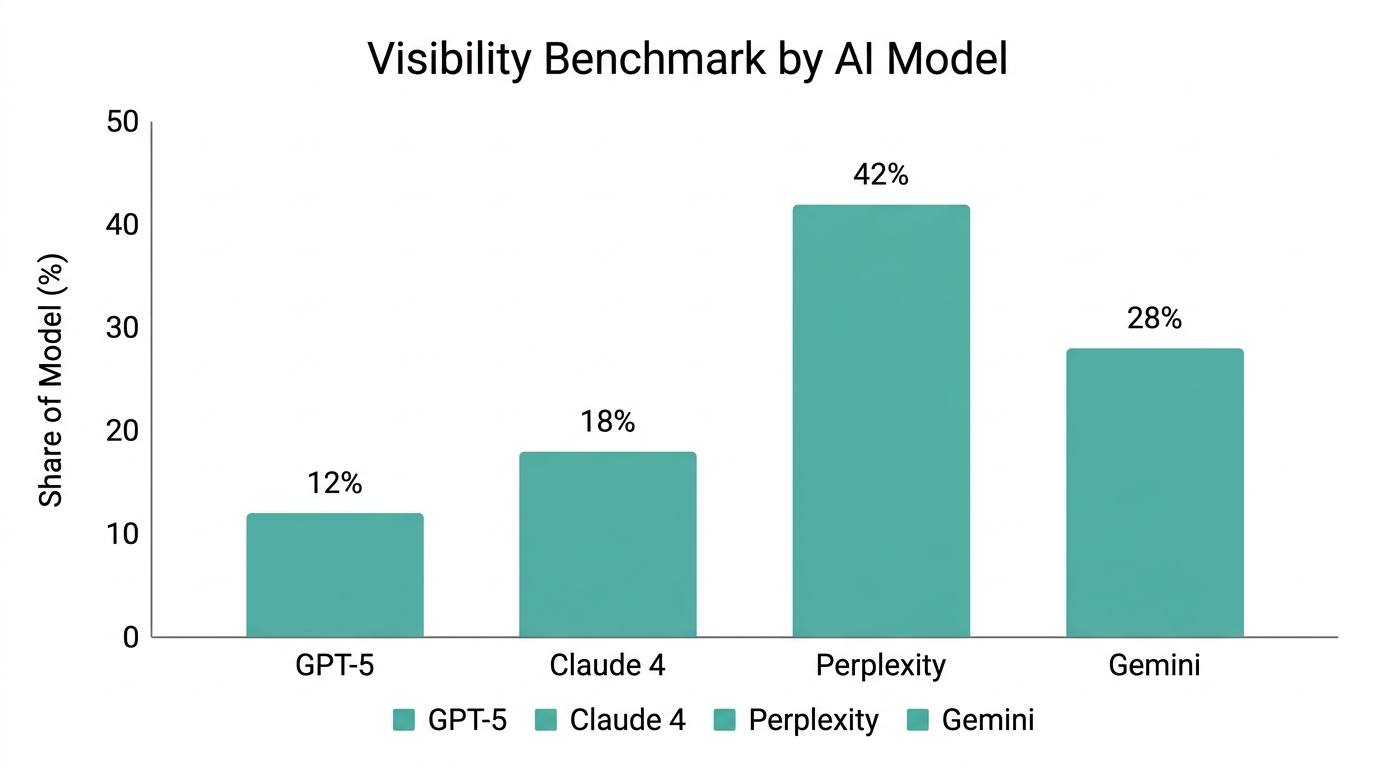
Since "clicks" are becoming less relevant, how do you measure success? In 2026, the primary KPI is Share of Model (SoM). This measures how often a specific LLM (like GPT-5) recommends your brand when a user asks a category-level question.
You should also track "Perception Drift"—a metric discussed by leading marketing analysts that monitors how AI models' descriptions of your brand change over time relative to your actual marketing. If the AI thinks your luxury brand is "budget-friendly," you have a data positioning problem.
| Metric | What it Tracks | 2026 Benchmark |
|---|---|---|
| Share of Model (SoM) | % of AI recommendations in category | 15% for Market Leaders |
| Agent Conversion Rate | Checkout success via ACP | 3.2%–4.7% |
| Metadata Health | % of products with valid GTIN/Schema | 99%+ Required |
Automating Syndication with Stormy AI
Running an Agentic Storefront is a 24/7 job. Prices change, stock fluctuates, and agents need real-time data to make purchase decisions for their humans. This is where Stormy AI excels as an AI ecommerce employee.
While tools like Luca AI handle your financial data, Stormy AI runs the messy operational middle. Stormy can:
- Monitor Inventory: Connect to Shopify and flag stockout risks to agents before they recommend a product you can’t ship.
- Syndicate Data: Automatically push catalog updates to the Agentic Commerce Protocol (ACP) every time you add a new SKU.
- Audit Competitors: Ask Stormy to "Search Perplexity for my top 5 competitors and summarize how the AI describes their durability vs. ours."
- Follow up with Suppliers: Use Stormy AI to track lead times in a living spreadsheet, ensuring your "Estimated Delivery" data (which agents prioritize) is always accurate.
"20% of all commerce will be agent-to-agent or machine-to-machine by 2030. The infrastructure you build on Shopify today determines if you're a participant or a bystander."
The Bottom Line for 2026
Transitioning to Answer Engine Optimization isn't just about a one-time setup; it’s about maintaining a high-fidelity data stream that AI agents can trust. By enabling Agentic Storefronts, cleaning your metadata with GTINs, and using an AI teammate like Stormy AI to automate the back-office syndication, you position your brand to win in the zero-click economy.