How to Prepare Your Brand for Shopify Agentic Commerce and the Universal Commerce Protocol in 2026
Learn how to optimize your Shopify store for AI agents and the Universal Commerce Protocol (UCP) to capture zero-click shopping traffic and boost conversion in 2026.
In 2026, the traditional e-commerce storefront is no longer the only destination for a transaction. We have officially entered the era of Agentic Commerce, a paradigm shift where AI agents—rather than human fingers—are doing the browsing, price-comparing, and purchasing. According to recent data from Shopify President Harley Finkelstein, orders originating from AI search engines like ChatGPT and Gemini have increased 15x over the past twelve months. For brand leaders, the mission has changed: you are no longer just optimizing for a human eye; you are optimizing for an algorithm’s wallet.
Defining Agentic Commerce: The Rise of the Machine Buyer
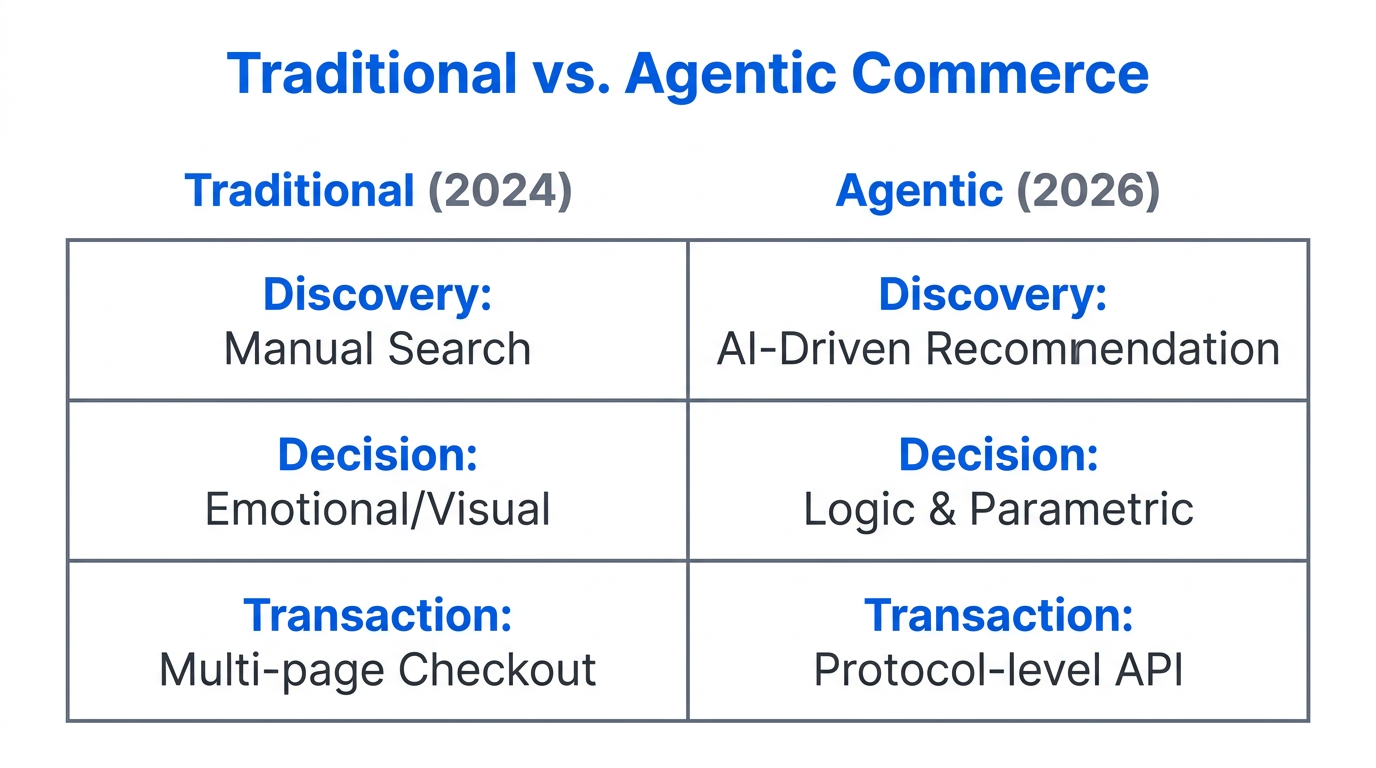
Agentic Commerce refers to a commerce ecosystem where autonomous AI agents act as intermediaries between the consumer and the brand. Instead of a customer visiting your URL, they simply state an intent to their personal assistant: "Find me a sustainable, waterproof hiking boot under $200 with 4-star reviews and have it delivered by Friday." The agent then scans the web, evaluates options, and completes the checkout process. This zero-click shopping strategy is becoming the dominant way high-intent consumers interact with brands in 2026.
This shift requires a total rethink of your digital infrastructure. In the past, UX design and high-resolution lifestyle photography were the primary drivers of sales. Today, while those still matter for brand building, your product metadata and technical schema are what actually close the deal in an agentic workflow. If an agent cannot "parse" your shipping speeds or return policy, your brand simply doesn't exist in the recommendation set.
"Automation isn’t just about efficiency; it’s about resilience. AI makes stores less dependent on manual intervention during market shifts." — Octavian Dumitrescu, CEO of Dyver.AI.
The Universal Commerce Protocol (UCP): The Rails of 2026 Trade
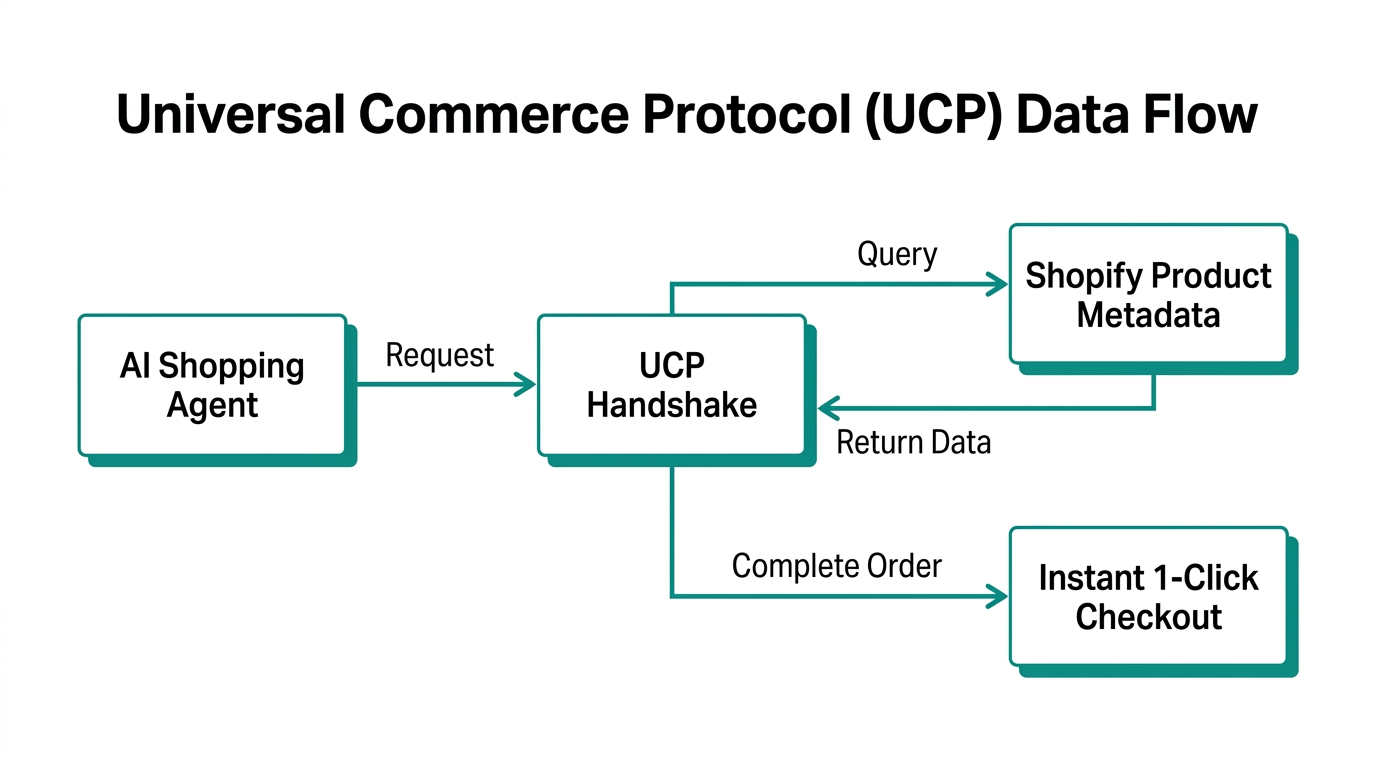
The backbone of this new economy is the Universal Commerce Protocol (UCP). Co-developed by Shopify and Google, UCP acts as the standardized language that allows different AI agents to communicate with any merchant's backend. Think of it as the "TCP/IP" of shopping. Before UCP, an AI agent would have to "scrape" a website like a human would—a messy and error-prone process. With UCP, Shopify stores broadcast a clean, structured data feed that agents can query instantly.
By adopting UCP standards, your Shopify store effectively becomes a headless node in a global network. This allows for seamless cross-platform transactions where the buyer never has to leave their AI interface to complete a purchase. Harley Finkelstein has positioned Shopify as the infrastructure for this era, ensuring that even small merchants can compete with giants by having their products "legible" to the world's most powerful AI agents.
| Feature | Traditional E-commerce (2020-2024) | Agentic Commerce (2026) |
|---|---|---|
| Buyer | Human browsing websites | AI Agents acting on intent |
| Discovery | SEO & Paid Social Ads | UCP Data Feeds & LLM training |
| Checkout | Manual multi-step forms | Zero-click automated payments |
| Loyalty | Brand affinity/emails | Trust scores & reliable fulfillment |
Step-by-Step: Optimizing Your Store for AI Discovery
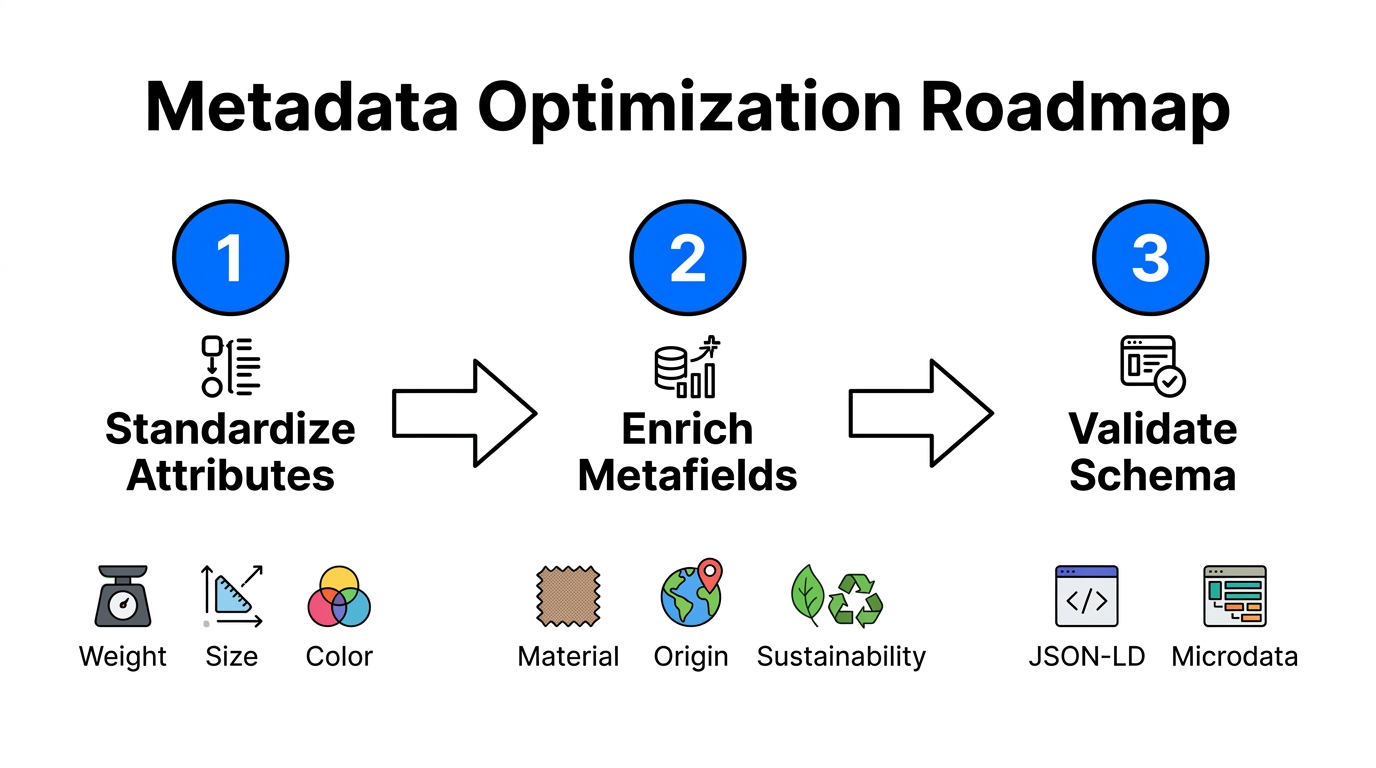
To win in 2026, you must treat your product catalog as a database for machines. AI agents prioritize high-signal metadata. If your product tags are inconsistent or your schema markup is missing, you will be filtered out of the results before a human ever sees your brand. Here is the playbook for optimization:
Step 1: Implement Rich Schema Markup
Basic SEO is no longer enough. You need deep JSON-LD schema that includes real-time availability, accurate shipping windows, and carbon footprint data. AI agents use these specific data points to rank results. Use tools like SEOAnt to automate the creation of high-signal metadata that follows UCP standards.
Step 2: Clean Your Product Taxonomy
Avoid "creative" naming conventions that confuse algorithms. If you sell a "Midnight Sky Silk Wrap," ensure the metadata clearly identifies it as a "Navy Blue Silk Dress." Standardized attributes (color, material, size, weight) should be mapped to the official Shopify Taxonomies to ensure cross-platform compatibility.
"The key to 2026 commerce is legibility. If an AI agent can't verify your inventory levels in milliseconds, it will move to a competitor who can."
Step 3: Leverage AI-Driven Fulfillment
Shipping is now a competitive marketing lever. AI agents often filter by "Fastest Delivery." By embedding AI into your supply chain, you can reduce inventory holdings by 20% to 30% and optimize last-mile costs, which currently account for 40% of total logistics spend. Tools like Loop Returns and predictive inventory apps like Prediko help maintain the 99% fulfillment accuracy that AI agents demand.
Maintaining Brand Identity When the Buyer is an Algorithm
One of the biggest risks of Agentic Commerce is the "commoditization" of brands. If an AI agent only looks at price and shipping speed, how do you maintain a premium identity? The answer lies in off-site trust signals. AI agents don't just read your website; they read reviews, social media sentiment, and expert mentions across the web.
To feed these agents the trust signals they crave, forward-thinking brands use platforms like Stormy AI to discover and collaborate with high-authority creators whose content validates product quality in the eyes of LLM-based crawlers. When an influencer talks about your product on TikTok or YouTube, that content is indexed by the very same models that power shopping agents. Third-party validation is the new PageRank.
The 2026 Agentic Commerce Stack
Building a store that thrives in the Universal Commerce Protocol era requires a specialized tech stack. These tools ensure your data is clean, your inventory is predictive, and your support is autonomous.
| Category | Recommended Tool | Impact in Agentic Era |
|---|---|---|
| Inventory AI | Prediko | Prevents stockouts that penalize AI rankings |
| Discovery SEO | SEOAnt | Generates machine-readable UCP schema |
| Support Automation | Gorgias | Resolves WISMO queries (30-50% of tickets) instantly |
| Influencer Trust | Stormy AI | Builds the external sentiment agents use for selection |
| Returns/Logistics | Loop Returns | Optimizes regional returns to lower carbon scores |
Conclusion: From Storefront to Data Stream
The transition to Shopify Agentic Commerce is the most significant change to digital trade since the invention of the smartphone. Brands that continue to focus solely on human-centric "vibe" while ignoring the underlying data protocol will find themselves invisible to the most lucrative customer segment of 2026: the automated buyer.
By optimizing your product taxonomy, adopting the Universal Commerce Protocol, and building a foundation of off-site trust through AI-powered creator discovery, you can ensure your brand isn't just surviving, but thriving in the zero-click era. The goal is simple: make your store so easy for an AI to understand that it becomes the default recommendation every time. Start auditing your metadata today—the agents are already watching.