The e-commerce landscape of 2026 has officially entered the Algorithmic Era. For Shopify merchants, the traditional playbook of manual bid adjustments and human-led creative testing has been rendered obsolete by the rise of agentic AI. Global digital ad spend is projected to surpass $1 trillion this year, with digital investments accounting for 68.7% of that total. Scaling in this environment requires more than just automation; it requires autonomous workflows that can think, pivot, and execute in real-time. This guide explores how to optimize your Shopify ads by moving from manual oversight to "AI Elevation."
The Shift from AI Automation to Agentic AI in 2026
In previous years, we relied on AI automation to handle repetitive tasks—think basic rules like "turn off ad if ROAS is below 2.0." In 2026, we have transitioned to Agentic AI. Unlike its predecessors, agentic AI doesn't just wait for a trigger; it acts as a proactive operator. According to the Digital Marketing Institute, agentic AI now performs end-to-end workflows including autonomous budget reallocation and rapid creative iteration without human intervention.
This shift is reflected in how ad dollars are spent. Programmatic buying is now expected to capture between 83% and 87% of all digital ad dollars. For a Shopify store, this means your Shopify ads optimization 2026 strategy must prioritize systems that can feed these programmatic engines with high-quality, real-time data.
"The move to Agentic AI represents the biggest shift in digital marketing since the introduction of the pixel. We are no longer managing ads; we are managing the agents that manage the ads."Preparing Your Shopify Store for AI Agents and 2026 Consumer Habits
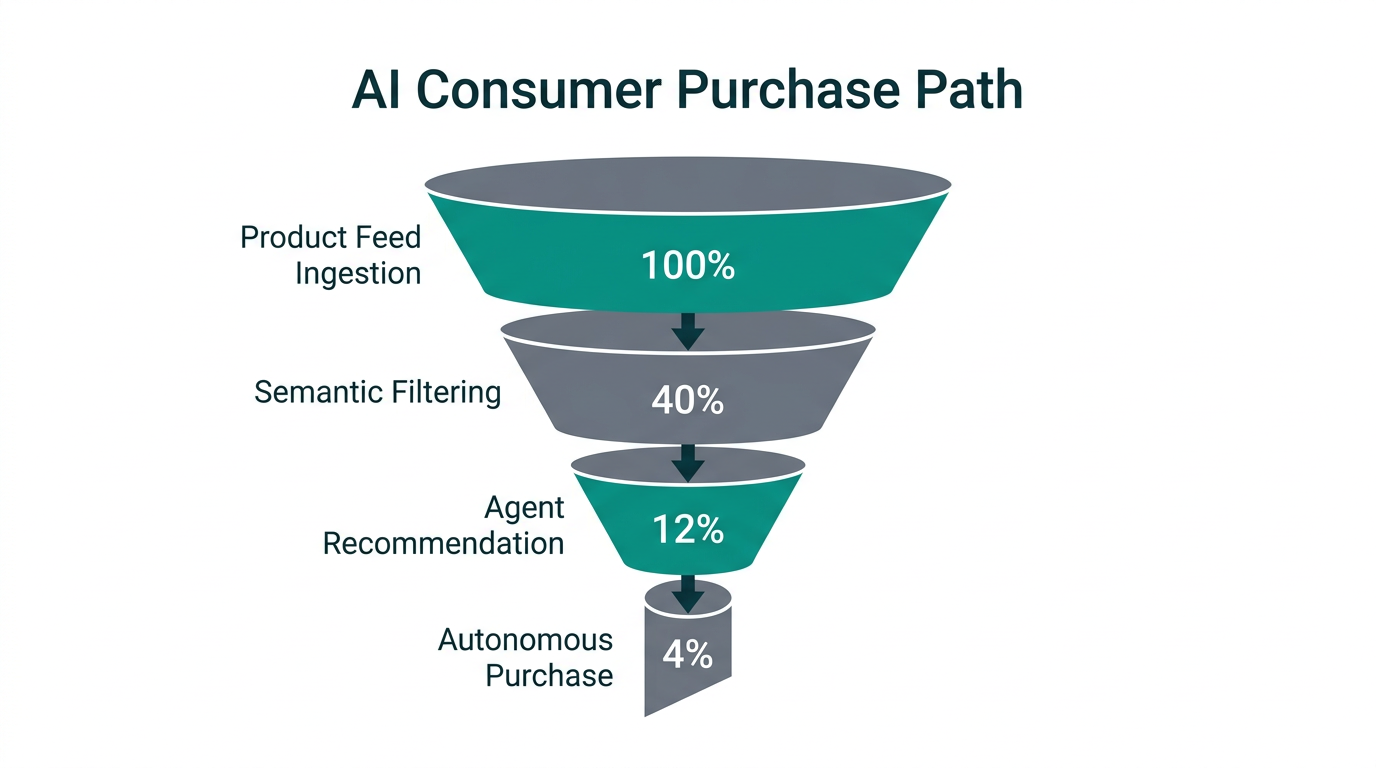
It is no longer just the marketers using AI; the consumers are too. By 2026, an estimated 60% of all transactions are expected to involve AI agents—such as autonomous restocking bots or price-comparison agents—that negotiate deals via APIs rather than interacting with traditional banner ads ([Source: iOPEX Technologies]). This necessitates a radical rethink of your store's infrastructure.
The Mobile-First Mandate
Mobile dominance is absolute in 2026, with 79% of all Shopify store visits originating from mobile devices. However, many brands still suffer from a "conversion gap." Data from TechnologyChecker shows that while mobile traffic is high, conversion rates often lag at 1.2% compared to 1.4% for desktop. To bridge this gap, your e-commerce growth strategy 2026 must focus on mobile-specific technical optimizations.
- The 3-Second Rule: Page load times exceeding 3 seconds increase your bounce probability by 90%. This is a critical factor for ad quality scores.
- Thumb-Friendly Design: Interactive elements and buttons must be at least 44x44 pixels to prevent "fat-finger" bounces ([Source: Rablab]).
- API Readiness: Ensure your product feeds are optimized for AI agents to crawl and compare prices accurately via Shopify's headless API solutions.
The 2026 Budget Reallocation Framework: Signal over Habit
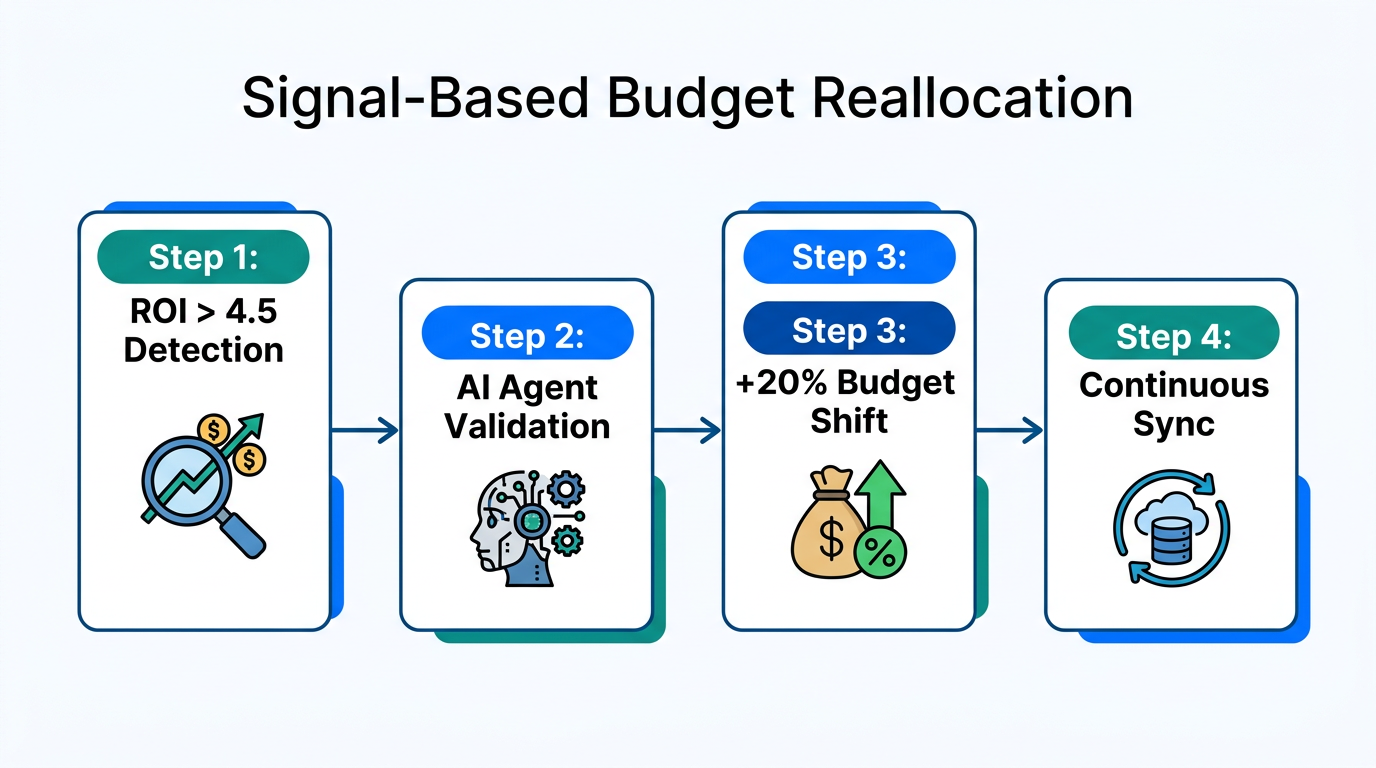
One of the most significant changes in autonomous ad management is the death of "habit-based" spending. In the past, brands would allocate fixed percentages of their budget to Meta, Google, and TikTok. In 2026, leading brands use a signal-based performance model. Expert Mia Healy from Triple Whale notes that 2026 is about building balanced channel mixes that reallocate spend based on real performance signals rather than historical habits.
| Strategy Component | Old Approach (2024-2025) | 2026 Agentic Approach |
|---|---|---|
| Budget Allocation | Fixed monthly budgets per channel | Fluid cross-channel reallocation |
| Attribution | Last-click or basic multi-touch | Machine learning-led signal analysis |
| Creative Testing | Manual A/B testing cycles | Autonomous AI-generated testing |
| Optimization Goal | ROAS (Return on Ad Spend) | MER (Marketing Efficiency Ratio) & POAS |
A prime example of this is the Travelpro Case Study. By using Triple Whale’s advanced attribution models, Travelpro discovered that 20% of their purchases were actually influenced by PR channels (like NYT Wirecutter) rather than the direct ads they were credit-linking. This insight allowed them to move spend away from low-impact habits and into high-impact signals.
"2026 is about building balanced channel mixes and reallocating spend based on real performance signals instead of habit." — Mia Healy, Triple WhaleImplementing 'Structural Speed' and First-Party Data Infrastructure
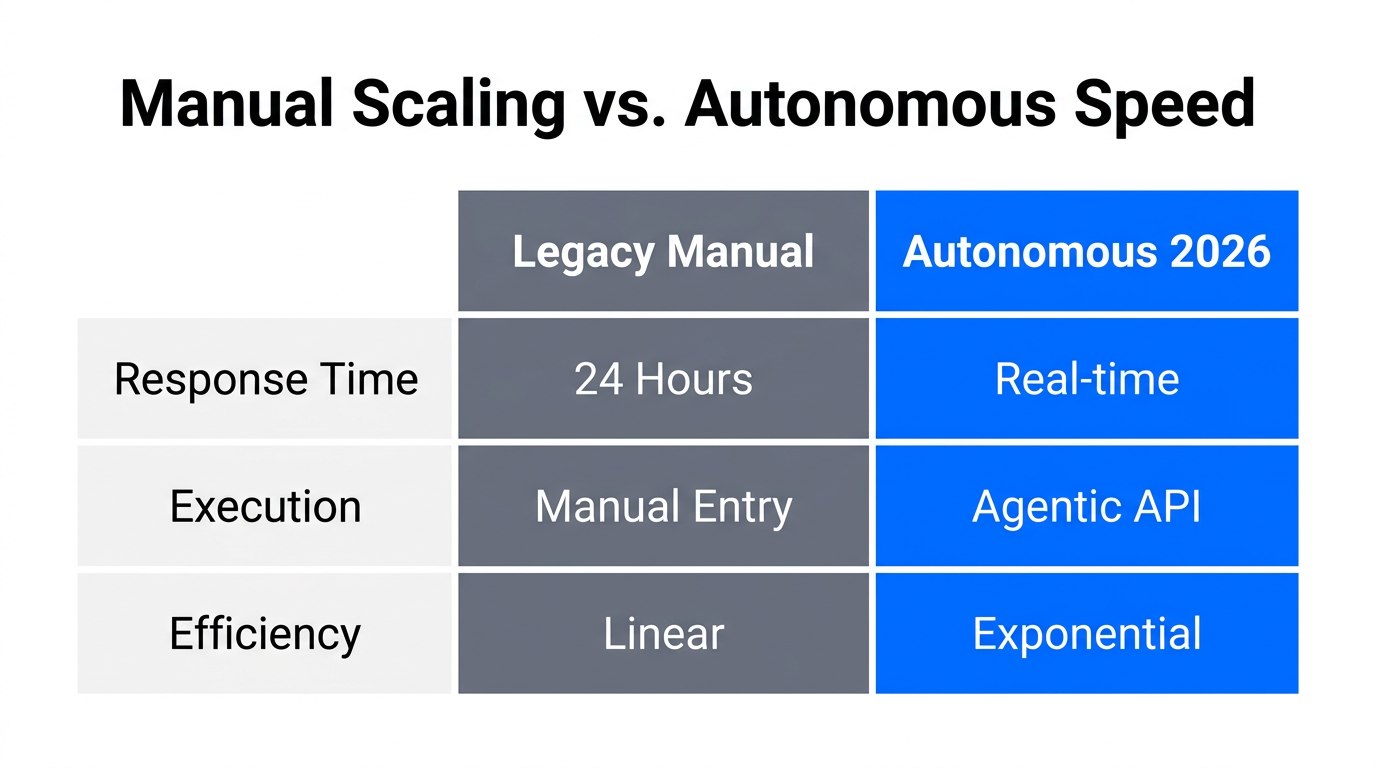
In the Algorithmic Era, the brand with the best data wins. Neil Kettleborough argues that "Structural Speed"—the reliability and velocity of real-time data flow—is the new competitive advantage (Neil Kettleborough). To achieve this, Shopify stores must move beyond browser-based pixels.
Server-Side Tracking is Mandatory
With the total deprecation of third-party cookies, tools like the Meta Conversions API (CAPI) and Google Enhanced Conversions are now mandatory. To scale AI marketing automation, you should implement server-side tracking via tools like wetracked.io. This captures backend Shopify revenue directly, ensuring your ad platforms optimize based on actual sales rather than incomplete browser data.
Furthermore, leveraging Shopify Audiences allows you to tap into Shopify’s proprietary data to find high-intent buyers, effectively bypassing many of the tracking limitations imposed by modern privacy standards.
Mastering Precision Bidding with AI Max and Standard Shopping
While autonomous ad management handles much of the heavy lifting, strategic oversight remains vital. The most successful Shopify brands in 2026 use a "hybrid" approach to bidding. This involves mastering Google’s Performance Max (PMax) and Meta’s Advantage+ campaigns while maintaining specific controls.
According to Stan Consulting, the optimal setup for 2026 involves running a high-priority Standard Shopping campaign for your top 20 margin products alongside your PMax campaigns. This ensures your most profitable items get the visibility they deserve while the AI explores broader opportunities.
Autonomous Creative Systems
The pace of creative fatigue has accelerated. Brands using agentic AI to generate, test, and iterate creative on a weekly basis have seen CAC drops of up to 27% (If This Then Data). To maintain this volume, many marketers use AI discovery tools like Stormy AI to find and vet UGC creators who can provide the raw assets that AI agents then remix for various formats and platforms.
"Creative is the only lever left for human marketers to truly influence. But even there, the execution must be autonomous to keep up with 2026 demand."The 2026 Shopify Growth Stack
To implement these Shopify ads optimization 2026 strategies, you need a robust tech stack that supports agentic workflows and precision attribution.
| Tool | Category | Primary 2026 Use Case |
|---|---|---|
| Triple Whale | Analytics | Machine learning-based multi-channel attribution |
| Klaviyo | Retention/Ads | AI-driven email and SMS sync with ad audiences |
| Madgicx | Automation | Autonomous Meta ad operations and budget scaling |
| Cometly | Attribution | Real-time ad tracking and ROI visualization |
| Stormy AI | Influencer/UGC | Finding and managing creators for autonomous creative feeds |
| ReConvert | Upsell | Maximizing LTV via autonomous post-purchase funnels |
When selecting tools, avoid "app bloat." Installing too many single-use apps can degrade your Core Web Vitals, which Google now uses as a direct factor for ad quality scores ([Source: Google Search Central]). Aim for integrated platforms that offer multiple functionalities within a single ecosystem.
Common 2026 Pitfalls to Avoid
As you scale your autonomous ad management, watch out for these common errors that can drain your budget:
- Ignoring View-Through Conversions: Research shows that up to 95% of ad impact occurs when users see but do not click an ad ([Source: Layerfive]). If you rely only on "Last Click" attribution, you will prematurely cut your most effective top-of-funnel discovery campaigns.
- Branded Traffic Cannibalization: Ensure your PMax or broad match Search campaigns exclude your own brand name. Failing to do so inflates your ROAS but provides zero incremental growth (Stan Consulting).
- Designing for Desktop First: In 2026, designing on desktop and merely "checking" mobile is a recipe for failure. Your entire UI/UX should be built for the thumb first, utilizing Shop Pay for one-click checkouts.
Conclusion: The Future is Autonomous
Success in Shopify ads optimization 2026 is no longer about who can spend the most time in the ad manager; it is about who can build the most effective autonomous systems. By transitioning to agentic AI, prioritizing structural speed through first-party data, and adopting a signal-based budget model, you can scale your brand in an increasingly algorithmic world.
As you move forward, remember that while the AI executes, you must still provide the vision. Start by auditing your data infrastructure with tools like Analyzify, then look to scale your creative pipeline with Stormy AI to ensure your agents always have the high-quality fuel they need to drive growth.