In mid-2026, the definition of ecommerce 'automation' has undergone a radical transformation. We have moved past the era of static triggers and basic 'if-this-then-that' rules. Today, high-growth brands are building Agentic Stacks — ecosystems where autonomous AI employees handle the heavy lifting of both logistics and customer acquisition. If you are still manually clicking through dashboards to print labels or managing influencer spreadsheets by hand, you are operating at a massive disadvantage. The current year is 2026, and the global e-commerce market has hit $6.88 trillion, fueled by a 90% surge in retailer AI investment.
The 2026 Agentic Shift: Why Traditional Automation is Obsolete
The core shift this year is from 'tools that need a human' to 'agents that need a goal.' Traditional software like legacy versions of ShipStation or early creator platforms required constant management. In 2026, we are seeing the rise of Agentic Commerce, where AI agents like Stormy AI actually pursue objectives, negotiate with partners, and troubleshoot logistics errors without waiting for a human to log in. According to Salsify 2026 Consumer Research, 22% of shoppers are now using AI-powered search assistants to discover products, making it critical for your back-office agents to be active 24/7.
"The value in 2026 isn't in search—it's in the execution of the entire supply chain. A true agent connects to your inventory, evaluates demand, and executes reorders without human intervention."
ShipStation Intelligence: The 2026 Gold Standard for Logistics
In March 2024 (updated for 2026), Auctane released ShipStation Intelligence, a suite that applies predictive AI across the entire shipment lifecycle. For the operations manager, this means the software no longer just prints labels; it identifies risks like predicted carrier strikes or weather delays before the label is even generated. Early pilot users of this agentic logistics layer report a 10–20% cut in shipping costs per order through autonomous 'Rate Shopping' that toggles between carriers to find the absolute best value.
The Gold Tier Paywall and API Realities
However, the 2026 landscape isn't without friction. ShipStation recently moved its API access to the Gold Plan ($29.99/mo) and above. This 'Gold Tier Paywall' has caused some pushback on Reddit's ecommerce communities, where smaller merchants argue that access to the 'Rate Shopper' endpoint should be universal. Despite this, mid-market accounts are saving an average of $2,700 per month by using ShipStation Intelligence to consolidate up to five separate logistics and analytics tools.
Stormy AI: Plugging the 'Distribution Gap'
While ShipStation excels at fulfillment execution (moving the physical package), it does nothing for distribution execution (getting the order in the first place). This is where an AI ecommerce employee like Stormy AI becomes the critical second half of the stack. Stormy bridges the gap by acting as an autonomous growth teammate that handles Google Ads, Meta Ads, and creator operations.

Unlike traditional influencer platforms that just give you a database, Stormy AI uses natural-language search to find creators and then activates an Autonomous Outreach Agent. This agent drafts hyper-personalized emails referencing specific past posts from the creator, which has been shown to increase reply rates by 2.3x (a 43% improvement) over legacy template-based tools. For a lean founder, Stormy is effectively replacing a full-time influencer manager.
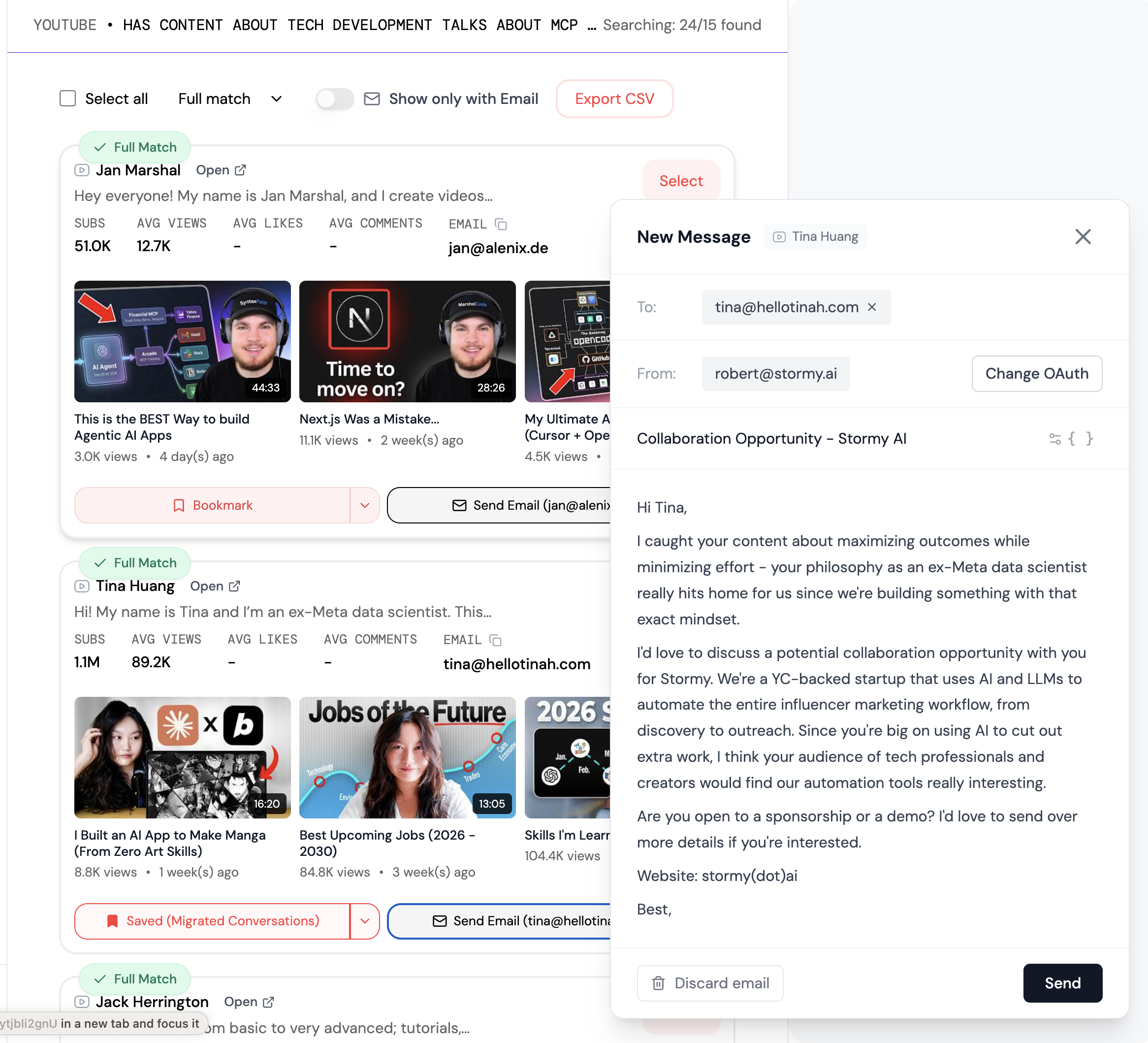
"Brands using Stormy’s automated creator outreach report 37% higher engagement rates and a 90% reduction in time-to-contract for UGC campaigns."
ShipStation vs. Stormy AI: The 2026 Comparison Table
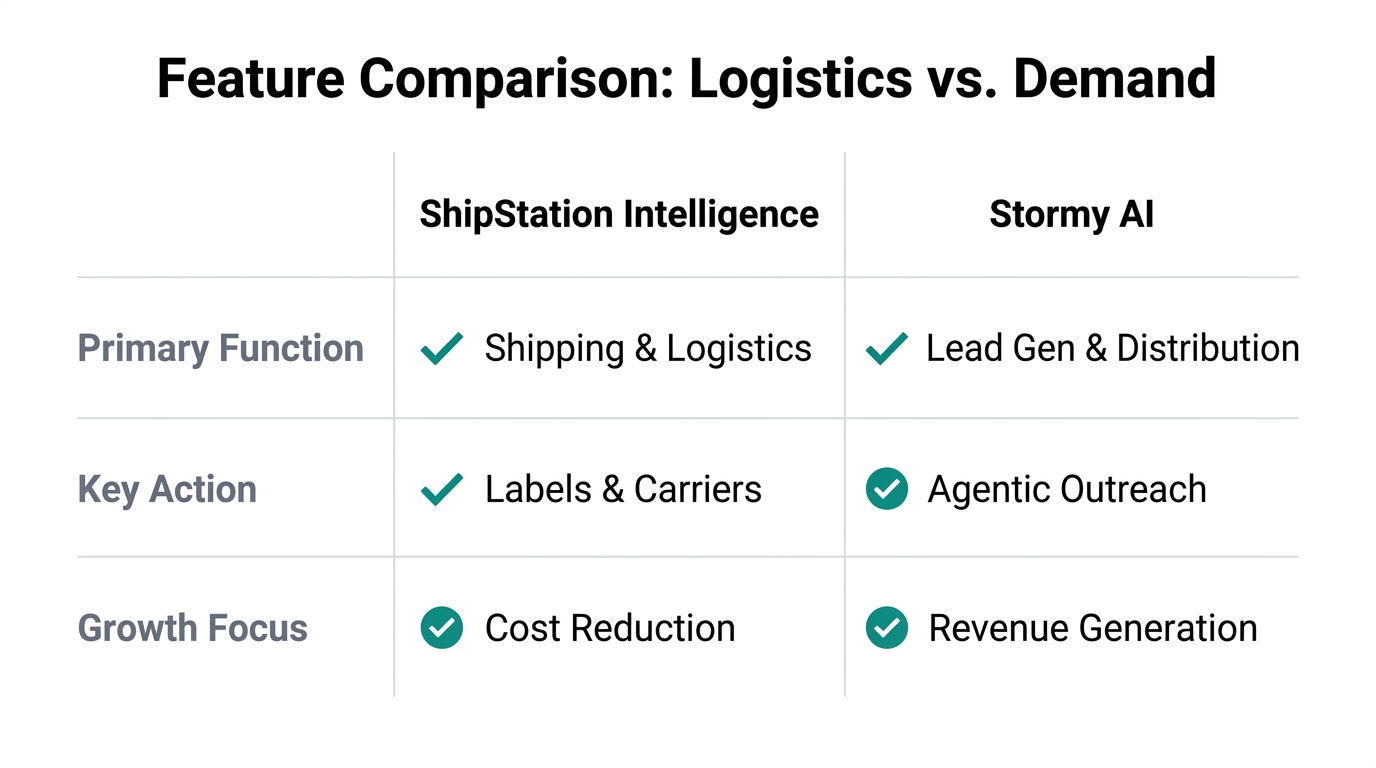
To understand how to balance your budget, you must distinguish between logistics and growth. ShipStation is essential once you have orders; Stormy AI is essential to generate those orders efficiently in a high-CAC environment.
| Feature | ShipStation Intelligence | Stormy AI (AI Employee) |
|---|---|---|
| Primary Goal | Logistics & Fulfillment | Growth & Distribution |
| Core AI Function | Carrier rate shopping & risk prediction | Autonomous creator outreach & ad ops |
| Best For | High physical order volume | Scaling reach without hiring |
| Integrations | Shopify, Amazon, 200+ Carriers | Shopify, Meta, TikTok, YouTube, Gmail |
| Pricing (2026) | $9.99 – $349.99+/mo | Starts at $40/mo |
The 2026 Playbook: Building a 'Closed-Loop' Back Office
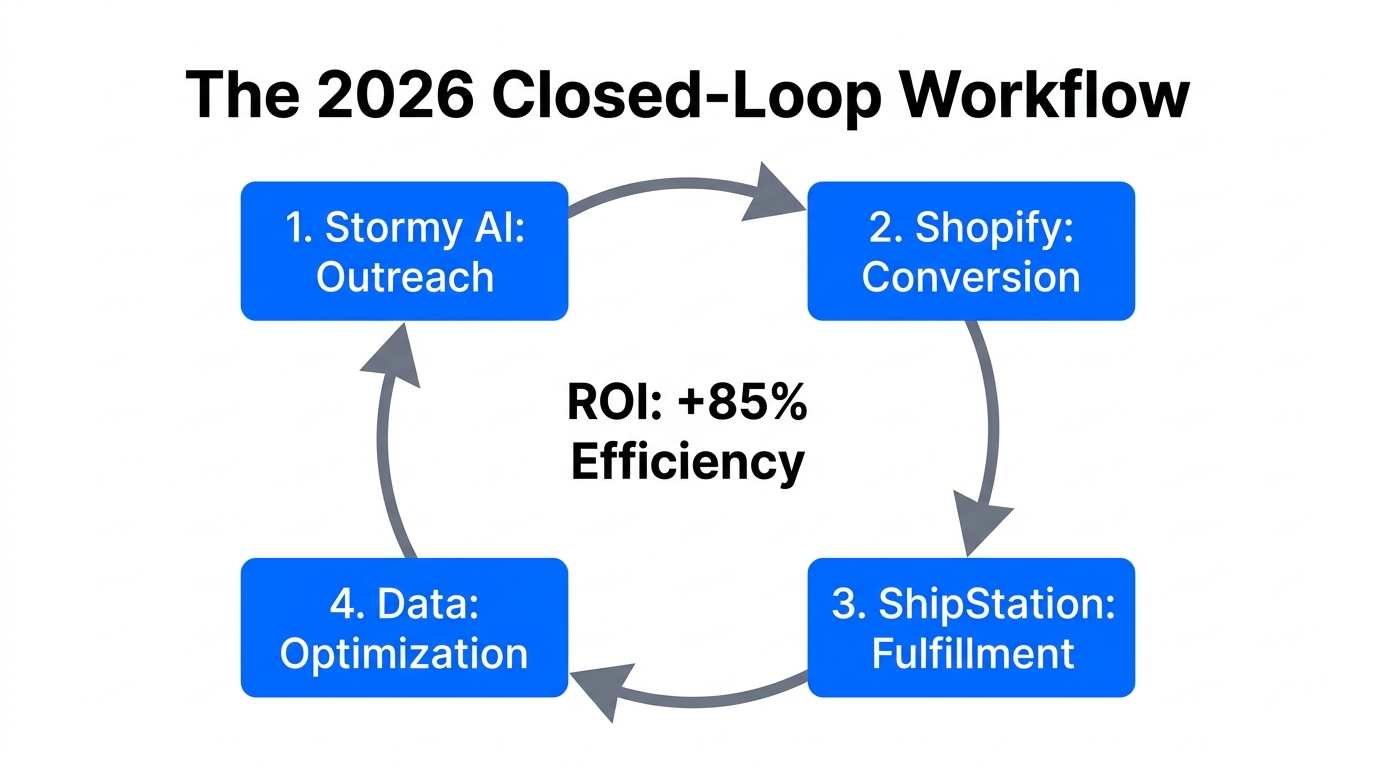
The ultimate goal for a 2026 ecommerce founder is a Closed-Loop System: Stormy AI generates demand, and ShipStation executes fulfillment with zero human intervention. Here is how to set it up.
Step 1: Connect Your Distribution Agent
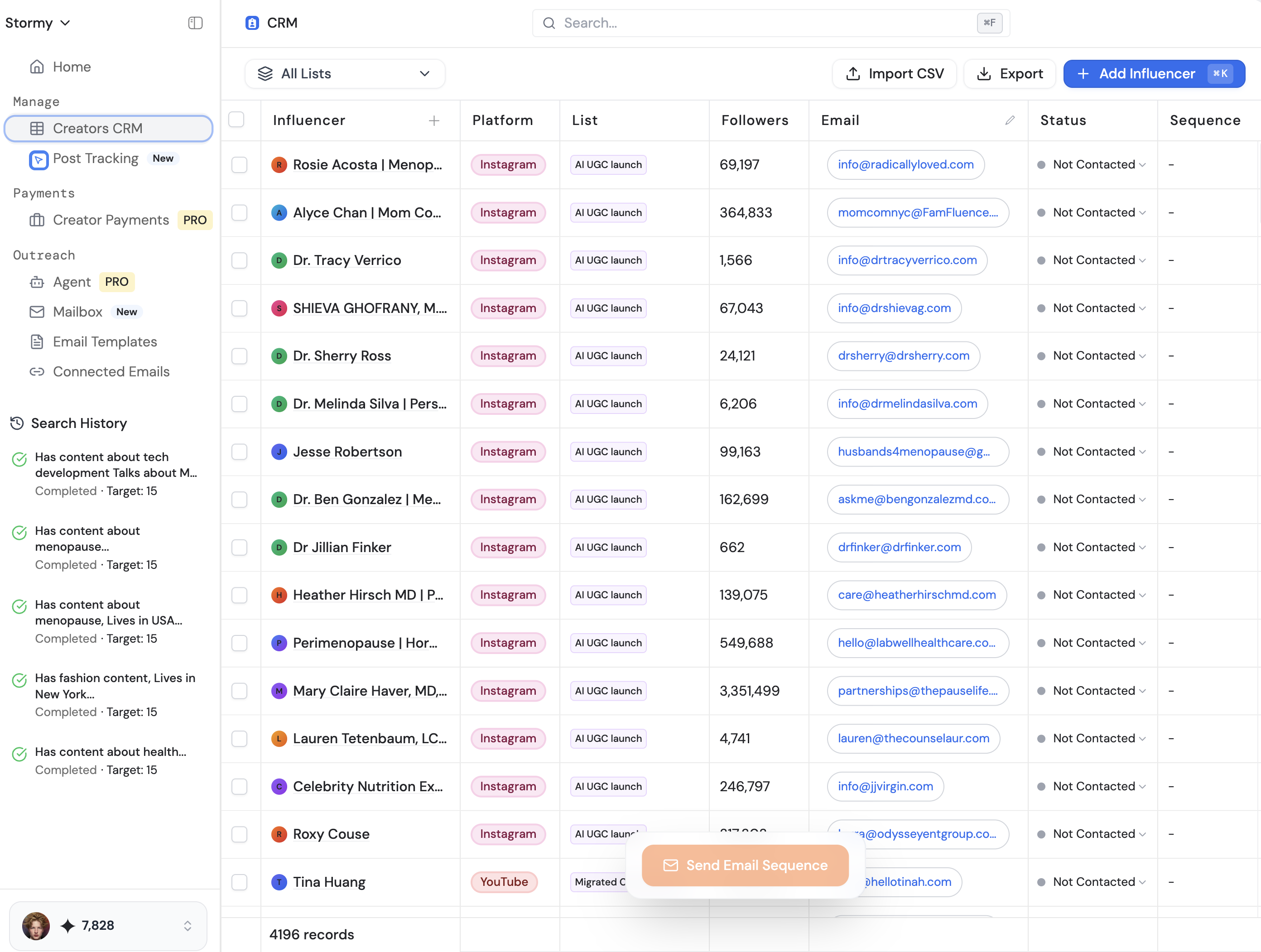
Link your Shopify or TikTok Shop to Stormy AI. Use natural language to define your goals: "Find minimalist decor YouTubers with 10k–50k followers and negotiate UGC deals under $300." Stormy will monitor your ad spend and creator ROI in a living spreadsheet.
Step 2: Scaffolding the Outreach
Upload your historical CRM data to 'Scaffold' the agent. This prevents what AI researchers call 'Hallucinations' — such as the AI offering a $500 collaboration to a creator who previously worked for $50. By referencing real-time supply chain data, Stormy can even pause creator campaigns if inventory levels in your warehouse drop too low.
Step 3: Enable AI-Powered Rate Shopping
In ShipStation, configure Automation Rules for carrier selection. Use the 'Rate Shopper' API to specify a strategy like best_value. The system will automatically select the cheapest/fastest route across 200+ carriers. As Stormy AI drives new orders, ShipStation ensures they are packed and shipped at the lowest possible cost.
"Marketers are entering the era of B2A. They must optimize content so autonomous agents can discover and parse their brands."
Budgeting for the Agentic Era: ROI and Platform Realities
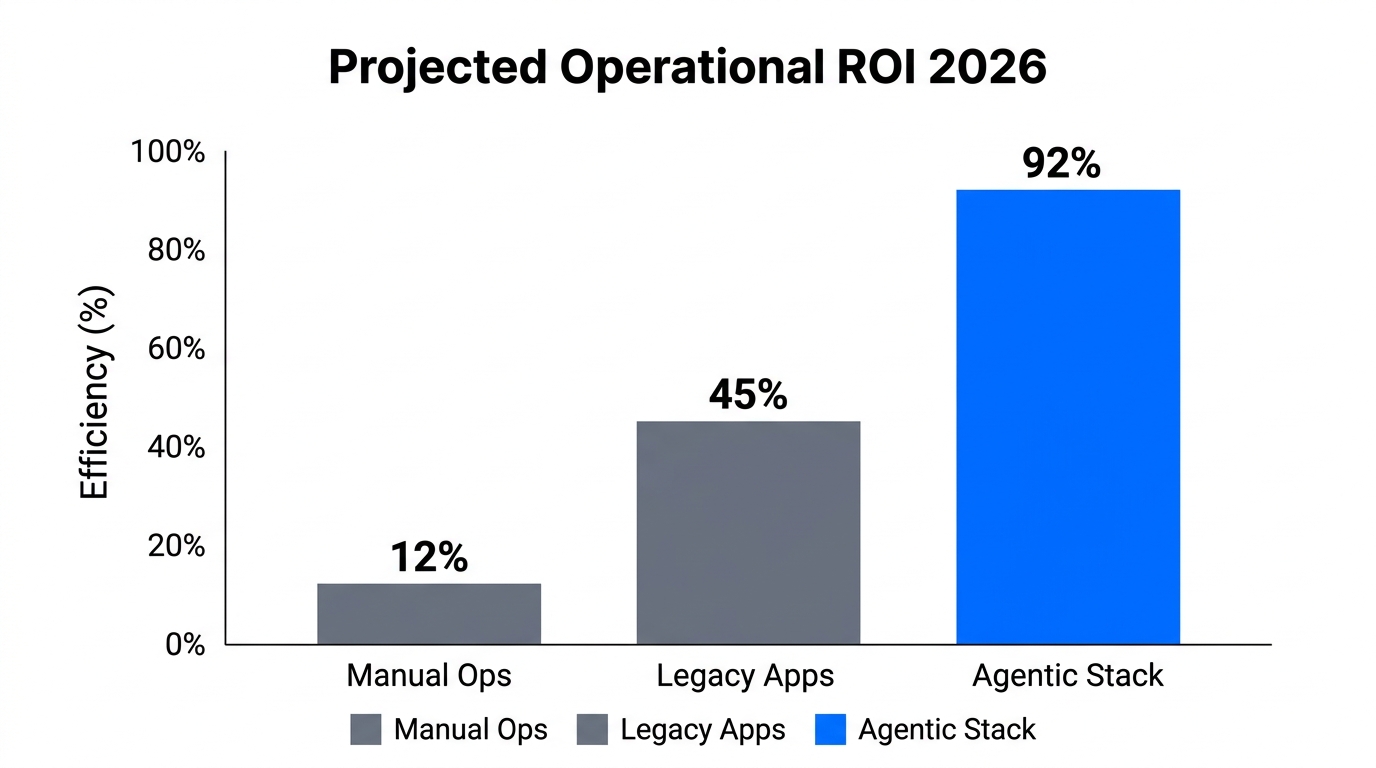
Managing the costs of these tools requires looking at the bottom line. While ShipStation's Scale Plan at $99.99/mo is a prerequisite for high-volume API access, the 112% increase in upsells through 'Smart Exchanges' (intelligent returns) often covers the subscription cost. On the other hand, Stormy AI is priced as an employee, not just a tool. A single UGC campaign managed by Stormy for a brand like Blueland resulted in $129k in revenue within 90 days and a 13x ROI.
However, beware of the 'Agentic Trap.' Gartner predicts that 40% of AI projects will fail by 2027 because brands try to run agents on 'dirty' data. Before you scale, ensure your inventory syncs between Amazon Seller Central and Shopify are real-time. Even a small delay in data flow can lead to overselling, which in 2026 triggers severe search ranking penalties.
Conclusion: The Lean Ecommerce Stack of the Future
In 2026, the 'ShipStation vs. Stormy AI' debate isn't about choosing one — it is about integrating both into a seamless operational loop. ShipStation Intelligence handles the physical complexities of global shipping, reducing your cost-per-order through predictive routing. Meanwhile, Stormy AI acts as your 24/7 growth agent, sourcing creators, managing ad bids, and keeping your distribution machine running while you sleep. By combining logistics automation with distribution automation, you aren't just running a store; you are operating a self-scaling agentic enterprise. Start by auditing your current manual tasks and ask: could an AI employee handle this in the background?