The Unified Commerce Blueprint: Scaling Multi-Channel Growth with ShipBob and Ecommerce Inventory Management Automation in 2026
Discover how to scale multi-channel fulfillment in 2026 using ShipBob and inventory automation. Move from omnichannel to unified commerce for 99% accuracy.
In the high-velocity retail environment of 2026, the traditional boundaries between online and offline commerce have completely dissolved. For brands aiming to scale, the focus has shifted from merely being "present" on multiple platforms to achieving ecommerce operational maturity. Success this year is no longer measured solely by top-line revenue, but by the efficiency of the back-office engine that powers every transaction. As multi-channel fulfillment strategies 2026 evolve, businesses are increasingly turning to ShipBob and sophisticated automation to manage the complexities of modern logistics.
The current landscape is dominated by a transition from omnichannel selling—where channels were often siloed or loosely synced—to Unified Commerce. In this new paradigm, a single source of truth governs every SKU across 3PLs, dark stores, retail locations, and social marketplaces. For SMBs, adopting unified commerce for SMBs is no longer an optional upgrade; it is a survival requirement in a market where inventory mismanagement contributes to 43% of lost sales in online retail.
The Shift from Omnichannel to Unified Commerce: Why a Single Source of Truth is the 2026 Standard
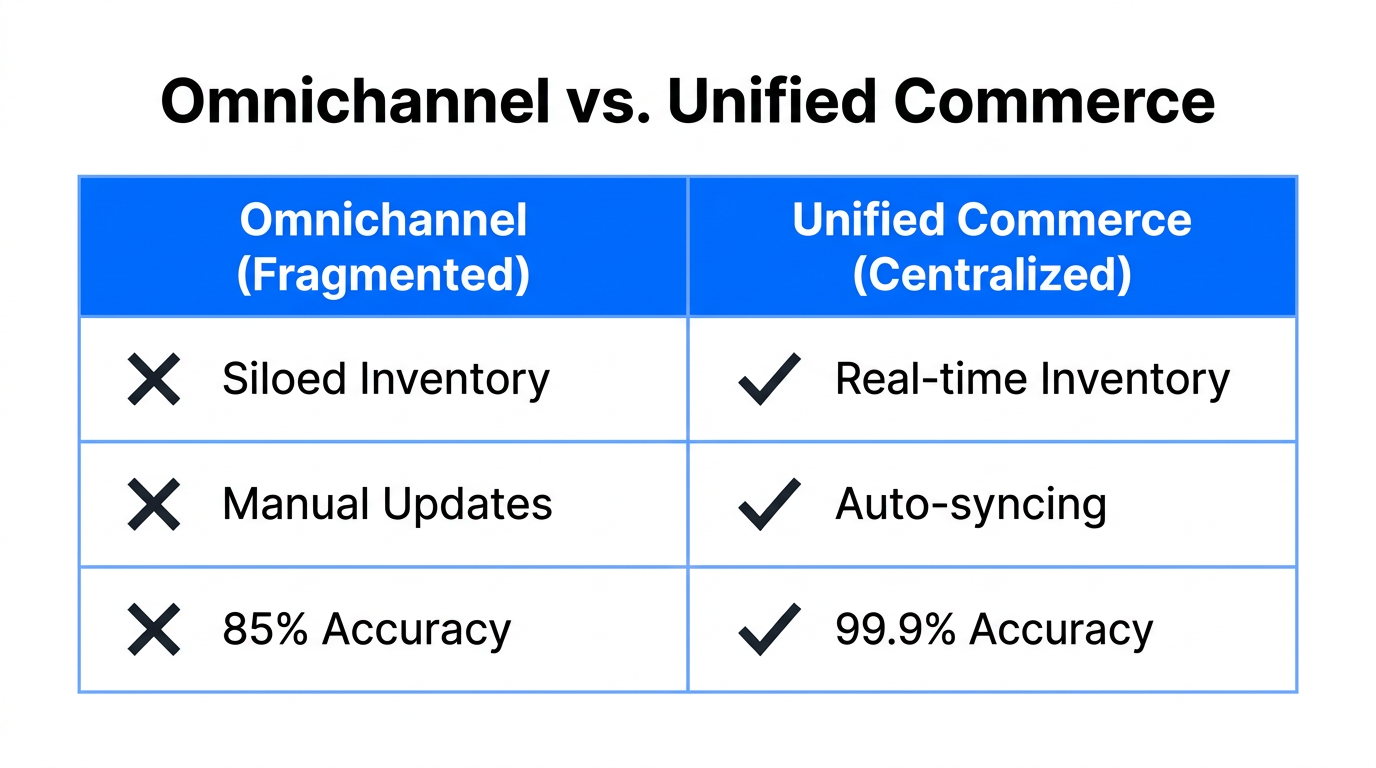
In years past, brands were satisfied with having their Shopify store "talk" to their Amazon account. However, as we move through 2026, "syncing" is no longer enough. The standard has moved toward a fully integrated ecosystem where your Order Management System (OMS) acts as the strategic engine for all stock. Whether a customer buys a product through TikTok Shop video, a LinkedIn newsletter ad, or a physical pop-up shop, the inventory must reflect that change instantly across all platforms.
Industry experts from Gartner and McKinsey emphasize that growth without visibility is a liability. Brands that rely on fragmented data sources find themselves plagued by stockouts and overstocking—both of which kill cash flow. Automated inventory systems, utilizing IoT and smart shelving, are now achieving 95–99%+ accuracy, a staggering leap from the 63–65% accuracy typical of manual environments.
"The move to Unified Commerce isn't just about software; it's about a cultural shift from 'selling everywhere' to 'operating as one.' In 2026, your supply chain is your most potent marketing tool."
By centralizing data, brands can implement Agentic Commerce—a shift where AI agents not only predict demand but autonomously negotiate with suppliers and execute purchase orders. This level of automation ensures that your multi-channel fulfillment strategy 2026 remains resilient against global supply chain fluctuations. Platforms like NetSuite and Cin7 are leading this charge, providing the architectural backbone needed for unified operations.
Using ShipBob's Automation to Reduce Last-Mile Costs and Carbon Footprints
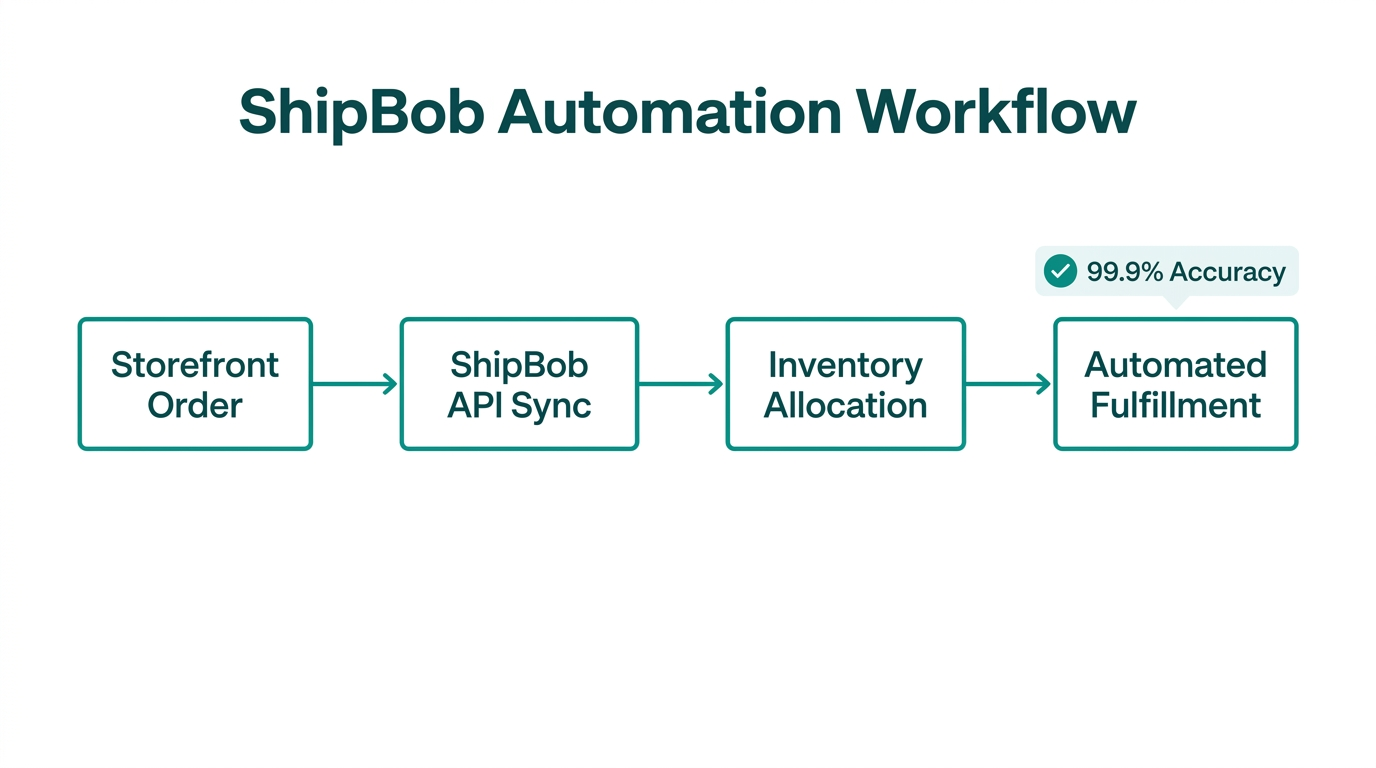
One of the most significant challenges in 2026 is the rising cost of the "last mile." To combat this, ShipBob ecommerce inventory management automation focuses on distributed inventory. Instead of shipping everything from a single central hub, ShipBob’s algorithms prioritize shipping from the fulfillment center closest to the customer. This reduces transit times, lowers shipping costs, and aligns with the growing consumer demand for sustainability-driven fulfillment.
By distributing stock across a global network of warehouses, brands can offer competitive shipping speeds that rival giants like Amazon. Amazon itself has set the gold standard by using Kiva robots and AI-powered forecasting to reduce warehouse errors by 25%. ShipBob brings this enterprise-level technology to growing SMBs, allowing them to scale without the massive capital expenditure of building their own logistics infrastructure.
| Fulfillment Factor | Manual/Siloed Approach | ShipBob Automated Approach |
|---|---|---|
| Inventory Accuracy | 63% - 65% | 99%+ |
| Last-Mile Delivery | Zone-independent (Higher Cost) | Location-optimized (Lowest Cost) |
| Reorder Logic | Static/Manual entry | AI-driven Dynamic Thresholds |
| Multi-Channel Sync | Delayed/Batch processing | Real-time/API-integrated |
This geographic intelligence is powered by real-time data. For instance, if a brand sees a surge in demand in the Pacific Northwest due to a local influencer campaign found via Stormy AI, ShipBob's system can suggest reallocating inventory to their Seattle-area dark stores before the stock runs out. This proactive approach prevents the "stockout cascades" that often follow viral growth periods, a strategy utilized effectively by cookware brand Caraway.
Escaping the 'Spreadsheet Trap': Why Manual Tracking Fails at 50 SKUs
Many founders start their journey with a simple Excel or Google Sheet to track inventory. This is fine for the first 10 SKUs, but once a brand exceeds 50 SKUs across two or more sales channels, they hit what we call the Spreadsheet Trap. Manual entry is estimated to introduce a 5% error rate, which compounds monthly. In a multi-channel environment, that 5% error can lead to overselling on TikTok while having "phantom stock" on Shopify.
The Spreadsheet Trap leads to phantom profits—a dangerous situation where businesses automate quantity but not cost. Failing to include landed costs like freight, duties, and insurance in your automated valuation results in an inaccurate picture of your margins. According to Kimonix, ignoring these variables is one of the primary reasons SMBs fail to maintain profitability during rapid scaling.
To avoid these pitfalls, brands must standardize first, then automate. Trying to force a new automated system to copy old, inefficient manual workflows is a recipe for disaster. Instead, utilize tools like Cogsy or Netstock for demand forecasting, which provides a clean data set for your fulfillment engine to act upon.
The Playbook: Automating Lead-Time Adjustments Based on Real-Time Data
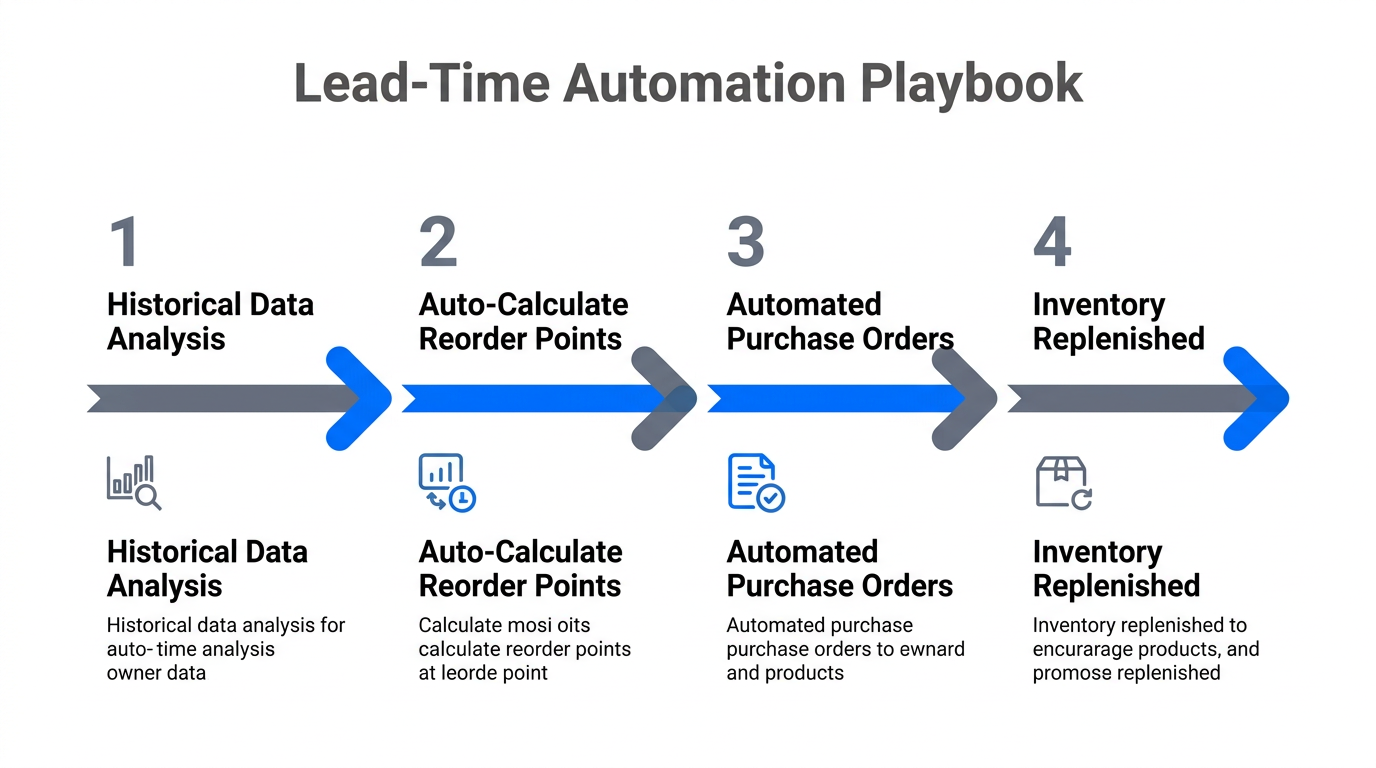
In 2026, using static reorder points is a relic of the past. Supplier performance fluctuates based on raw material availability, shipping port congestion, and seasonal delays. To maintain ecommerce operational maturity, you must automate your lead-time adjustments. Follow this step-by-step playbook to ensure your shelves are never empty:
Step 1: Conduct an AI-Driven ABC Analysis
Automatically categorize your products. "A" items (the top 20% of products driving 80% of revenue) should have tighter automated reorder points and higher safety stock levels. Tools like Flxpoint can help automate this categorization based on historical sales data from multiple channels.
Step 2: Sync with Supplier Performance Data
Your IMS should not just track your stock; it should track your suppliers. If a manufacturer in Vietnam is consistently three days late, your system should automatically adjust the reorder threshold for those SKUs to compensate. This prevents the stockouts that Demand Local notes can lead to a significant drop in customer lifetime value.
Step 3: Implement Hyper-Personalized Merchandising
Sync your inventory levels with your marketing efforts. In 2026, advanced brands use automation to instantly stop running Meta or Google ads for items that fall below a certain "low-stock" threshold. There is nothing more damaging to brand trust than a customer clicking an ad for a product that is sold out. Conversely, use Stormy AI to identify rising creator trends and boost inventory levels for products likely to go viral.
"Inventory is the physical manifestation of your brand promise. If you can't deliver what you promise, you don't have a brand—you have a backlog."
Step 4: Real-Time Receiving Checks
An automated inventory system is only as good as the data entered at the receiving dock. Ensure staff are trained to use mobile scanning tools like Sortly or Veeqo the moment a shipment arrives. A 99% accurate system fails if a palette sits unscanned for 48 hours while customers are trying to buy those items online.
Building Customer Trust: How 99% Inventory Accuracy Drives Long-Term Loyalty
In a world of infinite choices, reliability is a brand's greatest asset. When a customer sees "In Stock" on your website, they expect it to be true. Achieving 99% inventory accuracy through automation directly correlates with higher customer retention rates. Retailers like GreenLeaf Retail have seen sales boosts of 18% simply by reducing stockouts through automated QR scanning and real-time tracking.
Furthermore, automation allows for transparent communication. Systems that provide real-time updates—from order confirmation to the final mile—build a psychological bridge between the brand and the consumer. According to Sendcloud, post-purchase communication is the most critical touchpoint for driving repeat business in 2026.
As you scale your multi-channel presence, remember that the tools you choose today will define your operational ceiling tomorrow. Whether you are leveraging ShipBob ecommerce inventory management automation for fulfillment or using Stormy AI to discover the creators who will move that inventory, the key is integration. By moving toward a unified commerce model, you ensure that your brand is ready for whatever the 2026 market throws your way.
Conclusion: Achieving Operational Maturity in 2026
Scaling a multi-channel brand is a complex puzzle, but the pieces are clearer than ever. By embracing unified commerce, moving away from manual spreadsheets, and leveraging the automated power of platforms like ShipBob, you position your business for long-term success. Inventory isn't just about counting boxes; it's about predicting the future of your customer's needs and having the operational maturity to meet them every single time.
Ready to align your marketing with your inventory? Start by finding the right creators to move your products on Stormy AI, then ensure your back-end is powered by the best-in-class automation tools mentioned in this guide. The brands that win in 2026 are those that master the art of the Unified Commerce Blueprint.