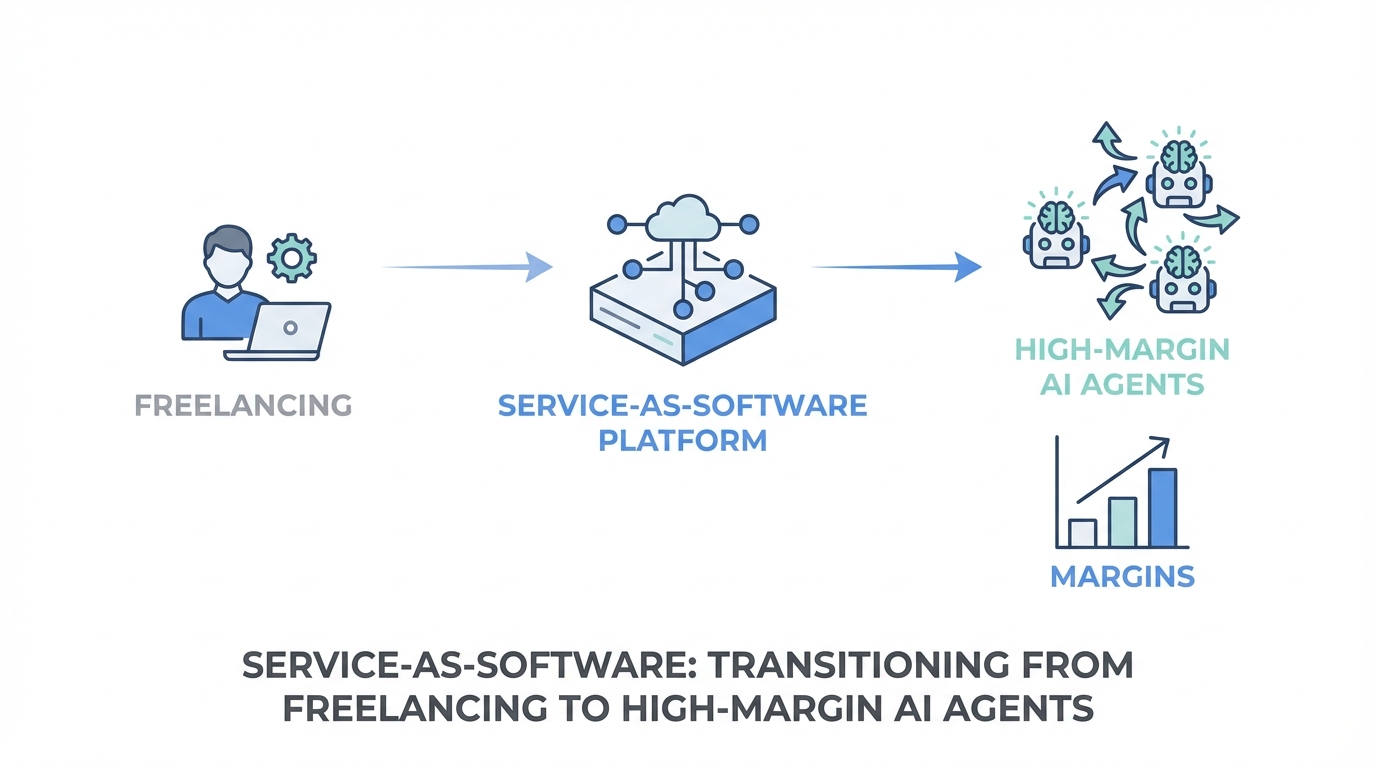
When Sam Altman, the co-founder of OpenAI, predicted that we would soon see the first one-person billion-dollar company, the tech world paused. For decades, scaling a business to a unicorn valuation required hundreds of employees, massive HR departments, and complex management hierarchies. But we have entered the era of the "Idea Guy," where leverage is no longer measured by headcount, but by GPUs and agents. This transition from manual labor to automated fulfillment is giving birth to a new business model: Service-as-Software.
The Shift from SaaS to Service-as-Software
For the last decade, Software-as-a-Service (SaaS) was the gold standard. You built a tool, and you sold access to it. However, the customer still had to do the work. If you sold a CRM, the customer still had to enter the data. If you sold an email tool, the customer still had to write the copy. Service-as-Software flips this model on its head. Instead of selling a tool that helps a human do a job, you sell the outcome itself, fulfilled by AI agents.
We are moving from a world of humans managing humans to a world where a solo founder manages a fleet of agents. In a traditional company, the VP of Sales manages a sales team; in an AI-first company, the founder manages sales agents that handle lead qualification, outreach, and demo booking. This is what Altman means when he says the future of startups could be "one person and 10,000 GPUs." By building on the shoulders of giants like Supabase for infrastructure or Netlify for deployment, the modern solopreneur can access billions of dollars in R&D with a single click.
The Progression Path: Freelancer to Billionaire
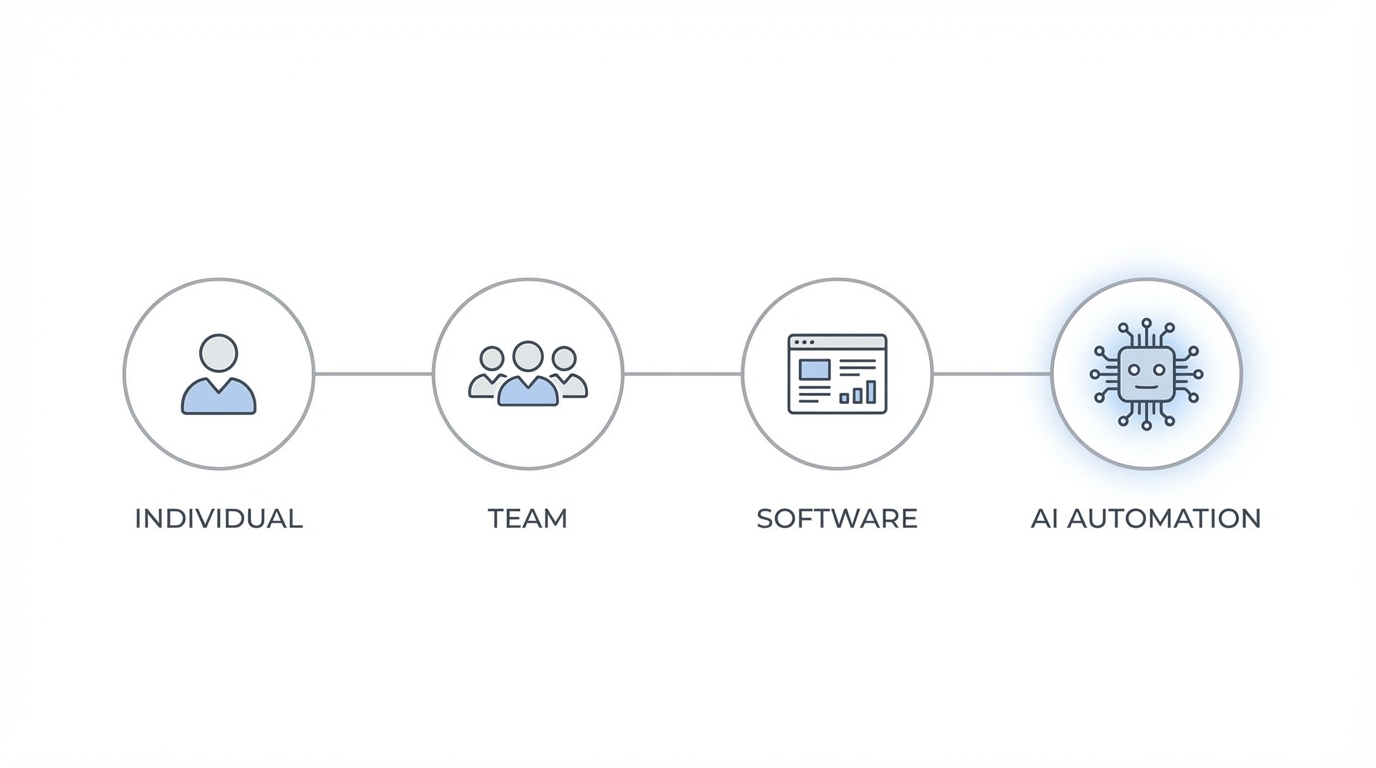
You don't start a billion-dollar company on day one. There is a proven progression path that allows you to de-risk the process while building the necessary leverage of code, audience, and capital. Most successful ai business models follow this four-step evolution:
- The Freelancer: You start by doing manual work for clients on platforms like Upwork. Maybe you design mobile apps or write SEO copy. This is where you learn the pain points of the industry.
- The Productized Service: You stop billing hourly and start billing per project. For example, "I will design your mobile app (5 screens) for $5,000." This standardizes your workflow.
- The Micro SaaS: You identify one repetitive feature that your clients always need and turn it into a software product. This is the vibe-coding stage where you use tools like Cursor to build a solution for your audience.
- AI Fulfillment (The End State): You replace the human labor in your service with AI agents. Now, instead of designing the app yourself, an agent takes the prompt and delivers the UI/UX assets.
The 2x2 Matrix: Finding AI Goldmines
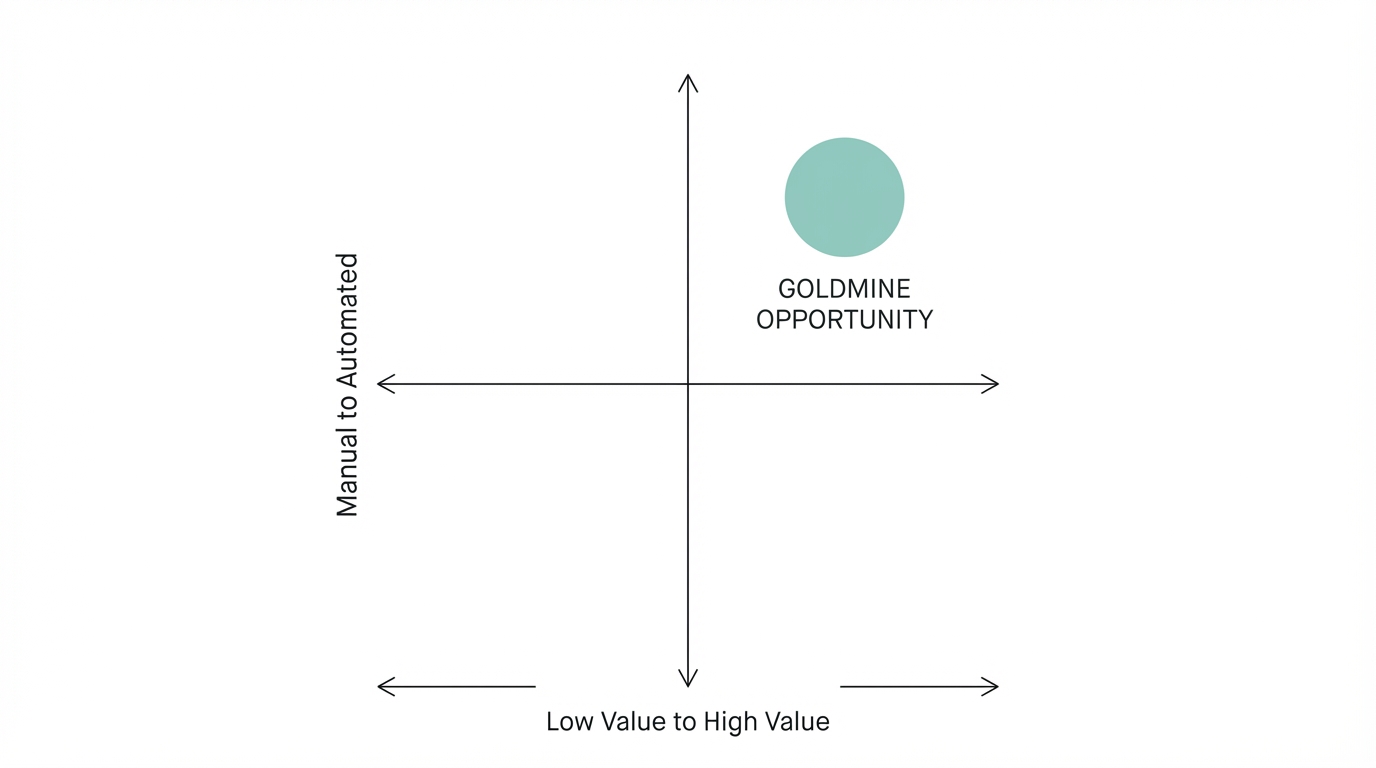
Not every service is a good candidate for the Service-as-Software model. To find ai micro saas ideas that can actually scale, you must analyze your tasks using a 2x2 matrix focused on two variables: Repetition and Value.
The Gold Mine is the quadrant where tasks are High Repetition and High Value. Think about social media management. Brands need content every single day (high repetition), and that content drives revenue (high value). This is the perfect environment for an AI agent. Conversely, tasks that are low value and low repetition are not worth automating. When you evaluate a niche, ask yourself: Does the customer want this outcome multiple times a day? If the answer is yes, you have found a scalable micro-niche.
Pricing for the AI Era: Outcome-Based Models
One of the biggest mistakes founders make is sticking to old-school seat-based pricing. In the age of AI, seat-based pricing is a race to the bottom because agents don't need seats—they need tasks. To build a high-margin business, you should look toward outcome based pricing or usage-based models. A perfect example of this is Fin by Intercom, a customer support agent. Instead of charging for a "support seat," they charge based on successful resolutions. You pay for what the AI actually solves.
This "win-win model" aligns your revenue directly with the value you provide. If you are building a tool for Google Ads optimization, don't charge a monthly fee; charge a percentage of the ad spend saved or a fee per lead generated. This makes the sales process significantly easier because the ROI is built into the pricing.
Marketing Leverage and Creator Communities
In the new path to $1B, distribution comes before the product. Successful solopreneurs like Marc Lou demonstrate that building an audience-first company is the most efficient way to scale. Marc Lou’s MRR growth—reaching $1k in four months and then jumping from $3k to $4k in just one month—shows how audience leverage compounds over time.
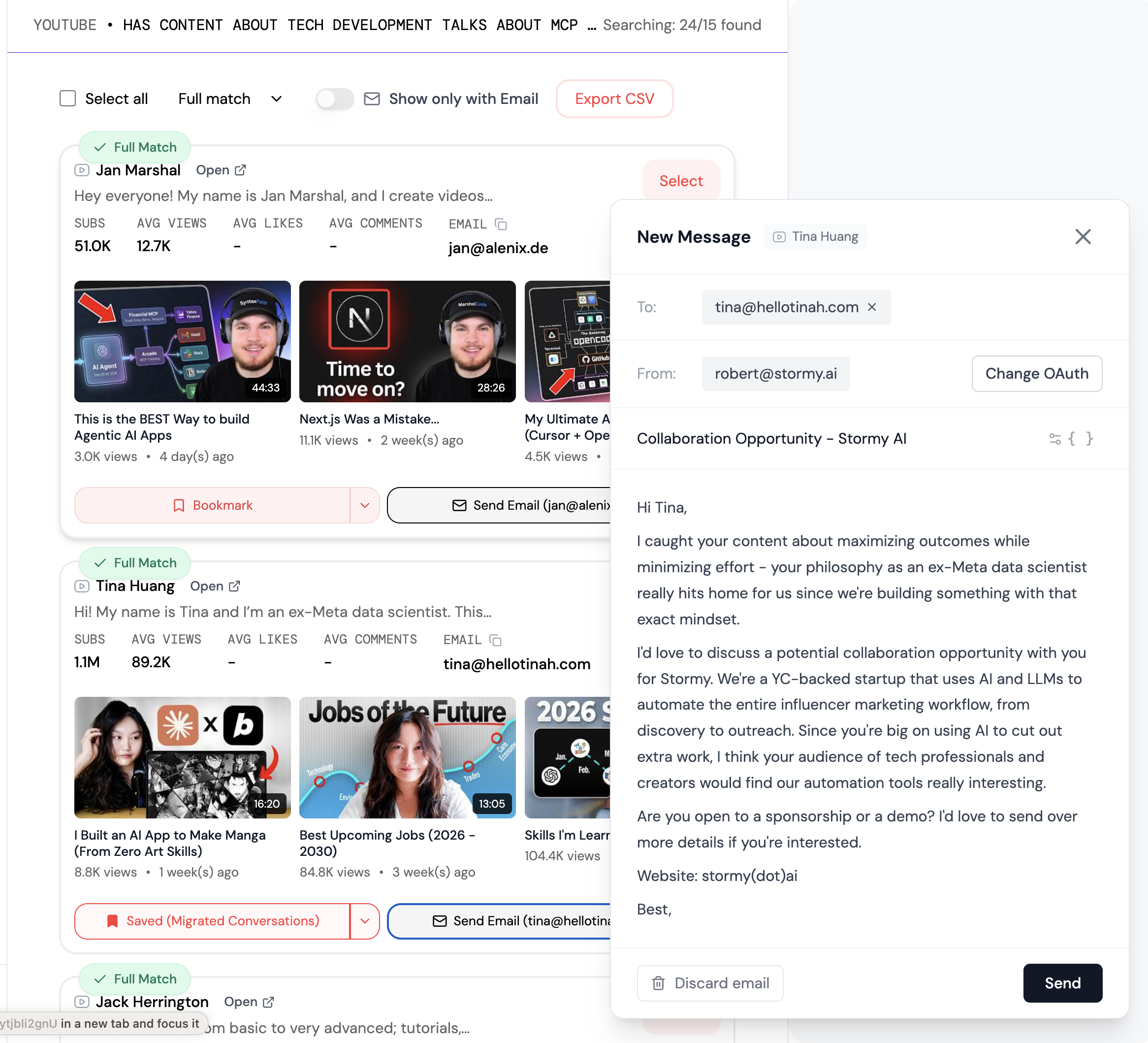
Modern founders use platforms like Meta Ads Manager or Apple Search Ads to reach users, but the real advantage lies in influencer and creator partnerships. If you don't want to build your own audience, you must partner with those who have. Managing these relationships at scale can be difficult for a solo founder, which is where specialized tools come in. For example, platforms like Stormy AI allow founders to use AI agents to discover, vet, and outreach to thousands of creators simultaneously, effectively replacing an entire marketing department with a single automated workflow.
Structuring Your AI Org Chart
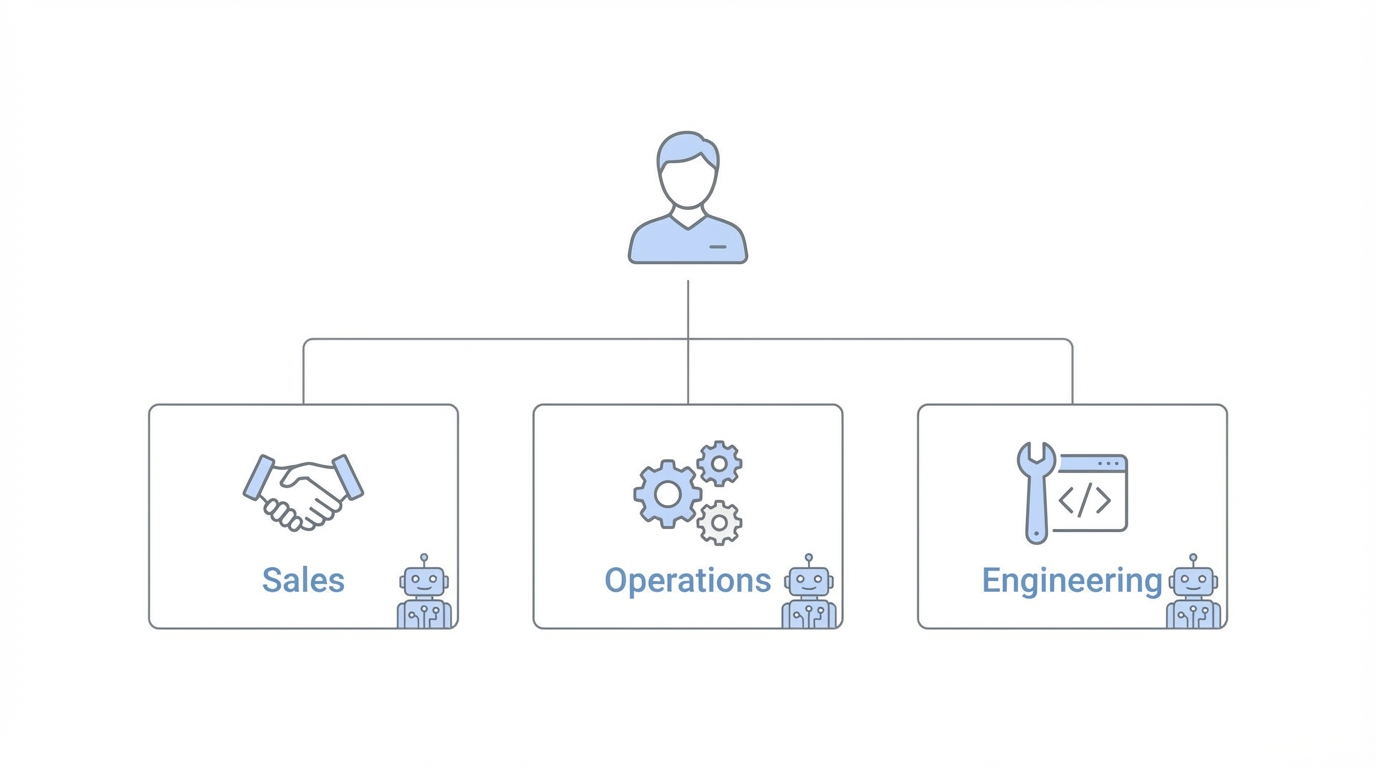
Even as a solo founder, you have an org chart—it just consists of agents instead of employees. Your role as the founder is to provide the context and the rules that these agents follow. A typical solo-founder org chart might look like this:
- Marketing Agents: Handling content creation, SEO, and social media scheduling.
- Sales Agents: Managing lead qualification and automated email follow-ups.
- Engineering Agents: Handling code generation, testing, and DevOps.
- Support Agents: Triage of tickets and documentation updates.
- Data Analyst Agents: Processing metrics from your Shopify store or SaaS dashboard.
The key to making this work is avoiding the "over-automation trap." If your agents lose the human touch, your quality control will suffer, and your brand will lose its connection with the audience. The most successful founders will be those who can dial in the rules so perfectly that the AI output is indistinguishable from, or better than, human output.
Conclusion: The Future of the Solo Unicorn
Is the one-person billion-dollar company actually possible? Technically, yes. Practically, it requires the perfect storm of digital product market fit, network effects, and low regulatory requirements. We expect to see the first solo unicorn emerge between 2026 and 2028, but the 10-person billion-dollar company is likely being built right now.
For those currently freelancing, the message is clear: start moving up the value chain. Stop selling your hours and start building the agents that will sell the outcomes. Whether you are using Idea Browser to find your next niche or deploying your first AI-driven service, the opportunity for unprecedented leverage has never been higher. The era of the solo founder isn't just coming—it's already here. Happy building.