Service as Software: Using AI Agents to Build 75% Margin Businesses in 2026
Learn how the service as software business model is achieving 75% margins in 2026. Use AI agents for business automation to scale your service agency with software multiples.
In the entrepreneurial landscape of 2026, the traditional distinction between "software" and "services" has effectively collapsed. For decades, founders were told that services were a "low-margin trap" while SaaS was the holy grail of scalability. But as we move through this year, a new paradigm has emerged: Service as Software (SwaS). By leveraging advanced AI agents, founders are now building lean organizations that deliver high-touch outcomes with the 75% gross margins typically reserved for pure-play code. The result is a surge in high margin business ideas 2026 that are disrupting everything from retail expansion to influencer marketing.
"The golden standard used to be 'triple, triple, double, double' revenue growth. In 2026, AI-native companies are seeing 10x, 10x, 10x trajectories because they've removed the human bottleneck from the delivery loop."
The Death of SaaS and the Rise of SwaS
Explore the shift from traditional SaaS to high-margin service businesses powered by AI agents.
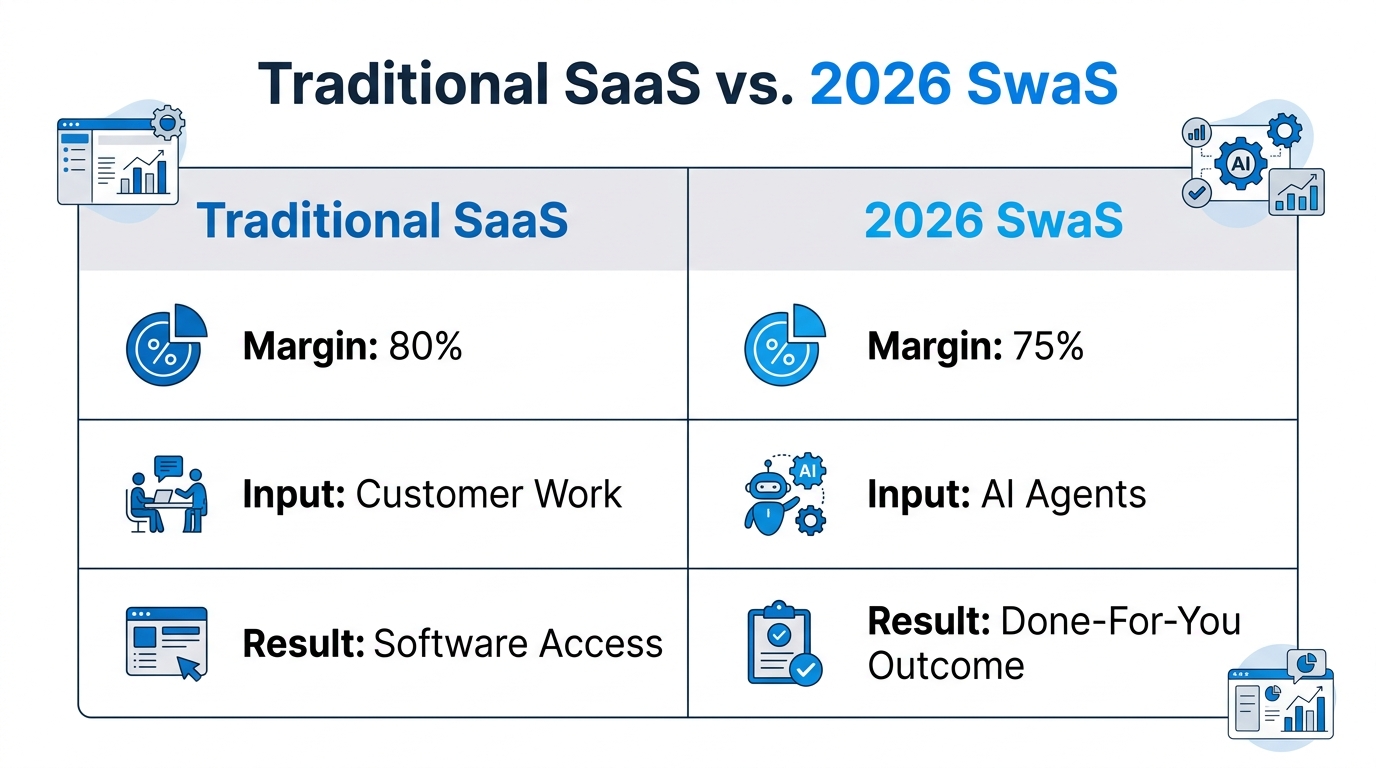
For a long time, the problem with software was that it required the customer to do the work. You bought a seat at legacy CRM platforms, and then you had to hire a human to manage the data. In 2026, customers no longer want tools; they want outcomes. This is where the service as software business model thrives. Instead of selling a dashboard, SwaS companies sell the completed task, performed by an autonomous agent.
This shift is driven by the explosive growth of AI capabilities. We've seen platforms like Anthropic reach significant milestones in monthly revenue this year—a figure that surpasses the growth of legacy giants like Snowflake or Databricks. This massive infusion of capital into AI infrastructure means that AI agents for business automation are now robust enough to handle complex, multi-step workflows that previously required a team of junior associates.
Building the "Autonomous Company" Model
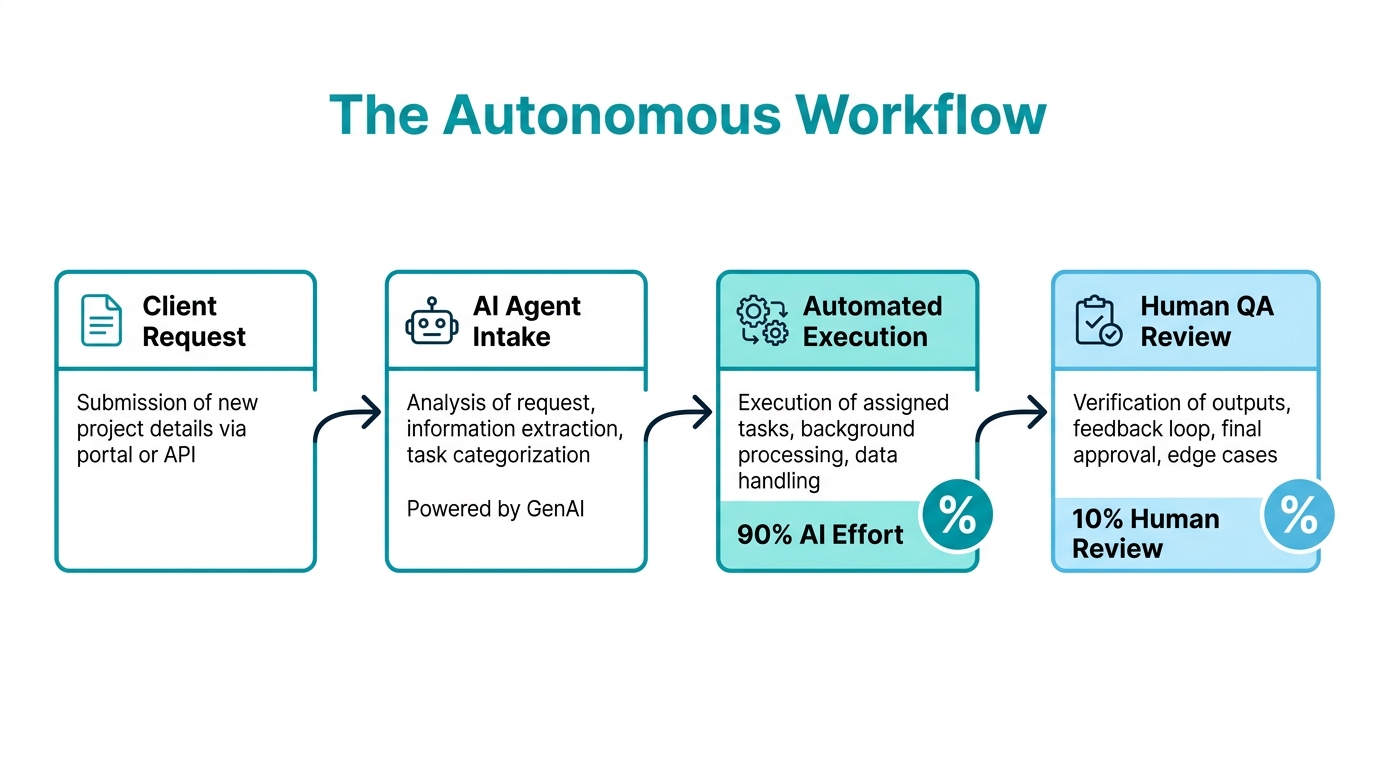
The hallmark of a high-margin SwaS business is the use of an Autonomous Company framework. In this model, the founder sits at the top, supported by a hierarchy of AI agents rather than a bloated payroll. We are seeing organizations where the "Chief of Staff," "Head of Operations," and "Customer Success Lead" are all AI agents programmed with specific personalities and decision-making frameworks using tools like Zapier Central.
Consider the recent case of a 50-person organization where the CEO replaced the middle management layer with interconnected agents. When an employee needed feedback on a project, they messaged a "Chief of Staff" agent. If the agent’s response was insufficient, they were referred to a "Head of Operations" agent for escalation. This isn't just a gimmick; it’s a way to ensure scaling service businesses with AI happens without the friction of human management cycles.
| Role | Traditional Human Cost | AI Agent Cost (2026) | Impact on Margins |
|---|---|---|---|
| Chief of Staff | $150,000/yr | $200/mo (API fees) | +12% Gross Margin |
| Market Researcher | $80,000/yr | $50/mo | +8% Gross Margin |
| Customer Success | $65,000/yr | $0.10 per interaction | +15% Gross Margin |
Private Equity: Why Investors Are Paying Software Multiples for Services
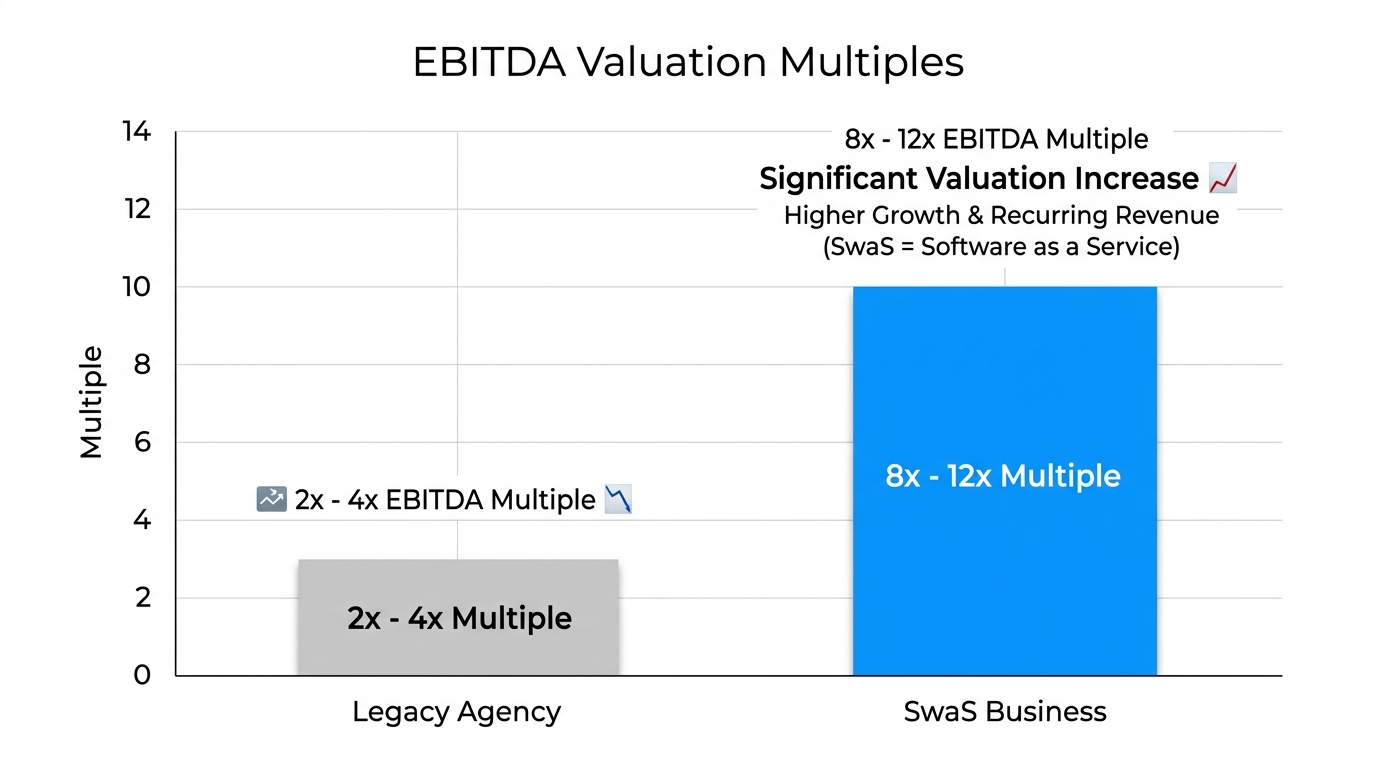
Historically, Private Equity (PE) firms stayed away from services because they weren't "defensible" or "scalable." That has changed. Investors are now aggressively shifting budgets away from traditional SaaS and into AI-augmented service companies. The reason? High gross margins. When a service business operates with a 75% margin, it looks, smells, and scales like a software company.
Investors are valuing these companies at software multiples because the future of enterprise software is increasingly "headless." The underlying logic is that if you can deliver a service—like legal auditing or tax preparation—using OpenAI-powered agents, your cost of goods sold (COGS) remains flat even as your customer base grows. This scalability is the primary driver of high margin business ideas 2026.
"The risk profile has flipped. Investors now see 'human-only' service businesses as high-risk, while AI-native services are seen as the new digital utilities."
Case Study: Productizing Retail Strategy with AI
A deep dive into using AI for retail expansion tracking and automated business strategy.One of the most compelling examples of SwaS in action is the transformation of retail expansion strategy. Traditionally, large real estate operators had to manually track store openings and closings using 10Ks, earnings calls, and press releases. It was a "gut-feel" business driven by manual labor.
By using a tool like Perplexity or custom Claude-based scrapers, operators have built productized AI alert systems. For instance, an AI agent can track Dollar General’s expansion plans or flag Walgreens’ plan to close underperforming locations in real-time. What used to be a $20,000-a-month consulting engagement is now an automated dashboard that provides a "hit list" for leasing teams instantly.
This same logic applies to the creator economy. Brands looking to scale their UGC (user-generated content) efforts no longer need massive internal teams to vet influencers. Instead, platforms like Stormy AI allow them to find and vet thousands of creators using AI search and automated quality reports, essentially turning influencer discovery into a software-like experience.
Pricing Strategies: From Hourly Billing to Value-Based Outcomes
If you are running a SwaS business, the worst thing you can do is bill by the hour. AI agents work 1,000 times faster than humans; if you bill by the hour, you are effectively punishing yourself for being efficient. To capture the 75% margin, you must move to value-based pricing.
- The "Success Fee" Model: Charge based on the outcome (e.g., $1,000 per qualified lead generated).
- The "Management Seat" Model: Charge a flat monthly fee for the "AI Agent" to manage a specific business function.
- The "Efficiency Arbitrage" Model: Price your service at 80% of what a human employee would cost, even if your AI cost is only 1%.
Playbook: How to Build Your Own SwaS Business
Step-by-step advice on launching a successful AI-driven service business in any local niche.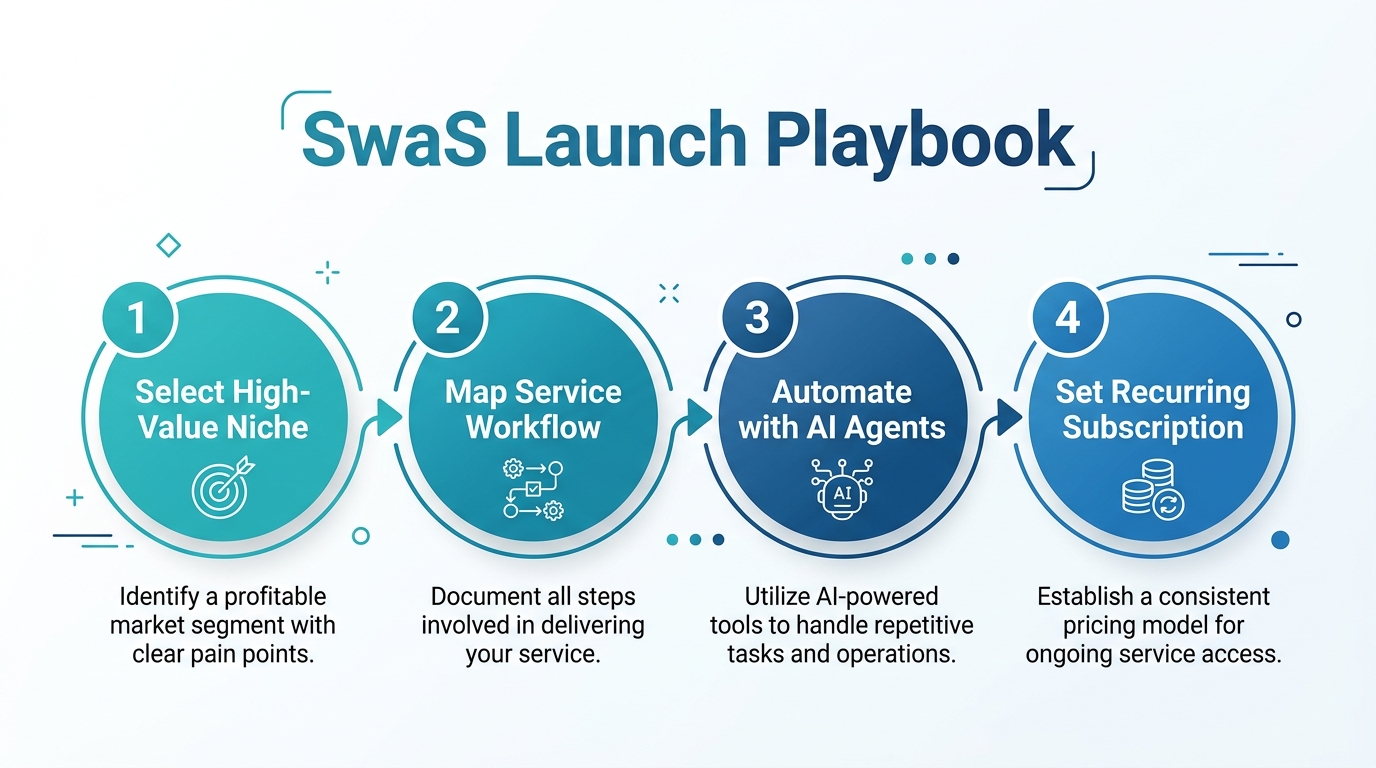
Scaling service businesses with AI requires a shift in mindset from "hiring people" to "engineering workflows." Here is the 2026 playbook for building a high-margin SwaS company:
Step 1: Identify a "High-Pain" Manual Process
Look for industries that are still "manual and gut-driven." This could be anything from dentist office scheduling to real estate legal audits or even TikTok ad management. The goal is to find a service where humans currently spend 40+ hours a week on repetitive data entry or communication tasks.
Step 2: Build the AI Workflow
Use agents to handle the research and execution. For example, if you're building a content agency, use AI to scrape trends, generate scripts, and even handle initial outreach to creators. Tools like Stormy AI can automate the discovery and outreach phase, allowing you to manage hundreds of influencer relationships with a single human operator.
Step 3: Sell the "No-Risk" Audit
The best way to acquire customers in the SwaS model is the AI Transformation Audit. Offer to analyze their current business for free and show them exactly where an AI agent could save them $100,000 a year. Once they see the proof of concept—like a live dashboard of their competitors' expansion moves—they will happily pay a recurring fee for the implementation.
Conclusion: The Future of Work in 2026
We are witnessing the democratization of the "Mogul" lifestyle. In the past, you needed hundreds of employees to build a seven-figure empire. Today, Gen Z digital moguls are building these businesses while spending their mornings at the gym, leveraging AI agents to do the heavy lifting of hiring, scaling, and operations. Whether you are curing cancer by sequencing DNA with custom AI models or simply automating a local service business, the path to wealth in 2026 is clear: stop selling your time and start selling your agents' outcomes.
The service as software business model isn't just a trend; it's the inevitable conclusion of the AI revolution. By focusing on high-margin delivery and value-based pricing, founders can finally achieve the dream of software-like scale with the intimacy and impact of a high-end service.