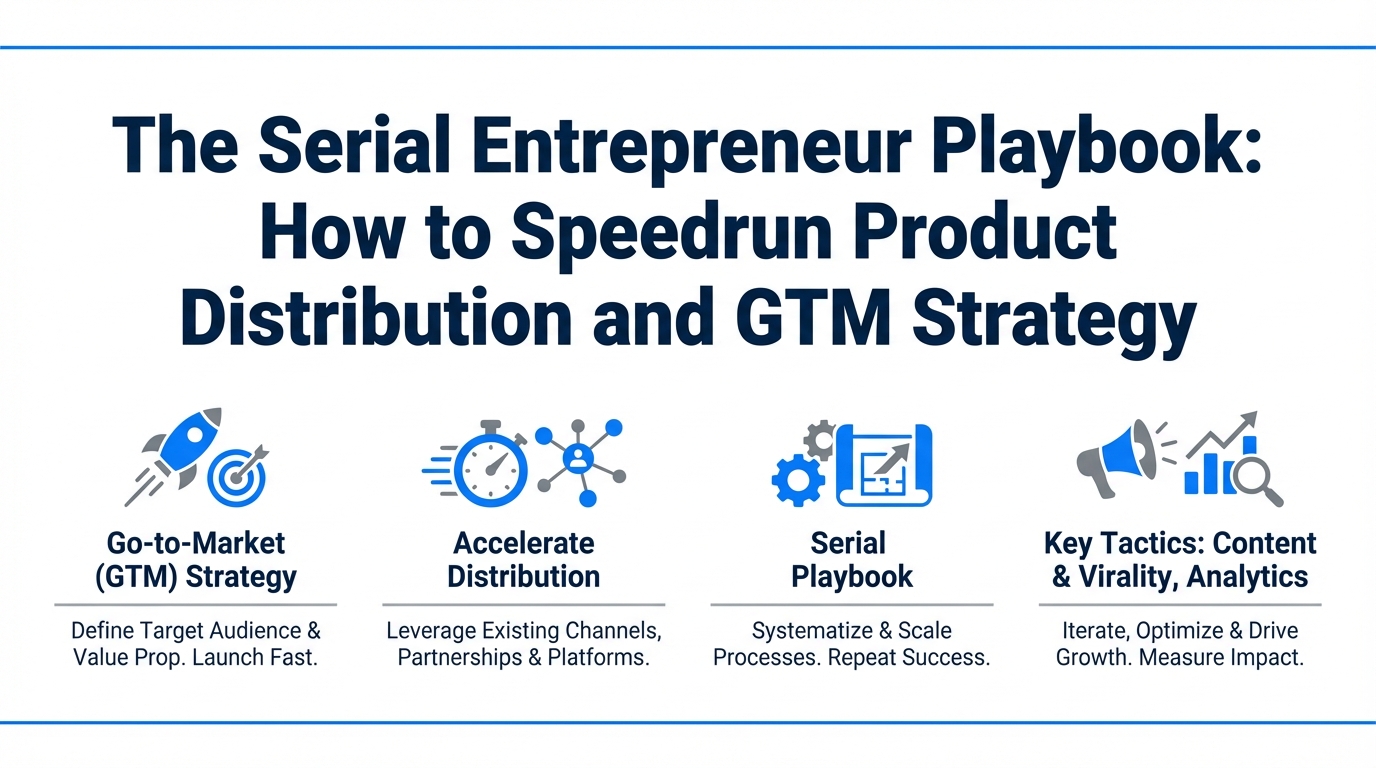
In the world of venture capital and high-growth startups, there is a phenomenon known as "speedrunning." While first-time founders often spend years grinding through the "brute force" stage to reach their first $1 million in revenue, repeat founders are increasingly reaching the $100 million mark in a fraction of the time. This isn't just about having more capital; it is about the clinical application of a proven go-to-market strategy. These entrepreneurs aren't reinventing the wheel—they are using a battle-tested blueprint to bypass common pitfalls and scale distribution with mathematical precision. Success, as it turns out, is a repeatable process of building a business that makes a specific result inevitable.
The Speedrunning Concept: From Zero to $100M in Record Time
The term "speedrunning" comes from the gaming community, where players attempt to complete a game as fast as possible by knowing every level like the back of their hand. In the serial entrepreneur business model, this translates to founders returning to markets they already understand to launch new products using the same infrastructure. A prime example is Peter Rahal, the founder of RX Bar. After building RX Bar from a kitchen table and selling it to Kellogg for $600 million, he didn't pivot to a new industry. He launched David Bar.
By leveraging his existing product distribution strategy and industry contacts, Rahal reportedly scaled David Bar to over $100 million in revenue in less than two years—significantly faster than his first venture. This is the power of "edge talents." When a founder knows the retailers, the supply chain, and the customer psychology of a niche, the time to market is slashed because the experimentation phase is virtually eliminated. They aren't guessing what works; they are executing what they already know to be true.
"The bottleneck of any business is the psychology of the founder. To get the results you want, you simply need to be the type of person for whom that result is inevitable."
Pricing as a Distribution Lever: The Carbone and RX Bar Models
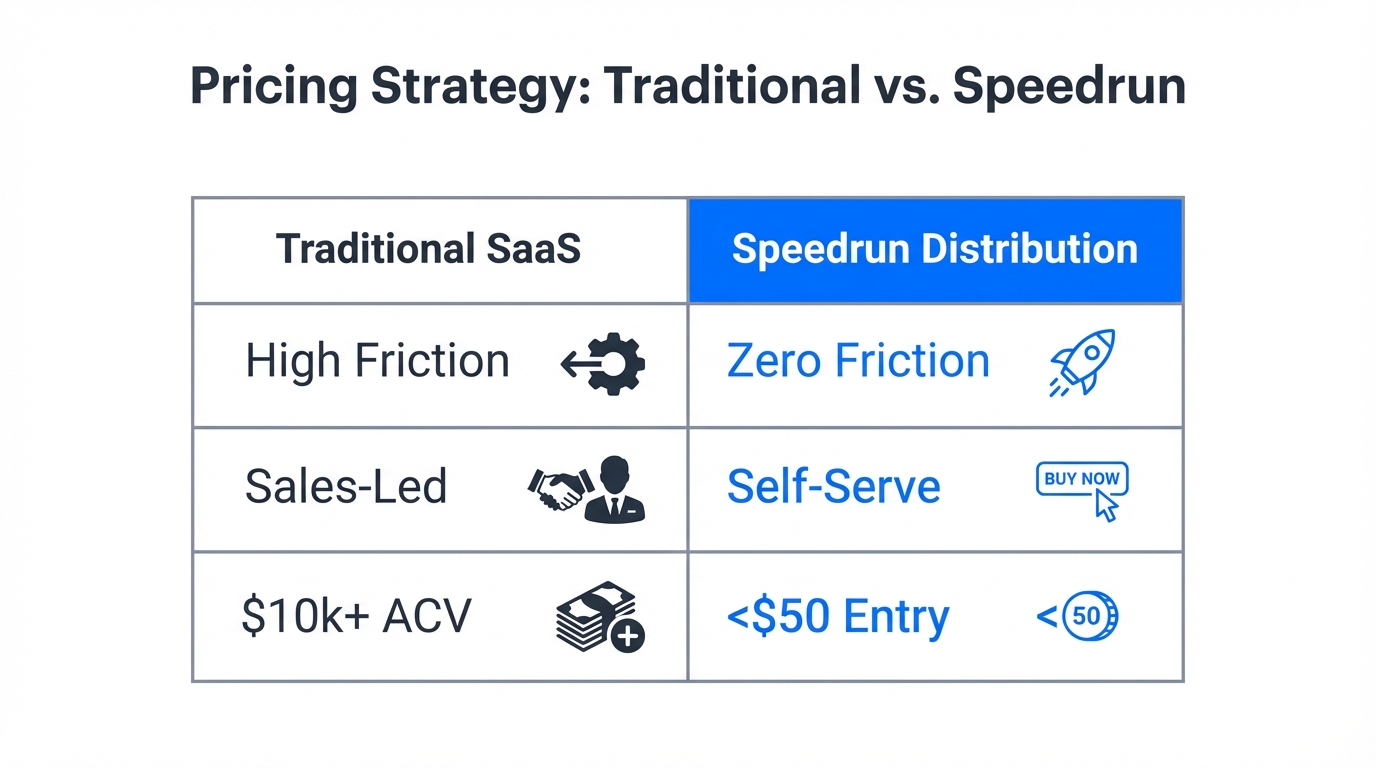
One of the most misunderstood aspects of a go-to-market strategy is the role of pricing. Most founders view price as a way to compete for customers, but serial entrepreneurs often view price as a way to compete for retailers. Consider the case of Carbone Fine Food. When they entered the crowded pasta sauce market, they didn't try to underprice the competition. Instead, they took a page from the Rao's Specialty Foods playbook.
By pricing their sauce at $7 to $11—nearly double the price of mass-market brands—they created a massive incentive for retailers. While a grocery store might make 50 cents on a standard jar of sauce, they could make $2.50 on a jar of Carbone. This high-margin distribution strategy made it a no-brainer for stores like Whole Foods and Kroger to give them shelf space. The premium price wasn't just a brand statement; it was a financial tool to secure distribution.
| Strategy Component | The 'Brute Force' Approach | The 'Serial Playbook' Approach |
|---|---|---|
| Pricing | Competing on being the cheapest | Premium pricing to incentivize retail margins |
| Market Entry | Testing multiple niches at once | Doubling down on existing industry contacts |
| Scaling | Hiring generalists to find a way | Using a proven template/blueprint |
The Multi-Brand Strategy: Dominating the Niche
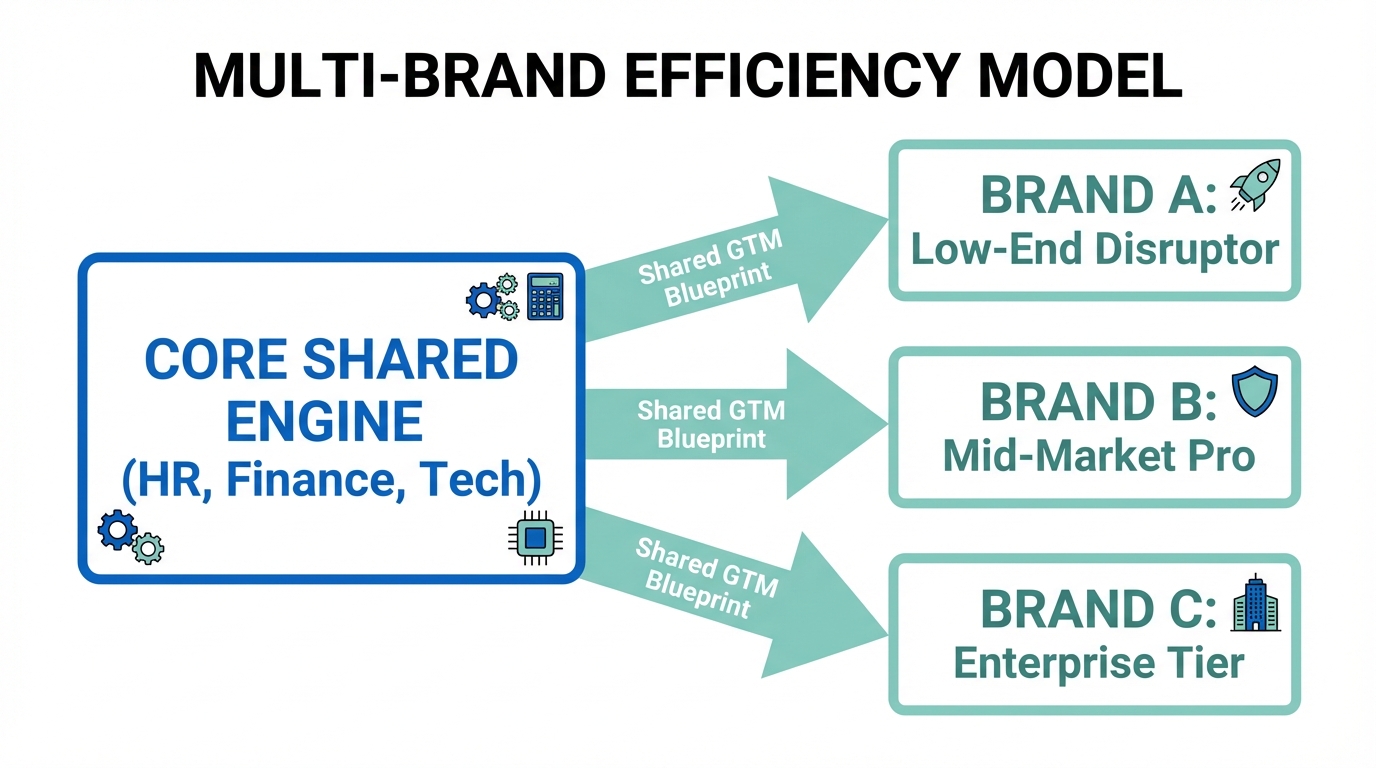
In the world of ecommerce growth playbooks, some of the most successful founders aren't just building one brand—they are building "twins." There are numerous instances in the Amazon and DTC space where two competing brands, ranked #1 and #2 in their category, are actually owned by the same person. They use the exact same Shopify templates, the same logistics providers like ShipBob, and the same Google Ads strategies.
This startup distribution channel strategy allows a founder to own more "real estate" in the search results. If you own the top two spots for a product, you effectively double your chances of a sale while sharing the same back-end overhead. It's a method of diversifying risk while maximizing the efficiency of your internal team. Tools like Stormy AI can help source and manage UGC creators at scale for these multiple brands, ensuring that each has a unique voice despite sharing a common operational skeleton.
Geographic Dominance: The 'Kendall' Model
Distribution doesn't always have to be horizontal. Sometimes, the fastest way to $100M is to own a single territory before expanding. This is what we call the Geographic Dominance Playbook. A notable example is Kendall, a founder in the sports-betting niche. When sports betting became legal in only a few U.S. states, his competitors ignored the market, thinking it was too small. Kendall did the opposite: he focused entirely on New Jersey.
By dominating the lead flow for one specific state, he built a business that he eventually sold for over $40 million. He then repeated the exact same process in Minnesota when it opened up, selling to the same buyer. This go-to-market strategy works because it allows you to become the "big fish" in a small pond, making your acquisition value much higher than if you had mediocre results across fifty different regions.
"The most valuable lessons are the ones you keep having to learn again and again. The key is to productize that wisdom so you don't repeat the same mistakes twice."
Scaling as a CEO: From Brute Force to Delegation
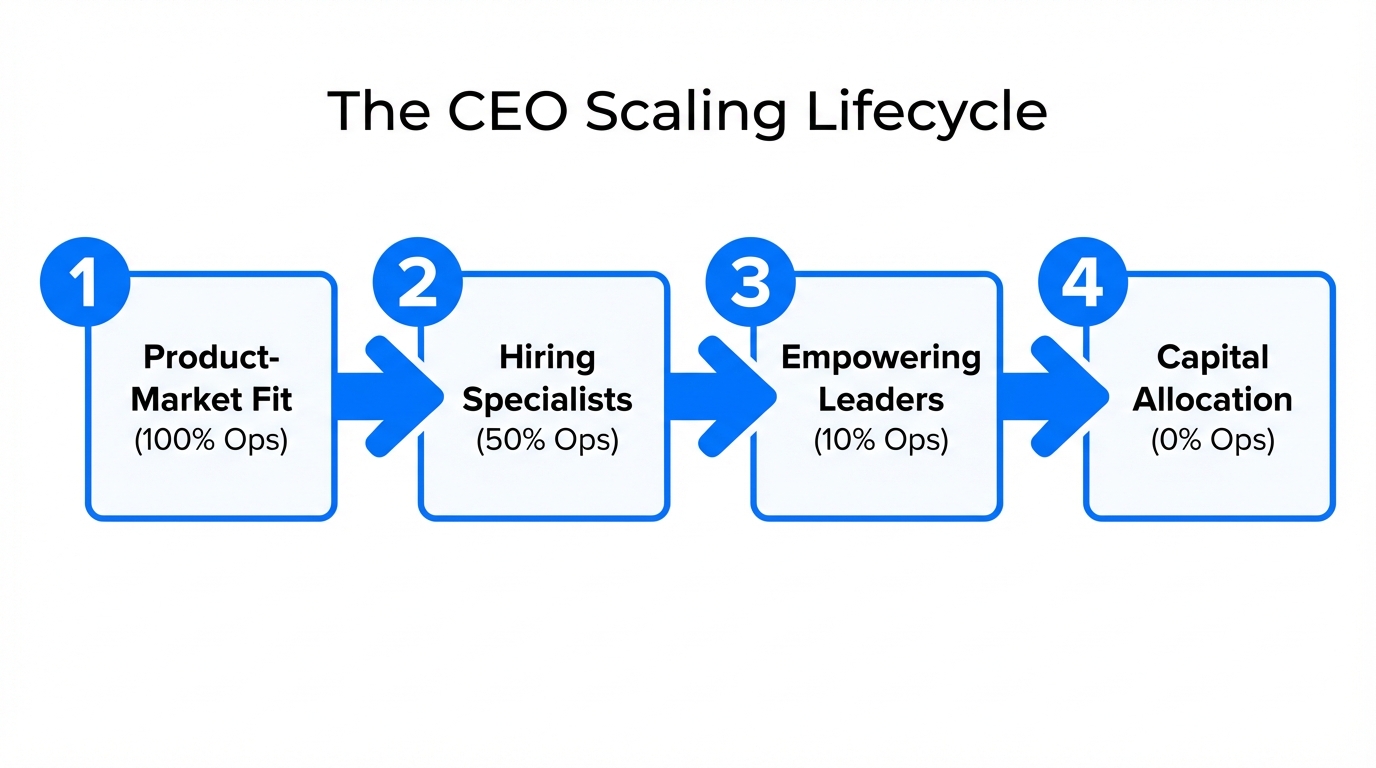
As a company scales from $1M to $10M and beyond, the founder's job shifts from doing to leading. This is where most first-time CEOs fail. They tend to "abdicate" (handing off a task and hoping for the best) rather than "delegate" (providing the training and framework for success). To manage this transition, many elite founders use the RACI model [source: Wikipedia] to define clear ownership within their teams.
- R: Responsible – The person doing the work.
- A: Accountable – The person whose head is on the block (usually the manager).
- C: Consulted – Those who provide input.
- I: Informed – Those who just need an FYI.
Implementing these systems allows the CEO to step back and focus on high-level strategy rather than getting lost in the weeds of daily operations. For founders managing high-velocity creator campaigns, using Stormy AI's creator CRM ensures that your team stays accountable for every influencer relationship without the CEO needing to be in every email thread.
Conclusion: Building for Inevitability
The secret of the serial entrepreneur isn't magic; it's blueprint application. Whether it's through premium pricing to capture retail shelf space, launching multi-brand competitors to own search results, or dominating a single geography before moving horizontally, these founders are playing a game of marginal gains. They take 1% improvements across their entire product distribution strategy and stack them until success is the only possible outcome.
If you are looking to scale your current venture, start by identifying the parts of your go-to-market strategy that can be templated. Are you building a resilient supply chain with partners like Flexport? Are you using data-driven discovery for your marketing via TikTok Ads? By treating your business like a repeatable playbook, you move out of the 'brute force' stage and into the realm of the elite speedrunners. Stop guessing, and start executing the blueprint.