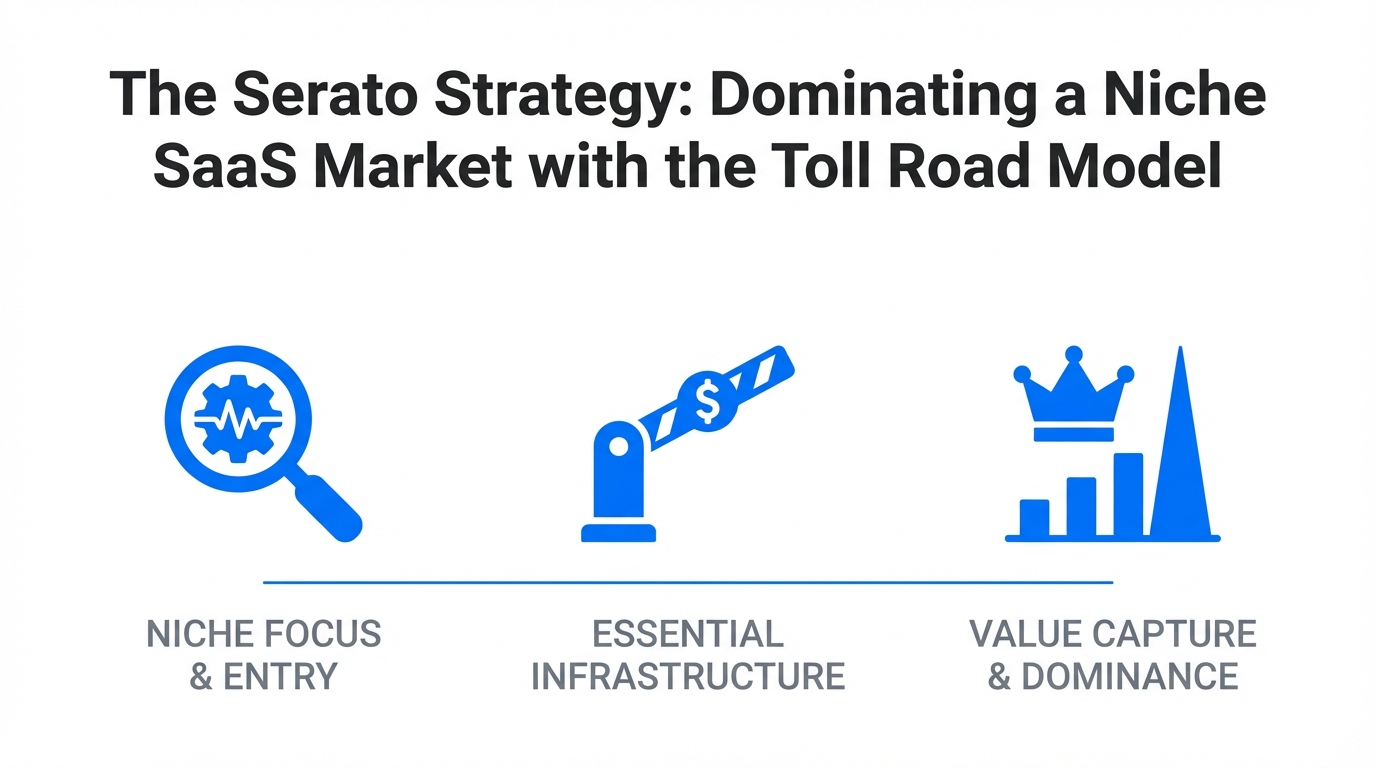
In the world of high-growth technology, we often hear about "horizontal" software—tools like Notion or Asana that attempt to be everything to everyone. But there is a quieter, often more lucrative path to B2B software marketing success: Niche Market Dominance. This is the realm of vertical SaaS, where a company identifies a specific, mission-critical workflow and becomes the undisputed standard for that industry.
One of the most compelling examples of this is Serato, a New Zealand-based software company that has spent the last 25 years becoming the backbone of the global DJ industry. Recently acquired by Tiny, Serato’s story offers a masterclass in vertical SaaS marketing and software retention tactics. By building a "hardware moat" and positioning itself as a "toll road" to professional status, Serato has defended its margins against both legacy competitors and modern AI-driven upstarts.
The Power of 'Mission-Critical' Vertical SaaS
When evaluating SaaS growth strategies, the most attractive businesses are those that provide mission-critical software. Andrew Wilkinson of Tiny often uses the analogy of funeral home management software. If you own a funeral home, you aren't looking to switch your management platform every six months to save a few dollars. The cost of a failure—losing data, scheduling errors, or workflow disruption—is far too high. This creates a natural monopoly of the workflow.
For DJs, Serato is that mission-critical tool. It isn't just a music player; it is the interface between the performer’s brain and the speakers. If the software crashes, the party stops, and the DJ's professional reputation is ruined. This high-stakes environment makes users incredibly sticky. Once a professional learns the keyboard shortcuts, the library organization, and the visual waveforms of a specific platform, the switching costs become psychological as much as they are technical.
The Hardware Moat: Defending Against AI and Margin Compression
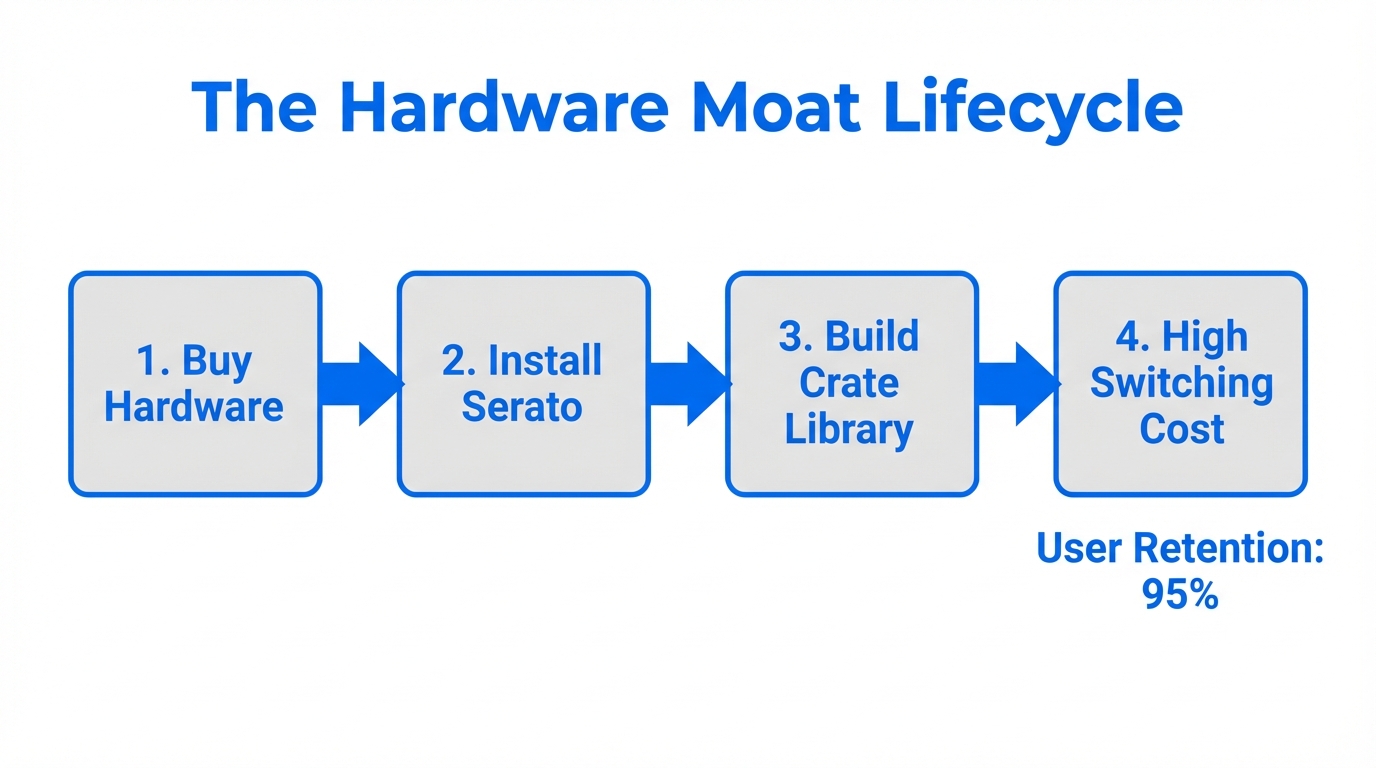
In the current tech landscape, many SaaS companies are worried about margin compression caused by AI. If a college student can "vibe code" a functional alternative to your software in a weekend, your pricing power evaporates. Serato defended against this by building a hardware moat. Instead of remaining a pure-play software company, they partnered deeply with hardware manufacturers like Pioneer DJ.
By integrating Serato directly into $5,000 professional DJ controllers and mixers, they created a physical barrier to entry. A new AI competitor might have a flashier interface, but if it doesn't map perfectly to the buttons, sliders, and platters of the hardware found in every major nightclub, a professional won't use it. Manufacturers don't want to risk their hardware's reputation on unvetted, "vibe-coded" software; they want to partner with the industry standard.
"When you are the standard, that is really exceptional. Once someone integrates into an ecosystem like Serato, buying thousands of dollars of hardware, they aren't going to switch off easily."This hardware integration serves as a software retention tactic that is almost impossible to break. It transforms the software from a digital tool into a component of a physical workstation. This strategy is particularly effective for B2B software marketing because it leverages the trust and distribution of established hardware giants.
| Feature | Standard SaaS | Hardware-Integrated SaaS |
|---|---|---|
| Switching Cost | Low (Data Export) | Very High (Hardware Replacement) |
| Distribution | Digital Marketing | OEM Partnerships |
| AI Threat | High (Code Replacability) | Low (Physical Integration Required) |
| Churn Risk | Moderate | Minimal |
The 'Toll Road' Analogy: Selling Status and Access
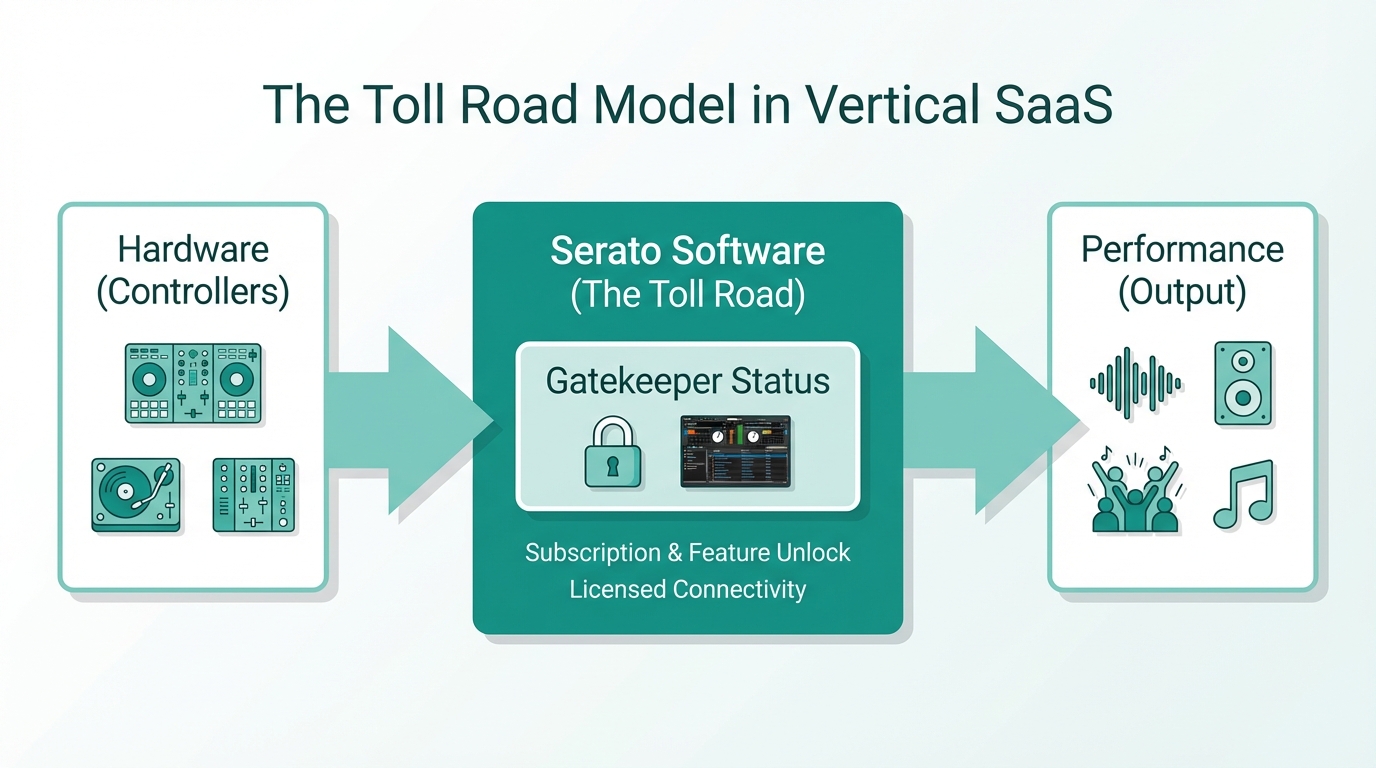
One of the most fascinating aspects of niche market dominance is the psychological positioning of the brand. Serato doesn't just sell software; they sell status. In the DJ world, being a "Serato DJ" carries a specific professional weight. It implies you are serious, that you play on professional gear, and that you are part of the same tribe as superstars like Diplo.
Andrew Wilkinson describes this as the "Toll Road" model. If you want to achieve a specific professional outcome—in this case, becoming a world-class DJ—you have to pay the toll. The software becomes the mandatory path to achieving that status. As long as young people (and increasingly, a diverse range of creators) find the profession desirable, they will continue to pay the toll.
This is a pivot from traditional SaaS growth strategies that focus on "problem-solving." Instead of just solving a problem, the software becomes the gateway to a lifestyle. When your brand becomes a verb or a prerequisite for entry into a professional guild, your marketing budget can decrease while your pricing power increases. To find and vet the creators who are already dominating these niche conversations, tools like Stormy AI can help brands discover and manage relationships with these high-status influencers at scale.
Navigating the Transition from Licensing to SaaS
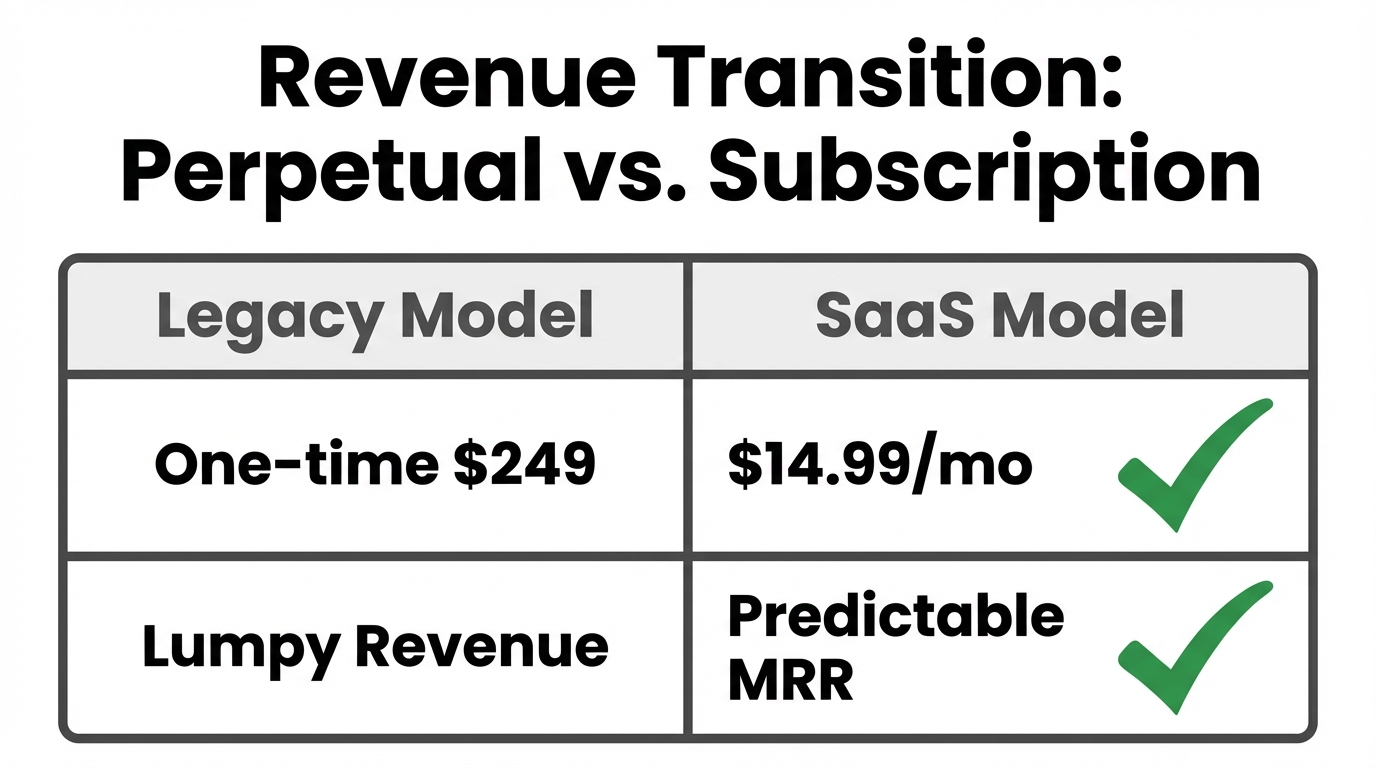
Even with a dominant position, Serato had to modernize its business model. For years, the company operated on a one-time licensing model. While this generated significant cash flow, it didn't provide the predictable, recurring revenue that investors prize. Transitioning to a subscription model is a dangerous move for any company with a legacy user base—power users often feel "betrayed" when asked to pay monthly for a tool they previously owned.
Serato’s transition was successful because they didn't just "turn on" a subscription; they continued to add value through the ecosystem. They maintained $45 million in revenue and $15 million in EBITDA by ensuring that the subscription felt like an investment in ongoing compatibility and new features, rather than a tax on existing functionality. This is a core software retention tactic: provide enough continuous value that the subscription feels negligible compared to the utility.
"The secret to success in business is just getting back up over and over again. Serato did this for 25 years until they became an unshakeable standard."Defending Against Margin Compression with UX Moats
Margin compression occurs when a product becomes a commodity. To prevent this, Serato invested heavily in high switching costs built into the UX. This isn't about making the software hard to leave—it's about making the alternative feel alien. If you have spent 10,000 hours looking at Serato’s specific waveform colors and library structure, competitor software or legacy tools like Traktor will literally feel like it is speaking a different language.
This UX moat is essential for niche market dominance. When a tool is used for hours every day, the user's brain physically rewires itself to favor that specific interface. This allows the company to maintain high margins because the "cost" of a competitor's lower price includes the "cost" of the user's decreased productivity and increased cognitive load during the learning phase.
Scaling Niche Dominance: Lessons for SaaS Marketers
The Serato strategy isn't just for music software. It can be applied to any industry where professionals have a high degree of ego and specific hardware or workflow requirements. Whether you are building for architects, surgeons, or TikTok content creators, the playbook remains the same:
- Identify the Mission-Critical Workflow: Find the thing that, if it fails, stops the user from making money.
- Build a Hardware or Ecosystem Moat: Partner with the tools your users already touch physically.
- Become the Toll Road: Market your software as the prerequisite for professional success.
- Monitor the Ecosystem: Use platforms like Stormy AI to track how your brand is being mentioned by top creators and ensure you remain the "standard" in their eyes.
- Focus on UX Retention: Make your interface so intuitive for your power users that they can't imagine using anything else.
Conclusion: The Long Game of Vertical SaaS
Dominating a niche market isn't about being the loudest; it's about being the most indispensable. By focusing on vertical SaaS marketing and building deep moats through hardware and status, companies like Serato prove that you don't need a billion users to build a hundred-million-dollar business. You just need to be the only path forward for a specific, passionate group of professionals.
As you build your own SaaS growth strategies, remember that the most defensible business is often the one that looks the most "boring" or specialized to an outsider. If you can build the toll road to an industry's success, you won't just survive the age of AI—you'll thrive in it.