In 2026, the marketing landscape has undergone a tectonic shift. The era of the "ten blue links" is officially a relic of the past, replaced by the immediate, synthesized answers of generative engines like Perplexity, Gemini, and OpenAI's SearchGPT. For brands, the goal is no longer just to rank on page one of Google Search; it is to be the primary citation in the AI’s answer. This is the era of Generative Engine Optimization (GEO).
As we navigate this new reality, marketing teams are moving away from manual content creation toward agentic marketing. With the global AI agents market reaching $12.06 billion this year, the focus has shifted to machine-readability. If an AI agent cannot parse your brand’s value proposition, your brand effectively does not exist in the 2026 buyer journey. This guide explores how to bridge the gap between traditional SEO and high-scale GEO using modern tools like MindStudio and NoimosAI.
The Evolution of Search: SEO vs. GEO
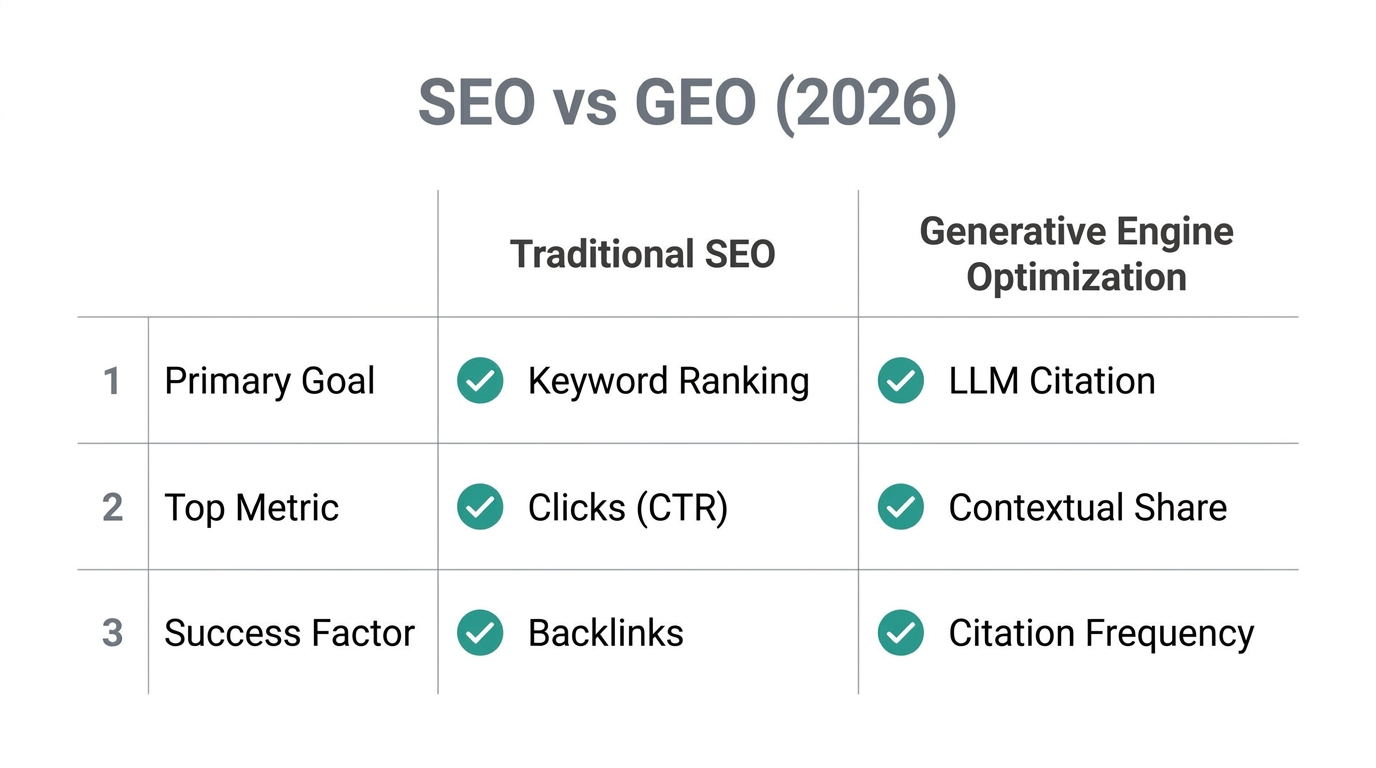
Traditional SEO was a game of keywords, backlinks, and technical site health. While these factors still matter, they are now secondary to how LLMs (Large Language Models) perceive your brand. In 2026, 51% of large enterprises have implemented autonomous agentic workflows to manage this transition, focusing on the AI Citation Rate—the frequency with which your brand is cited as a source in generative responses.
| Metric | Traditional SEO (2020-2024) | Generative Engine Optimization (2026) |
|---|---|---|
| Primary Goal | Clicks to Website | Citations in AI Answers |
| Success Metric | SERP Rank / CTR | Citation Rate / Share of Model |
| Content Focus | Keyword Density / LSI | Machine-Readability / Fact Density |
| User Path | User > Search > Website | User > Agent > Recommendation |
The core difference lies in "Perception Drift." This metric, as highlighted by AnalyticaHouse, tracks how much your brand's authority fluctuates within an AI's latent space over time. If your brand is mentioned positively in social proof, technical documentation, and authoritative news, the AI’s "perception" of you remains stable, leading to consistent citations.
"Agents don't shop—they decide. Marketers must ensure their brand is interpretable to systems, not just humans." — Eii Promisel, Silicon Foundry
Building Your GEO Audit Swarm with MindStudio
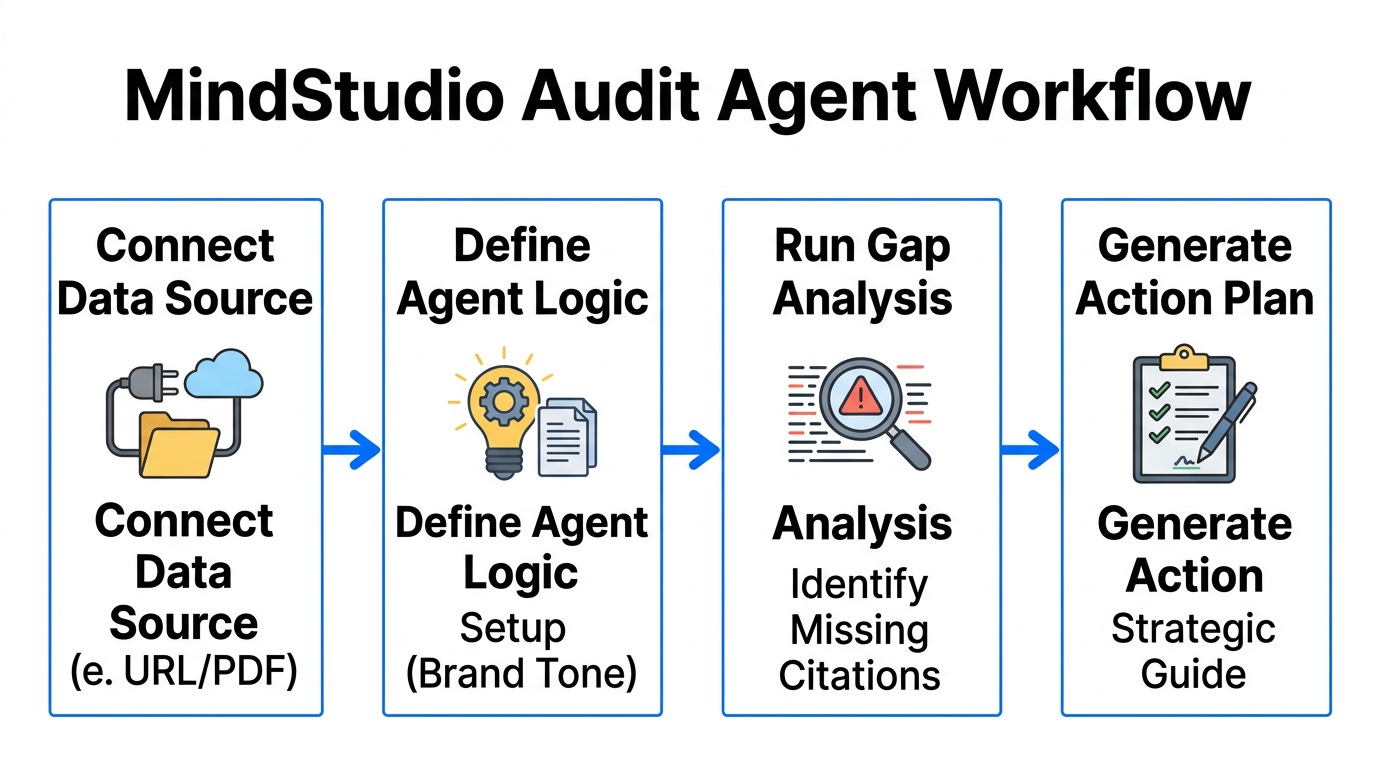
You cannot optimize what you cannot measure. In 2026, leading marketers use MindStudio to build custom "Audit Agents" that constantly monitor brand visibility across different LLMs. Unlike a human SEO specialist who might check rankings once a week, these agents perform Bulk Prompt Orchestration—running hundreds of queries across multiple models simultaneously.
Using MindStudio’s no-code platform, you can deploy a Multi-Agent System (MAS) where:
- The Sourcing Agent: Scrapes current AI responses for your target keywords.
- The Analysis Agent: Compares your brand’s citation rate against competitors.
- The Sentiment Agent: Evaluates the "vibes" or tone the AI uses when referencing your products.
By leveraging MindStudio marketing agents, teams have seen a 73% reduction in campaign development timelines. Instead of manual audits, you receive a real-time dashboard showing exactly where your Generative Search Optimization efforts are failing.
The Agentic Commerce Protocol: Selling to Machines
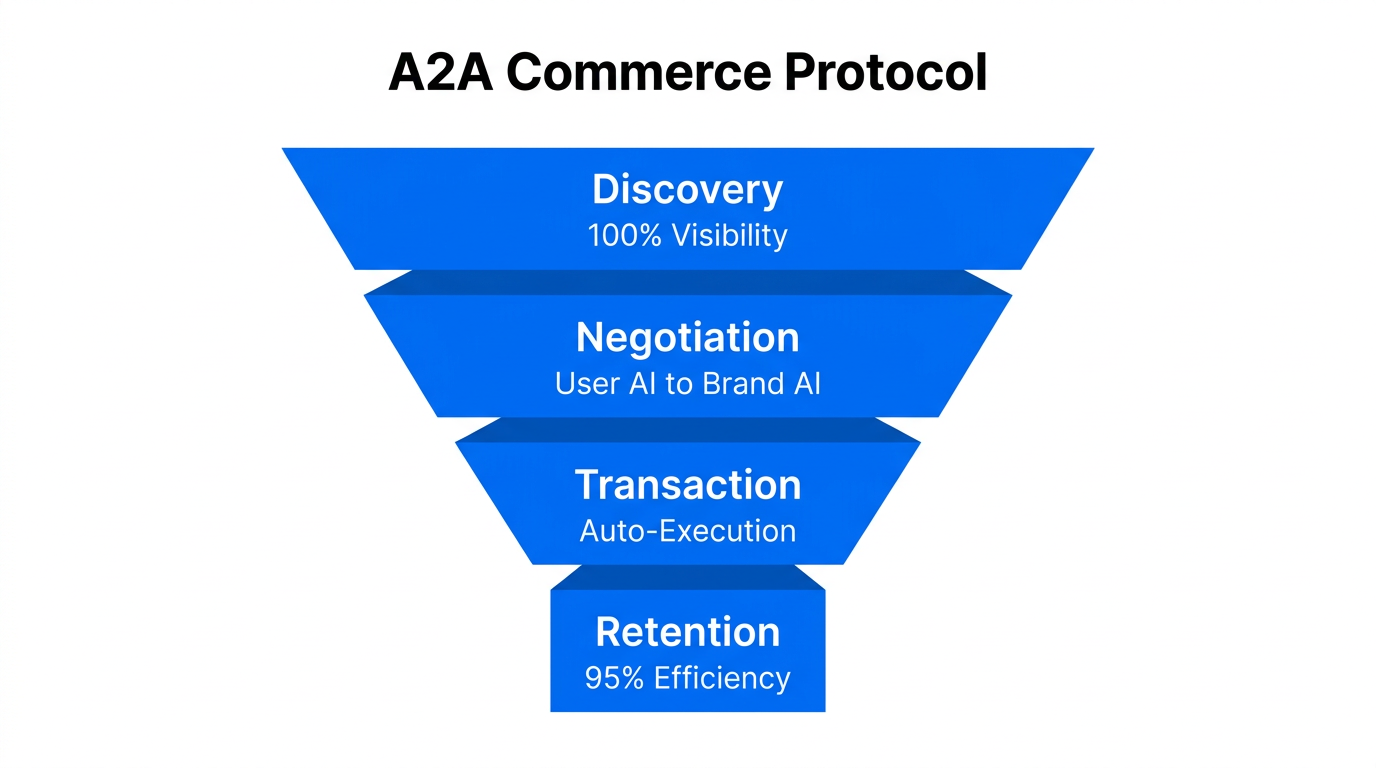
The most radical change in 2026 is Agent-to-Agent (A2A) Commerce. We are no longer just marketing to humans scrolling on TikTok or Instagram. We are marketing to the buyer agents that humans use to make decisions. This has led to the development of the Agentic Commerce Protocol (ACP), a technical standard that allows your marketing agent to communicate directly with a consumer's purchasing agent.
To win in an A2A economy, your content must be machine-readable. This means:
- Structured Data Excellence: Moving beyond basic Schema.org to deep, interconnected Knowledge Graphs.
- High Fact Density: AI models prefer content that provides high information value per token. Fluff is filtered out.
- Direct Negotiability: Using protocols like ACP to allow agents to negotiate prices or check stock in real-time.
As Scott Brinker of HubSpot notes, 90.3% of marketing organizations now use agents, shifting the marketer’s role from a creator to a "governor" of these machine-to-machine interactions.
Tactical GEO Playbook: Becoming a Cited Authority
To scale your brand citations in generative search results, you need a high-velocity content engine that mimics the training data AI models crave. Here is the 2026 playbook for Generative Search Optimization:
Step 1: The "Planner-Critic-Executor" Pattern
Don't just generate content; use an agentic workflow. According to Beam AI, the most successful agents follow a three-step loop. A Planner maps out 200 content pieces based on AI gaps; an Executor (using a platform like Gumloop) generates them; and a Critic ensures brand safety and factual accuracy.
Step 2: Optimize for "Zero-Click" Citations
Focus on answering complex, multi-layered questions that require the AI to pull from multiple sources. If your brand provides the most comprehensive data point, you become the "anchor" citation. High-quality User-Generated Content (UGC) is critical here, as AI engines increasingly weigh social proof and real-world usage data. Platforms like Stormy AI can help you discover and manage the creators who provide the authentic social signals that feed these AI engines.
Step 3: Establish a "Truth File"
Create a machine-readable directory of your brand’s facts, pricing, and claims. When a generative engine crawls the web, it should find a consistent "source of truth" across your site, LinkedIn, and press releases. Consistency reduces perception drift.
"Just as DevOps reshaped software, AgentOps will reshape AI operations in 2026. Large enterprises will build internal 'Agent Factories'." — Joao Moura, CEO of CrewAI
Scaling End-to-End GEO Workflows with NoimosAI
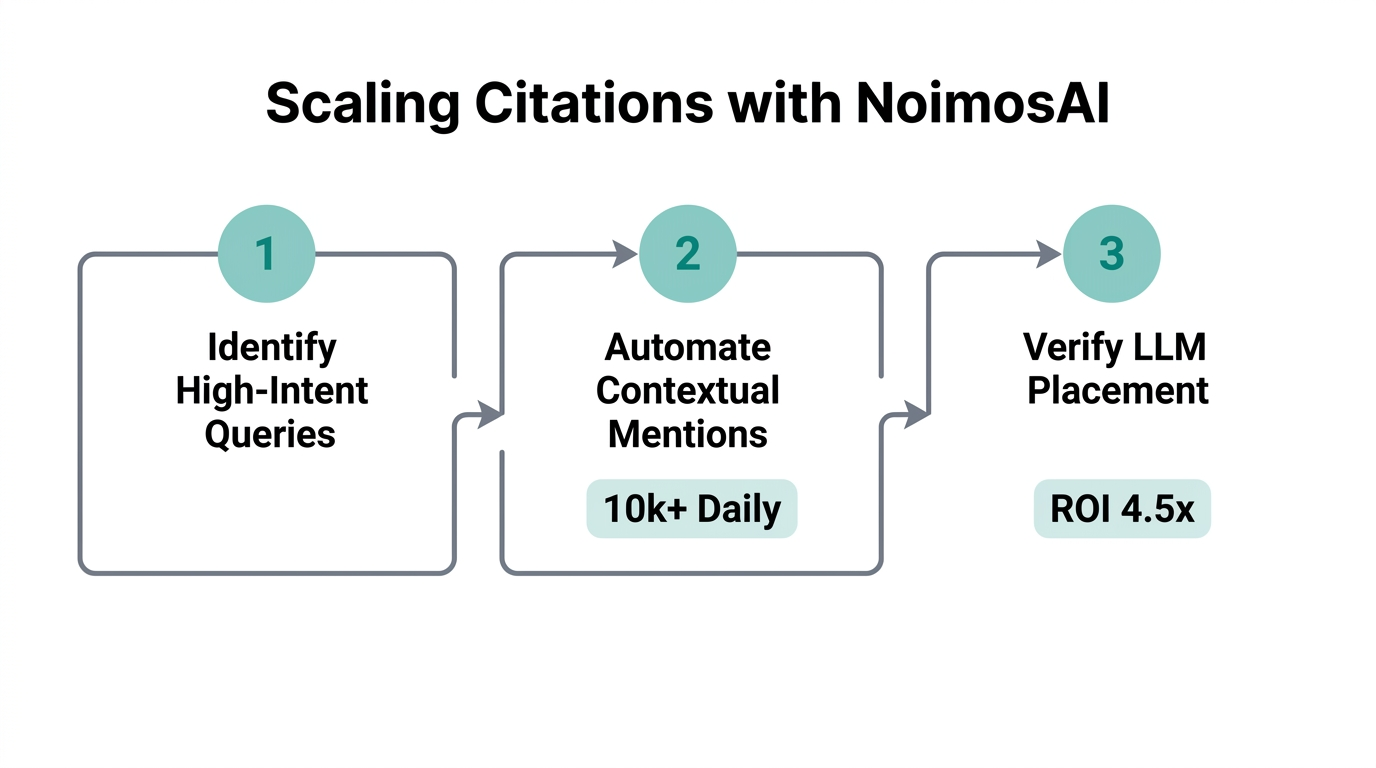
For SMBs and scaling brands, managing these complex agent swarms can be daunting. This is where Command Marketing platforms like NoimosAI become essential. NoimosAI acts as an orchestrator, managing the entire GEO and SEO lifecycle autonomously.
Instead of manual prompt engineering, you give NoimosAI a high-level command: "Increase our citation rate in the 'sustainable fintech' niche by 25% by Q4." The platform then:
- Identifies which generative engines (Perplexity vs. ChatGPT) are currently ignoring your brand.
- Deploys a fleet of agents to create targeted technical articles and forum discussions to increase your latent space presence.
- Uses NoimosAI's end-to-end workflows to monitor performance and pivot strategies if citation rates drop.
By moving to this "Command" model, brands can achieve what used to take a 20-person agency with just a handful of strategists. In fact, some eCommerce brands have increased revenue per marketing dollar by 52% within six months by replacing rigid teams with autonomous agent units.
The "Failure Wall": Risks of Over-Automation
While the "10 minutes, 200 prompts" strategy is powerful, it is not without risks. Gartner predicts that 40% of agentic AI projects will be canceled by 2027 due to poor operationalization. The "Janitor Problem" is real: marketers can easily spend more time cleaning up hallucinated AI content than they would have spent creating it manually.
To avoid the "Over-Automation Trap," successful 2026 brands use AgentOps to monitor the health and cost of their agent fleets. Using high-powered models like Claude for simple tasks can destroy margins; savvy teams utilize Small Language Models (SLMs) for bulk GEO tasks while reserving GPT-5 class models for final strategic reviews.
Conclusion: The Future is Agentic
The transition from SEO to GEO is not just a change in keywords—it is a change in how the internet functions. In 2026, authority is no longer earned by just having the most backlinks; it is earned by being the most reliable data source for the AI agents that now mediate our daily lives. By utilizing platforms like MindStudio for custom agent building and NoimosAI for massive orchestration, your brand can scale its citation rate and dominate the generative search landscape.
Remember, the agents are watching. Ensure your brand is not just visible, but interpretable, credible, and cited. For those looking to fuel their GEO engine with high-quality creator content and social signals, Stormy AI provides the essential search and discovery tools to find the influencers who will help define your brand's AI perception this year.